
Last updated September 23, 2026
Insulation Cost Breakdown: The Long Beach Homeowner’s Reference for 2026
Most insulation bids in Long Beach aren’t comparing the same job, even when the square footage matches. We’ve reviewed hundreds of competing estimates since 2016, and the same pattern repeats: a $2,200 attic job and a $3,400 attic job can both be “correct” prices for identical homes, because one scopes air sealing, top-plate sealing, and can-light covers while the other quotes insulation depth alone. The R-value printed on the bag means almost nothing if conditioned air is still escaping through gaps the new material buries. This guide breaks down every line item you’ll see on a 2026 Long Beach insulation bid, what each costs, and which cuts will cost you performance you already paid for. For Insulation Warning Signs: A Long Beach Homeowner’s Reference Guide, see our companion resource.
Quick Answer
Attic insulation in Long Beach typically runs $1.80-$2.40 per square foot for blown-in fiberglass or cellulose at R-38 to R-49, but that figure excludes air sealing labor that adds $0.40-$0.80 per square foot. A complete attic job including sealing, insulation, and blower-door verification in a 1,200-square-foot attic floor generally costs $2,800-$4,800 in the Long Beach market for 2026. Spray foam at rim joists or open-cell wall cavities runs higher at $3.50-$6.00 per board foot installed, with dense-pack wall retrofits falling between $2.00-$3.50 per square foot of wall area.
Table of Contents
- Why Long Beach Insulation Bids Vary by 40-60% for the Same House
- Line-Item Cost Breakdown: What Each Scope Element Costs in 2026
- Cost-per-R-Value: Comparing Materials on Equal Ground
- The Blower-Door Test: Cost, Purpose, and Why Some Contractors Omit It
- SoCalGas and SCE Rebates for Long Beach Homeowners in 2026
- How to Structure a Counter-Proposal Without Cutting Performance
- Long Beach Climate and Neighborhood Notes That Affect Your Bid
- Common Mistakes to Avoid
- When to Call a Professional
- Frequently Asked Questions
Why Long Beach Insulation Bids Vary by 40-60% for the Same House
The spread isn’t markup. It’s scope omission. We’ve walked Belmont Shore bungalows and Bixby Knolls ranch homes where the homeowner showed us three bids separated by $1,800 or more, and every time the difference traces to four items: whether air sealing is included, whether the blower-door test is in the scope, whether the quoted R-value meets Title 24 or exceeds it, and whether old insulation removal is priced separately or buried in a “prep” line item.
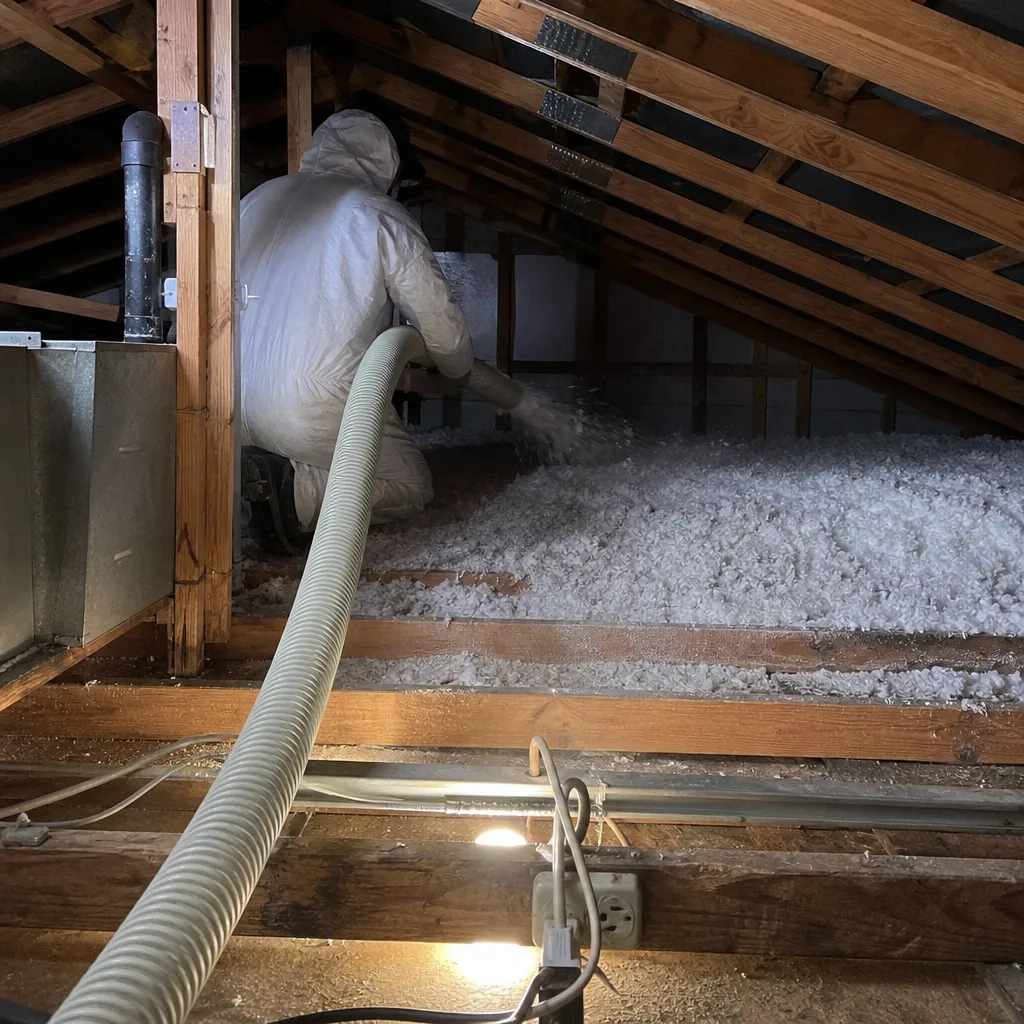
Here’s how this plays out in practice. A contractor quotes $2,200 to blow R-38 fiberglass over your existing attic floor. Another quotes $3,600 for R-38 after removing degraded material, sealing top plates and can lights, installing baffles at the eaves, and running a blower-door test before and after. The first bid isn’t dishonest. It’s incomplete. And in Long Beach’s climate, where summer attic temperatures exceed 140°F and winter marine-layer coolness drives stack effect, incomplete insulation performs like no insulation at all.
The 2026 Long Beach labor market reinforces this split. Skilled air-sealing technicians command $28-$38 per hour, up from $22-$30 in 2020, and a thorough attic air seal on a 1,200-square-foot floor takes a two-person crew four to six hours. A contractor who skips sealing saves $600-$900 in labor, quotes lower, and leaves the homeowner with a thermal blanket full of holes. Under Topside Attic Insulation Long Beach home standards, we don’t proceed with insulation until the envelope is sealed. The Haven Standard Clause 1 requires a written scope, written price, and written warranty before any work starts, and that scope always includes sealing first.
Three structural differences to flag when comparing bids:
- Air sealing scope: Does the bid itemize top-plate sealing, can-light covers, duct boot sealing, and penetration foam? Or does it say “prep attic” as a single line?
- R-value target: Is the bid to Title 24 minimum (R-38 in Long Beach’s climate zone) or to performance R-49? The material cost difference is modest; the labor is identical.
- Verification: Is a blower-door test included, and are the results provided in writing? Without it, you have no documented proof the work changed anything.
Line-Item Cost Breakdown: What Each Scope Element Costs in 2026
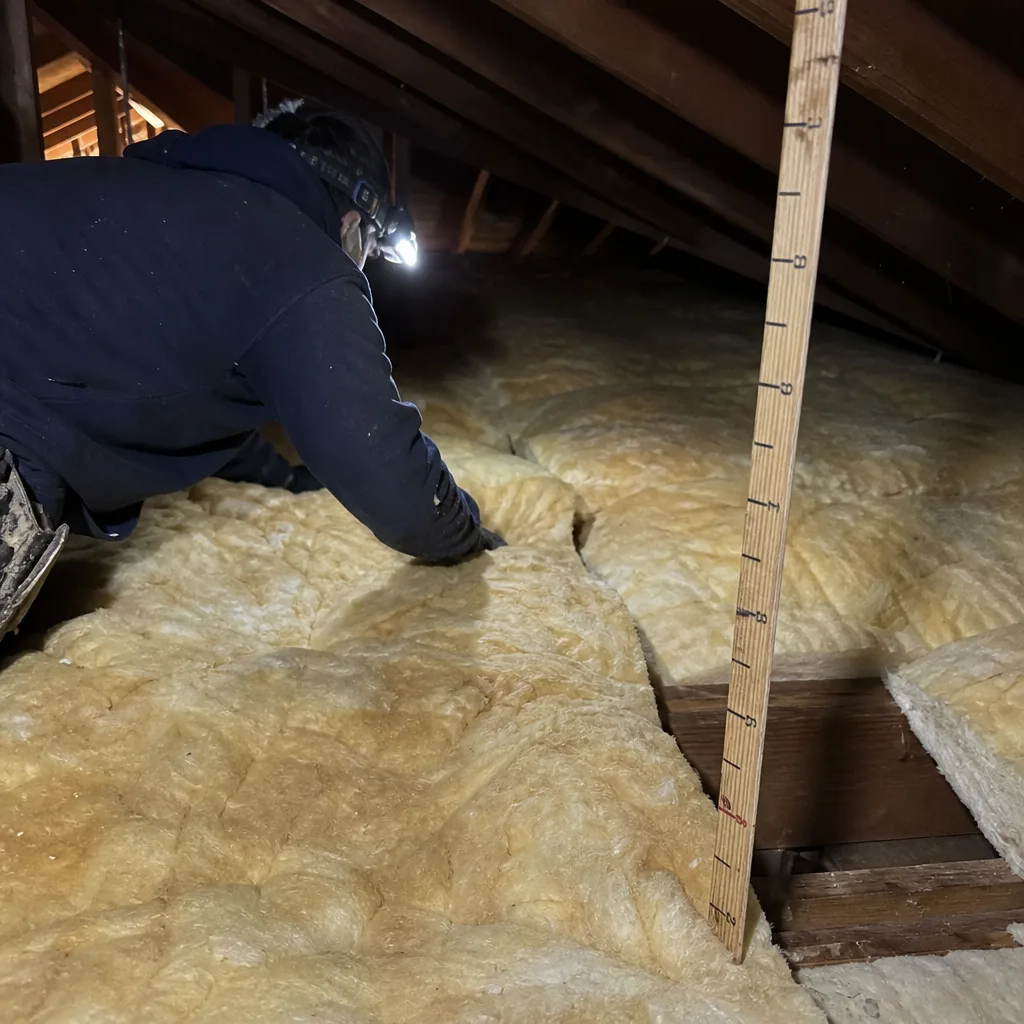
These ranges reflect Long Beach’s 2026 labor market, material costs from Owens Corning, Johns Manville, Knauf, and GreenFiber distributors, and our direct experience pricing jobs from Alamitos Beach to North Long Beach. Every range assumes a typical single-family home built 1940-1985, which describes most of Long Beach’s housing stock.
Attic Air Sealing
$0.40-$0.80 per square foot of attic floor area. This covers top-plate sealing with acoustic sealant or one-part foam, can-light covers (fire-rated where required), duct boot sealing, plumbing and electrical penetration foam, and baffle installation at eaves to maintain vent channel. A 1,200-square-foot attic runs $480-$960 for thorough sealing. Rushed jobs that spot-seal only the largest gaps fall at the low end; complete envelope sealing with smoke-pencil verification hits the high end.
Blown-In Insulation (Fiberglass or Cellulose)
$1.00-$1.60 per square foot per inch of settled depth. For R-38 (approximately 12 inches of fiberglass or 10 inches of cellulose), installed cost runs $1.80-$2.40 per square foot including material, labor, and basic prep. GreenFiber cellulose runs slightly higher material cost than Owens Corning fiberglass but offers better density and air-resistance at equal R-value. In Long Beach’s marine climate, cellulose’s moisture buffering is worth considering for attics with marginal ventilation.
Old Insulation Removal and Disposal
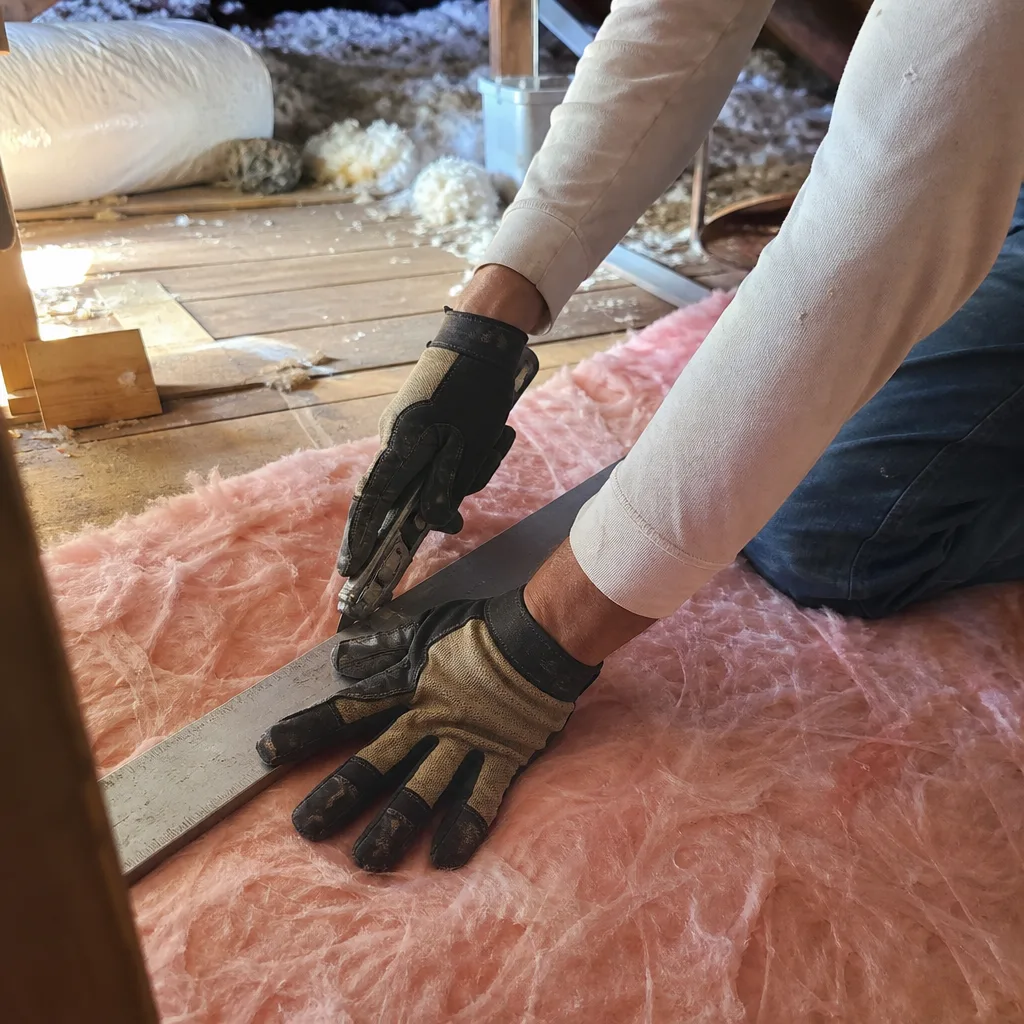
$0.60-$1.20 per square foot. Degraded, rodent-contaminated, or water-stained insulation must come out before new material goes in. This includes HEPA vacuum extraction, bagging, and disposal per California DTSC requirements. If your attic has active rodent issues, Attic Insulation in Long Beach should include rodent proofing as a separate scope, typically $400-$800 for entry-point sealing.
Spray Foam Insulation (Open-Cell)
$3.50-$5.00 per board foot installed. Open-cell spray foam, used at rim joists, cathedral ceilings, and select wall cavities, expands to fill irregular spaces and provides air sealing and insulation in one pass. A typical Long Beach home’s rim joist perimeter (1,800 linear feet at 9 inches tall, 3.5 inches thick) runs $1,650-$2,360 in open-cell foam. Spray Foam Insulation in Long Beach jobs at this price point should include substrate moisture verification; foam applied to damp surfaces delaminates.
Spray Foam Insulation (Closed-Cell)
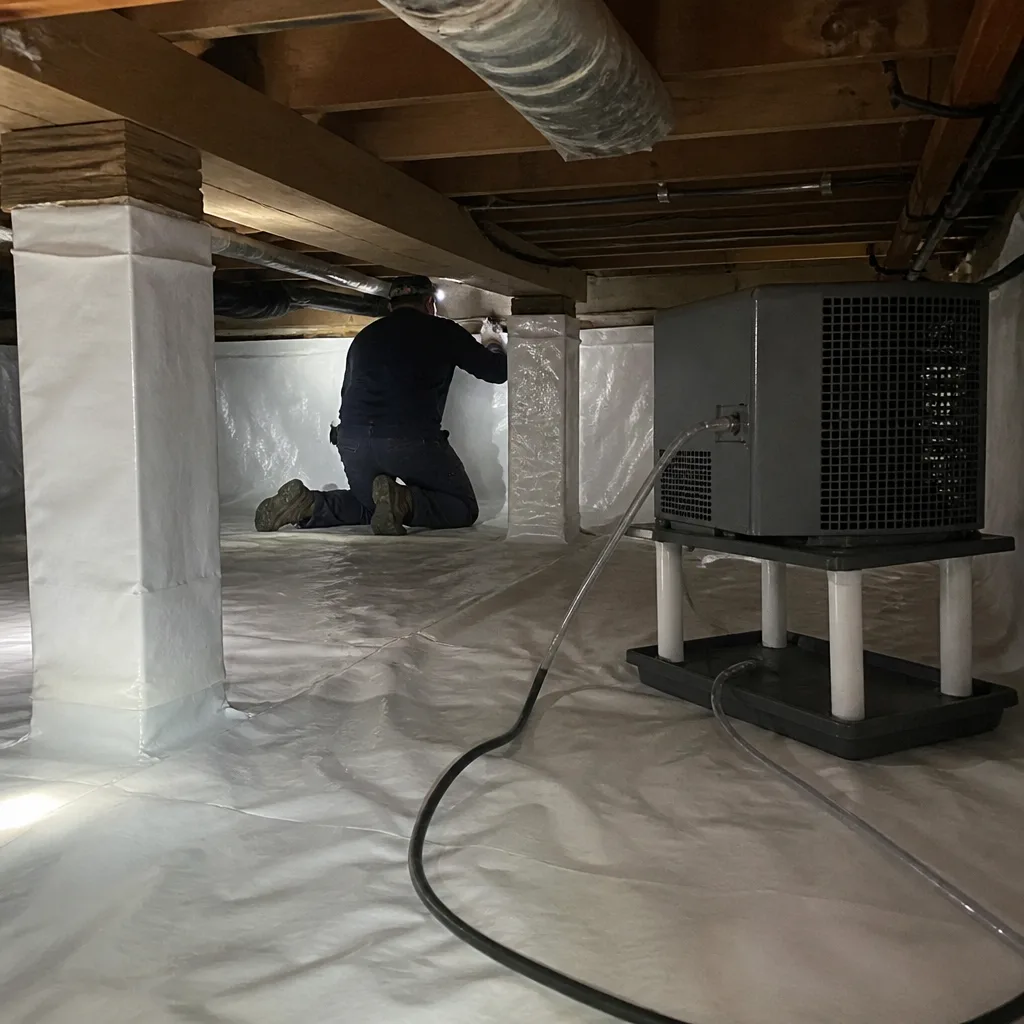
$5.00-$7.50 per board foot installed. Closed-cell’s higher R-value per inch (R-6.5 vs. R-3.6 for open-cell) and vapor-barrier properties suit crawl space walls, steel-frame applications, and limited-space installations. Most Long Beach residential jobs don’t require closed-cell except at Crawl Space Encapsulation & Vapor Barrier in Long Beach perimeters where ground moisture is chronic.
Dense-Pack Wall Insulation (Cellulose or Fiberglass)
$2.00-$3.50 per square foot of wall area. This retrofit technique drills holes at stud bays, blows material at 3.5 pounds per cubic foot (cellulose) to eliminate convection loops, and patches. A 1,500-square-foot home with 2,400 square feet of wall area runs $4,800-$8,400. Long Beach’s stucco exteriors require skilled patching to match texture; sloppy patchwork is the most common complaint we see on wall retrofit jobs.
Radiant Barrier Installation
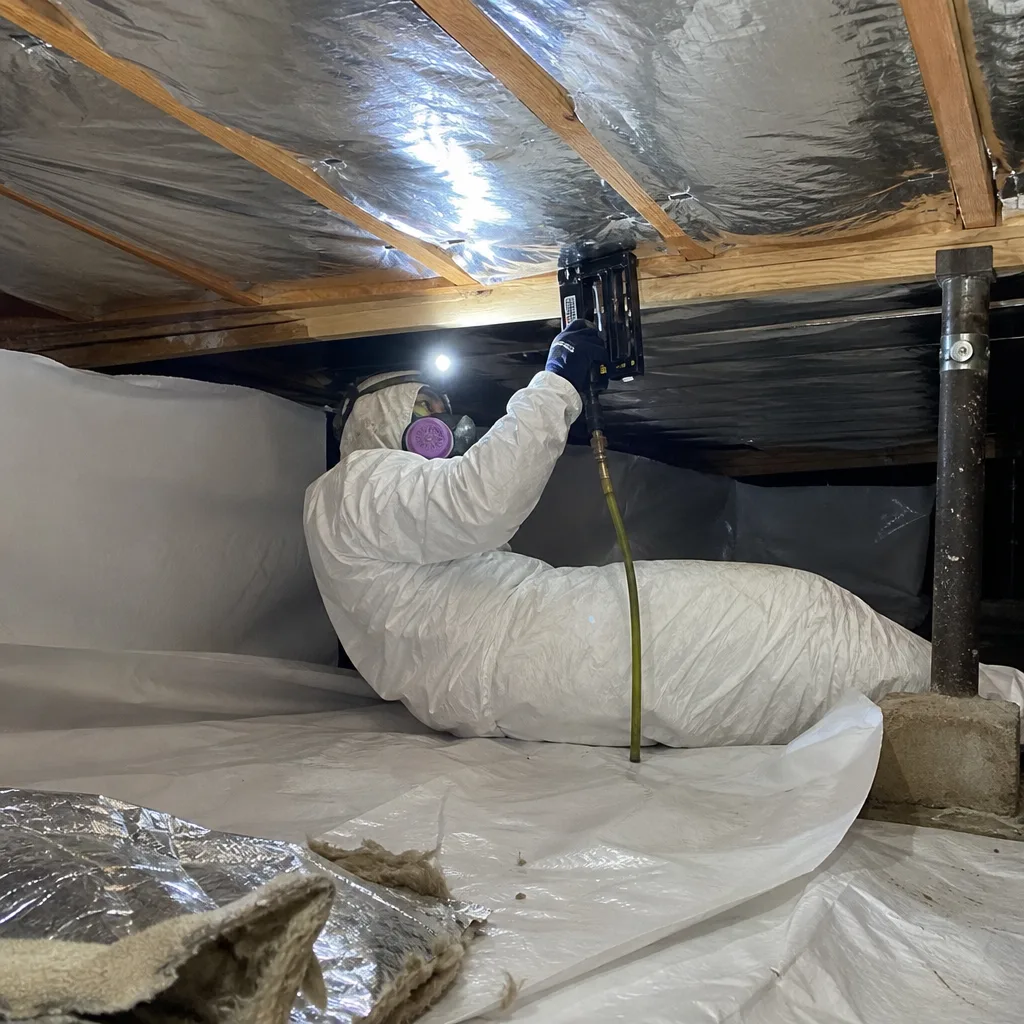
$0.75-$1.25 per square foot of roof deck. Stapled foil or sprayed low-emissivity coating reduces radiant heat gain in Long Beach’s sun-exposed attics. Best paired with adequate insulation; radiant barrier alone won’t compensate for R-19 in a 140°F attic.
Blower-Door Test (Standalone or Included)
$350-$550 as a standalone service; typically $150-$250 when bundled with insulation work. More on this in the next section.
Cost-per-R-Value: Comparing Materials on Equal Ground
Contractors quote different materials, and homeowners struggle to compare. The solution is cost per R-value per square foot, normalized to a standard thickness. Here’s how the four main materials stack up for a 1,200-square-foot attic floor at R-38:
| Material | R-value per inch | Inches needed for R-38 | Material cost/sq ft | Installed cost/sq ft | Cost per R-value |
|---|---|---|---|---|---|
| Blown fiberglass (Owens Corning AttiCat) | R-3.1 | 12.3″ | $0.45-$0.60 | $1.80-$2.20 | $0.047-$0.058 |
| Blown cellulose (GreenFiber, Knauf) | R-3.8 | 10.0″ | $0.55-$0.75 | $2.00-$2.50 | $0.053-$0.066 |
| Open-cell spray foam | R-3.6 | 10.6″ | $1.20-$1.60 | $3.50-$5.00 | $0.092-$0.132 |
| Closed-cell spray foam | R-6.5 | 5.8″ | $2.00-$2.80 | $5.00-$7.50 | $0.132-$0.197 |
Blown fiberglass wins on raw cost per R-value, but that calculation excludes air sealing performance. Cellulose at higher density resists airflow better. Spray foam integrates sealing and insulation but at premium cost. For most Long Beach attics, the optimal approach is hybrid: air seal with targeted foam, then blow fiberglass or cellulose to R-49. We’ve installed this combination in over 9,000 homes since 2016, and the blower-door numbers consistently show 35-50% reduction in air leakage.
One Long Beach-specific note: the marine layer’s moisture means attics near the water, from Bluff Park to Belmont Shore, need careful vapor management. Dense-pack cellulose in roof assemblies without proper drying potential can accumulate moisture. We specify borate-treated cellulose and verify attic ventilation meets 1:150 ratio before dense-packing any roof slope.
The Blower-Door Test: Cost, Purpose, and Why Some Contractors Omit It
A blower-door test, a pressurization reading that shows in one number how much air your building envelope is losing, costs $350-$550 as a standalone service in Long Beach. Bundled with insulation work, it’s typically $150-$250. The test depressurizes the house to 50 Pascals and measures airflow in CFM50, cubic feet per minute at that pressure difference.
Here’s why this matters more than any material specification. We recently worked a California Heights home where the pre-work blower-door reading was 4,200 CFM50, well above the 2,400 CFM50 target for a 1,800-square-foot house. After air sealing and R-49 cellulose, the reading dropped to 1,850 CFM50. Without the test, the homeowner would have known only that new insulation was installed, not that air leakage was cut by 56%. The post-work reading is the only objective documentation that the money spent changed the building’s performance.
Contractors omit blower-door tests for three reasons, and none serve the homeowner:
- Cost: The equipment runs $3,000-$5,000, training is specialized, and the test adds 45-60 minutes to the job.
- Liability: A pre-test documents how leaky the house was before the contractor touched it. Some prefer not to have that baseline recorded.
- Ignorance: Many insulation crews are installers, not building scientists. They don’t own the equipment and don’t understand what it measures.
Under the Haven Standard, every applicable job at Topside Attic Insulation Long Beach includes before-and-after blower-door readings in the Documented Photo Record delivered at completion. The homeowner receives the CFM50 figures, the photos, and the written scope as a single package. If a competing bid omits the test, add $400 to your comparison to price it equivalently, or accept that you’re buying insulation without verification.
SoCalGas and SCE Rebates for Long Beach Homeowners in 2026
California utility rebates can offset 10-30% of insulation costs, but the documentation requirements are specific and unforgiving. For 2026, Long Beach homeowners in Southern California Gas Company and Southern California Edison territory have two primary paths:
SoCalGas Energy Savings Assistance Program (ESAP)
Income-qualified households at or below 200% of federal poverty guidelines receive free attic insulation, air sealing, and health and safety measures. Eligibility is verified through tax returns or program participation (CalFresh, Medi-Cal, etc.). The contractor must be a SoCalGas-authorized service provider, and the work requires pre- and post-inspection by the utility.
SCE Home Energy Upgrade Program
Non-income-qualified homeowners can receive rebates of $0.15-$0.30 per square foot of insulation installed, with bonus incentives for comprehensive packages that include air sealing, duct sealing, and HVAC upgrade. A typical Long Beach home qualifies for $180-$540 in insulation rebates, with additional $200-$400 for whole-home packages.
Documentation Required
- Pre-installation photos showing existing conditions, including insulation depth measurements
- Itemized invoice with material types, R-values, and square footage
- Post-installation photos showing installed depth and coverage uniformity
- Air sealing checklist (if claimed as part of comprehensive package)
- Blower-door test results (required for highest-tier rebates)
The contractor must provide this documentation. If your bid doesn’t mention rebate documentation, ask directly: “Will you provide the photos and test results SCE requires?” We’ve handled rebate paperwork for hundreds of Long Beach jobs. The 365-Day Done Right Promise covers documentation accuracy, if a rebate is denied due to contractor error, we correct it.
How to Structure a Counter-Proposal Without Cutting Performance
Not every high bid is inflated. But some line items have legitimate negotiation room, and others are structural cuts that undermine the project. Here’s our field-tested guidance from nine years of bid reviews.
Line Items With Negotiation Room
- Material brand substitution: Owens Corning fiberglass and Johns Manville fiberglass perform equivalently at equal density. If one bid specifies a premium brand, ask for the alternative. Savings: $0.10-$0.20 per square foot.
- R-value reduction within performance range: R-49 to R-38 saves 15-20% on material with modest performance impact in Long Beach’s mild climate. We don’t recommend below R-38, but the step from R-49 to R-38 is negotiable.
- Phased execution: Seal and insulate the attic now, defer wall dense-packing to a later year. This preserves the critical air sealing work while spreading cost.
Line Items That Cannot Be Cut Without Damage
- Air sealing: Blowing insulation over unsealed leaks buries problems and makes future access harder. Every dollar “saved” here is performance destroyed.
- Old insulation removal when contaminated: Rodent droppings, moisture damage, or asbestos-suspect material (pre-1990 vermiculite) must be removed per California code. Covering it is illegal and hazardous.
- Blower-door verification: The only proof the work performed. Omitting it saves $200 and eliminates accountability.
How to Present Your Counter-Proposal
- Request the bid in itemized form if not already provided. Haven Standard Clause 1 requires written scope and price; any contractor resisting itemization is a red flag.
- Identify your target reduction, 10-15% is reasonable for scope adjustments.
- Propose specific trades, “Substitute Johns Manville for Owens Corning and reduce to R-38” rather than “Can you do better on price?”
- Request the revised scope in writing before work starts. Verbal concessions evaporate when the crew arrives.
We offer a Free Second Opinion on any written estimate. Bring us a competing quote and we’ll read it with you, line by line, and identify what’s equivalent, what’s omitted, and what’s overpriced. No obligation to hire.
Long Beach Climate and Neighborhood Notes That Affect Your Bid
Long Beach’s geography creates microclimates that change insulation priorities. The marine layer penetrates differently, attic ventilation performs differently, and housing stock varies significantly by neighborhood. Our Seasonal Insulation Care for Long Beach: Year-Round Homeowner’s Guide covers how these factors shift through the year.
Alamitos Heights, Belmont Heights, Bluff Park: Pre-war construction with balloon framing, minimal original insulation, and ornate plaster interiors. Wall retrofit access is limited; dense-pack through exterior is often the only viable path. Attic floors are frequently smaller but leakier due to balloon framing’s continuous stud bays. Budget 20% premium for careful access work.
Bixby Knolls, California Heights, Lakewood Village: Post-war tract housing, 1945-1965, with predictable 2×4 construction and accessible attics. The sweet spot for cost-effective upgrade. Many homes have some original rock wool or early fiberglass that must be removed. Standard pricing applies.
North Long Beach, Wrigley: Larger lots, 1950s-1970s ranches with substantial attic area and minimal shading. Summer attic temperatures here exceed 145°F, making radiant barrier and R-49 insulation particularly cost-effective. Watch for ductwork in attics, a common efficiency killer that air sealing alone won’t fix.
Downtown, East Village, Waterfront: Mixed-age construction including condos and townhomes with HOA coordination requirements. Access restrictions, parking logistics, and HOA approval timelines add administrative cost. Verify your contractor carries appropriate commercial general liability for multi-family work.
Long Beach’s Title 24 climate zone is 8, which sets R-38 as attic minimum and R-13 as wall minimum for new construction. Retrofit work isn’t required to meet new-construction standards, but we quote to performance levels that actually change utility bills, not code minimum that satisfies inspectors and disappoints homeowners. See Insulation Permits, Codes & Inspections in CA: What You Need to Know for regulatory details.
Common Mistakes to Avoid
- Accepting a “per-inch” quote without settled depth specification. Blown insulation settles 10-20% after installation. The bid must specify settled R-value, not blown thickness, or you’ll receive less performance than quoted.
- Ignoring can lights in vaulted ceilings. Non-IC-rated recessed lights in Long Beach’s many mid-century vaulted ceilings create direct thermal bypasses. Covering them with insulation risks fire; leaving them open leaks conditioned air. Proper covers add $25-$40 each but are non-negotiable.
- Skipping the pre-work blower-door test to save money. Without the baseline, you cannot prove improvement occurred. We’ve seen contractors claim “50% better” with no measurement; the actual figure was 12%.
- Assuming all spray foam is equal. Open-cell and closed-cell serve different purposes. Using open-cell in a crawl space with groundwater intrusion invites moisture absorption. Using closed-cell in an attic roof deck prevents drying and can rot sheathing. Material selection must match location.
- Neglecting attic ventilation when adding insulation. Adding R-49 over a poorly vented attic in Long Beach’s humid marine climate traps moisture. Baffles at eaves, adequate ridge or gable venting, and 1:150 free vent area ratio are required companions to insulation, not optional extras.
- Hiring based on lowest bid without scope comparison. The $2,200 bid that excludes sealing, removal, and verification is not cheaper than the $3,400 complete job. It’s a different product entirely.
When to Call a Professional
Call when your energy bills spike without usage change, when rooms have persistent temperature stratification, when you find compressed or water-stained insulation in the attic, or when you’re considering any HVAC upgrade. A furnace or AC replacement without envelope improvement is performance left on the table. Topside Attic Insulation Long Beach offers free estimates in Long Beach, call (424) 415-7031. Every estimate includes a written scope and written price before any work starts, and our Documented Photo Record shows you exactly what was found and what was changed. Calls are answered by a live person, 24/7.
Frequently Asked Questions
A complete attic insulation job in Long Beach runs $2,800-$4,800 for a 1,200-square-foot attic floor, including air sealing, material to R-38 or R-49, and blower-door verification. Blown-in fiberglass or cellulose at the attic floor is the most common approach. Call (424) 415-7031 for a written estimate on your specific home, estimates are free.
Repair is rarely cost-effective. Spot-adding insulation over degraded or uneven existing material creates thermal bypasses and hides problems. Removal and replacement with uniform new material, properly sealed, typically costs only 15-25% more than spot repair and delivers measurably better performance. We document the existing condition with photos before recommending either path.
Yes. SCE offers $0.15-$0.30 per square foot for insulation, with bonus incentives for comprehensive packages including air sealing. SoCalGas provides free weatherization for income-qualified households. The contractor must provide pre- and post-installation photos, itemized invoices, and blower-door results. We handle this documentation on every qualifying job.
Look for specific line items: top-plate sealing, can-light covers, duct boot sealing, penetration foam, and baffle installation. A generic “prep” or “attic preparation” line without detail typically means minimal or no sealing. Under the Haven Standard, air sealing is never optional and never buried in vague language.
Most homeowners see 15-25% heating and cooling reduction, with payback in 4-7 years at current utility rates. Homes with ductwork in the attic, common in North Long Beach and Wrigley, see faster payback because sealing and insulating the attic also reduces duct losses. The blower-door test quantifies your specific leakage and projects savings more precisely than rules of thumb.
No, and any contractor who can is skipping steps. We provide a written price at the estimate, but installation requires material ordering, crew scheduling, and in some cases HOA or permit coordination. Typical lead time is 5-10 business days. Emergency situations, active rodent infestation or water damage, get priority scheduling.
The Bottom Line
Insulation cost in Long Beach isn’t a single number. It’s a stack of line items, air sealing, material, removal, verification, and documentation, that together determine whether your investment performs or disappoints. The 40-60% bid spread reflects real scope differences, not arbitrary markup. The lowest bid usually excludes the sealing that makes insulation work, the blower-door test that proves it worked, and the documentation that secures your rebate. Start with a written scope that specifies each element, compare cost-per-R-value on equal terms, and demand verification in numbers you can read. Explore more guides & resources on getting insulation right. The Haven Standard exists because every homeowner deserves to know what they bought, what it cost, and what changed.
Written by Wes Okafor, Owner at Topside Attic Insulation Long Beach, serving Long Beach since 2016.