
Last updated September 23, 2026
Insulation Permits, Codes & Inspections in CA: What You Need to Know
A Long Beach insulation job that replaces existing material in an attic can legally skip a permit in some cases - but the same job triggers mandatory compliance with Title 24’s 2022 requirements the moment a contractor disturbs the air barrier or modifies HVAC equipment, a line most homeowners don’t know exists. We’ve pulled permits for over 9,000 homes since 2016, and the gap between what contractors quote as “code minimum” and what inspectors actually measure is where underperforming work hides. This guide walks through which jobs trigger a permit, what Long Beach building inspectors check, and how to use your permit record as leverage after the crew leaves. For more guides & resources on insulation and home efficiency, visit our blog.
Quick Answer
Most insulation work in California falls under Title 24 energy code compliance, but only projects that alter the building envelope, change insulation type or R-value, or involve HVAC modifications require a Long Beach building permit. Permitted jobs need a HERS rater or certified inspector to verify installation against the approved plans, and homeowners should retain the original CF-2R Certificate of Compliance and CF-6R Installation Certificate - not contractor copies - as proof of code-compliant work.
Table of Contents
- Which Insulation Jobs Require a Permit in Long Beach?
- Title 24 2022 vs. 2019: Which Code Cycle Applies to Your Job
- What a Long Beach Building Inspector Actually Checks
- CF-2R and CF-6R: The Documents That Protect You
- When Contractors Skip Permits: Who Carries the Liability
- How to Use Your Permit Record After the Job Is Done
- Common Mistakes to Avoid
- When to Call a Professional
- Frequently Asked Questions
Which Insulation Jobs Require a Permit in Long Beach?
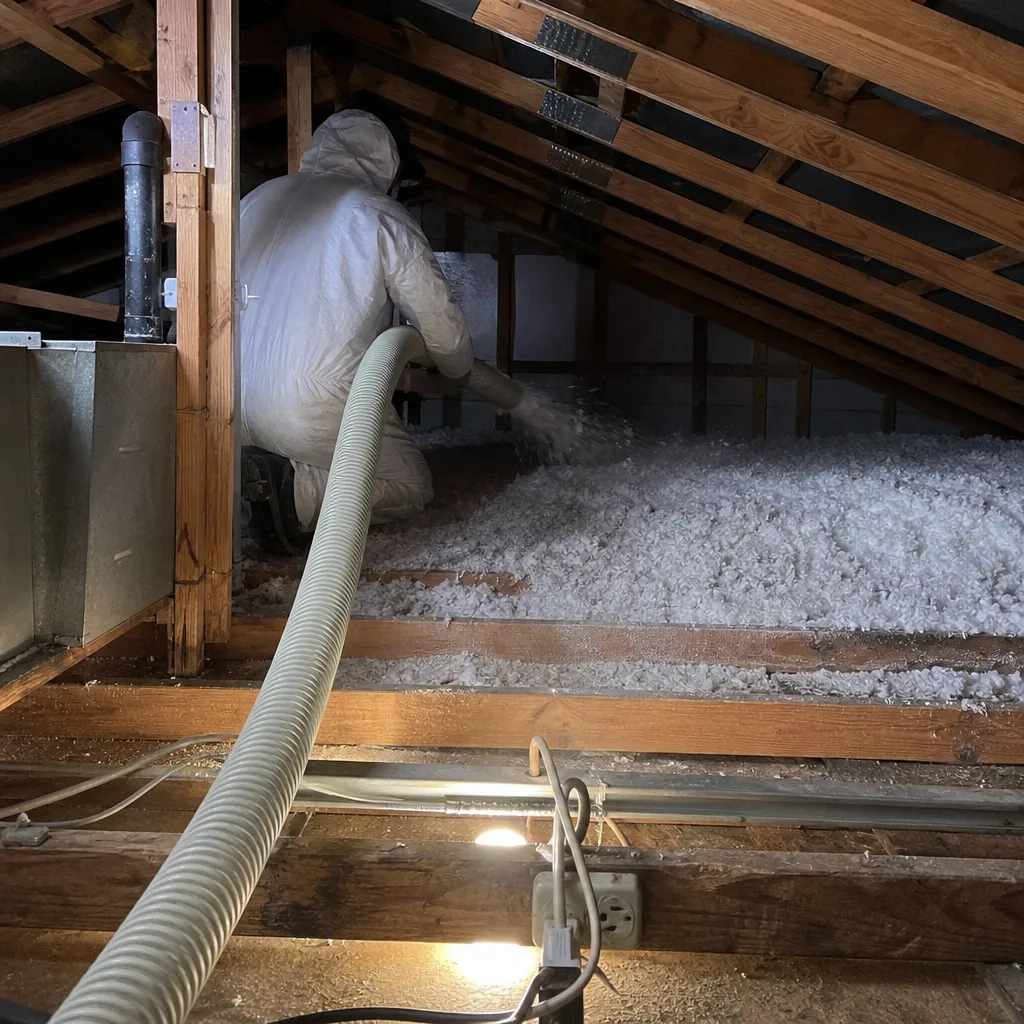
Not every insulation project needs a building permit, but the threshold is narrower than most contractors admit. Understanding where your job sits on this matrix protects you from both unnecessary fees and from work that lacks legal standing.
Jobs That Typically Do NOT Require a Permit
Like-for-like replacement - removing old fiberglass batts and installing new batts of the same R-value in the same cavity - generally qualifies as maintenance, not construction. The Long Beach Development Services Department treats this as repair work provided the building envelope isn’t modified and no HVAC equipment is touched. We’ve seen this most often in Belmont Heights and Belmont Shore, where 1940s bungalows need attic top-offs after decades of settling.
Key conditions for permit exemption:
- Same insulation material type (batts for batts, loose-fill for loose-fill)
- Same or lower R-value - never higher, which triggers energy compliance review
- No alteration to top plates, soffits, or other air-barrier components
- No modification to ductwork, exhaust fans, or combustion venting
- No change to conditioned vs. unconditioned space boundaries
Jobs That ALWAYS Require a Permit
The moment you cross certain lines, permit exemption disappears. In Long Beach’s climate zone 8 - marine-influenced with mild winters and significant cooling loads - these triggers are common:
- Changing insulation type or R-value: Upgrading from R-19 batts to R-38 blown-in, or switching from fiberglass to spray foam, requires a permit because it alters the thermal performance calculation filed with the state.
- Air sealing work on the pressure boundary: Sealing top plates, can lights, and penetrations - which we complete before any insulation goes in - changes the blower-door result and therefore the energy model.
- HVAC modifications: Moving ducts, adding a return, or upsizing equipment all trigger Title 24 compliance review.
- Conditioned attic conversions: Converting a vented attic to conditioned space with spray foam insulation in Long Beach is a full building permit with fire-resistance and ventilation requirements.
- Crawl space encapsulation: Installing a vapor barrier and sealing crawl space vents changes moisture management and requires review - see our Crawl Space Encapsulation & Vapor Barrier in Long Beach page for scope details.
The 2022 Title 24 cycle added a critical wrinkle: any work that “disturbs the thermal envelope” now requires a HERS-verified installation certificate, even if a full building permit isn’t triggered. Many Long Beach contractors still operate under 2019 assumptions and miss this.
Title 24 2022 vs. 2019: Which Code Cycle Applies to Your Job
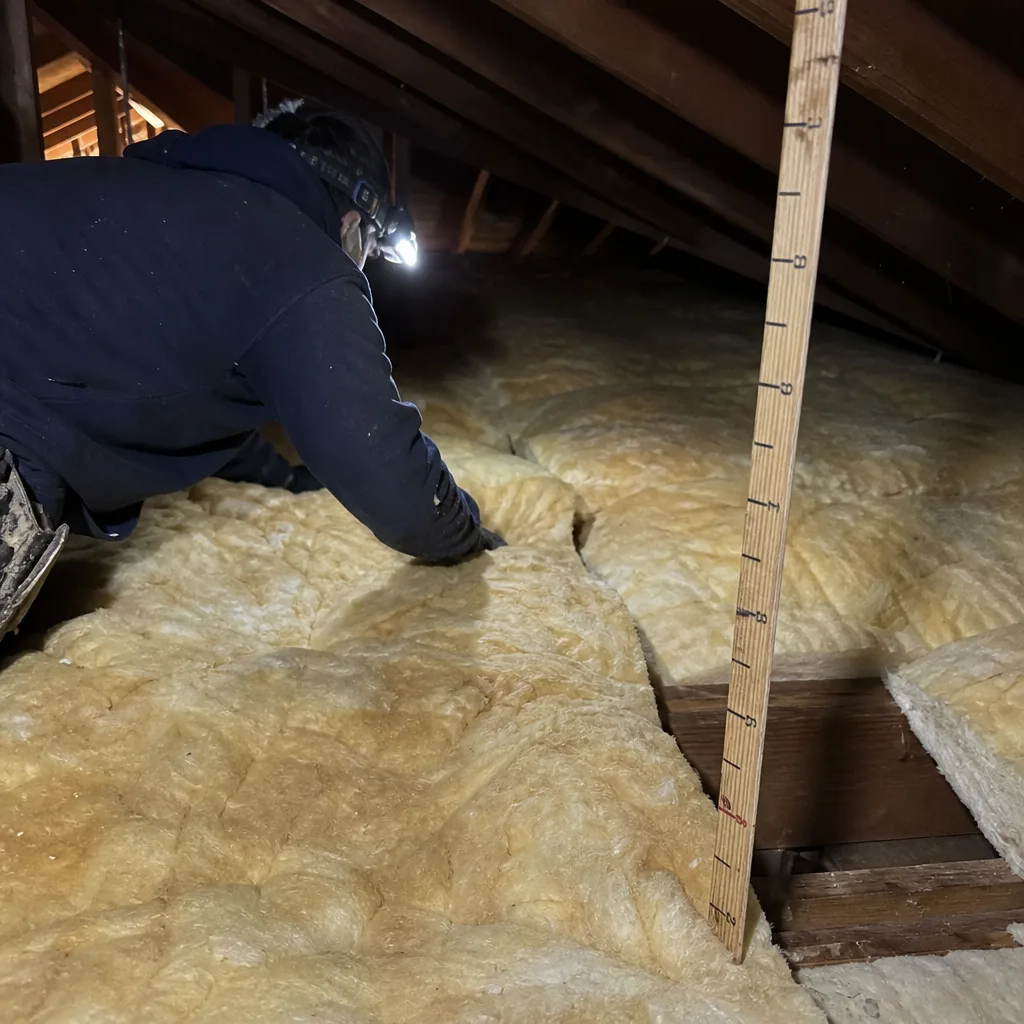
Here’s where homeowners get burned: the code cycle that governs your job isn’t determined by when you sign the contract or when work starts. It’s locked to the permit submission date.
The Submission Date Rule
California’s Building Standards Code operates on three-year cycles. The 2022 cycle took effect January 1, 2023, with a six-month grace period for permits submitted under 2019 standards. As of July 2023, all new permit submissions in Long Beach fall under 2022 Title 24, Part 6 - the energy efficiency standards.
What changed between cycles matters for insulation work:
| Requirement | 2019 Cycle | 2022 Cycle |
|---|---|---|
| Attic insulation minimum R-value (wood frame) | R-38 | R-49 in most climate zones; R-38 only with specific prescriptive exceptions |
| High-performance attic option | Allowed with R-30 + radiant barrier | Restricted; requires whole-building performance compliance path |
| Air sealing verification | Blower-door test optional for some prescriptive paths | Mandatory blower-door test for all new construction; strongly encouraged for alterations |
| HERS rater involvement | Required for new construction, some alterations | Expanded to cover most envelope modifications |
| Installation certificate (CF-6R) | Required for HERS-verified measures | Required for all insulation and air-sealing work |
We’ve reviewed competitor quotes in Long Beach’s Lakewood Village and California Heights neighborhoods where contractors specified “R-38 attic, code minimum” in 2024 - citing 2019 standards that no longer apply. The homeowner gets a permit based on outdated specs, the inspector flags it, and the project stalls while someone pays for revised plans.
The Performance Path vs. Prescriptive Path
Title 24 offers two compliance routes. The prescriptive path follows a checklist: R-49 in attics, R-19 in walls, specific U-factors for windows. The performance path uses computer modeling to show the proposed building meets equivalent energy use.
Most Long Beach insulation contractors default to prescriptive because it’s simpler. But older homes in neighborhoods like Rose Park or Wrigley - with uninsulated walls, single-pane windows, and minimal attic access - often can’t meet prescriptive requirements without extreme measures. The performance path, modeled by a HERS rater, might allow R-38 attic insulation with aggressive air sealing to achieve equivalent savings.
We run blower-door tests before quoting performance-path jobs. The starting CFM50 reading - a pressurization measurement that shows, in one number, how much air your building envelope is losing - tells us whether air sealing alone can close the gap or whether full cavity insulation is necessary. Without that number, performance-path modeling is guesswork.
What a Long Beach Building Inspector Actually Checks
There’s a persistent myth that insulation inspections are visual only - a quick attic glance and a signature. That hasn’t been true in Long Beach since Title 24’s 2019 cycle, and the 2022 standards made verification more rigorous.
What Inspectors Measure, Not Just Observe
A Long Beach building inspector conducting a rough or final inspection for insulation work will verify:
- Insulation type and R-value against the approved plans - not the contractor’s word. Batts must show printed R-value markings; loose-fill requires manufacturer certification and depth markers installed every 300 square feet.
- Coverage completeness - no gaps, compression, or voids around obstructions. In Long Beach’s coastal climate, where marine layer moisture can penetrate incomplete coverage, this matters for mold risk as much as energy loss.
- Attic ventilation balance - intake at soffits, exhaust at ridges or gables, with no insulation blocking airflow paths. We see this violated constantly in Bixby Knolls ranch homes where blown-in covers soffit vents.
- Recessed light clearance - IC-rated cans can contact insulation; non-IC require three inches clearance and baffling. Many 1960s Long Beach homes have mixed can types that homeowners don’t know about.
- Combustion safety zones - insulation must maintain clearances around furnace flues, water heater vents, and chimney penetrations. This is where DIY jobs and low-bid contractor work most often fail.
What Inspectors Do NOT Check (But Should Concern You)
The inspector verifies code compliance, not quality optimization. They won’t flag:
- Air sealing quality - the CFM50 reduction from sealing top plates and penetrations is HERS-verified, not building-inspector verified
- Insulation contact with air barrier - whether the material actually touches the drywall or leaves a convection gap
- Material sourcing - whether your “Owens Corning” quote actually uses that brand or a substitute
This gap between “passes inspection” and “performs well” is why we publish before-and-after blower-door numbers on every applicable job. A home can pass visual inspection at 4,200 CFM50 and still leak twice the conditioned air of a sealed home at 2,100 CFM50.
The HERS Rater’s Role
For jobs requiring HERS verification - which now includes most envelope alterations under 2022 Title 24 - a certified HERS rater operates independently of the building inspector. They conduct:
- Pre-installation inspection of the existing envelope and documentation review
- Mid-installation verification of air-sealing details (if specified in the energy model)
- Post-installation blower-door test and infrared scan for thermal bypasses
- Completion of CF-6R Installation Certificate with field-measured values
The HERS rater reports to the California Energy Commission database, not to the contractor. This independence is your protection against inflated performance claims.
CF-2R and CF-6R: The Documents That Protect You
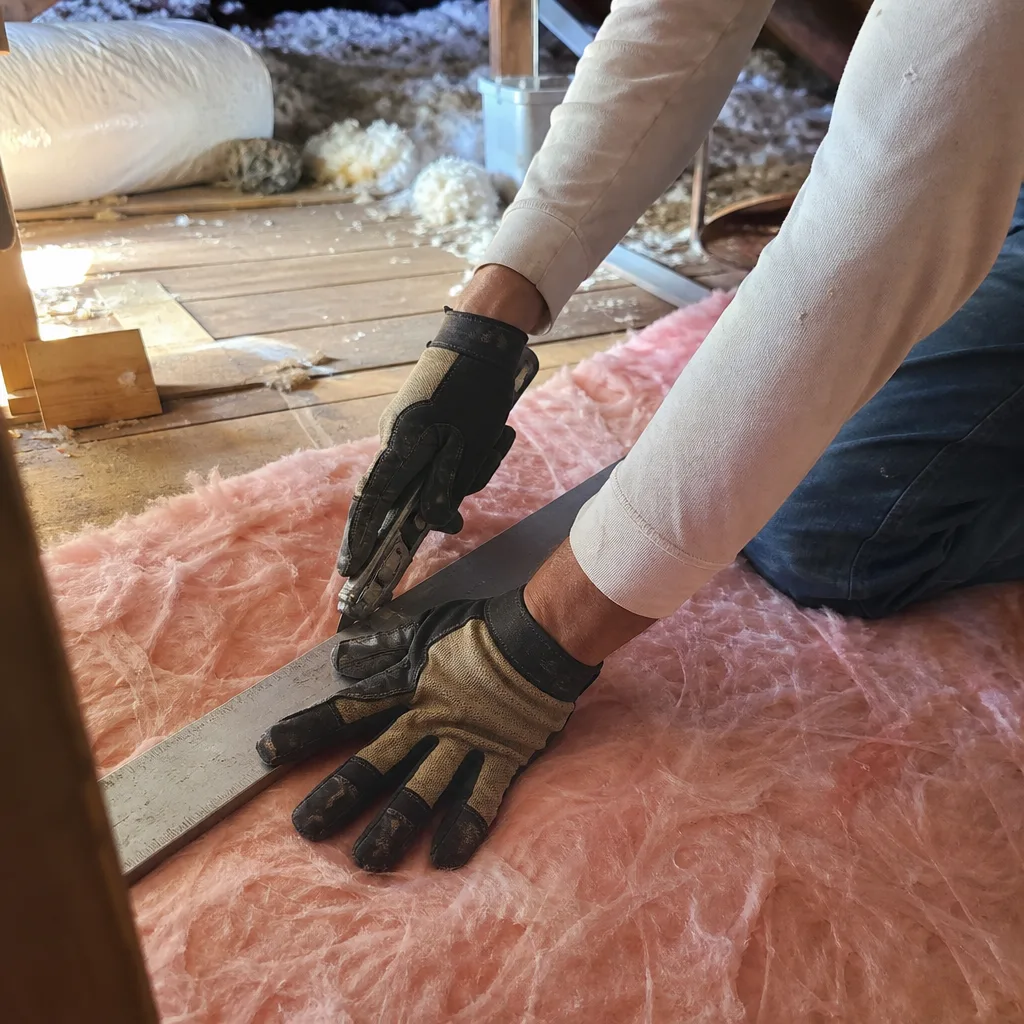
California’s energy compliance documentation is a two-part system that most homeowners never see complete. Understanding what each document does, and why you need originals, separates protected customers from those with no recourse.
CF-2R: Certificate of Compliance
The CF-2R is the design document - the energy model that predicts how your home will perform. It’s completed by a HERS rater or certified energy consultant before work begins, based on:
- Existing building characteristics (if alteration) or proposed construction (if new)
- Insulation R-values and locations
- Air leakage target (CFM50) if using performance path
- HVAC equipment efficiency ratings
The CF-2R gets filed with your permit application. It becomes the benchmark against which your actual installation is measured. Without it, there’s no defined standard for “compliance.”
CF-6R: Installation Certificate
The CF-6R is the field verification - the proof that what was installed matches what was designed. It includes:
- Actual R-values and coverage areas
- Blower-door test results (where required)
- Photographic documentation of critical details
- HERS rater certification number and signature
Under 2022 Title 24, the CF-6R is mandatory for all insulation and air-sealing work, not just new construction. This is the change most Long Beach contractors haven’t internalized.
Why You Need Originals, Not Contractor Copies
We’ve seen this scenario repeatedly: homeowner sells their Long Beach home, buyer’s inspector asks for energy compliance documentation, homeowner contacts the contractor who did the work three years prior. The contractor is out of business, or claims “we never got the final paperwork,” or sends a blurry photocopy that the title company rejects.
Original CF-2R and CF-6R documents - the ones with original signatures and HERS rater certification numbers - are your legal proof of code-compliant installation. They transfer with the property and may be required for:
- Refinance appraisals that include energy efficiency valuation
- Sale disclosures in jurisdictions requiring energy compliance verification
- Utility rebate programs with multi-year documentation requirements
- Insurance claims where installation quality is disputed
- Warranty claims against contractors who performed non-compliant work
Under Haven Standard: Have it in writing. We deliver original CF-2R and CF-6R documents with every permitted job, along with our written scope, written warranty, and Documented Photo Record. You should demand this from any contractor.
When Contractors Skip Permits: Who Carries the Liability
The permit threshold matrix isn’t just bureaucratic trivia. It defines liability when work goes wrong, and the allocation surprises most homeowners.
The Contractor’s Legal Exposure
California Business and Professions Code Section 7110 makes it a misdemeanor for a contractor to perform work requiring a permit without obtaining one. The contractor faces:
- Fines up to $5,000 per violation
- Potential license suspension by the Contractors State License Board
- Criminal charges for willful violations
But here’s what homeowners miss: the contractor’s legal exposure doesn’t automatically protect you. If unpermitted work causes damage - a fire from insulation contacting a non-IC can, moisture damage from blocked ventilation, carbon monoxide from altered combustion venting - your homeowner’s insurance may deny the claim based on unpermitted alteration.
Your Liability as Property Owner
Long Beach’s municipal code places ultimate responsibility for permit compliance on the property owner, not the contractor. The city can:
- Issue a notice of violation requiring removal or modification of unpermitted work
- Place a hold on future permits until compliance is achieved
- Assess penalties that accumulate daily until correction
We’ve been called to Long Beach homes where the previous owner’s unpermitted attic insulation - done by a contractor who skipped the permit to “save money” - had to be completely removed before the new owner could get a permit for unrelated kitchen work. The cost of compliance exceeded the original job price.
Remedies When You Discover Unpermitted Work
- Contact the contractor in writing - email or certified mail, not text - requesting they pull a retroactive permit and arrange inspection. Document everything.
- File a complaint with the CSLB if the contractor refuses. The board has authority to compel permit compliance as a condition of license retention.
- Consult your homeowner’s insurance about coverage for necessary corrective work, understanding that unpermitted status may limit or exclude coverage.
- Hire a HERS rater independently to assess whether the installed work meets current code, even if installed under older standards. This creates documentation for any legal action.
- Consider small claims or civil court for recovery of correction costs, using the CSLB complaint record and HERS assessment as evidence.
The 365-Day Done Right Promise we offer exists partly because we’ve seen what happens when contractors disappear. If it’s not done right, we make it right - but that promise requires the work to be ours, documented, and traceable. Unpermitted work from unknown contractors often has none of these protections.
How to Use Your Permit Record After the Job Is Done
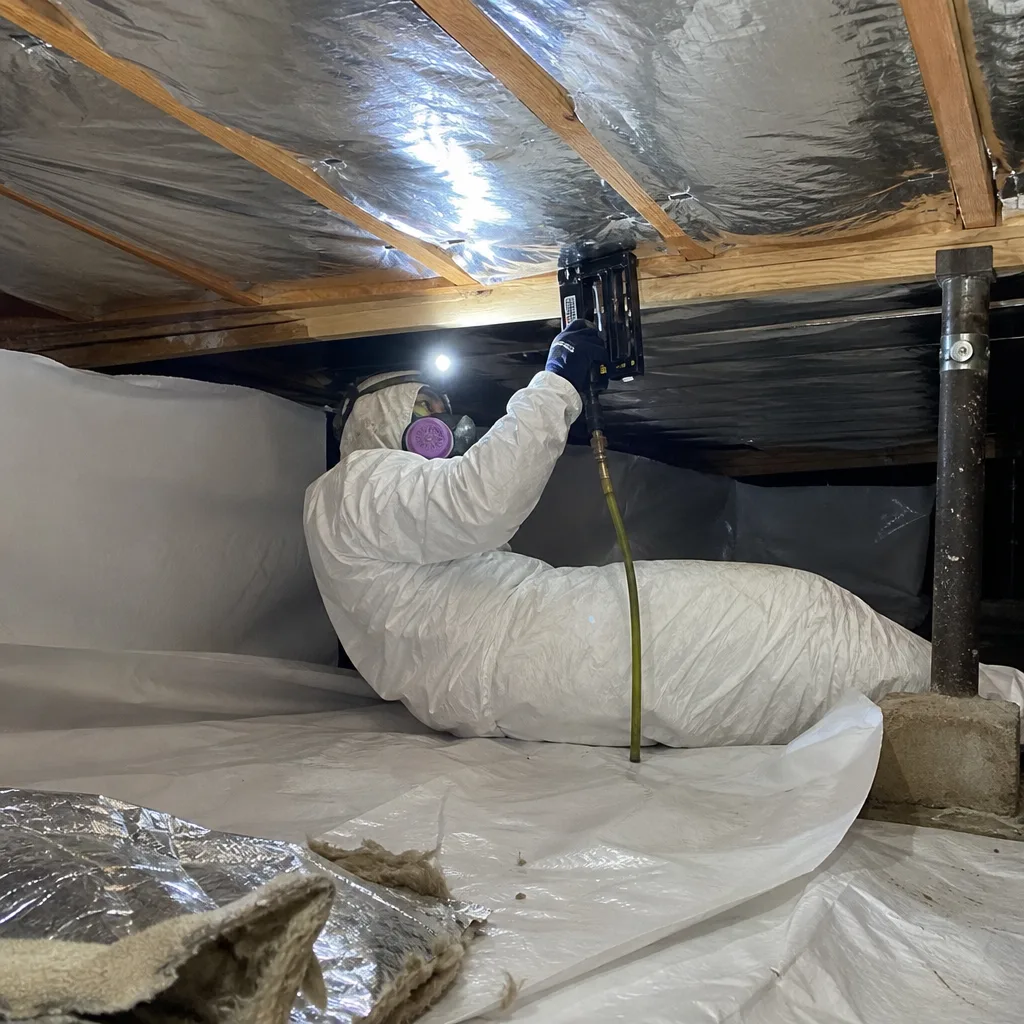
A permit isn’t just pre-work bureaucracy. It’s a permanent record that creates ongoing value if you know how to use it.
During Ownership: Warranty and Performance Verification
The permit record ties your installation to a specific code cycle, inspector, and HERS rater. When we complete attic insulation in Long Beach, we provide:
- Permit number and inspection sign-off dates
- CF-2R and CF-6R with original signatures
- Before-and-after blower-door readings on applicable jobs
- Documented Photo Record of installation details
If your energy bills don’t reflect the predicted savings, this documentation lets us - or any subsequent contractor - diagnose whether the installation matches the design. Without it, we’re guessing.
At Sale: Disclosure and Value Protection
California’s Transfer Disclosure Statement asks about alterations and permits. A clean permit record:
- Eliminates buyer negotiation leverage for “unknown” work
- Supports energy efficiency claims with verified documentation
- Prevents sale delays from title company permit holds
In Long Beach’s competitive market, where homes in Naples and the Peninsula sell quickly, a permit hold can derail closing timelines. We’ve had sellers call us in panic because a $3,000 unpermitted insulation job from five years ago became a $15,000 closing-delay problem.
For Rebates and Incentives
Southern California Edison and Gas Company rebate programs increasingly require permit verification for insulation incentives. The permit record with CF-6R completion is the standard documentation. Self-installed or unpermitted work generally disqualifies.
Common Mistakes to Avoid
- Accepting “permit included” without seeing the permit number. Some contractors absorb permit costs but never file. Always verify the permit is pulled in your name with the Long Beach Development Services Department before work begins.
- Assuming like-for-like replacement exempts Title 24 compliance. Even permit-exempt jobs must meet current energy standards if they disturb the air barrier or modify HVAC. Ask specifically which code cycle governs.
- Letting the contractor keep original compliance documents. You paid for the work; you own the proof. Original CF-2R and CF-6R documents should be in your files, not the contractor’s truck.
- Ignoring the blower-door number. A contractor who won’t measure air leakage before and after sealing can’t prove improvement. In Long Beach’s older housing stock, air sealing often delivers more comfort gain than additional insulation.
- Signing off on final inspection without personal verification. Visit the attic. Check depth markers on loose-fill. Verify can light clearances. The inspector’s sign-off protects code compliance; your eyes protect your specific job.
- Assuming all HERS raters are equal. Verify certification through the California Energy Commission’s online database. Expired or lapsed certification invalidates your CF-6R.
- Taking the lowest bid without documentation comparison. A $200 lower quote that lacks written scope, written warranty, and permit inclusion isn’t cheaper - it’s uninsured.
When to Call a Professional
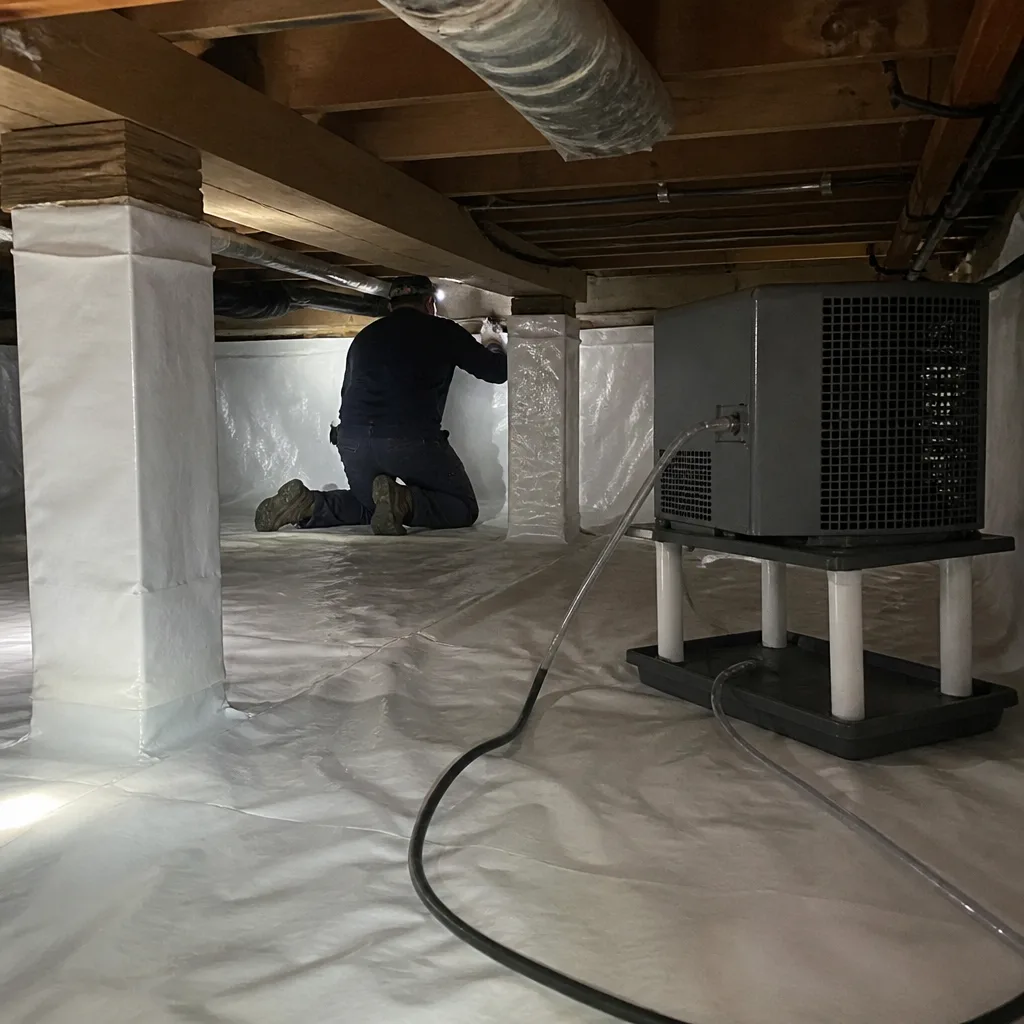
Call a professional when your job crosses any permit threshold, when your home was built before 1980 and has never had a blower-door test, or when you’re comparing quotes that specify different R-values or code cycles. The cost of a consultation is negligible against the cost of unpermitted work removal.
Topside Attic Insulation Long Beach offers free estimates in Long Beach - call (424) 415-7031. Every estimate includes a written scope, written warranty, and flat price before any work starts. We pull permits when required, publish before-and-after blower-door numbers on applicable jobs, and deliver original compliance documents with every permitted project. Ask us about our Attic Insulation Maintenance Checklist for Long Beach Homeowners to protect your investment long-term. Background-checked, uniformed technicians; calls answered by a live person, 24/7.
Frequently Asked Questions
Permit fees for insulation-only alterations typically run $150-$400 depending on project valuation, with an additional $75-$150 for HERS rater coordination if required. Call (424) 415-7031 for an exact quote on your specific scope - estimates are free.
Homeowner-performed work follows the same permit thresholds as contractor work. Like-for-like replacement in your own home is generally exempt, but changing R-value, insulation type, or disturbing the air barrier triggers the same permit and compliance requirements. Owner-builders must still obtain HERS verification where Title 24 requires it.
The property owner bears ultimate responsibility for permit compliance in Long Beach. If the city issues a violation, you’ll need to either compel the contractor to pull a retroactive permit (file a CSLB complaint if they refuse) or hire a new contractor to legalize the work. Retain all documentation and communications for any legal recovery action.
The governing cycle is determined by permit submission date, not project start date. Permits submitted before July 1, 2023 could use 2019 standards with approved extensions; all submissions after that date fall under 2022 Title 24, Part 6. Verify with Long Beach Development Services when your permit is pulled.
Under 2022 Title 24, most envelope alterations including attic insulation require HERS-verified installation certificates. The prescriptive path for simple R-value increases may not require full HERS modeling, but the CF-6R installation certificate still needs HERS rater completion. Your contractor should specify this in writing before work begins.
Long Beach Development Services typically schedules rough inspections within 3-5 business days of request and final inspections within 2-4 business days. HERS rater verification adds 1-2 weeks for scheduling and field work. Total permit timeline from submission to final sign-off generally runs 2-4 weeks for straightforward insulation alterations.
The Bottom Line
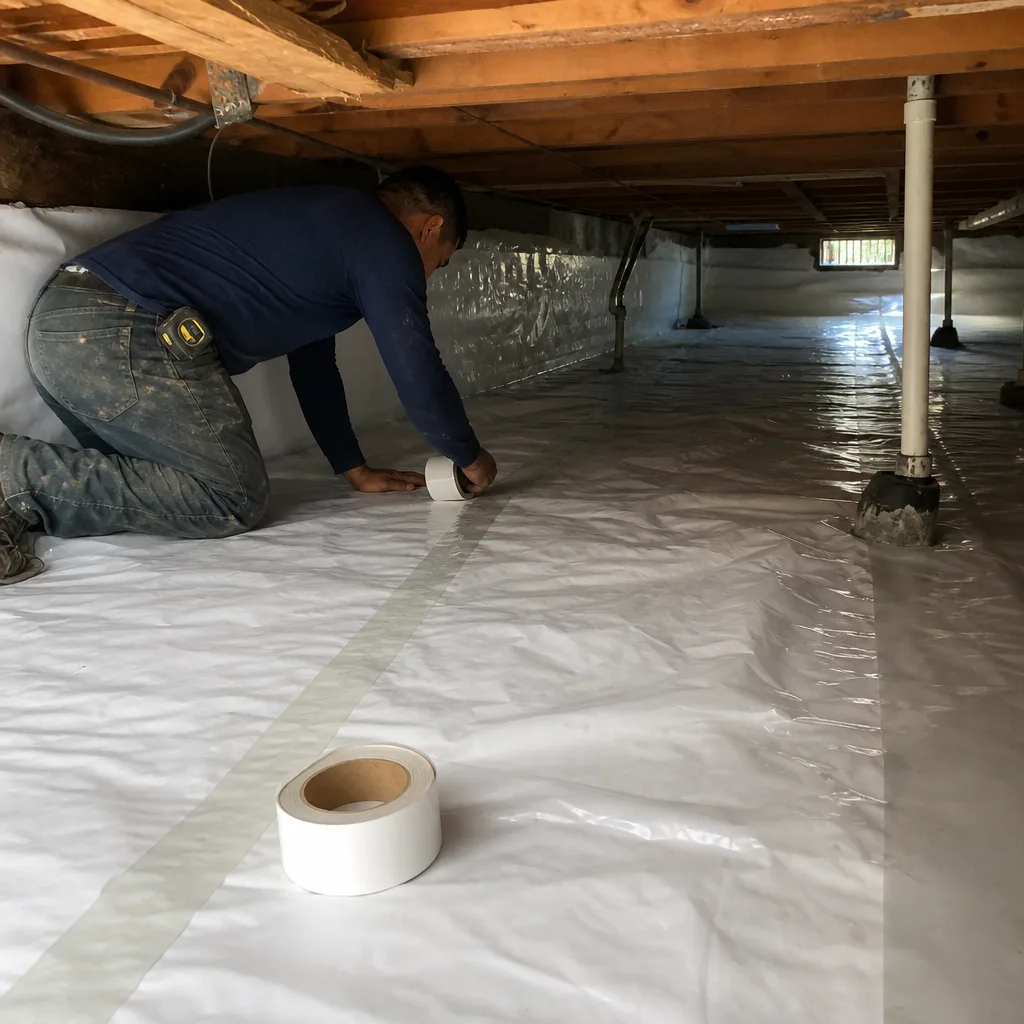
California’s Title 24 energy code and Long Beach building requirements create a permit and compliance landscape that rewards informed homeowners and penalizes those who trust contractor claims without verification. The key protections are simple: know which code cycle governs your job, demand original compliance documents, verify permit status independently, and measure performance with blower-door numbers rather than visual inspection alone. The gap between “passes inspection” and “actually performs” is where your comfort and energy dollars live.
Written by Wes Okafor, Owner at Topside Attic Insulation Long Beach, serving Long Beach since 2016.