
How Much Does Wall Insulation Cost in Long Beach?
Our Wall Insulation services in Long Beach, CA typically cost between $1,800 and $6,500 for a standard single-family home, depending on wall area, access method, and insulation type. Most homeowners in neighborhoods like Bixby Knolls, Los Altos, and Belmont Shore land somewhere between $2,400 and $4,200 for a whole-home project using blown-in or injection foam. Jobs on smaller homes or partial retrofits can run as low as $900, while larger homes with cathedral walls or complex framing can push past $7,000.
Wall Insulation Cost Breakdown (2026)
Wall insulation in Long Beach, CA costs between $1,800 and $6,500 for most single-family homes. The table below reflects what we actually see in this market, not national averages adjusted for California with a footnote.
| Insulation Type / Scope | Typical Range (Long Beach, 2026) | Best For |
|---|---|---|
| Blown-in fiberglass (existing walls, small holes) | $1.80 – $2.80 per sq ft of wall area | 1950s-1970s wood-frame homes with uninsulated cavities |
| Injection foam (dense-pack, no drywall removal) | $2.40 – $4.00 per sq ft | Older stucco homes, Craftsman bungalows, tight cavities |
| Fiberglass batt (open-wall / new construction / remodel) | $0.60 – $1.20 per sq ft | Walls already open for a remodel or addition |
| Rockwool / mineral wool batt (open wall) | $1.10 – $1.90 per sq ft | Fire-rated partitions, party walls, better sound control |
| Open-cell spray foam (open wall) | $1.40 – $2.60 per sq ft | Open remodel walls where air sealing and insulation are combined |
| Closed-cell spray foam (open wall) | $2.80 – $5.20 per sq ft | Garage walls, bonus rooms over unconditioned space |
| Whole-home blown-in retrofit (1,400-1,800 sq ft home) | $2,400 – $4,200 total | Typical Long Beach post-war tract home |
| Whole-home injection foam retrofit (1,400-1,800 sq ft home) | $3,800 – $6,500 total | Stucco exterior where drilling into siding is required |
| Partial retrofit (one exterior wall, single story) | $900 – $1,800 total | Home office addition, single-room comfort fix |
What Pushes the Price Up – and What Brings It Down
The single biggest cost driver is access method. When walls are already open because you’re mid-remodel, batt insulation is fast and straightforward. In a closed-wall retrofit, the crew has to drill small holes through the exterior siding or interior drywall, inject or blow material into each stud bay, then patch and paint. That process is slower and requires more skill, so it costs more regardless of what material goes in.
Stucco exteriors – common across Long Beach’s Craftsman and mid-century neighborhoods in areas like California Heights and Wrigley – add cost because drilling through stucco is more labor-intensive than drilling through wood siding or clapboard. A typical stucco retrofit runs about 20-35% more per square foot than the same scope on a home with wood or fiber-cement siding.
Wall height matters too. Standard 8-foot walls are priced into most estimates automatically. Vaulted ceilings, two-story exterior walls, or any wall that requires scaffolding or a lift will carry a surcharge, usually $200-$600 depending on the scope.
Finally, the R-value target affects material cost. Long Beach sits in California’s Climate Zone 8, which has its own Title 24 compliance requirements. Most retrofits target R-13 to R-15 in a standard 2×4 stud bay. If you’re building an addition with 2×6 framing, the target shifts to R-19 or higher, and material quantities (and cost) increase accordingly.
What Affects Wall Insulation Pricing in Long Beach
- Home age and construction type: Long Beach has a significant stock of homes built between 1940 and 1975 – a lot of which went up with zero wall insulation. Older homes in areas like Zaferia and South Wrigley often have irregular stud spacing, fire blocks mid-cavity, or settled debris that complicates dense-pack installation and adds time to the job.
- Exterior finish: Stucco is the dominant exterior finish in Long Beach, and it costs more to drill cleanly than wood siding. Injection foam or dense-pack blown-in through stucco requires slower drilling and more careful patching, which is reflected in the per-square-foot rate.
- Number of stud bays and obstructions: Every electrical box, plumbing penetration, fire block, or diagonal brace is an obstruction that slows installation. Older bungalows in Belmont Heights regularly have mid-cavity fire stops that split the cavity into two independent chambers, each requiring its own hole.
- Wall area vs. linear footage: Contractors price differently. Some quote by linear foot of wall, others by square foot of wall area (height x length). Ask which method your estimate uses. For a 9-foot-ceiling home versus an 8-foot-ceiling home, that difference adds up across a whole-house scope.
- Air sealing before insulation: At Envelope Insulation Co., air sealing is not an optional add-on – it’s done before any insulation goes in. We will not blow insulation into a wall cavity with an unsealed top plate or unsealed penetrations at the bottom. That sequencing costs more upfront than skipping the sealing step, but it’s the only way the insulation actually performs. Blowing fiberglass into a leaky cavity and calling it done is a documented waste of material and money.
- Patching and finish work: Most insulation contractors exclude drywall patching from their scope. We include a Documented Photo Record of every hole location so your painter or drywaller knows exactly what was touched. Make sure any quote you receive spells out whether patching is included or excluded – it affects the real total cost by $300-$900 on a whole-house job.
A Note on Long Beach’s Climate Zone
Long Beach is in California Climate Zone 8 – a mild coastal zone with low humidity but meaningful overnight temperature swings, especially in fall and winter. Homes near the water in Alamitos Beach or Naples experience salt air that can degrade certain materials over time. Mineral wool and closed-cell foam are more resistant to moisture than fiberglass in those environments. In the inland parts of Long Beach closer to the 91 freeway corridor, summer heat gain through west-facing walls is the primary comfort complaint we hear. That’s a different problem with a different material solution, and a proper energy audit separates the two before anyone picks up a drill.
Spray Foam vs. Blown-In vs. Batt: Which Is Right for Your Long Beach Home?
The right material depends on whether your walls are open or closed and what you’re trying to fix. Here’s a plain-language breakdown:
Blown-In Fiberglass or Cellulose (Closed-Wall Retrofit)
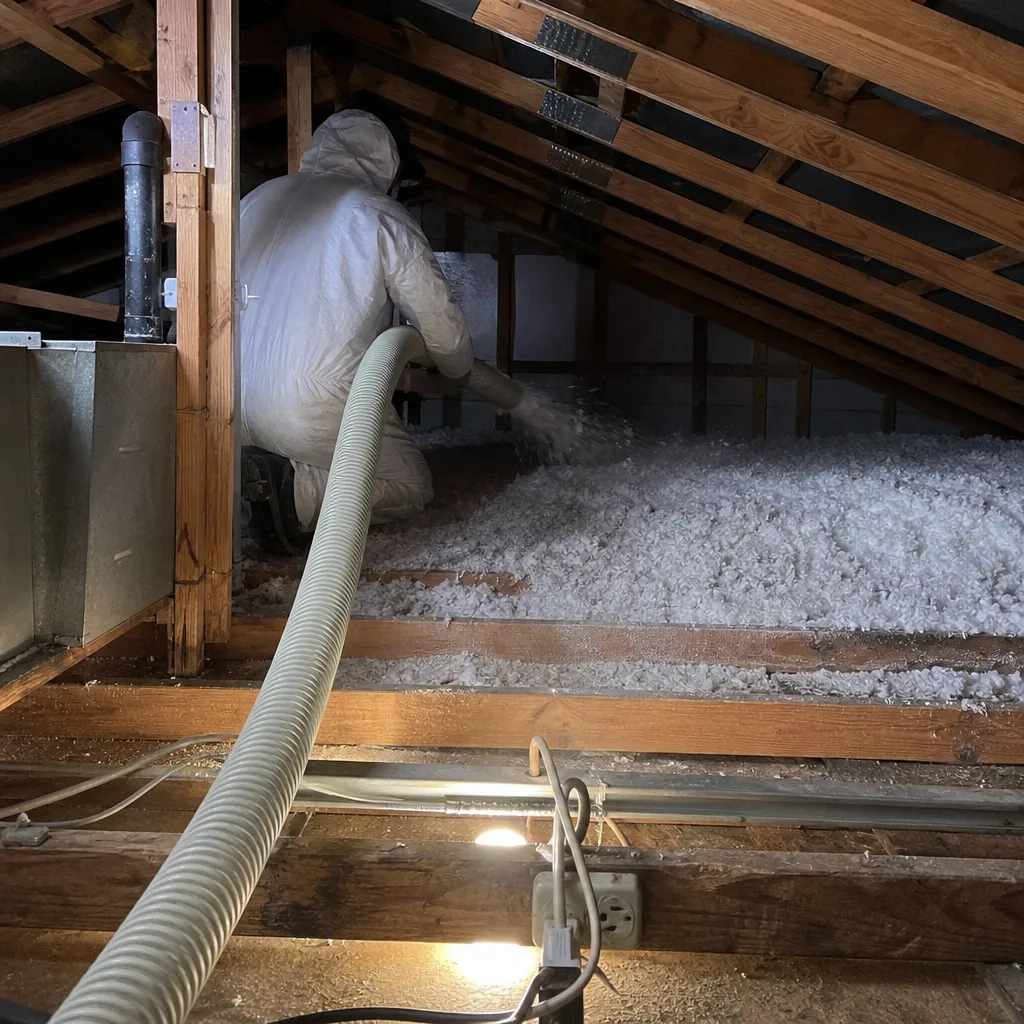
This is the most common approach for Long Beach retrofits on homes that aren’t mid-remodel. Small holes are drilled in each stud bay, material is blown in at high density to fill the cavity, holes are patched. GreenFiber cellulose and Knauf blown fiberglass are the two materials we use most. Cellulose has a slight edge in effective air resistance; blown fiberglass installs faster. Both reach R-13 to R-15 in a standard 2×4 bay when installed correctly.
Injection Foam (Closed-Wall Retrofit)
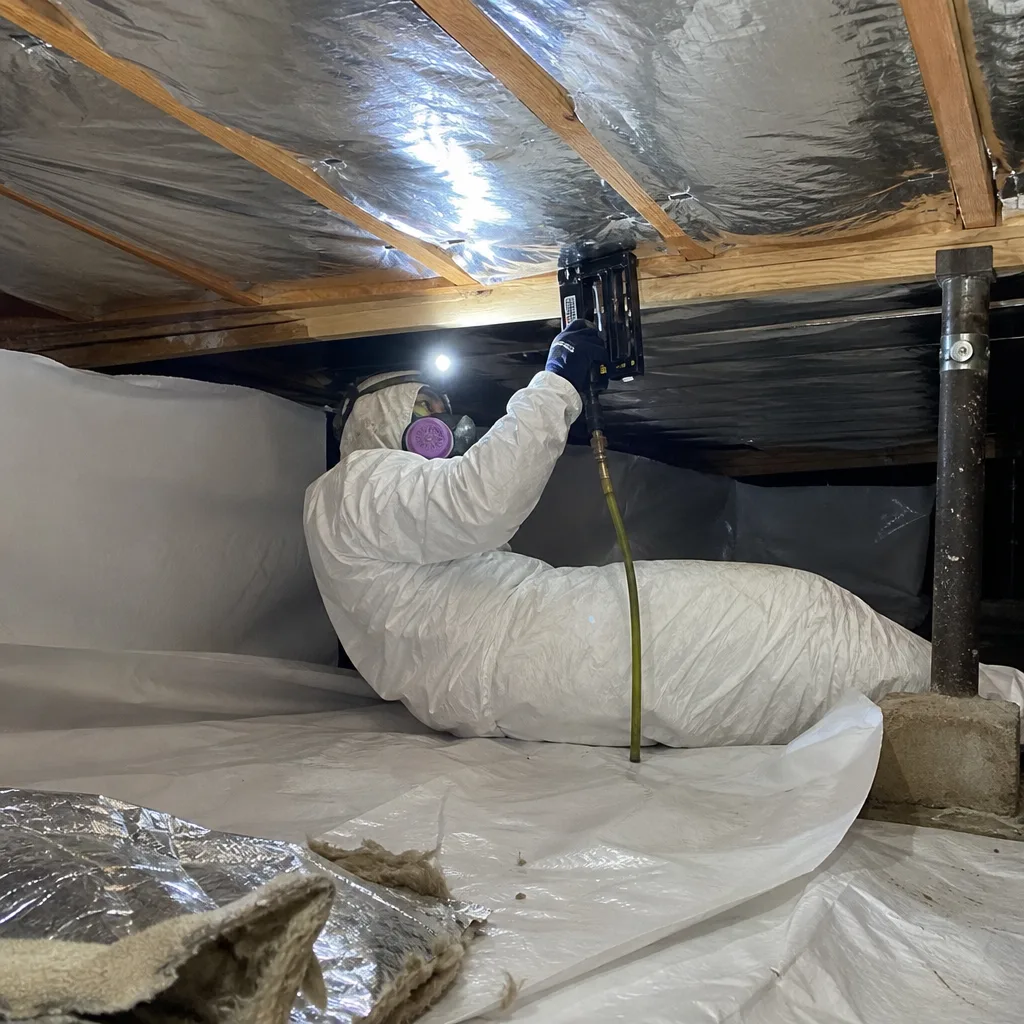
Injection foam – we source Icynene and Demilec products depending on the application – flows into the cavity under low pressure and expands to fill irregular spaces that blown-in material sometimes misses. It’s more expensive, but in a stucco home with unusual framing, injection foam often produces fewer voids. We use a borescope camera to verify fill on representative bays on larger jobs.
Fiberglass or Mineral Wool Batt (Open Wall)
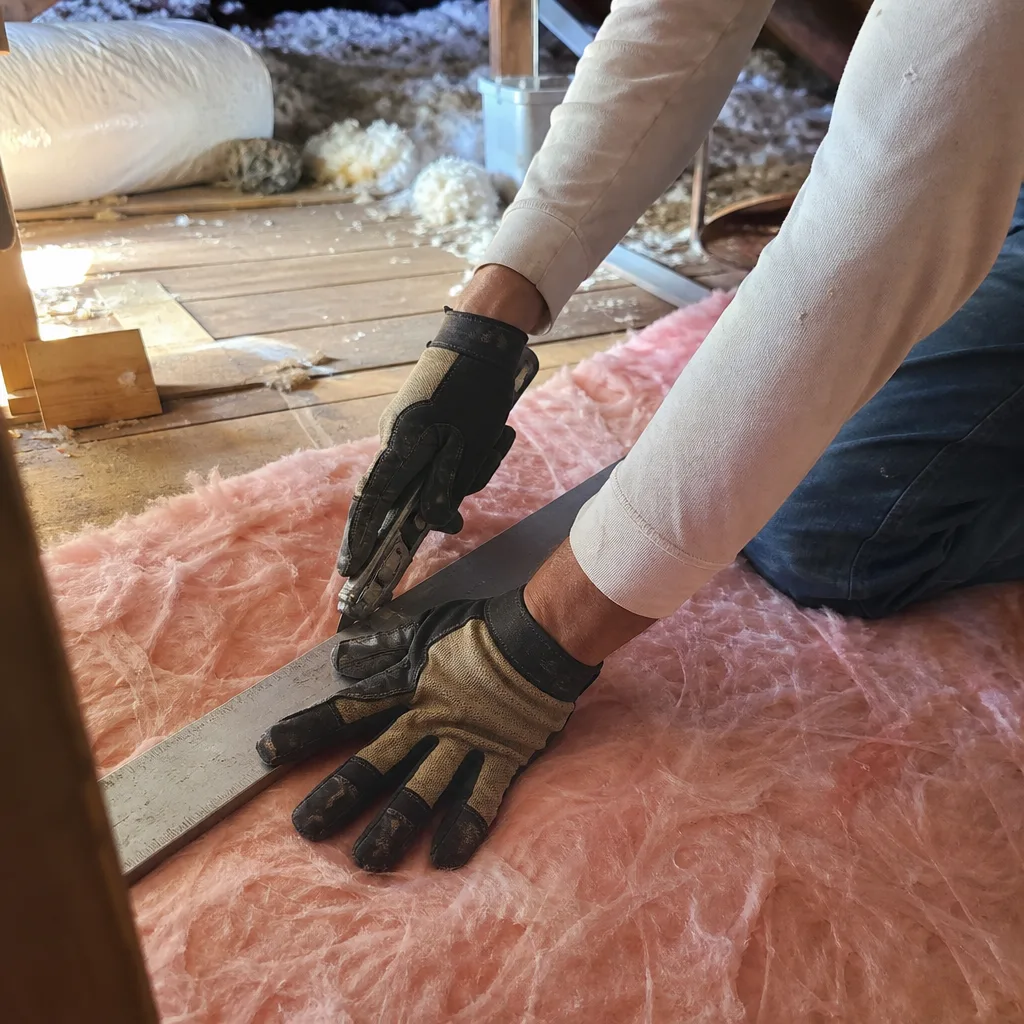
If your walls are already open for a kitchen remodel, an addition, or a full gut renovation, batt is the most cost-effective choice. Owens Corning EcoTouch fiberglass or Rockwool Comfortbatt go in quickly between existing studs and hit R-13 or R-15 depending on thickness. The cost advantage disappears the moment you have to open the wall just to insulate it – at that point, spray foam often makes more sense because it also air-seals in one step.
Spray Foam (Open Wall or Specific Applications)
Open-cell spray foam from Icynene fills and air-seals in one pass and works well in open walls. Closed-cell spray foam from Demilec is denser, adds structural rigidity, and is the better choice for garage walls, bonus rooms over garages, or any wall that interfaces with unconditioned space. Closed-cell also acts as a vapor retarder, which matters in the few Long Beach applications where bulk moisture is a real concern. Neither type should be applied by someone without proper training or equipment – the chemistry involves significant heat and off-gassing during cure.
The Air Sealing Step Most Contractors Skip
We mention this on our Wall Insulation in Long Beach service page and we’re repeating it here because it directly affects your cost calculation: insulation without prior air sealing underperforms its rated R-value in real-world conditions.
A blower-door test – a pressurization measurement that shows, in one number, how much conditioned air your home’s envelope is losing – will frequently show that the biggest air leaks in a Long Beach home are at the top plates where the walls meet the attic floor, around recessed lights, and at plumbing and electrical penetrations. Filling the wall cavity with R-13 fiberglass while leaving those pathways open is like insulating a house with the windows cracked.
Under Envelope Insulation Co.’s Haven Standard, we run a blower-door test before and after on applicable jobs so the homeowner gets a number – not a promise – showing what changed. In practice, on a typical Long Beach home in the 1,400-1,800 square foot range, we commonly see pre-sealing readings of 3,800-5,200 CFM50 drop to 1,800-2,600 CFM50 after top-plate sealing, can-light sealing, and penetration sealing are complete. That reduction is what makes the insulation work.
We will not install wall insulation over unsealed air pathways. Some homeowners balk at the extra line item on the scope. Our answer is always the same: we’ll show you the before-and-after numbers when the job is done, and you can decide whether the air sealing paid for itself. It always does.
How to Save on Wall Insulation in Long Beach
Time It With a Remodel
The single most effective way to reduce per-square-foot cost is to insulate while walls are already open. If you’re planning a kitchen renovation, a bathroom gut, or adding a room in the back of your Long Beach home, that’s the moment to do the walls. Batt insulation in an open 2×4 cavity runs $0.60-$1.20 per square foot. The same wall done as a closed retrofit costs $1.80-$4.00 per square foot. The math is simple.
Prioritize the Walls That Matter Most
Not every wall in your home loses the same amount of heat or gains the same amount of summer heat. West-facing walls in Long Beach face afternoon sun for six or more hours a day in summer. A focused retrofit on the west-facing exterior walls of a home in Los Altos or El Dorado Park, paired with attic air sealing, often delivers more comfort improvement per dollar than a whole-house wall scope done alone. We can map which walls are working hardest during a pre-job assessment.
Stack With Utility Rebates
Southern California Edison and SoCalGas both have active rebate programs for insulation upgrades in 2026. Rebate amounts shift with program funding levels, but insulation upgrades in Climate Zone 8 homes have historically qualified for $0.10-$0.25 per square foot under SCE’s programs. We can tell you what documentation your rebate submission will need; we provide it as part of the Documented Photo Record on every job. Ask about current program availability when you call (424) 415-7031 for your written estimate.
Get a Second Opinion on Any Written Estimate
Under Haven Standard, we offer a free second opinion on any written estimate you have from another contractor. Bring us the scope, and we’ll read it with you line by line. This isn’t a sales tactic – it’s a way to make sure you understand what you’re being quoted and what might be missing (patching scope, air sealing, permit fees, warranty terms).
Avoid the Cheapest Bid Without a Written Scope
The lowest number on an insulation estimate is rarely the lowest final cost. Bids that exclude patching, exclude air sealing, or don’t specify the material brand and R-value target leave room for change orders that close the gap quickly. Under Haven Standard Clause 1, every Envelope Insulation Co. job starts with a flat, written price, a written scope, and a written warranty before any work begins. That’s not a feature – it’s the minimum standard for knowing what you’re actually buying.
Wall Insulation Cost FAQs – Long Beach, CA
How much does it cost to insulate the walls of a 1,500 sq ft home in Long Beach?
A whole-house wall insulation retrofit on a 1,500 square foot Long Beach home typically runs $2,600 to $4,800, depending on exterior finish and access method. Stucco homes land toward the higher end of that range because stucco drilling is slower than wood-siding drilling. Homes with existing open walls (mid-remodel) can be done for significantly less – $900 to $1,800 – using batt insulation. Call (424) 415-7031 and we’ll give you a written price range specific to your address before we schedule anything.
Is blown-in insulation or injection foam better for a stucco home in Long Beach?
Injection foam is generally the better technical choice for Long Beach stucco homes because it flows around mid-cavity obstructions and irregular framing better than blown-in fiberglass. It costs roughly $0.60-$1.20 more per square foot. In homes with clean, unobstructed stud bays, blown-in dense-pack at R-13 performs nearly as well at a lower cost. We assess the framing condition and cavity during the pre-job walkthrough before recommending one over the other – not before.
Do Long Beach homes need a permit for wall insulation?
Most wall insulation retrofits in Long Beach do not require a permit when no structural work is involved. However, if the work is part of a larger remodel scope that includes electrical or plumbing work, a building permit may already be open and the insulation inspection will be folded in. California Title 24 energy code compliance does apply to new construction and permitted additions, and your contractor should document the installed R-values to support that compliance. We include that documentation in the Documented Photo Record on every applicable job.
How long does wall insulation take to install?
A whole-house blown-in or injection foam retrofit on a typical Long Beach home runs one to two days for the insulation work itself. Homes with stucco exteriors sometimes run closer to two full days because of slower drilling. Air sealing – which we complete before any insulation goes in – adds half a day to a full day depending on the home’s complexity. Patching and painting happen after us, typically with your own contractor.
What R-value do walls need in Long Beach under California code?
For Long Beach (Climate Zone 8), California Title 24 currently requires R-13 minimum in 2×4 exterior wall framing for new construction and permitted additions. Many homeowners targeting real comfort improvement rather than code minimum go to R-15 using high-density blown-in or injection foam, which fits in a standard 2×4 bay. If you’re framing new 2×6 walls, the code-minimum target shifts upward and R-19 or R-21 is the typical spec. We put the material, brand, and R-value in writing before any work starts.
Does wall insulation help with noise as well as temperature in Long Beach?
Yes, particularly mineral wool. Rockwool Comfortbatt has a higher Sound Transmission Class (STC) rating than standard fiberglass batt at the same thickness, which is why we use it on party walls, garage-to-living-space walls, and home office applications. For a homeowner in Naples or Alamitos Beach dealing with street noise through a single-wythe stucco wall, the combination of injection foam (which fills voids that carry sound) plus a secondary layer of mineral wool in an open-wall scenario produces a meaningful reduction in transmitted noise. Blown-in fiberglass does help with sound but not as much as dense-pack or mineral wool at equivalent thickness.
Will wall insulation lower my energy bill in Long Beach?
In most Long Beach homes built before 1980, yes – walls are commonly uninsulated or partially insulated with settled, degraded material. The energy savings depend on how leaky the wall assemblies were before treatment. Homes we’ve worked on in areas like Wrigley and North Long Beach with previously uninsulated walls have shown heating and cooling cost reductions of 12-22% after a whole-house wall and attic sealing scope. We don’t quote that number as a guarantee – every home is different – but we do publish before-and-after blower-door readings so you can see the air-sealing result in a measurable unit rather than a claim.
Why the Sequencing Matters: Sealed First, Then Insulated
Every insulation company in Long Beach will install fiberglass batts. Fewer will dense-pack correctly. Almost none will stop a crew and say: we are not adding insulation until the air leaks are sealed, full stop.
That’s the position we’ve held since Wes Okafor founded Envelope Insulation Co. in 2016, and it comes from a straightforward observation: an unsealed air leak at the top plate of a wall cavity moves more heat per hour than the entire R-value of the insulation can compensate for. Filling the cavity is not the same as fixing the problem. The blower-door number before and after tells you whether you fixed the problem. We publish that number.
Under Haven Standard Clause 1, before any work starts on a Long Beach home, the homeowner receives a written price, a written scope identifying each wall section, the material and brand, the R-value target, and the air sealing locations. The 365-Day Done Right Promise applies to everything in that scope. If something was missed or installed incorrectly, we make it right. That’s not a slogan – it’s a written warranty you hold in your hand before the crew arrives.
The Documented Photo Record included on every visit shows the pre-installation wall condition, the drilling locations (so your patcher knows where every hole is), the material in cavity, and the finished surface condition before we leave. For applicable jobs where a blower-door test is run, the before and after CFM50 readings are documented alongside the photos.
Key Takeaways
- Wall insulation in Long Beach runs $1,800-$6,500 for most whole-house projects, with $2,400-$4,200 being the typical range for a 1,400-1,800 sq ft home.
- Stucco exteriors – common across Long Beach’s older neighborhoods – add 20-35% to closed-wall retrofit cost versus wood siding.
- Blown-in fiberglass (R-13 to R-15) is the most common retrofit material. Injection foam costs more but fills irregular cavities better.
- Air sealing before insulation is the step that determines whether the insulation actually performs. Blower-door numbers document the result.
- Stacking wall insulation with a planned remodel (walls already open) is the most cost-effective timing, cutting per-square-foot cost by 50-70%.
- California Climate Zone 8 requires R-13 minimum in 2×4 walls for permitted work. Many homeowners target R-15 for real comfort improvement.
- Every Envelope Insulation Co. job starts with a written price and scope – no exceptions – and ends with a Documented Photo Record.
Get a Written Price for Your Long Beach Home
Wes Okafor and the Envelope Insulation Co. team have been documenting wall insulation scopes across Long Beach since 2016 – more than 9,000 homes with a written price before any work started and a Documented Photo Record when the crew left. If you have a competing written estimate, bring it. We’ll read it with you line by line at no cost.
Call (424) 415-7031 to get a written estimate for your Long Beach home. A live person answers – no voicemail, no callback window measured in business days. If you’d prefer to start with your address and square footage, that’s enough information to give you a preliminary range before we schedule a walkthrough.
There’s no pressure and no work starts without a written price in your hand first. That’s Haven Standard Clause 1, and it applies to every job, every time.
Written by Wes Okafor, Owner at Envelope Insulation Co., serving Long Beach, CA since 2016.
Pricing reflects the Long Beach market as of 2026. Topside Attic Insulation Long Beach offers free estimates – call (424) 415-7031.
What Our Customers Say
"They photographed rodent damage in the old insulation that we had no idea about, and priced the exclusion work separately so we could decide."
- Harriet N."The winter gas bill dropped by about a third. They had estimated a quarter, so they under-promised."
- Genevieve R."They air-sealed the attic floor before insulating and showed me the blower-door number before and after. The upstairs is finally the same temperature as downstairs."
- Marisol D.