
Crawl Space Insulation in Long Beach, CA
Crawl space insulation in Long Beach typically runs between $1,800 and $4,500 for a standard single-family home, depending on square footage, current conditions, and whether air sealing needs to happen first – and it almost always does. At Topside Attic Insulation Long Beach, we seal every penetration, rim joist, and air gap in the crawl space before a single inch of insulation goes in. That order matters, and we won’t skip it.
If you’ve got cold floors over an uninsulated or under-insulated crawl space, or if your energy bills have been climbing without an obvious cause, this page will walk you through what to expect: the process, the pricing, and the documentation you’ll have in hand when we’re done. Questions before then? Call us at (424) 415-7031 – a live person answers, no voicemail loop.
Crawl space insulation is one piece of a larger building-envelope picture. If moisture, standing water, or a failing vapor barrier is part of what you’re dealing with, that side of the work is covered under our Crawl Space Encapsulation & Vapor Barrier in Long Beach service. The two often go together, and we’ll tell you honestly which one your house needs – or whether it needs both.
When You Need Crawl Space Insulation
Long Beach sits in a coastal climate that people often assume is mild enough to skip crawl space work. That’s not quite right. Marine layer mornings keep ground temperatures lower than most homeowners expect, and the combination of cool, damp air pulling in from the Pacific and warm interior air migrating down through the floor is exactly the condition that makes an uninsulated crawl space expensive to live with. Here’s what that looks like in practice:
- Cold or uneven floors in winter months. If the rooms above your crawl space – especially a kitchen or ground-floor bedroom in a Belmont Shore bungalow or a California Heights craftsman – feel noticeably colder than the rest of the house, missing or degraded insulation between the floor joists is usually the first place to check.
- Heating and cooling bills that don’t match your usage. A crawl space with no insulation, or insulation that has sagged and separated from the subfloor, lets conditioned air bleed out continuously. We’ve seen Long Beach homes where the crawl space alone was responsible for 20-30% of total heating load.
- Existing insulation that’s been wet, compressed, or chewed. Fiberglass batts that have contacted moisture – common in crawl spaces without a functioning vapor barrier – lose nearly all of their thermal value. Rodent activity, which we see regularly in older neighborhoods like Wrigley and Zaferia, compresses batts and voids any performance they had left.
- An older home with no crawl space insulation at all. Many Long Beach homes built before 1978 were never insulated below the floor. If you bought a 1940s or 1950s house in Bixby Knolls or the East Village Arts District and haven’t pulled permits for crawl space work, there’s a reasonable chance you’re running on nothing.
- A recent HVAC upgrade that isn’t performing as expected. A new heat pump or mini-split system that’s working harder than it should in a well-sized home is often fighting an uninsulated or leaky building envelope below the floor, not above the ceiling.
- Musty odors at floor level or near vents. While odor is often a moisture issue, it can also indicate that degraded organic insulation material – older cellulose or wet-compressed fiberglass – is sitting in the crawl space and needs to come out before anything new goes in.
Our Crawl Space Insulation Process
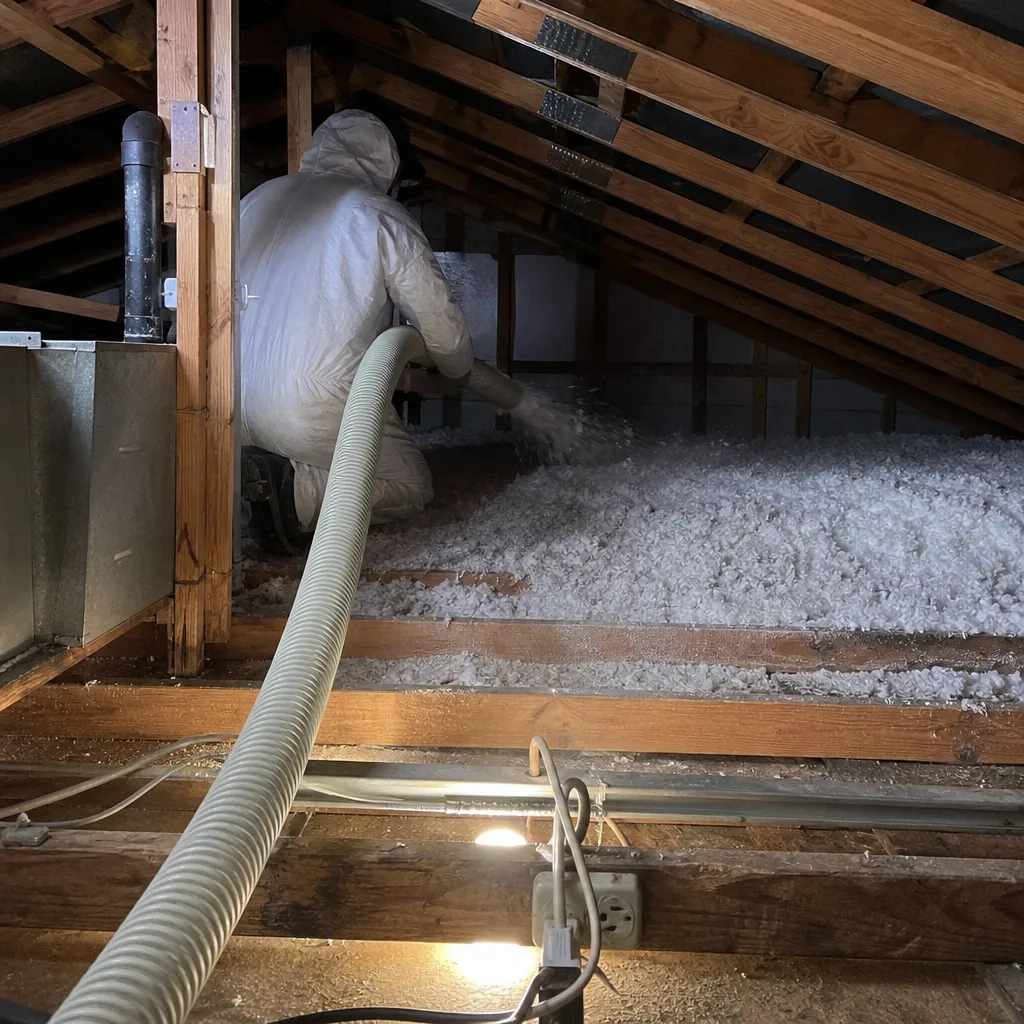
The sequence here is not optional. Blowing or stapling insulation into a crawl space that still has open penetrations, unsealed rim joists, or a compromised vapor barrier is one of the most common insulation mistakes we see when homeowners call us for a second opinion. Our process runs in this order, every time.
- Assessment and written scope before any work starts. A technician – background-checked, uniformed, and arriving with a text notification when they’re on the way – inspects the crawl space and documents current conditions with photos. We measure the square footage, note the joist depth and spacing, identify existing insulation material if present, and flag any moisture or structural concerns. You receive a written price and a written scope before anyone lifts a tool. That’s Haven Standard Clause 1, and it’s not negotiable.
- Moisture and vapor barrier evaluation. Insulation installed over a bare dirt floor or a torn vapor barrier will absorb ground moisture and fail. Before insulation work begins, we confirm that the vapor barrier is intact and properly lapped – or we flag it for repair or replacement under our Crawl Space Encapsulation & Vapor Barrier in Long Beach service. If you’re doing both, we encapsulate first.
- Air sealing – rim joists, band joists, and penetrations. This step comes before insulation, always. The rim joist – the perimeter framing where the floor structure meets the foundation wall – is one of the largest single sources of air infiltration in a crawl space. We seal it with spray foam, and we address every pipe penetration, duct boot, and gap in the subfloor before we add any insulating material. Skipping this step means the insulation sits over a leaky shell, which reduces its real-world performance significantly regardless of its rated R-value.
- Insulation installation – material matched to the space. For most Long Beach crawl spaces with standard 2×8 or 2×10 floor joists, we install friction-fit fiberglass batts rated at R-19 or R-30, sourced from Owens Corning. For rim joists and irregularly shaped cavities, cut-and-cobble rigid foam board combined with spray foam – including products from Icynene where a continuous air barrier is the goal – gives a more reliable seal. We choose based on what the space actually needs, not on what’s easiest to install.
- Mechanical fastening and retention. Batts that aren’t properly retained fall. In a crawl space, that means they drop to the ground and provide zero benefit – and that’s exactly what we find in roughly a third of the existing-insulation jobs we’re called to assess. We use wire supports, insulation hangers, or approved netting depending on joist configuration, and we verify coverage before closing out.
- Documented photo record and closeout. When the job is done, you receive a photo record of the finished work – subfloor coverage, rim joist sealing, vapor barrier condition – not on request, included. On jobs where before-and-after blower-door testing applies, you also get those numbers: a pressurization reading that shows, in one figure, how much conditioned air your home was losing before we sealed it and how much it’s losing now.
Crawl Space Insulation Pricing in Long Beach
Crawl space insulation in Long Beach runs higher than national averages quoted on generic home-improvement sites, for a few reasons specific to this market: labor costs, access conditions in older housing stock, and the fact that most crawl spaces here need some air sealing and vapor barrier work before insulation can go in. A number that doesn’t account for those factors isn’t a useful number.
Here are realistic ranges for the Long Beach market as of 2025-2026, broken down by what drives each cost category:
| Scope | Typical Range | Notes |
|---|---|---|
| Fiberglass batt installation only (clean, accessible crawl space, no prior insulation) | $1,800 – $2,800 | Assumes vapor barrier is intact and no air sealing is needed |
| Air sealing + fiberglass batt installation | $2,400 – $3,600 | Most common scope for Long Beach homes built pre-1980 |
| Removal of failed insulation + reinstall | $2,800 – $4,500 | Adds disposal of wet or pest-damaged material; common in Wrigley, Bixby Knolls |
| Spray foam rim joist sealing (add-on or standalone) | $600 – $1,200 | Rim joist only; often done alongside batt installation |
| Full encapsulation + insulation (combined scope) | $4,500 – $9,000+ | Vapor barrier, air sealing, and insulation as a single project |
What moves a job toward the higher end of any range: limited access height (crawl spaces under 18 inches require more labor time), significant rodent remediation or contaminated material removal, homes with complex joist configurations or multiple additions, and jobs where the Crawl Space Vapor Barrier needs full replacement before insulation can begin.
Under Haven Standard Clause 1, you receive a flat written price and written scope before work starts – no open-ended estimates, no per-hour billing that escalates on the day. If you have a written estimate from another contractor, bring it to us. We’ll read it with you as part of a free second opinion, and we’ll tell you what it covers and what it doesn’t.
To get a written price for your specific crawl space, call (424) 415-7031. We’ll schedule a time, send a technician, and have a number in writing for you the same visit.
FAQs – Crawl Space Insulation in Long Beach
What R-value do I need for crawl space insulation in Long Beach?
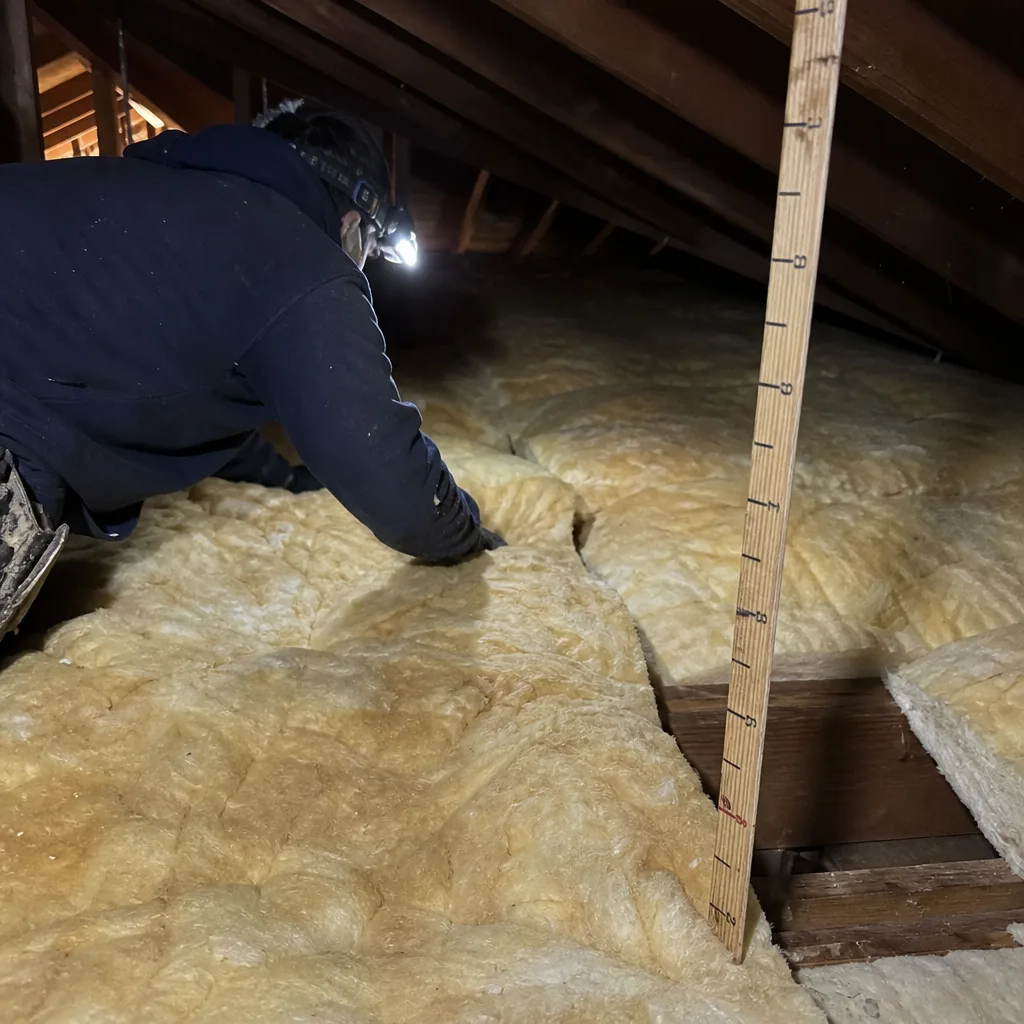
Long Beach falls in IECC Climate Zone 3B, which calls for R-19 minimum in the floor cavity under conditioned space, though R-30 is achievable in standard 2×10 joist bays and worth the marginal cost difference. The R-value requirement is a floor, not a target – and the real-world performance of any insulation layer is heavily influenced by whether the air leaks below it have been sealed first. An R-30 batt sitting over an open rim joist performs closer to R-10 in practice. We install to meet current California Title 24 requirements and document the installed depth and coverage.
How long does crawl space insulation last in this climate?
Properly installed fiberglass batts in a dry, sealed crawl space can last 30 to 40 years without meaningful performance loss. The failure mode in Long Beach isn’t age – it’s moisture. Batts that contact water, even periodically from ground moisture through an inadequate vapor barrier, compress and lose R-value within a few seasons. That’s why we address Crawl Space Encapsulation & Vapor Barrier integrity before insulation goes in. If you’re looking at a crawl space that’s already showing signs of moisture, the insulation question and the encapsulation question are the same conversation.
Can you insulate a crawl space that already has some insulation in it?
It depends on the condition of what’s there. If existing insulation is dry, undamaged, and still retaining its original loft and position, we can sometimes add to it to bring it up to current R-value. More often in Long Beach’s older housing stock, what we find is partially fallen batts, moisture-degraded material, or fiberglass that’s been compressed by pests – none of which is worth building on. We document the existing condition with photos during the assessment, and we tell you what we found, not what’s easiest to sell. If removal is warranted, we say so and price it in the written scope.
Do I need a permit for crawl space insulation in Long Beach?
In most cases, replacing or adding insulation in an existing crawl space does not require a building permit in Long Beach under the City of Long Beach Municipal Code – it’s considered routine maintenance. However, if the work involves changes to the structural framing, duct systems, or is part of a larger renovation project requiring a permit, the insulation may need to be inspected as part of that broader scope. We’re familiar with local requirements and will flag permit questions during the assessment if anything in your specific scope triggers one. When in doubt, we’d rather over-communicate that detail than leave you surprised later.
Why Long Beach Homeowners Call Topside Attic Insulation Long Beach
We’ve sealed and insulated more than 9,000 homes since 2016, every one of them with a written price before work started and a documented photo record when the crew left. That’s not a marketing claim – it’s the operating standard we’ve run under since we opened, and we call it The Haven Standard because it’s built around what a homeowner actually needs to trust a contractor: a number in writing, photos when it’s done, and a real person to call if anything isn’t right.
The 365-Day Done Right Promise covers every job we complete. If the work we did isn’t performing as scoped, we make it right – under the written warranty you received before we started.
For crawl space insulation specifically, the thing that separates jobs that perform from jobs that don’t is the sequence: air sealing before insulation, vapor barrier confirmed before either. We don’t skip steps because skipping them costs the homeowner more in the long run – in energy bills, in failed insulation, and in the cost of doing it twice. We’ve been doing this work in Long Beach long enough to know what the crawl spaces here actually look like and what they need.
To get a written estimate for your crawl space, call (424) 415-7031. A live person will answer, and we’ll schedule an assessment at a time that works for you. The estimate is free, the price will be in writing, and you’ll know the full scope before anyone starts.
You can also learn more about the full scope of moisture control and structural protection below the floor on our home page, or read through the complete service overview on our Crawl Space Encapsulation & Vapor Barrier page if you’re still sorting out which problem you’re dealing with.
Written by Wes Okafor, Owner at Topside Attic Insulation Long Beach, serving Long Beach since 2016.