
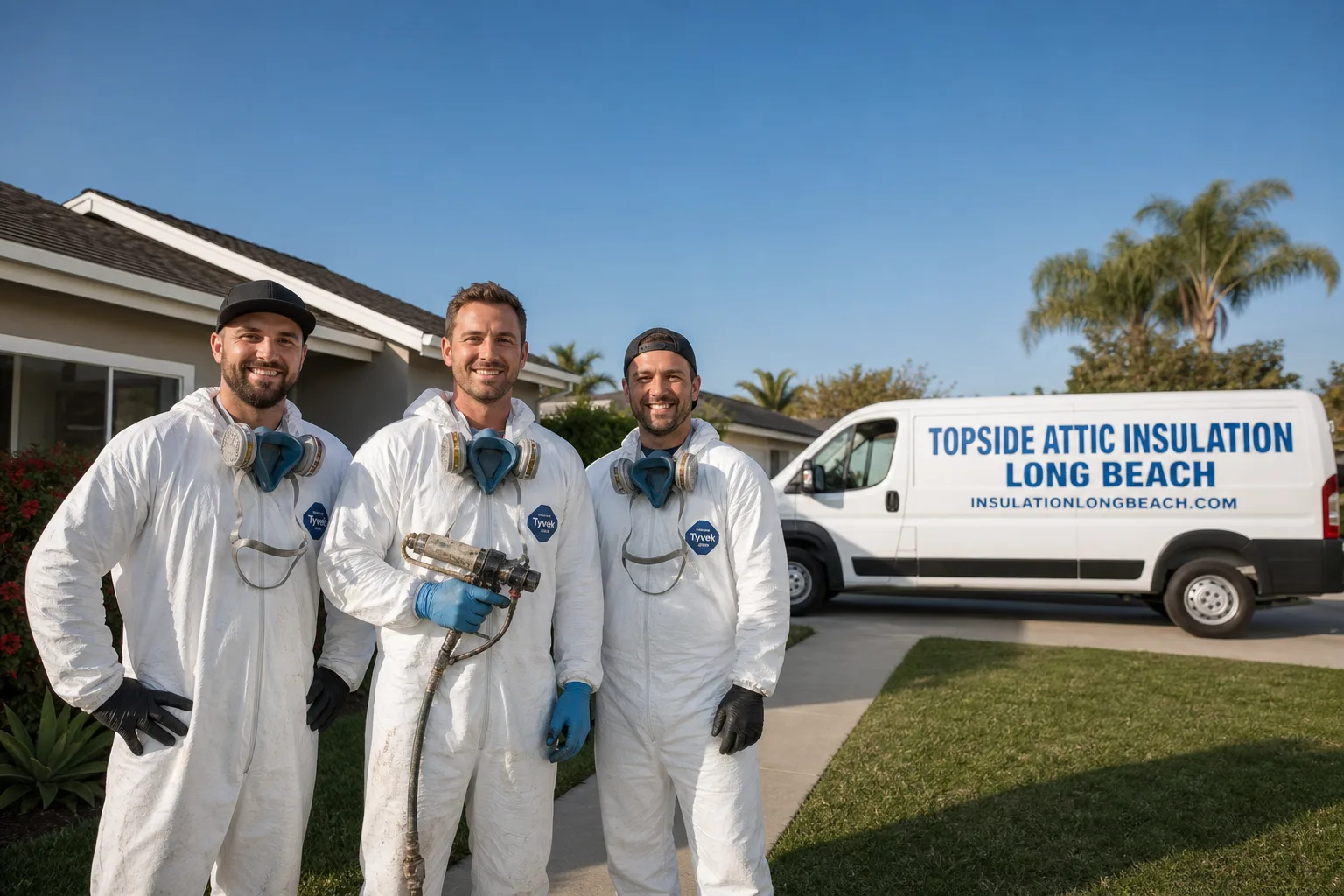
Trusted Crawl Space Encapsulation & Vapor Barrier for Long Beach Homeowners
Crawl Space Encapsulation & Vapor Barrier pricing in Long Beach typically runs $3,200-$8,500 for a complete system, with most homeowners in Belmont Heights, Bixby Knolls, and the Peninsula seeing projects finished in 1-3 days. We’re Topside Attic Insulation Long Beach, and we’ve sealed and insulated more than 9,000 homes since 2016 - every one starting with a written price and closing with a documented photo record. Call (424) 415-7031 for a free estimate with same-day scheduling available.
Long Beach’s coastal climate means crawl spaces here deal with something inland cities don’t: salt-laden moisture pushing in from the Pacific, combined with the heavy clay soils in neighborhoods like Lakewood Village and California Heights that hold water against foundation walls. We’ve pulled back vapor barriers in Signal Hill homes that looked intact from above but were trapping condensation underneath, and we’ve found rim joists in Alamitos Beach crawling with mold because the original 1950s construction never included proper ground sealing. Our approach starts with air sealing - the same principle we apply to attics - because a vapor barrier over unsealed penetrations is just a pool liner with holes in it.
Wes Okafor leads our crew with a simple rule: no insulation or encapsulation material touches a surface until we’ve documented where the air is moving. On crawl space jobs, that means blower-door testing when the house geometry allows it, smoke-pencil tracing at rim joists, and moisture-meter readings at multiple points along the foundation perimeter. You get the numbers in writing before we start, and you get the after readings plus photos when we leave.
What Our Crawl Space Encapsulation & Vapor Barrier Service Includes
Crawl Space Vapor Barrier
A Crawl Space Vapor Barrier is a polyethylene sheet - typically 6-mil or thicker - installed over exposed earth to block ground moisture from evaporating into your crawl space air. In Long Beach, where the water table sits high in areas near the Los Angeles River and Colorado Lagoon, an unsealed dirt floor can pump gallons of moisture upward daily. We install vapor barriers with sealed seams and perimeter attachment to foundation walls, not just sheets laid on the ground. For homes in El Dorado Park and Los Altos, where clay soil expands and contracts with seasonal moisture, we use reinforced polyethylene that won’t tear during soil movement.
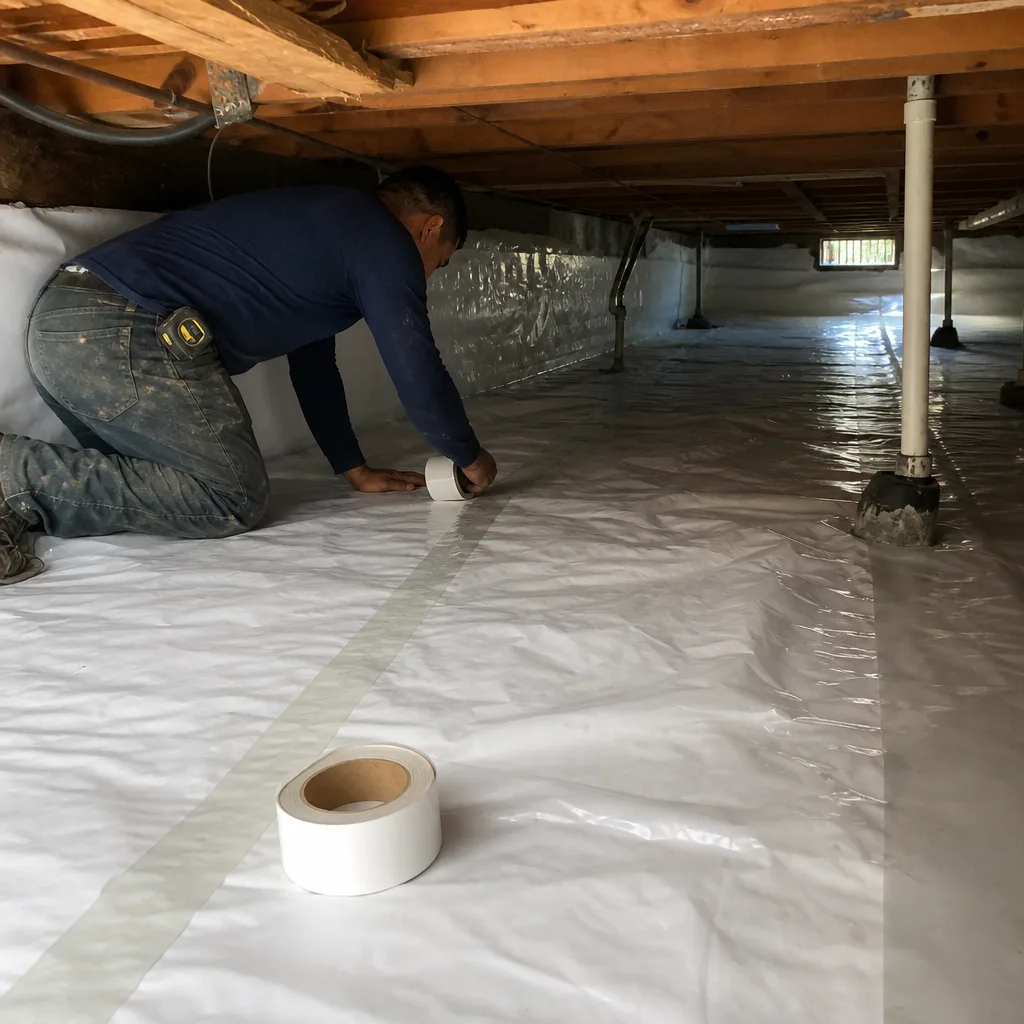
Crawl Space Encapsulation
Encapsulation is the complete sealing of your crawl space: vapor barrier on the floor, sealed to walls; closed-cell spray foam or rigid foam board on foundation walls; sealed vents; and often a dehumidifier or conditioned air supply to maintain dry air. In Long Beach’s mild climate, full encapsulation makes particular sense for homes built before 1980 with vented crawl spaces that were designed for a drier era. We’ve encapsulated crawl spaces in Bluff Park where the original vents were pulling in fog-laden air directly off the beach, and in North Long Beach where summer heat was cooking moisture out of the soil faster than natural ventilation could remove it. Every encapsulation includes a written scope specifying R-value targets, foam thickness, and dehumidifier capacity if specified.
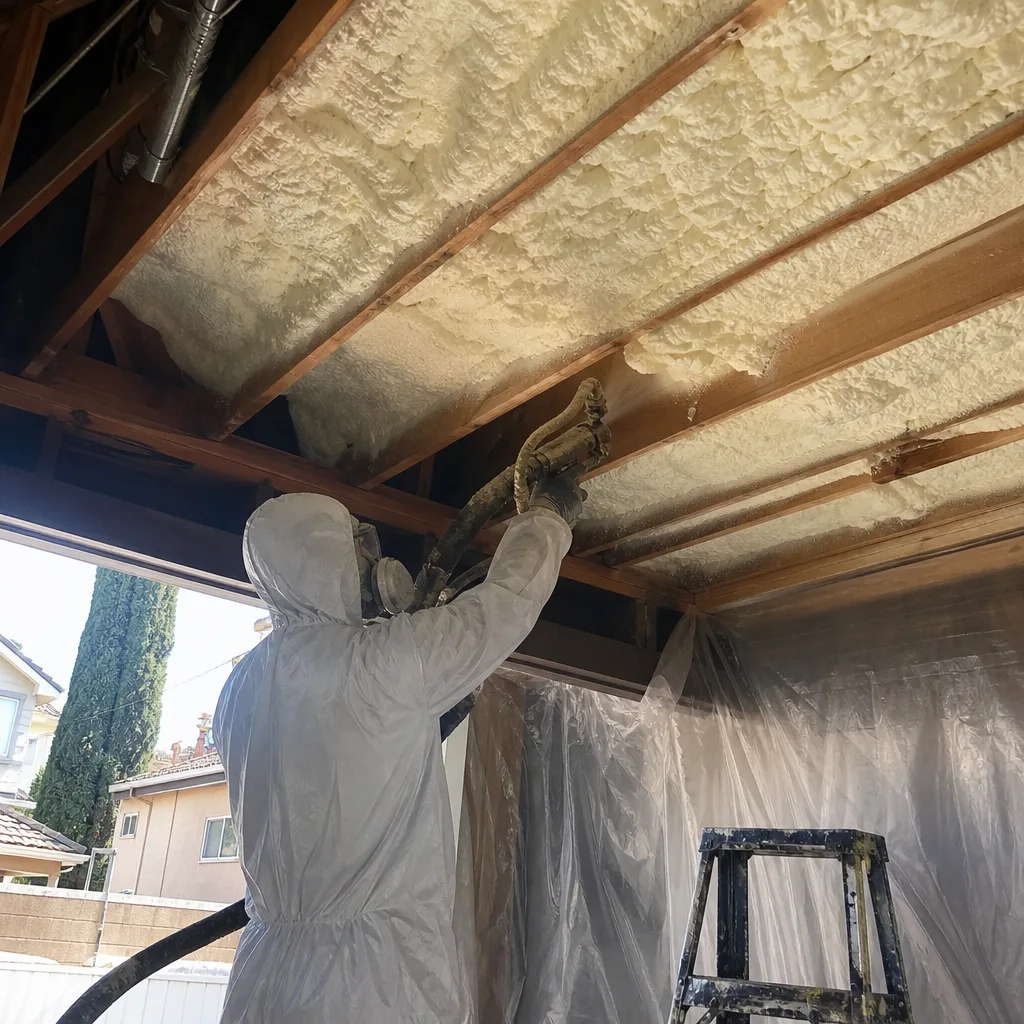
Crawl Space Insulation
Crawl Space Insulation in our climate typically means rigid foam board applied to foundation walls (for encapsulated spaces) or fiberglass batts in the floor joists (for vented crawl spaces that won’t be fully sealed). We don’t blow fiberglass over unsealed rim joists - that’s sealing air leaks first, then insulating, the same sequence we use in attics. For Long Beach homeowners in the Craftsman districts near Retro Row, where floor joists are often true-dimension lumber with irregular spacing, we cut foam board to fit rather than forcing standard batts that leave gaps. The Haven Standard requires we photograph every bay before and after insulation, so you see what was covered and what condition the wood was in.
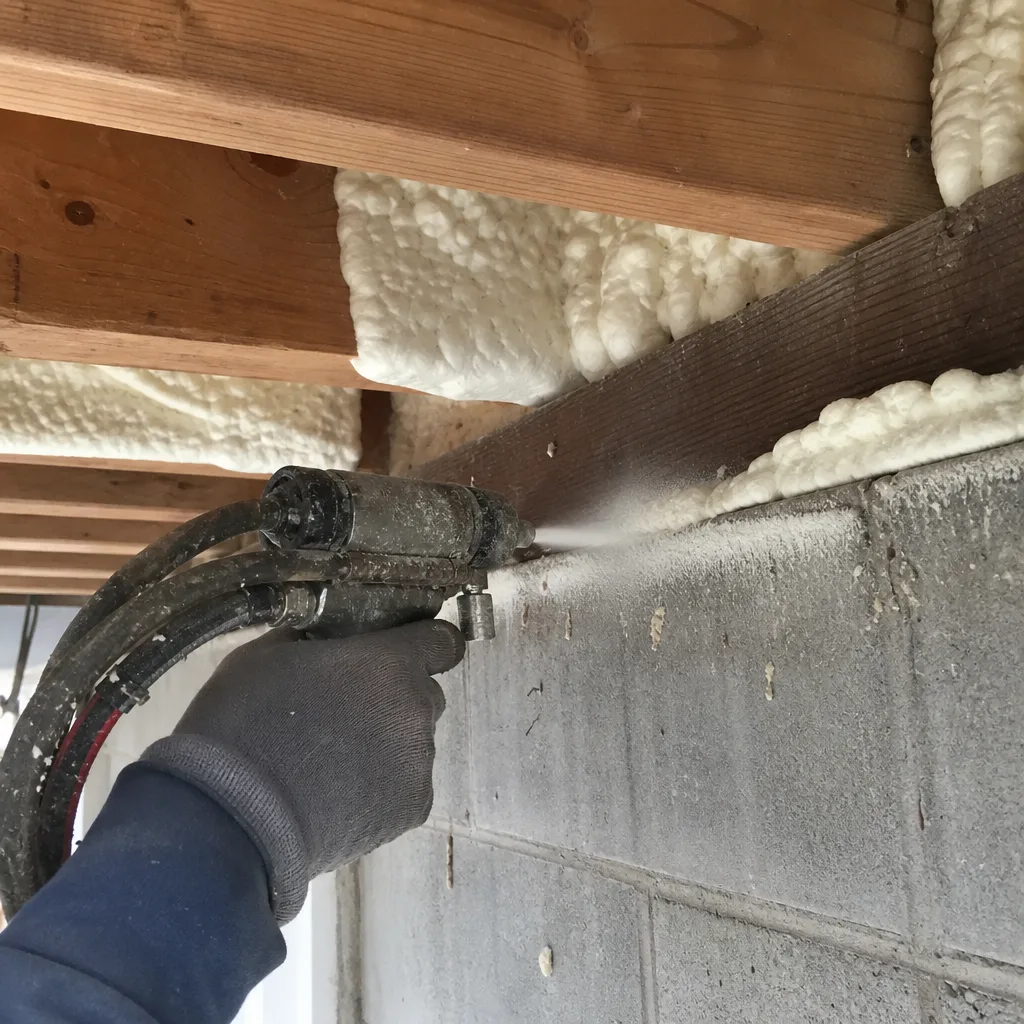
Crawl Space Moisture Control
Moisture control addresses the sources beyond ground evaporation: plumbing leaks, foundation cracks, inadequate drainage, and in coastal Long Beach, wind-driven rain through vent screens. We start with a moisture meter survey - readings above 20% in wood framing trigger a mold protocol consultation before any encapsulation proceeds. In homes near Marine Stadium and Naples Canal, we’ve found that subsurface drainage was never installed or has failed, requiring a French drain or sump pump before encapsulation makes sense. We tell you this in the written price, not after demolition starts. Our moisture control plans include target humidity levels (typically 50-55% RH for Long Beach), monitoring equipment recommendations, and maintenance schedules.
Crawl Space Cleanout
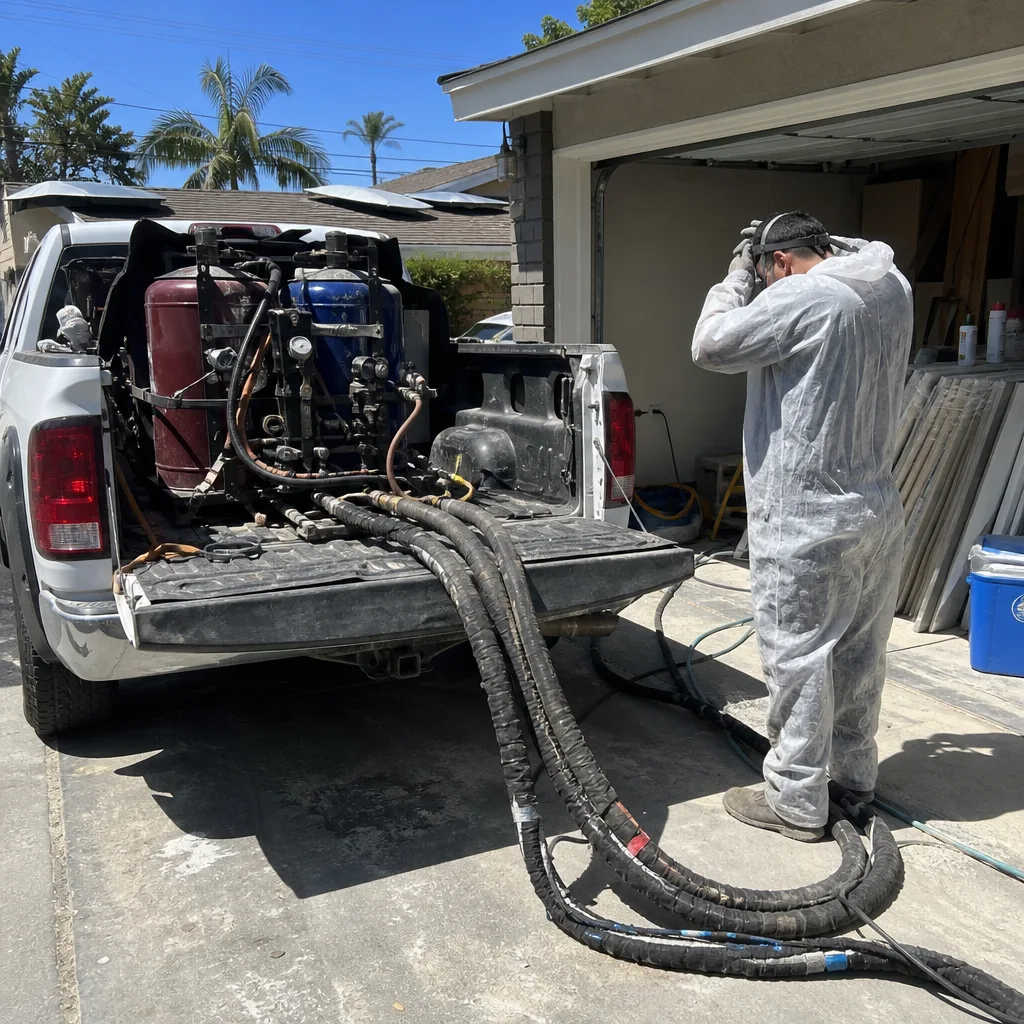
Cleanout removes existing insulation, debris, rodent droppings, and failed vapor barriers before new work begins. In Long Beach’s older housing stock - particularly in Wrigley and Willmore City - we’ve pulled out sixty years of layered materials: 1960s rock wool, 1980s fiberglass, 2000s reflective bubble wrap, none of it installed with any air sealing. Cleanout includes HEPA vacuuming, disposal per California waste codes, and photographic documentation of structural conditions we expose. If we find active rodent activity, we coordinate with our attic cleaning and rodent proofing team before sealing anything new. You receive photos of the cleaned space and any structural concerns before encapsulation or insulation proceeds.
What happens when you call
- 1
A real person answersNo phone trees - you reach a local pro.
- 2
You get an upfront price rangeHonest numbers before anyone is dispatched.
- 3
A background-checked tech heads outLicensed & insured, dispatched right away.
- 4
You approve before work beginsNothing starts until you say go.
Brands We Service for Crawl Space Encapsulation & Vapor Barrier
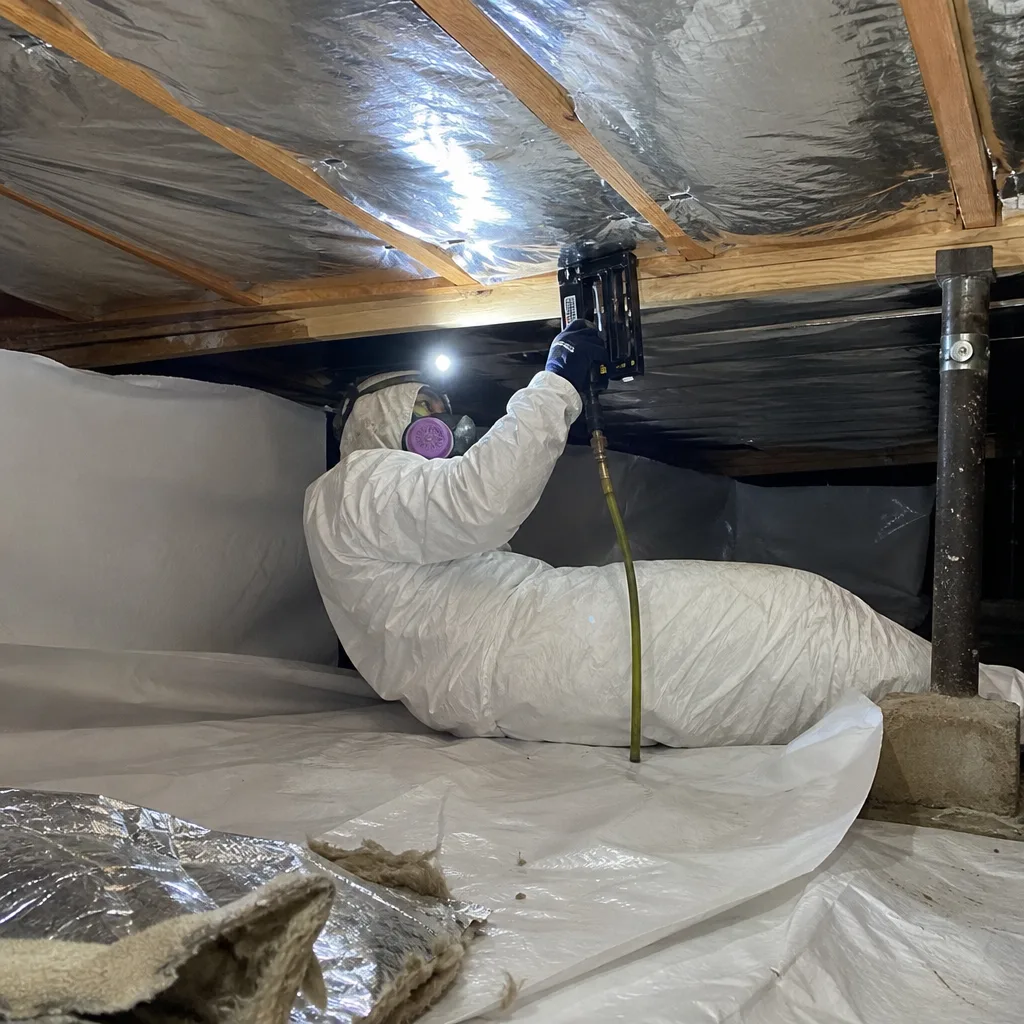
We source encapsulation materials from Owens Corning, Johns Manville, Knauf, and Icynene - no proprietary lock-ins that limit your options or inflate prices. Owens Corning’s Foamular rigid foam board is our standard for foundation wall insulation in Long Beach encapsulations; we’ve installed thousands of board-feet in crawl spaces from Belmont Shore to Signal Hill, and we stock 2-inch and 3-inch thicknesses for same-day jobs. Icynene’s closed-cell spray foam serves jobs with complex geometries - around plumbing chases, irregular stone foundations, or where rim joists have been notched for historical utilities - because it expands to fill gaps that board stock can’t follow.
Whether your existing crawl space has Demilec foam that needs assessment, GreenFiber cellulose that has absorbed moisture and compacted, or any other manufacturer’s materials, we evaluate what you have before recommending what comes next. Our written price specifies brand and product by name, not “or equivalent” language that lets a contractor substitute cheaper stock. If you have a preference based on prior experience or manufacturer warranty, we accommodate it in the scope.
Signs You Need Crawl Space Encapsulation & Vapor Barrier Right Now
- Musty odors rising from floor registers or wall cavities. That smell is microbial growth on wood or insulation, and in Long Beach’s climate it doesn’t take standing water - sustained humidity above 60% RH will do it. We’ve traced musty complaints in Park Estates homes to crawl spaces with perfectly dry dirt floors but unsealed vents pulling in summer air at 80% relative humidity.
- Sagging or falling insulation between floor joists. Fiberglass batts lose R-value when they absorb moisture and compress, and gravity does the rest. In homes near the Traffic Circle built in the 1940s-50s, we regularly find original insulation held by rusted wire hangers that have given way.
- Soft or bouncy floors above the crawl space. Moisture damage to girders or sill plates compromises structural support. We found a compromised sill plate in a Rose Park home where termites had followed moisture trails into the wood - encapsulation after repair prevents recurrence.
- Increased allergy symptoms or respiratory issues indoors. Crawl space air doesn’t stay in the crawl space; stack effect pulls it upward through plumbing penetrations, electrical boxes, and subfloor gaps. A 2013 study by Advanced Energy found that up to 40% of first-floor air originates in the crawl space in typical homes.
- Visible mold on foundation walls or floor joists. Any mold growth larger than 10 square feet requires professional remediation before encapsulation proceeds. We document extent with photos, recommend remediation contractors we’ve worked with in Long Beach, and return to encapsulate once clearance testing is complete.
Our Crawl Space Encapsulation & Vapor Barrier Process - Step by Step
- 1
Site assessment and moisture mapping. We arrive with a moisture meter, flashlight, and camera. Readings are taken at sill plates, rim joists, girder pockets, and multiple floor locations. We photograph existing conditions, note plumbing leaks or drainage issues, and test for active mold if visual indicators exist. You get a written summary before we leave, not a verbal “looks fine.”
- 2
Written price and scope delivery. Under Haven Standard Clause 1, you receive a flat price, written scope of work, and written warranty before any work is scheduled. The scope specifies materials by brand and thickness, R-values, dehumidifier capacity if included, and timeline. For Long Beach permits - required for spray foam applications over certain thicknesses - we note whether permit fees are included or separate.
- 3
Cleanout and preparation. Existing materials are removed and disposed of per California waste regulations. Structural repairs are completed if specified in scope - we don’t encapsulate over damaged framing. The space is HEPA-vacuumed and prepped for sealing.
- 4
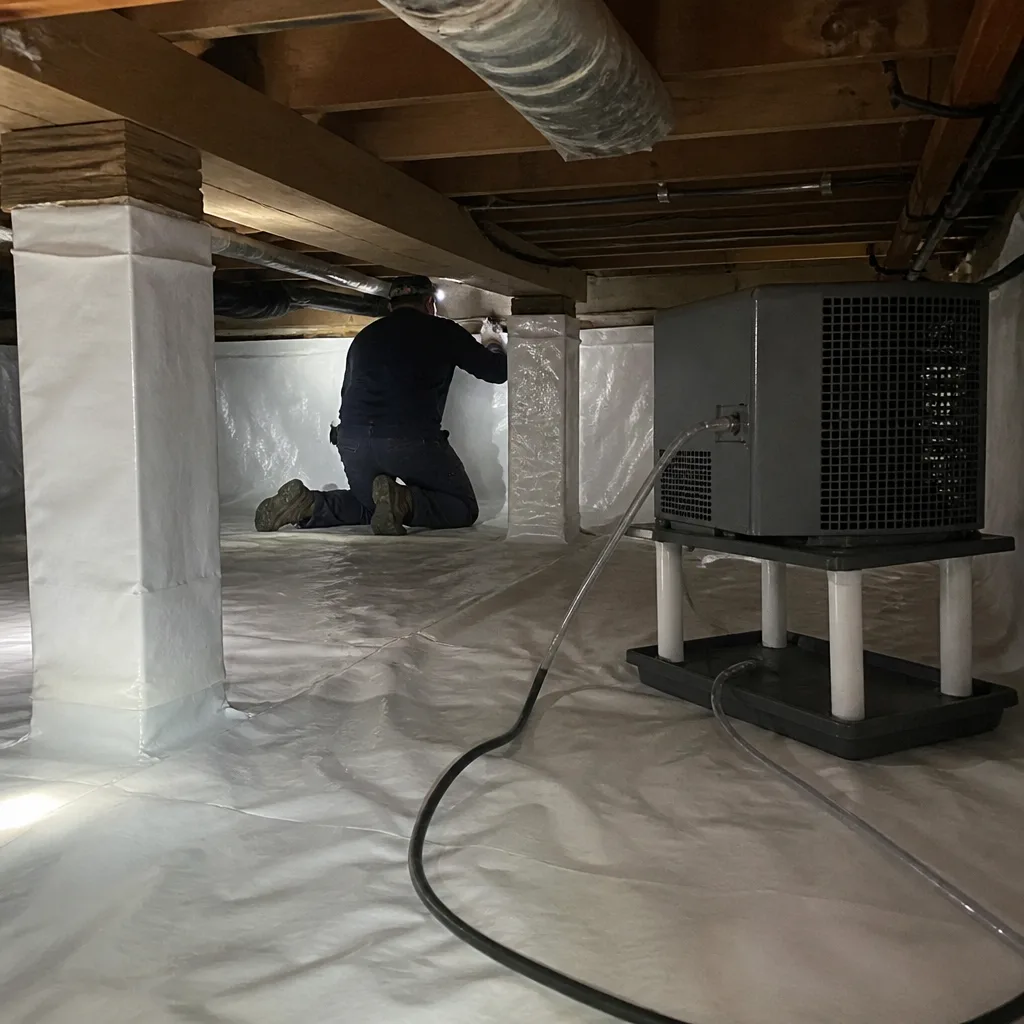
Air sealing and vapor barrier installation. Rim joists, sill plates, and penetrations are sealed with appropriate materials - closed-cell foam, caulk, or gasket depending on gap size and substrate. The vapor barrier is installed with sealed seams, mechanical attachment at walls, and proper overlap at penetrations. For encapsulations, foundation walls receive rigid foam or spray foam to specified R-value, and vents are sealed with blocking and foam.
- 5
Documentation and verification. We photograph completed work from multiple angles. Where accessible, we run a blower-door test to quantify air leakage reduction - the same pressurization measurement we use on attic jobs, showing in one number how much conditioned air your home was losing through the crawl space envelope. You receive the photo record, any test readings, and warranty documentation before final payment.
How Much Does Crawl Space Encapsulation & Vapor Barrier Cost in Long Beach?
Most crawl space projects in Long Beach fall into these ranges based on what we’ve priced in the last eighteen months:
| Service | Typical Range | What Drives the Price |
|---|---|---|
| Vapor barrier only (ground seal, no wall insulation) | $1,800-$3,500 | Square footage, access difficulty, existing debris removal |
| Full encapsulation with rigid foam walls | $5,500-$8,500 | Linear feet of wall, foam thickness, dehumidifier specification |
| Crawl space insulation (floor joists or wall board) | $2,200-$4,800 | R-value target, cavity depth, air sealing extent |
| Moisture control with drainage/sump pump | $3,500-$7,000 | Excavation needed, pump capacity, discharge routing |
| Cleanout and prep (standalone or add-on) | $800-$2,000 | Volume of material, contamination level, access constraints |
What moves you toward the top of any range: limited crawl space height (less than 18 inches), active mold requiring pre-remediation, failed drainage systems needing excavation, or locations with difficult equipment access like the narrow lots in Belmont Shore. What keeps you toward the bottom: clear access, no pre-existing damage, and straightforward rectangular geometry.
The most common overpayment we see in Long Beach is homeowners who paid for encapsulation without air sealing first - a contractor laid vapor barrier and foam board over unsealed rim joists, and the moisture problems returned within two years. Our written scope specifies sealing sequence; if a competing quote doesn’t, bring it to us for a Free Second Opinion. We’ll read it with you and show you what’s missing.
Every estimate we provide is free, includes the full written scope, and carries no obligation. Call (424) 415-7031 to schedule.
Crawl Space Encapsulation & Vapor Barrier Near Long Beach - Our Service Area
We work throughout the Long Beach metro and surrounding cities with typical response times of same-day to 48 hours depending on inspection scheduling. Our regular service area includes Crawl Space Encapsulation & Vapor Barrier in Lakewood, Crawl Space Encapsulation & Vapor Barrier in Bellflower, plus Carson, Paramount, Cerritos, Compton, Norwalk, Lynwood, Downey, Lomita, and South Gate. Homes in the Peninsula and Naples areas sometimes require morning scheduling to avoid afternoon marine layer fog that complicates material handling. We don’t charge travel fees within this radius.
Serving Long Beach, CA - Our Local Coverage Area
We’re based in the Long Beach area and know this community well. Use the map below to see our service coverage - if you’re nearby, we can almost certainly help.
Frequently Asked Questions - Crawl Space Encapsulation & Vapor Barrier in Long Beach
Crawl space encapsulation is the complete sealing of your crawl space from outside air and ground moisture using a vapor barrier on the floor, insulation on foundation walls, and sealed vents; a vapor barrier alone is the ground-sealing component that blocks soil moisture evaporation. In Long Beach’s coastal environment, encapsulation typically provides better moisture control than vapor barrier alone because it addresses humidity entering through vents as well as from the ground. We recommend full encapsulation for homes with persistent humidity above 60% or visible mold history, and vapor barrier with targeted air sealing for drier sites with limited budgets.
Most crawl space encapsulation projects in Long Beach are completed in 1-3 days; vapor barrier-only jobs often finish in a single day, while full encapsulations with rigid foam and dehumidifier installation may extend to three days for larger footprints. Access constraints are the biggest variable - we’ve completed a 1,200 square foot encapsulation in Bixby Knolls in two days because the crawl space had 3-foot clearance, and a similar footprint in Belmont Heights took four days due to 16-inch height requiring hand-carried materials. Your written price includes the timeline estimate before work starts.
Complete encapsulation in Long Beach typically runs $5,500-$8,500 for homes under 2,000 square feet of footprint, with vapor barrier-only projects at $1,800-$3,500. Price depends on linear feet of foundation wall, crawl space height, existing condition, and whether drainage or mold remediation is needed first. Call (424) 415-7031 for a free estimate with exact pricing for your home - estimates include written scope and warranty documentation with no obligation.
Yes, we install Owens Corning Foamular rigid foam board and Icynene closed-cell spray foam in Long Beach crawl spaces regularly, and we assess existing installations of these brands for condition and compatibility with new work. Owens Corning board is our default for wall insulation in standard encapsulations; Icynene serves complex geometries or where higher R-value per inch is needed in constrained spaces. Your written scope specifies which product and thickness applies to each assembly.
We answer calls 24/7 through a live person, not voicemail, and we prioritize active water intrusion, sewage backup in crawl spaces, or structural concerns that pose immediate risk. Same-day response is often available for Long Beach emergencies; for non-urgent encapsulation or vapor barrier installation, we typically schedule within 48 hours. Call (424) 415-7031 anytime - if it’s after hours, our on-call technician will assess whether the situation needs immediate dispatch or next-day scheduling.
All completed work is backed by our 365-Day Done Right Promise - if it’s not done right, we make it right - plus manufacturer warranties on materials (typically 10 years on Owens Corning Foamular, lifetime on Icynene foam when installed to specification). The Haven Standard requires written warranty delivery before work starts, so you know exactly what’s covered and for how long. Warranty claims are handled directly with our office, not forwarded to a manufacturer help line.
Clear access to the crawl space entrance, remove stored items from the area, and ensure we can reach electrical outlets for our tools; we’ll handle everything else including material delivery, protection of finished surfaces, and final cleanup. If you have pets, secure them away from work areas as we’ll be entering and exiting frequently with bulky materials. We photograph the work area before starting as part of our Documented Photo Record, so any pre-existing conditions are noted - you don’t need to document anything yourself.
Schedule Your Crawl Space Encapsulation & Vapor Barrier Service in Long Beach Today
Call (424) 415-7031 to speak with a live person now, or request a free estimate for our Crawl Space Encapsulation & Vapor Barrier in Long Beach. Every job starts with a written price, written scope, and written warranty before any work begins - Haven Standard Clause 1, no exceptions. You’ll receive a Documented Photo Record when we finish, and on applicable jobs, before-and-after blower-door numbers showing the air-sealing result you paid for. Same-day scheduling available.
Written by Wes Okafor, Owner at Topside Attic Insulation Long Beach, serving Long Beach since 2016.