
Last updated September 23, 2026
DIY vs Professional Insulation: The Long Beach Homeowner’s Decision Guide
Here’s a fact that stops most Long Beach homeowners mid-planning: you can legally install batt insulation in an open wall cavity under California’s owner-builder provisions without ever pulling a contractor license, but the moment that same work requires a Title 24 CF-6R installation certificate, only a licensed C-2 Warm-Air Heating, Ventilating and Air-Conditioning contractor can sign it. That signature becomes a recorded document. Skip it, and a future buyer’s inspector flags unpermitted energy work during escrow. We’ve seen this delay sales in Belmont Shore and Bixby Knolls by three to six weeks while homeowners scramble for retroactive documentation. This guide draws the actual legal and technical line by task, not by general category, so you know precisely where DIY ends and professional work begins, and complements our Insulation Permits, Codes & Inspections in CA: What You Need to Know for the full regulatory picture.
Quick Answer
DIY insulation in Long Beach makes sense for adding loose-fill depth to an already-sealed attic, installing pre-cut batts in accessible knee walls, or laying radiant barrier over existing insulation in a vented attic. Professional work is required when air sealing must precede insulation, when spray foam or dense-pack cellulose demands specialized equipment, or when Title 24 compliance documentation must accompany the installation for permit closure or resale.
Table of Contents
- The California Legal Boundary: What Homeowners Can Actually Self-Perform
- Where DIY Saves Money Without Sacrificing Performance
- Where DIY Masks the Real Problem
- The Blower-Door Rental Reality: What First-Time Users Misread
- How to Document DIY Work for Real Estate Disclosures and Permit Inspections
- Cost Comparison: Real Numbers for Long Beach Projects
- Common Mistakes to Avoid
- When to Call a Professional
- Frequently Asked Questions
- The Bottom Line
The California Legal Boundary: What Homeowners Can Actually Self-Perform
California Business and Professions Code Section 7044 allows owner-builders to perform construction work on their own single-family dwelling without a contractor license, provided they occupy or intend to occupy the home and do not sell or lease it within one year of completion. This is the legal foundation for DIY insulation. But the exemption has hard edges that insulation-specific codes sharpen considerably.
Here’s where the line sits in practice:
- No license needed: Installing unfaced fiberglass batts in an open wall cavity during a remodel; blowing additional loose-fill cellulose over existing attic insulation where no air sealing is required; laying radiant barrier foil across attic joists; installing rigid foam board in a crawl space that does not require vapor barrier integration with the foundation wall.
- License required for compliance documentation: Any insulation work that triggers Title 24, Part 6 energy efficiency standards and requires a CF-6R certificate of installation. This includes most new construction, additions over 1,000 square feet, and alterations where the permit authority requires HERS (Home Energy Rating System) verification. The CF-6R must be signed by a licensed contractor, and the HERS rater must be independent.
- License practically required: Spray foam insulation of any type, because closed-cell and open-cell polyurethane foams are classified as chemical applications requiring specialized respiratory protection and ventilation control; dense-pack cellulose in closed cavities, which requires a blowing machine with pressure regulation that rental units rarely include; any work involving disturbed vermiculite or asbestos-containing materials, which triggers Cal/OSHA notification requirements.
Long Beach sits in Climate Zone 8 under Title 24, which means prescriptive insulation R-values are among the highest in the state: R-38 to R-49 in attics, R-13 to R-19 in wood-framed walls, R-19 to R-30 in floors. An owner-builder can install material that meets these values, but cannot self-certify the installation. If your permit set includes a HERS verification plan, you need a licensed C-2 or B-General contractor to sign off.
The resale complication is what we see most often. In neighborhoods like California Heights and Los Altos, where 1920s and 1930s homes trade frequently, buyers’ agents increasingly request documentation of any energy improvements. A DIY attic insulation job performed in 2019 without CF-6R paperwork becomes a disclosure question in 2025. The homeowner must either produce documentation, accept a price reduction, or delay closing for HERS verification. The original $400 savings from skipping professional installation can cost $2,000 to $4,000 in re-verification fees and holding costs, as detailed in our Insulation Cost Breakdown: The Long Beach Homeowner’s Reference for 2026.
Where DIY Saves Money Without Sacrificing Performance
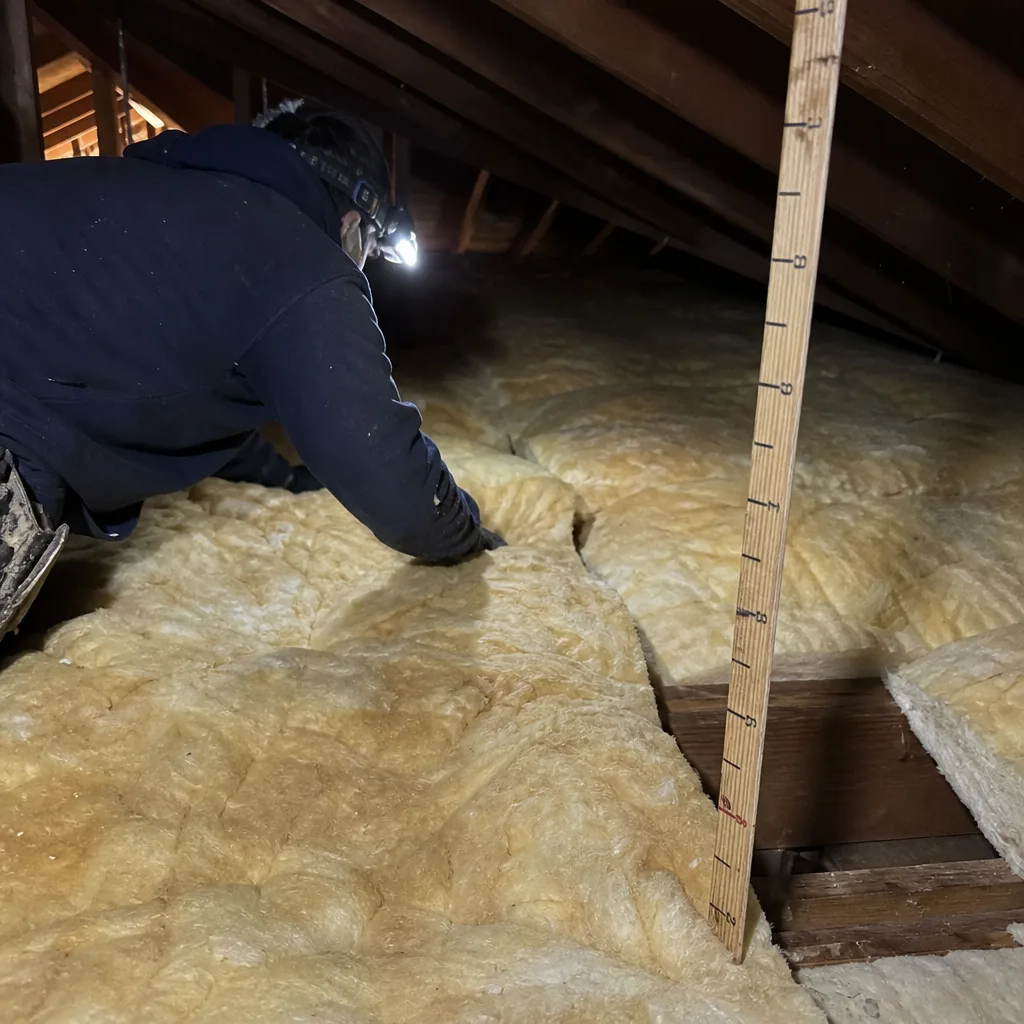
There are three insulation scenarios in Long Beach where a careful homeowner can achieve professional-grade results without professional involvement. The key is that none of them require diagnostic equipment to verify success, and none trigger Title 24 documentation requirements.
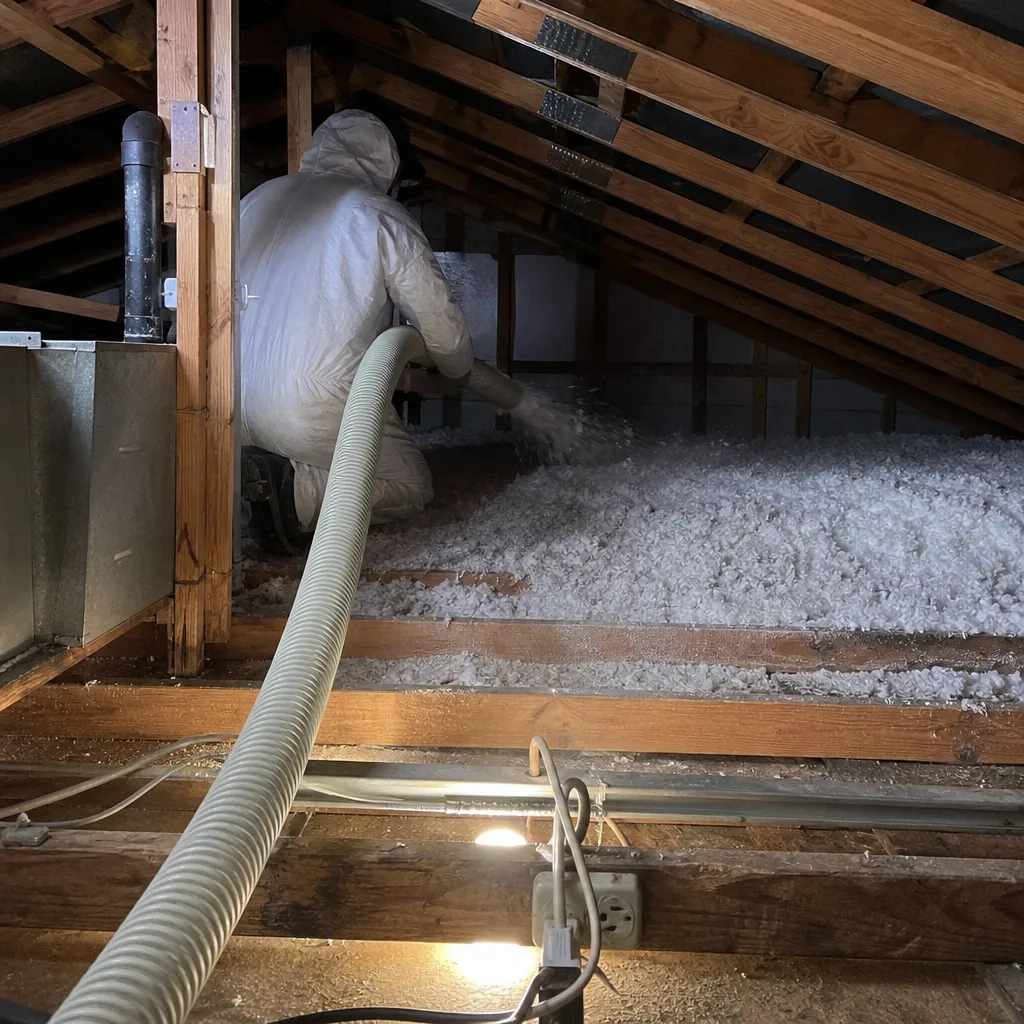
1. Adding Loose-Fill Depth to an Already-Sealed Attic
If your attic was professionally air-sealed within the last decade and you simply need to restore depth lost to settling or add R-value for Climate Zone 8 compliance, blowing additional cellulose or fiberglass is straightforward. The critical precondition is the “already-sealed” part. Top plates, can lights, plumbing penetrations, and chimney chases must be sealed with fire-rated caulk or foam. If you did not witness this work or have photos of sealed penetrations, assume the attic is not sealed.
The process:
- Measure existing depth with a ruler at ten evenly spaced locations, avoiding joist tops. Average the readings.
- Calculate bags needed using the manufacturer’s coverage chart, which specifies square feet per bag at target depth. For GreenFiber cellulose, achieving R-38 over 1,000 square feet requires approximately 30 bags at the settled density.
- Rent a blowing machine from a Long Beach-area home center. Most machines include 100 feet of hose. Verify the machine has agitator paddles, not just auger feed, or cellulose will clog.
- Install baffles at every eave vent to maintain soffit airflow. This is the most commonly skipped step and the most consequential. Blocked soffit vents create moisture accumulation that we see regularly in Belmont Heights attics.
- Blow perpendicular to joists in two passes, with the second pass offset by half a hose width to fill gaps.
- Document with photos showing depth measurements, baffle installation, and bag labels with R-value claims.
2. Pre-Cut Batts in Accessible Knee Walls
Second-story additions in Bluff Park and Bluff Heights often have knee wall spaces behind upstairs bedrooms. These are short walls under sloped ceilings, typically with attic space behind them. Installing faced batts between studs, then covering with rigid air barrier, is within reach of a careful DIYer. The facing goes toward the conditioned side. Use 1-inch rigid foam or housewrap as the air barrier, sealed with acoustic sealant at edges.
3. Radiant Barrier Over Existing Insulation
Long Beach’s cooling-dominated climate makes radiant barrier relevant for vented attics with ductwork. Laying perforated radiant barrier foil across joists, stapled every 6 inches, reduces attic temperatures by 20 to 30 degrees in summer. This is purely additive work with no sealing implications. Do not use unperforated foil in attics, as it creates a vapor barrier on the wrong side of the assembly for our coastal climate.
Where DIY Masks the Real Problem
This is where we spend most of our diagnostic time, and where DIY enthusiasm does active damage. The pattern is consistent: a homeowner notices high summer cooling bills, reads that attic insulation should be R-38, sees their attic has settled to R-19, and blows additional cellulose or fiberglass over the top. The bills do not improve. The homeowner assumes the insulation “didn’t work” and lives with the cost, or calls us two years later.
What actually happened: the attic floor was never air-sealed. Conditioned air was escaping through top plate gaps, electrical penetrations, and the chase around the furnace flue. The new insulation buried these leaks, making them harder to find and more expensive to fix. The homeowner paid for R-38 performance and received R-38 material over an R-0 air barrier.
We see this most often in 1940s and 1950s Long Beach tract homes in Lakewood Village and the Plaza. These houses were built with no top plate sealing, minimal blocking at partition walls, and open chases for knob-and-tube wiring that was later abandoned in place. The insulation contractor who installed the original batts in the 1970s or 1980s did not seal, because sealing was not standard practice then and because many of those contractors were insulation-only operations without air-sealing training.
The diagnostic that reveals this is a blower-door test, which we perform before every attic insulation in Long Beach job. A blower door is a calibrated fan mounted in an exterior door frame that depressurizes the house to 50 Pascals. The resulting airflow in cubic feet per minute at 50 Pascals, or CFM50, quantifies total building envelope leakage. In our experience, a 1,200-square-foot Long Beach home from the 1940s typically tests at 3,500 to 5,000 CFM50 before air sealing. After sealing top plates, can lights, penetrations, and the attic access hatch, we typically see 1,800 to 2,500 CFM50. That reduction, not the insulation depth, is what changes utility bills.
DIY insulation over an unsealed attic is not neutral. It is negative. It obscures leaks, traps moisture against drywall if vapor drive is present, and creates a false sense of completion that delays proper remediation by years.
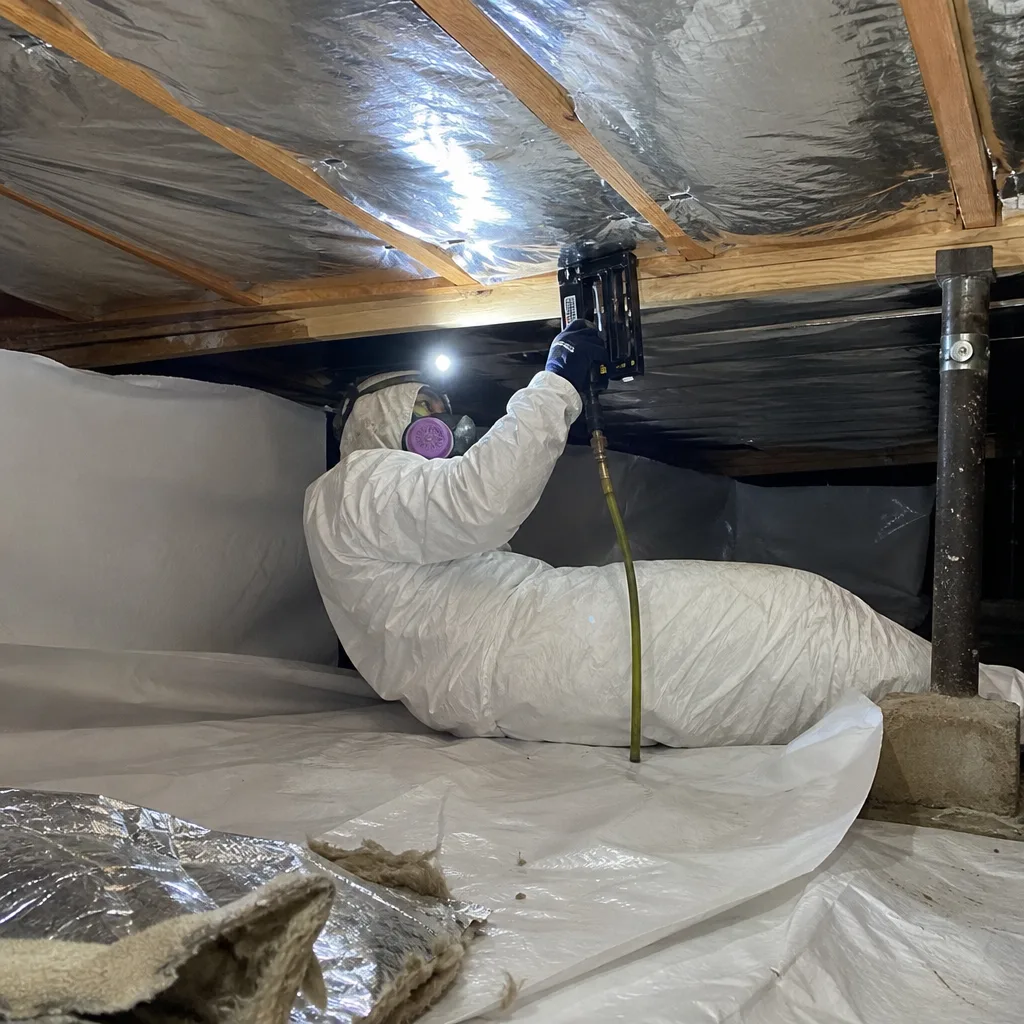
The same principle applies to crawl spaces. A homeowner might lay polyethylene sheeting over dirt, believing they have “encapsulated” the crawl space. Without wall insulation, rim joist sealing, and mechanical dehumidification or conditioned air supply, this partial measure can increase relative humidity and accelerate floor joist decay. Crawl space encapsulation & vapor barrier in Long Beach requires integrated design that accounts for our marine climate’s specific moisture patterns.
The Blower-Door Rental Reality: What First-Time Users Misread
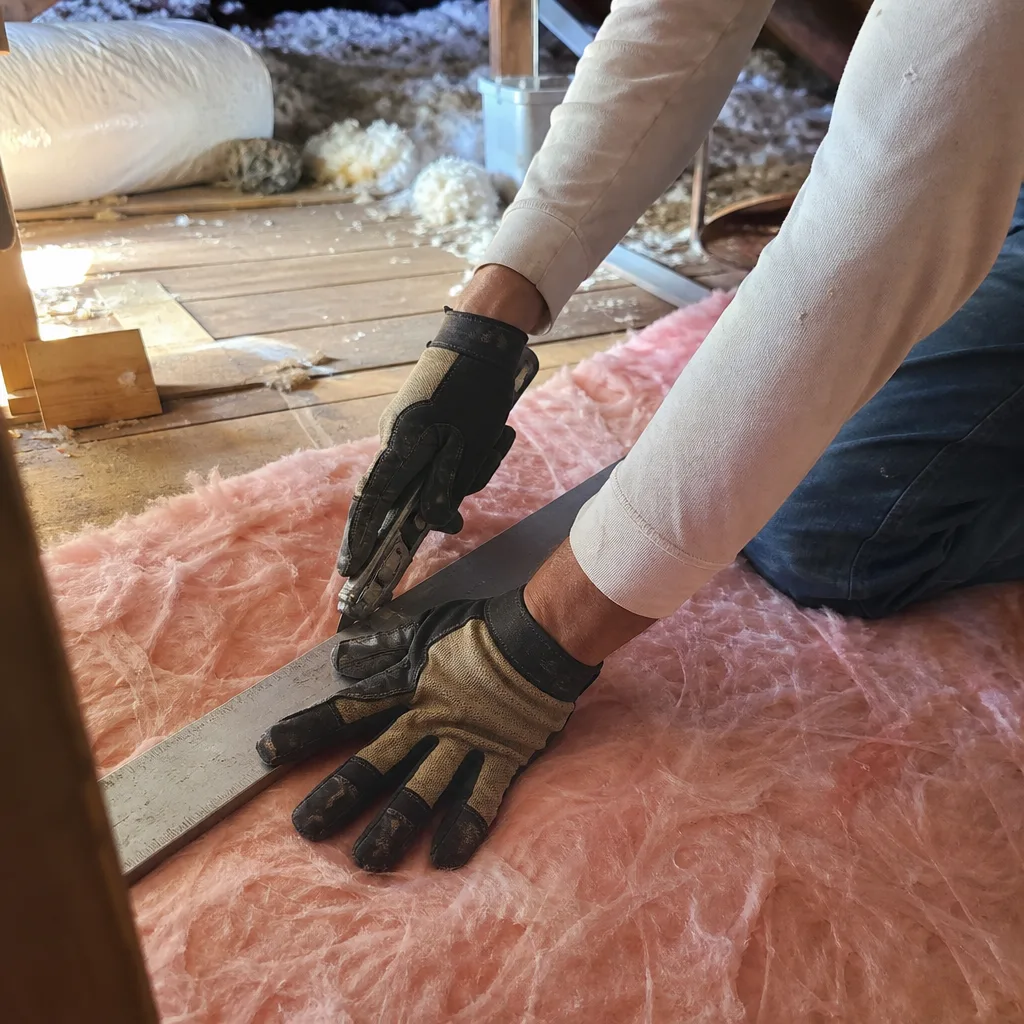
Blower-door equipment is available for rent in the Los Angeles metro area. The machines are not the barrier to accurate measurement. Interpretation is.
A rental unit provides CFM50, the raw airflow number. What it does not provide is context for that number. A first-time user typically encounters three misreading scenarios that lead to misdirected remediation:
Misreading 1: Comparing to published “target” numbers without normalization. A 2,500 CFM50 reading might be excellent for a 3,000-square-foot house and terrible for an 800-square-foot bungalow. Professional analysis divides CFM50 by conditioned floor area to get CFM50 per square foot, or by building volume to get air changes per hour at 50 Pascals (ACH50). California new construction targets 5 ACH50 or lower. Existing homes in Long Beach often test at 10 to 20 ACH50 before work. Without normalization, the raw number is meaningless.
Misreading 2: Attributing all leakage to the attic. A blower door measures total envelope leakage. It does not locate it. A first-time user feels drafts at the attic hatch and concludes the attic is the primary leak. In reality, the largest leaks might be at the crawl space rim joists, the garage-to-house wall, or recessed can lights in the ceiling below the attic. We use a theatrical fog machine and infrared camera during our diagnostics to locate leaks precisely. Rental packages rarely include either tool.
Misreading 3: Testing after insulation installation. The correct sequence is blower-door test, air sealing, blower-door test, insulation installation. A homeowner who insulates first, then tests, cannot measure the sealing effect separately from the insulation effect. The before-and-after comparison that justifies the sealing investment is lost.
The cost of these misreadings is not theoretical. We have been called to homes in Naples and the Peninsula where a homeowner rented a blower door, misidentified the primary leak location, and spent $800 on garage weatherstripping that changed their CFM50 by less than 100. The actual problem was unsealed top plates in the attic, which a professional crew would have identified in the first hour of diagnostic work.
Rental blower doors are valuable tools for the educated user. But they are medical instruments, not bathroom scales. The number requires interpretation by someone who has tested hundreds of homes in similar construction eras and climates.
How to Document DIY Work for Real Estate Disclosures and Permit Inspections
If you proceed with DIY insulation, documentation is not optional. It is the difference between a smooth sale and an escrow contingency. Here’s what to retain and how to organize it.
Photo Record Requirements
- Before condition: Wide shots of each work area showing existing insulation depth, visible penetrations, and any signs of moisture, pest activity, or degraded material. Date-stamped.
- During work: Close-ups of each sealed penetration, if sealing was performed; baffle installation at eave vents; any fire-blocking or draft-stopping added; material bag labels showing manufacturer, product name, and claimed R-value per inch.
- After condition: Depth measurements with a ruler visible in frame, taken at minimum ten locations per attic zone; wide shots showing uniform coverage without gaps or compression.
Paper Record Requirements
- Material receipts with date of purchase, product specifications, and square-foot coverage claims.
- Manufacturer installation instructions, followed precisely, with any deviations noted in writing with justification.
- Depth calculation worksheet showing target R-value, required inches at stated R-value per inch, and actual measured depths.
- If a permit was pulled, the approved inspection card with final sign-off. If no permit was required, a written statement from the Long Beach Development Services building counter confirming exemption, with staff name and date.
Disclosure Language
When selling, disclose DIY insulation work in the Transfer Disclosure Statement with this specificity: “Attic insulation added [date] by owner-builder. Material: [product name], [R-value] per inch, [depth] inches installed. No permit required per [exemption basis] / Permit #[number] with final inspection [date]. Documentation available upon request.” Vague language like “insulation upgraded” invites inspector suspicion.
We provide a Topside Attic Insulation Long Beach home Documented Photo Record on every professional job we complete. Homeowners who DIY should replicate this standard, not because it is our standard, but because it is what a buyer’s inspector expects to see in 2025 and beyond.
Cost Comparison: Real Numbers for Long Beach Projects
These ranges reflect 2024-2025 material and labor costs in the Long Beach market. They assume a single-story, 1,200-square-foot home with 800 square feet of attic floor, typical of mid-century construction in the city.
| Project Type | DIY Cost Range | Professional Cost Range | What Drives the Difference |
|---|---|---|---|
| Add loose-fill over existing, sealed attic | $400-$700 (material + machine rental) | $1,200-$2,000 | Labor, setup, disposal, documentation |
| Attic air sealing + new insulation to R-38 | $800-$1,400 (material only, no diagnostic) | $2,800-$4,500 | Blower-door testing, sealing labor, equipment, warranty |
| Spray foam, open-cell, roofline | Not practically DIY | $4,500-$7,500 | Chemical application, respiratory protection, ventilation, code compliance |
| Crawl space encapsulation with vapor barrier | $600-$1,200 (partial: ground cover only) | $3,500-$6,500 | Wall insulation, rim joist sealing, dehumidification, integrated design |
| Wall insulation, dense-pack cellulose | $1,500-$2,500 (machine rental, limited access) | $3,000-$5,500 | Cavity assessment, pressure regulation, patch and paint, HERS documentation |
The professional ranges include our Written Price Before Any Work Starts, which means the number you receive after our diagnostic is the number on the final invoice. No change orders for “unforeseen conditions” that should have been identified during inspection.
Where DIY saves money meaningfully: adding depth to an already-sealed attic, where the only variables are material quantity and distribution. Where DIY costs more in the long run: any project where air sealing is required but skipped, where material selection is mismatched to the assembly (fiberglass in a moisture-prone crawl space, for example), or where documentation gaps create resale friction.
Spray foam insulation in Long Beach is rarely a DIY candidate. The material cost alone for a roofline application approaches $2,500, and the respiratory protection, ventilation, and ignition barrier requirements add another $800 to $1,200 in equipment that has no resale value after a single use. The professional premium for spray foam is largely compliance and safety, not material markup.
Common Mistakes to Avoid
- Installing insulation before air sealing. This is the most expensive error we correct. Once insulation covers top plates and penetrations, sealing requires removal and reinstallation. The rework costs 40% more than doing both correctly the first time.
- Compressing batts to fit. A batt compressed from 6 inches to 3 inches loses approximately 50% of its R-value. We see this in Long Beach attic hatches and around obstructions where homeowners forced standard-width batts into narrow cavities.
- Blocking soffit vents with insulation. Every vented attic in Long Beach needs continuous airflow from soffit to ridge. Baffles cost $2 each and take five minutes to install. Skipping them creates moisture problems that require $3,000 to $8,000 in mold remediation.
- Using faced batts in attic floors. The facing is a vapor retarder. In our marine climate, it belongs on the warm-in-winter side of walls, not on attic floors where it can trap summer moisture against drywall. Use unfaced batts in attics, with vapor management at the ceiling plane.
- Ignoring can lights. Older recessed lights are not insulation-contact rated. Covering them with cellulose or fiberglass creates fire hazards. They must be replaced with IC-rated fixtures or covered with pre-formed fire-rated enclosures before insulation is added.
- Assuming all spray foam is equivalent. Open-cell and closed-cell polyurethane have different vapor permeance, R-value per inch, and structural contribution. Using open-cell below grade or closed-cell in a roofline without ventilation analysis leads to assembly failure. We specify Icynene and Demilec products with known performance characteristics for each application.
- Failing to document for resale. The $400 saved by skipping permit or professional documentation becomes a $2,000 to $4,000 problem at closing. Photograph everything, retain receipts, and confirm exemption status in writing if no permit is pulled.
When to Call a Professional
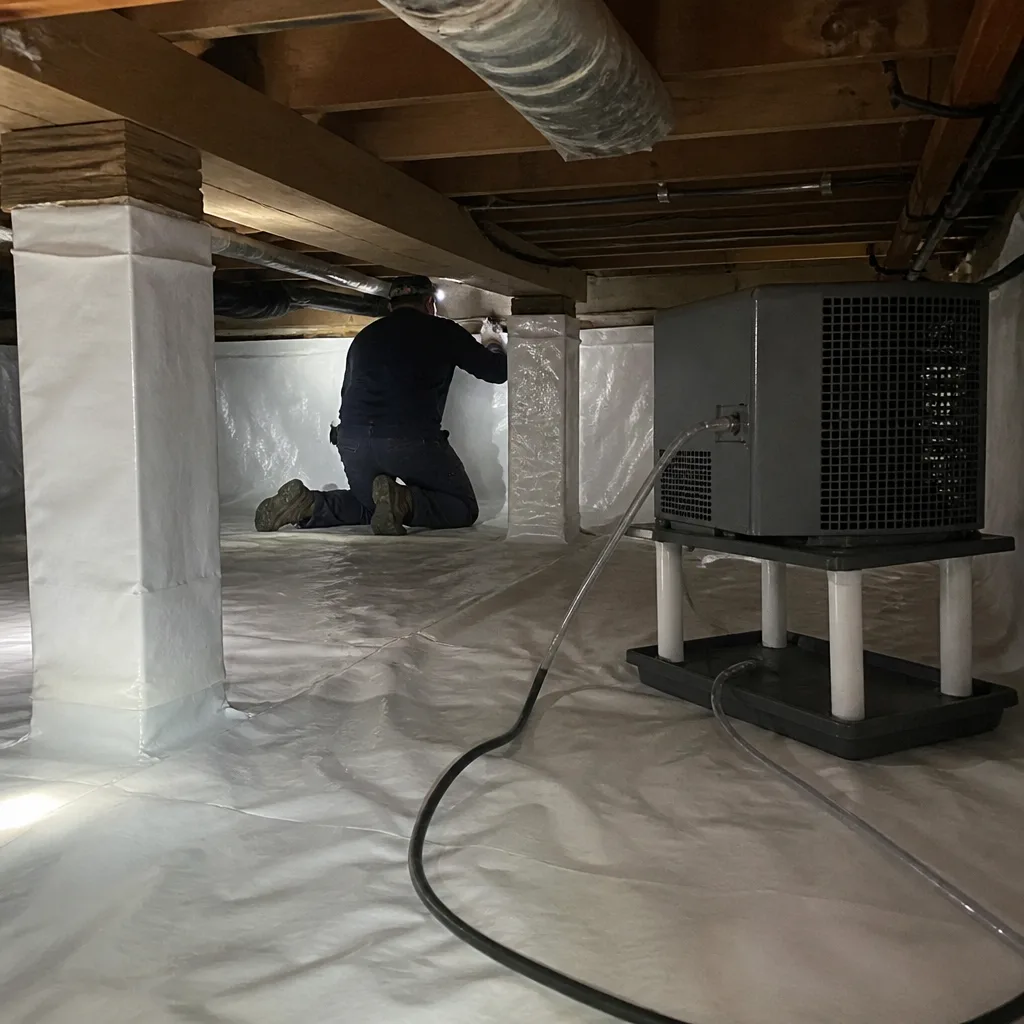
Call a professional when the work requires diagnostic equipment you do not own and cannot interpret, when Title 24 documentation must accompany the installation, or when the assembly complexity exceeds your comfort with building science. See our How to Hire a Insulation Contractor in Long Beach: A Step-by-Step Guide for what to ask before signing. Specifically: spray foam of any type; dense-pack cellulose in closed cavities; any project where air sealing must precede insulation and you have no blower-door baseline; crawl space work involving vapor barrier integration with foundation walls; and any situation involving disturbed vermiculite, asbestos, or active rodent infestation.
Topside Attic Insulation Long Beach offers free estimates in Long Beach. We’ll perform a blower-door test, show you the CFM50 number, and explain exactly what sealing and insulation would change it. Call (424) 415-7031. Every estimate includes a Written Price Before Any Work Starts and a Documented Photo Record if you proceed. Under our 365-Day Done Right Promise, if it’s not done right, we make it right.
Frequently Asked Questions
Not for adding insulation to an existing attic in a single-family home if the work does not alter structure, electrical, or mechanical systems. If the project includes air sealing as part of a Title 24 compliance path, or if it is new construction or an addition, a permit and HERS verification are required. Call Long Beach Development Services at (424) 415-7031 to confirm your specific project.
Most attic insulation jobs in a 1,200-square-foot Long Beach home run between $2,800 and $4,500 when air sealing is included, or $1,200 to $2,000 for adding loose-fill over existing sealed insulation. The range depends on access difficulty, existing material condition, and whether baffles, hatch insulation, or can light enclosures are needed. Call (424) 415-7031 for a written price specific to your home - estimates are free.
Yes, rental units are available in the Los Angeles area for approximately $250 to $400 per day. However, accurate interpretation requires normalizing the CFM50 reading to floor area or building volume, locating leaks with supplemental tools like infrared cameras or fog machines, and understanding typical leakage patterns for your home’s construction era. Most first-time users misidentify the primary leak location and spend money on the wrong remediation.
Only if you document it thoroughly. Future buyers and their inspectors increasingly request energy improvement documentation. DIY work without photos, material specifications, and permit status confirmation creates disclosure risk. Professional work with a written scope, warranty, and documented photo record transfers cleanly to the next owner. Consider whether your time and documentation effort justify the savings.
Installing new insulation over an unsealed attic floor. This buries air leaks, makes them harder and more expensive to fix later, and produces no performance improvement because conditioned air continues to escape. The correct sequence is seal first, test to confirm, then insulate. We’ve corrected this error in homes throughout Belmont Shore, Bixby Knolls, and Lakewood Village.
Yes. Bring us any written estimate for insulation work in Long Beach. We’ll review the scope, material specifications, and pricing with you, and we’ll provide our own written price for comparison. No obligation. This is Haven Standard practice, not a limited promotion.
The Bottom Line
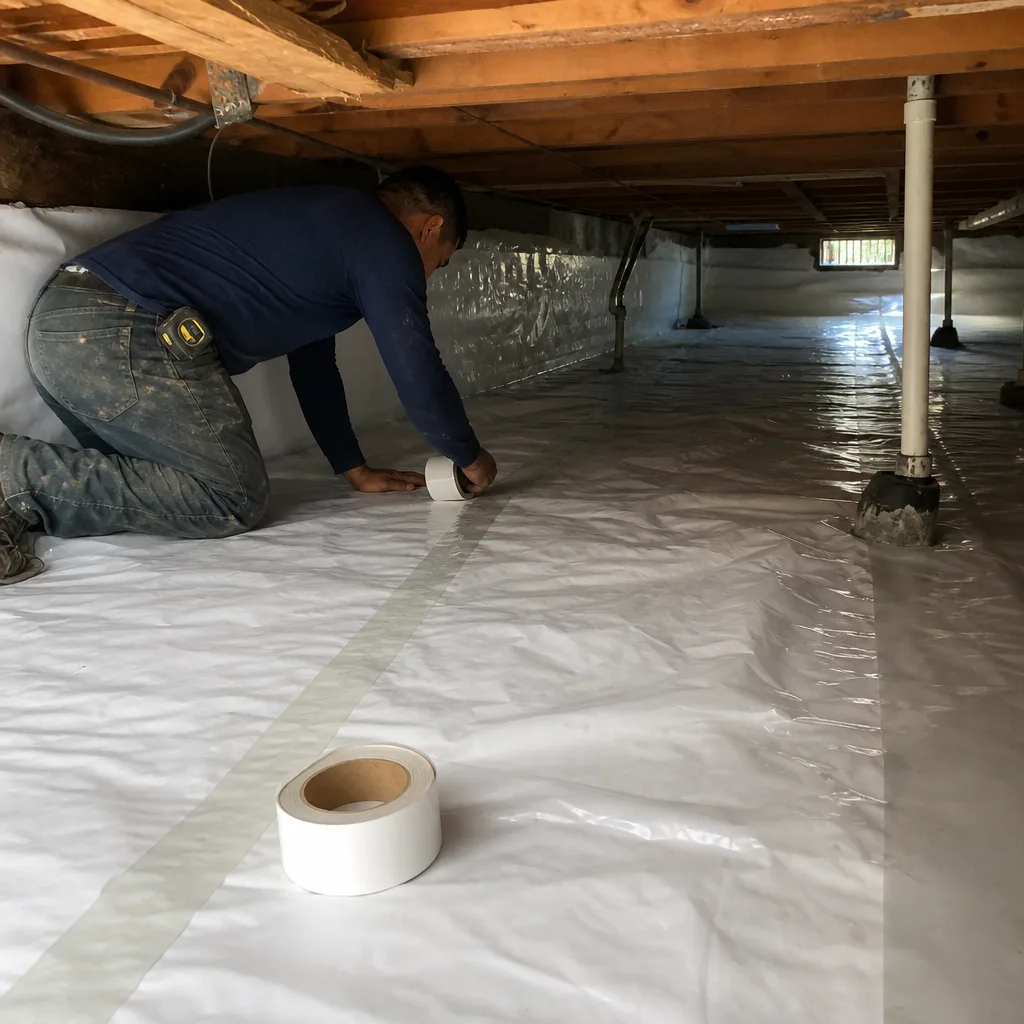
The DIY-versus-professional question for Long Beach insulation is not about your skill with a staple gun. It is about whether the task requires diagnostic equipment to verify success, licensed certification to document compliance, or building science knowledge to avoid assembly failure. Adding loose-fill to a sealed attic is within reach of a careful owner-builder. Air sealing, spray foam, dense-pack walls, and any work requiring Title 24 documentation is not. The cost of professional work includes something DIY cannot replicate: a before-and-after blower-door number that proves the building envelope changed, a written warranty that transfers to the next owner, and a documented record that survives inspection. Choose the right boundary for your project, and document everything if you cross it alone. For additional guidance, explore more guides & resources on our blog.
Written by Wes Okafor, Owner at Topside Attic Insulation Long Beach, serving Long Beach since 2016.