
Last updated September 23, 2026
Attic Insulation Maintenance Checklist for Long Beach Homeowners
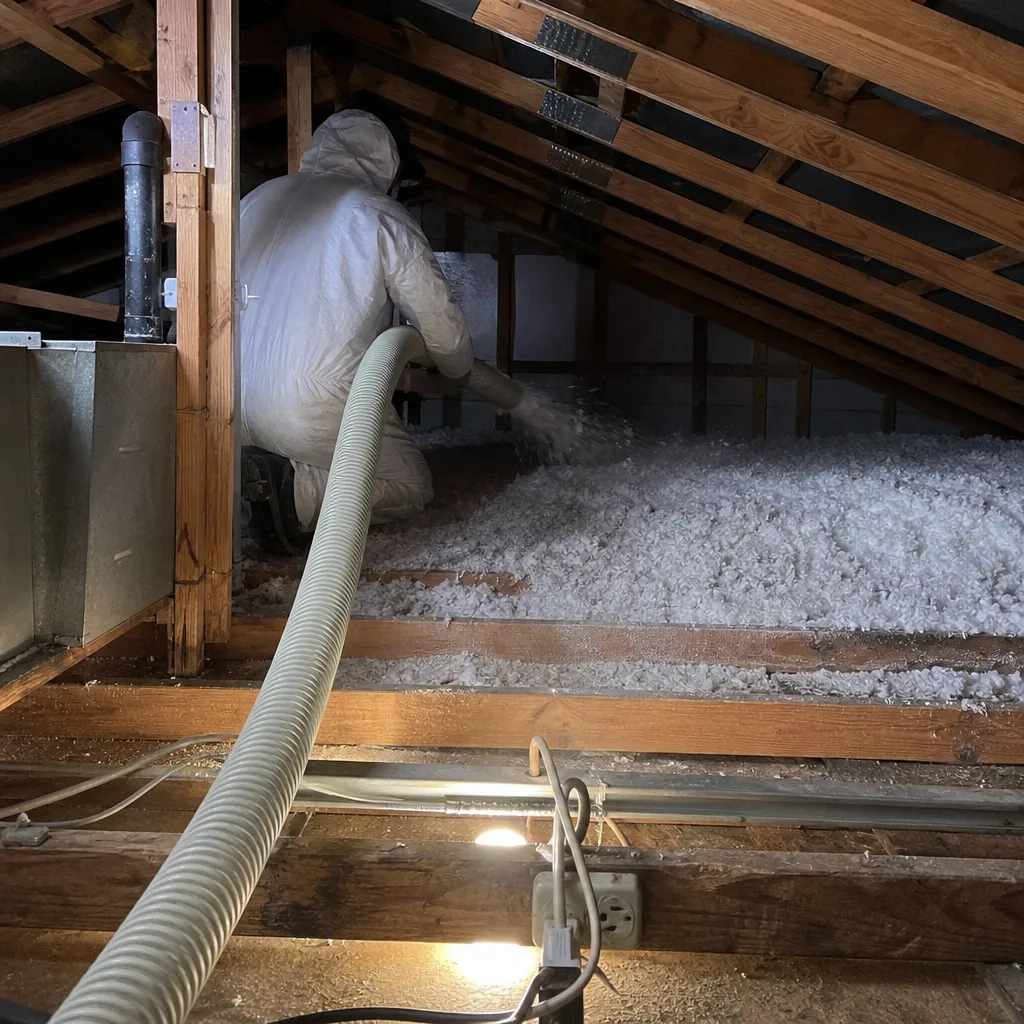
Blown fiberglass in a Long Beach attic loses roughly 20% of its installed R-value in the first decade, not from material failure but from air movement through the depth. This happens silently, season after season, while your HVAC system compensates until it can’t. In The Complete Guide to Insulation in Long Beach, you’ll learn the specific inspection intervals tied to Long Beach’s coastal climate, how to measure settled depth against your original job documentation, what pest intrusion looks like before it reaches the access hatch, and how to build an inspection record that future contractors cannot ignore. We’ve sealed and insulated over 9,000 homes since 2016, and the attics that perform best at year ten are the ones where someone checked them at year three.
Quick Answer
Attic Insulation services in Long Beach mean inspecting twice yearly - once before marine layer season (May) and once after Santa Ana winds (November) - checking settled depth against original specs, photographing six or more measurement points, verifying air-barrier continuity, and documenting everything so the next contractor sees the full history. Most insulation degradation is inspectable and preventable; it rarely fails all at once.
Table of Contents
- Why Attic Insulation Degrades Differently in Long Beach
- The Long Beach Inspection Schedule: Timing by Climate Event
- Measuring Settled Depth and When It Matters
- Air Barrier and Top Plate Inspection
- Pest Intrusion, Moisture, and Contamination Signs
- HVAC Duct Leakage Into Attic Insulation
- Building Your Inspection Record
- Common Mistakes to Avoid
- When to Call a Professional
- Frequently Asked Questions
Why Attic Insulation Degrades Differently in Long Beach
Long Beach sits in a unique coastal zone where the marine layer, Santa Ana wind events, and urban heat island effects create attic conditions that inland California doesn’t experience. The Pacific Ocean moderates our temperatures, but it also drives moisture cycling that compresses and displaces loose-fill insulation in ways that attic owners in Riverside or San Bernardino rarely see.
The marine layer rolls in most nights from May through July, pushing cool, saturated air against warm roof decks. This temperature differential creates convection currents in vented attics. Those currents don’t just move air; they move insulation particles, especially low-density blown fiberglass. Over years, this redistribution creates thin spots near the eaves and valleys where thermal bridging is worst. We’ve measured attics in Belmont Shore where the center held 14 inches of fiberglass but the north eave had compressed to 4 inches - a functional R-value drop from R-38 to R-11 in a zone that matters enormously for winter heat loss.
Santa Ana winds compound the problem from September through January. These hot, dry, pressurized events force air through every penetration in the ceiling plane. If your top plates, can lights, and duct boots aren’t sealed - and many Long Beach homes built between 1945 and 1985 never were - the wind pressurizes the attic and displaces loose-fill toward the leeward side. We’ve found drifts of insulation 18 inches deep against west-facing gable walls while east slopes sat nearly bare after a three-day Santa Ana event in 2020.
The urban heat island matters too. Long Beach’s dense core and asphalt coverage keep nighttime temperatures elevated compared to surrounding county areas. Attics don’t cool down as much, so insulation faces more thermal cycling. This doesn’t degrade the material itself - fiberglass and cellulose are thermally stable - but it accelerates the air movement that redistributes and compresses it.
What this means practically: Long Beach attics need more frequent depth verification than the manufacturer’s generic guidance suggests. The “set it and forget it” approach works in stable climates. It doesn’t work here.
The Long Beach Inspection Schedule: Timing by Climate Event
We recommend two formal inspections yearly, timed to specific local weather patterns rather than arbitrary calendar dates. This catches problems when they’re small and documents conditions before and after our most disruptive climate events.
Pre-Marine Layer Inspection: Late April to Early May
Before the marine layer season begins, verify that your attic ventilation is balanced and that insulation depth is uniform. The cool, moist air of marine layer season will test any existing moisture problems. You want to find them before the fog does.
- Check attic ventilation intake at soffits or eaves - look for blocked vents from prior wind events or nesting material
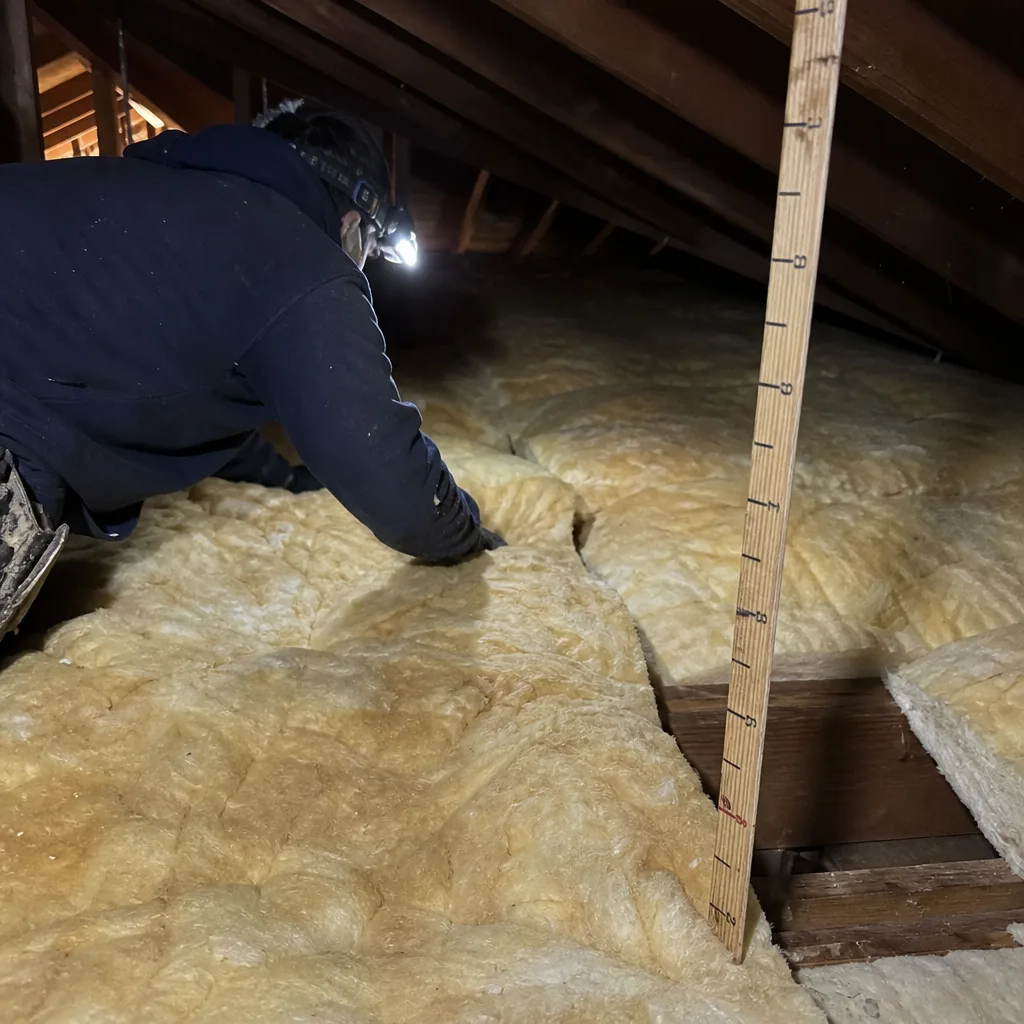
- Measure insulation depth at six points: two near the access hatch, two at mid-attic, two at the eaves
- Photograph each measurement point with the tape measure visible in frame
- Inspect for dark staining on insulation facing, which indicates prior moisture cycling
- Verify bathroom and kitchen exhaust ducts terminate at exterior vents, not into attic space - a common finding in Long Beach’s 1950s-1970s housing stock
Post-Santa Ana Inspection: Late November to Early December
After Santa Ana season, check for wind-driven displacement and seal integrity. The pressurized, dry air finds every gap.
- Re-measure the same six points from your May inspection
- Look for drift patterns - deeper accumulation on leeward walls, bare spots on windward slopes
- Inspect top plates and electrical penetrations for visible gaps where sealant may have dried and cracked
- Check for new pest entry - Santa Ana winds often damage roof vents and fascia that rodents exploit
- Document any depth loss exceeding 15% from May measurements
Post-Heavy-Rain Check: Within 48 Hours
Long Beach sees concentrated rain events, particularly during El Niño winters. A single compromised flashing or vent seal can introduce moisture that mold and compressed insulation will preserve for months.
- Look for water staining on rafters or roof deck, not just on insulation
- Check for insulation clumping - wet fiberglass mats into dense, ineffective pads; wet cellulose darkens and compacts
- Smell for mustiness at the access hatch before entering - a significant mold issue often announces itself
- Inspect the access hatch itself for proper weatherstripping and latch seal
Neighborhoods near the Los Angeles River floodplain, including parts of Wrigley and North Long Beach, should treat every significant rain event as a trigger inspection. The water table and drainage patterns in these areas create attic moisture risks that hillside neighborhoods like Belmont Heights don’t share.
Measuring Settled Depth and When It Matters
Settling is normal. Performance loss from settling is not, if the material was installed to correct density. The key is comparing current measured depth to the installed depth documented on your original job record - or estimating original depth if you don’t have records.
How to Measure
Use a rigid measuring tape, not a flexible cloth tape that bends over insulation. At each measurement point, compress gently until you feel the drywall or existing substrate, then read the depth at the top of the insulation layer. For loose-fill fiberglass, don’t compress beyond the natural resistance of the material - you’re measuring settled depth, not maximum compression.
Take six measurements minimum: two within 3 feet of the access hatch (where traffic and disturbance are highest), two at mid-attic, and two within 3 feet of the eaves (where wind and thermal bridging stress the material most). Mark these points on a simple sketch or photograph so you return to the same locations.
Interpreting the Numbers
| Current Depth vs. Original Installed Depth | Performance Impact | Recommended Action |
|---|---|---|
| 90-100% of original | Negligible | Continue scheduled inspections |
| 75-89% of original | Moderate loss; thermal bridging at eaves likely | Add insulation to restore depth; inspect air sealing |
| 60-74% of original | Significant compromise; HVAC load increased measurably | Full assessment recommended; likely need removal and reinstallation with air sealing |
| Below 60% of original | Severe underperformance; comfort and energy costs affected | Professional assessment required; insulation may be contaminated or improperly installed |
The 15% threshold matters for Long Beach specifically. Because our climate events redistribute material rather than just compress it, depth loss often concentrates at eaves and valleys while center-attic depth looks fine. Average depth can mask critical thin spots. We always measure at eaves separately and flag any eave measurement below 75% of original as a priority repair.
If you don’t have original documentation, estimate based on visible markers. Look for paint lines on trusses or rafters where insulation was installed to a marked level. Check for original insulation stops or baffles that indicate intended depth. In Long Beach’s pre-1978 housing stock, original attic insulation was often R-19 or less - anything substantially above that was added later and should have documentation somewhere.
Air Barrier and Top Plate Inspection
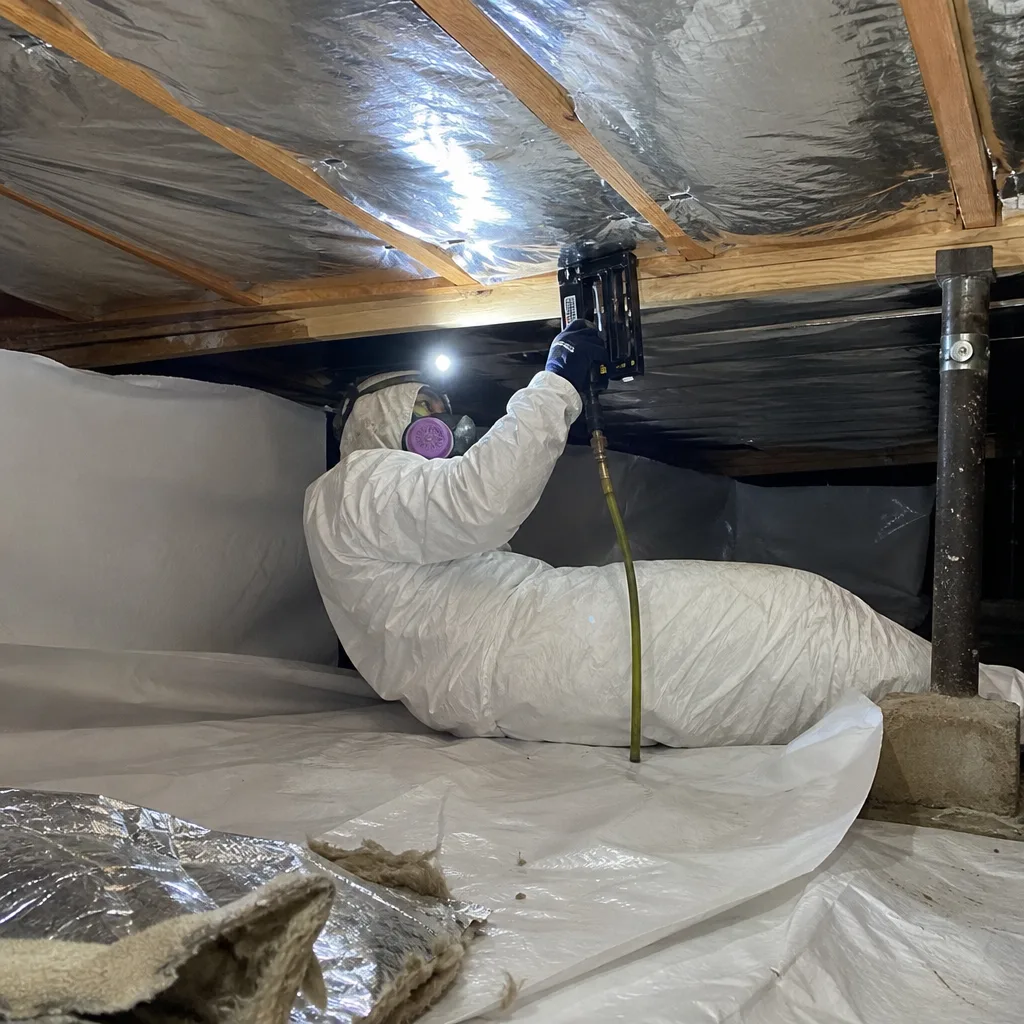
Insulation does not stop air movement. Only an air barrier does. In Long Beach, where Santa Ana winds and marine layer convection drive significant attic air pressure, an unsealed attic floor is a thermal bypass regardless of how deep the insulation sits.
The critical detail most homeowners miss: top plates - the horizontal framing member where wall studs meet the ceiling - are almost never sealed in homes built before 1990. Every stud bay becomes a chimney, moving conditioned air into the attic in winter and hot attic air into walls in summer. Blown fiberglass or cellulose over an unsealed top plate is like throwing a blanket over a screen door. It helps, but not nearly as much as the R-value number suggests.
What to Look For
- Visible gaps between drywall and top plate, especially at interior wall intersections
- Insulation stained dark in lines corresponding to framing below - this indicates air washing, where conditioned air has moved through the insulation and deposited dust
- Recessed can lights without airtight covers - these are code-compliant fire safety covers, not air barriers, and most leak substantially
- Plumbing vent stacks, electrical runs, and chimney chases without fire-rated foam or sealant
- HVAC register boots that don’t meet drywall with a sealed connection
The Infrared Check
An infrared thermometer, available for $30-$50, reveals air leakage that visual inspection cannot. On a morning when the attic is cooler than the house below, scan the ceiling plane from below. Cold spots at top plates, can lights, and register boots indicate active air movement. In summer, reverse the logic: hot spots from below mean attic air is entering conditioned space.
We’ve documented attics in Bixby Knoll with 8 inches of Rockwool over the ceiling plane but infrared readings showing 15°F temperature differentials at unsealed top plates. The effective performance was closer to R-20 than the labeled R-30. Air sealing reduced the blower-door reading from 3,800 CFM50 to 2,100 CFM50 - a 45% reduction in envelope leakage that no additional insulation could have achieved.
Under Haven Standard: Arrive on schedule, you get a named technician and a text when they are on the way. Every air-sealing job begins with a blower-door test - a pressurization reading that shows, in one number, how much air your building envelope is losing - and ends with a documented after-test so you can verify the result.
Pest Intrusion, Moisture, and Contamination Signs
Long Beach’s mild winters and dense urban canopy support robust rodent populations. Roof rats, in particular, exploit attic spaces from September through April, and their activity destroys insulation performance in ways that don’t show at the access hatch.
What Rodents Do to Insulation
Rodents don’t just nest in insulation; they compress it into tunnels and runways, reducing depth and creating thermal bypasses. They contaminate material with urine and feces, which can carry pathogens and which degrades fiberglass binders over time. Cellulose, treated with borate for fire resistance, is less palatable to rodents but still compresses under traffic.
The critical inspection points are away from the hatch, where rodents establish travel corridors. Look for:
- Compressed trails 3-4 inches wide through loose-fill, often following joist lines or top plates
- Scattered droppings, which appear as dark rice grains; fresh droppings are soft, old ones crumble
- Urine staining visible as yellowed or darkened patches on insulation facing
- Nesting material - shredded paper, fabric, or plant matter - concentrated in corners or near heat sources
- Gnaw marks on wiring, PVC vent pipes, or wood framing
Moisture and Mold Indicators
Long Beach’s marine layer creates condensation risks on north-facing roof slopes and in underventilated attics. Insulation that has been wet and dried may look normal but has lost significant R-value. Wet fiberglass mats into dense pads with air gaps between fibers collapsed. Wet cellulose clumps and the borate treatment leaches out, reducing fire resistance.
Check for:
- Insulation that feels stiff or crunchy rather than resilient
- White or gray mold growth on rafters or roof deck - mold on wood indicates sustained moisture, even if insulation appears dry
- Corroded nail heads on roof decking, which indicate condensation cycling over years
- Discolored or warped roof sheathing, especially on north slopes
If you find active contamination - fresh droppings, wet insulation, or visible mold - stop the inspection and call a professional. Disturbing contaminated insulation without proper PPE and containment spreads particulates into your living space. This is not a DIY situation.
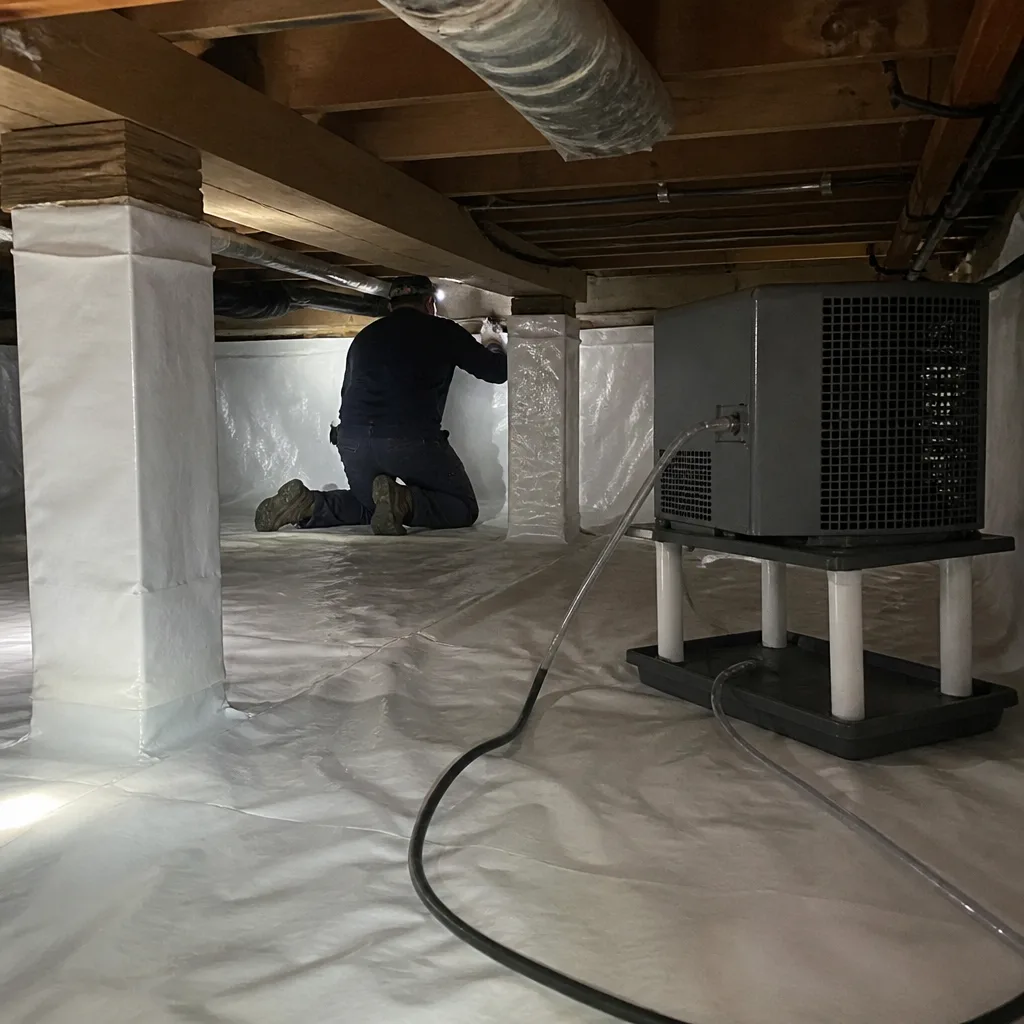
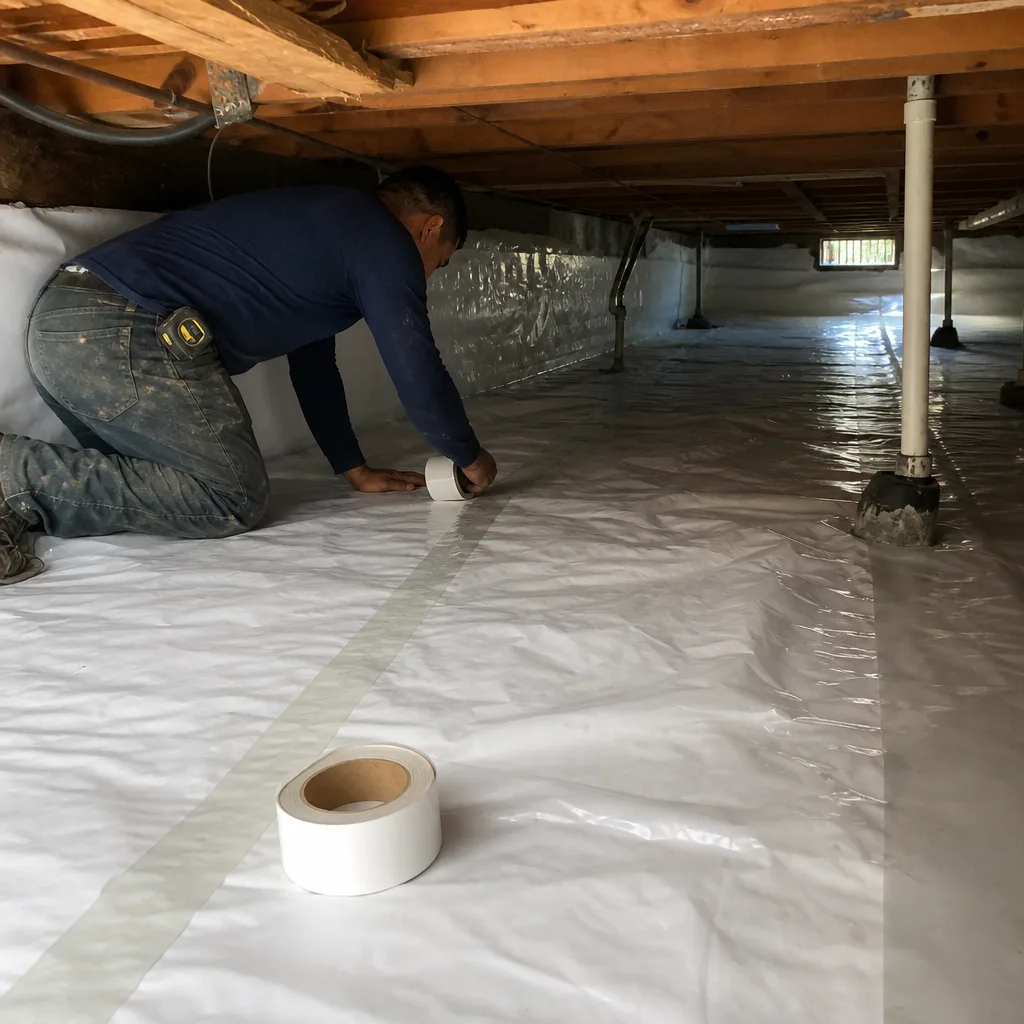
We include rodent proofing and Crawl Space Encapsulation & Vapor Barrier in Long Beach as part of our building envelope service line, because attic and crawl space pest issues are almost always connected. A roof rat entry point at the roofline often pairs with a crawl space access point at the foundation.
HVAC Duct Leakage Into Attic Insulation
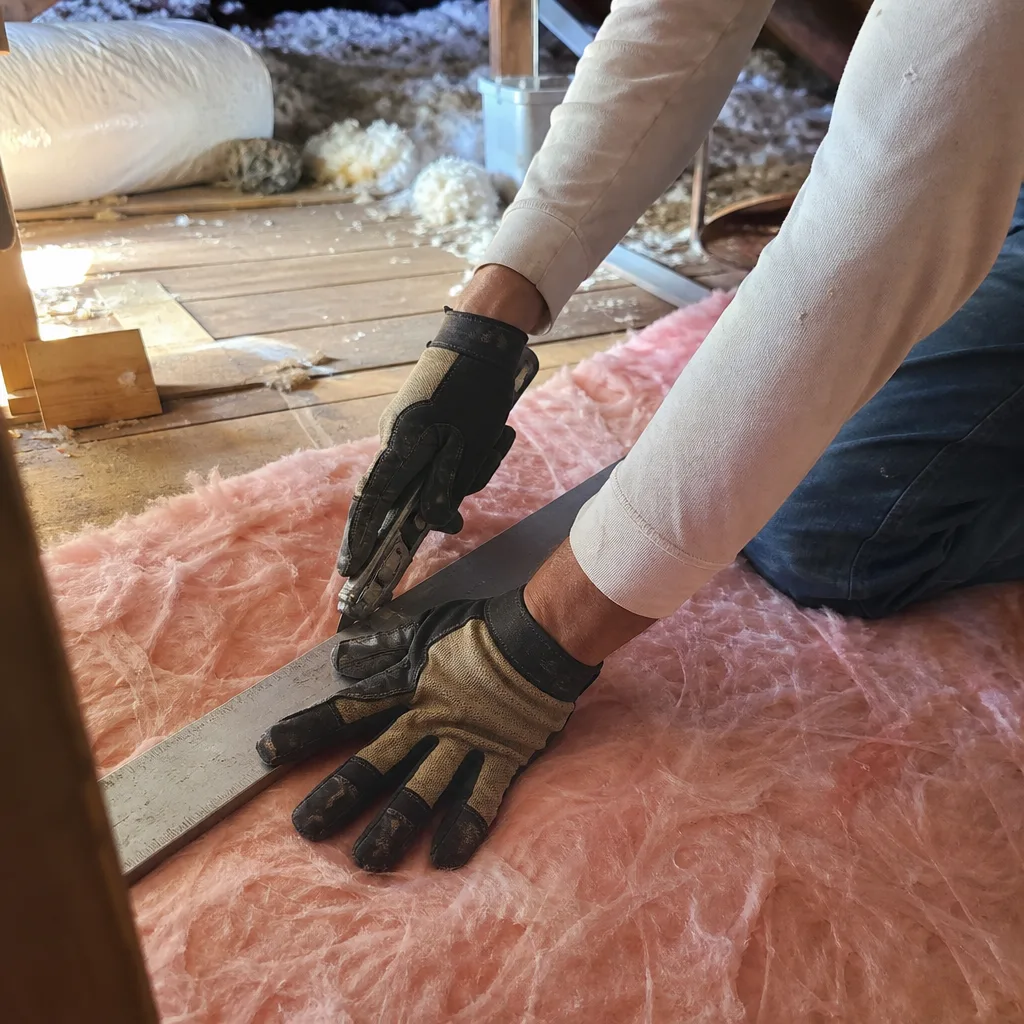
This is the most commonly missed problem in Long Beach attic inspections, and it’s the one that makes added insulation nearly worthless. When conditioned air leaks from ductwork into attic insulation, it creates a thermal bypass that no amount of R-value can fix. The insulation becomes a filter for air that should be in your living room.
How Duct Leakage Hides
Flexible ductwork, common in Long Beach additions and retrofits from the 1980s forward, develops leaks at connection points and where it rests on trusses or insulation. Metal ductwork corrodes at seams, especially in attics with moisture history. Both types leak into the insulation surrounding them, so the problem is invisible without specific checks.
Detection Methods
- Visual inspection of flex duct: look for sagging, kinking, or contact with insulation that has compressed around the duct shape - this indicates long-term embedding and likely leakage
- Feel for temperature anomalies: with HVAC running, the duct exterior should be near attic temperature (cool in summer, warm in winter). A duct that matches the conditioned air temperature is leaking internally
- Inspect insulation around duct boots and plenums for dark staining - air washing deposits dust just as it does at top plates
- Check that all connections are sealed with mastic or foil tape, not duct tape (which fails in attic temperature cycling)
The blower-door test with duct blaster is the definitive measurement, but homeowners can flag probable issues with the checks above. In our experience, Long Beach homes with original 1970s-1990s ductwork in vented attics leak 20-35% of conditioned air before it reaches registers. Sealing ducts and the attic floor together, rather than adding insulation over leaky ducts, is the only approach that delivers the performance you’re paying for.
We never blow insulation over unsealed ductwork. Under Haven Standard Clause 1, the written scope defines what gets sealed before any insulation is added, and the blower-door test verifies the result.
Building Your Inspection Record
The inspection record is your defense against contractors who want to sell you a full replacement without understanding what you have. A proper record establishes baseline conditions, documents change over time, and forces specificity in any future proposal.
What the Record Should Contain
- Date and weather conditions - temperature, recent rain or wind events, marine layer presence
- Photographs - minimum 12 images: access hatch and ladder, overall attic from two angles, each of the six depth measurement points with tape visible, close-up of any problem areas, HVAC equipment and duct connections
- Depth measurements - recorded in a simple table with location description and measurement
- Air barrier assessment - noted gaps, sealed areas, condition of existing sealant
- Pest and moisture observations - specific locations, evidence type, recommended follow-up
- HVAC duct condition - visible leaks, insulation condition around ducts, connection integrity
- Comparison to prior inspection - what changed, what stayed stable, what requires attention
Storage and Access
Keep digital copies in cloud storage and a printed copy with home records. When you call for estimates, email the record to prospective contractors before they visit. A contractor who won’t review your documentation before quoting is telling you something about their process.
The record also protects your investment if you sell. Buyers and their inspectors increasingly ask about insulation condition. A five-year maintenance record with photos and measurements demonstrates care and supports your disclosure statements.
At Topside Attic Insulation Long Beach, we provide a Documented Photo Record on every visit - included on every job, not available on request. This becomes part of your permanent home file. We’ve found that homeowners who maintain their own records between our visits catch problems earlier and spend less on corrective work - explore our more guides & resources for additional tips.
Common Mistakes to Avoid
- Measuring only at the access hatch. The hatch area is the most disturbed, most trafficked, and most likely to have been repaired or supplemented. It tells you almost nothing about eave conditions where performance matters most.
- Adding insulation over unsealed air leaks. This is the most expensive mistake in attic work. New insulation over a leaky ceiling plane performs like old insulation over a leaky ceiling plane - you’re paying for material that doesn’t solve the problem.
- Ignoring Santa Ana displacement. Homeowners who inspect in spring after marine layer season but skip the post-Santa Ana check miss the primary driver of loose-fill redistribution in Long Beach attics.
- Using fiberglass batt “to add R-value” over existing loose-fill. Batts create a double vapor barrier when laid over loose-fill, trapping moisture. They also compress the material below, reducing total system performance. If you need more depth, add matching loose-fill material.
- DIY air sealing without understanding fire codes. Foam around chimneys and flues requires fire-rated products and clearances. Standard spray foam is not fire-rated for these applications. We’ve found improperly sealed penetrations in Lakewood Village and California Heights that created genuine hazards.
- Assuming new construction was done correctly. Long Beach’s building boom of 2015-2022 produced many homes with insulation that met code on paper but failed in practice due to compressed batts, missed cavities, and unsealed top plates. Age is not a reliable indicator of condition.
- Waiting for the utility bill to spike. By the time energy costs show a problem, insulation degradation has been underway for years. The inspection schedule prevents this lag.
When to Call a Professional
Call for assessment if your inspection reveals depth loss exceeding 25% at any eave measurement, active pest contamination, wet or moldy insulation, or visible duct leakage you cannot access safely. Also call if your home was built before 1990 and has never had a blower-door test - the baseline air leakage number will change how you think about your attic.
Topside Attic Insulation Long Beach offers free estimates in Long Beach - call (424) 415-7031. Every estimate includes a written scope and written price before any work starts, per Haven Standard Clause 1. We also offer a Free Second Opinion on any written estimate - bring us a competing quote and we will read it with you. Our materials come from Owens Corning, Johns Manville, Knauf, Rockwool, CertainTeed, Icynene, Demilec, and GreenFiber, with no proprietary product lock-in.
Frequently Asked Questions
Twice yearly: once in late April or early May before marine layer season, and once in late November or early December after Santa Ana winds. Add a third inspection within 48 hours of any heavy rain event. This schedule catches the three climate drivers that most affect Long Beach attic performance. Call (424) 415-7031 if you find anything concerning - estimates are free.
Professional inspection and assessment typically runs $150-$350 for a standard Long Beach attic under 1,500 square feet. Restoration of settled depth with matching loose-fill material runs $1.20-$2.50 per square foot, depending on material type and access difficulty. Full removal and replacement with air sealing, where the existing insulation is contaminated or the attic was never properly sealed, most often falls between $3,500 and $7,500 for homes in the 1,200-2,000 square foot range. We provide a written price before any work starts - always - and a Free Second Opinion on any written estimate. Call (424) 415-7031 for exact pricing on your home.
Yes, if the old insulation is dry, uncontaminated, and the air barrier below is sealed. No, if there is pest contamination, moisture damage, or significant air leakage through the ceiling plane. Adding material over a compromised base traps problems and wastes money. We inspect first, then specify - never assume addition is appropriate without verification. Our Documented Photo Record shows you exactly what we found and why we recommended what we did.
Current California Title 24 code requires R-38 minimum for attics in Climate Zone 6, which includes Long Beach. Many homes built before 2005 have R-19 or less. However, R-value alone is misleading - an R-38 attic with unsealed top plates performs like an R-20 attic that’s properly sealed. We prioritize air sealing first, then insulation depth, because the blower-door number predicts performance better than the R-value number alone.
Check that intake vents at soffits or eaves are clear and that exhaust vents at ridge or gables are unobstructed. The attic should feel no more than 10-15°F warmer than outside on a sunny day. If it’s stifling in summer or damp in winter, ventilation is likely inadequate. Long Beach’s marine layer season makes underventilated attics particularly prone to moisture accumulation. We assess ventilation as part of every attic inspection and specify corrections where needed.
The 365-Day Done Right Promise covers our workmanship and materials. Rodent damage after installation is a pest control issue, not an insulation workmanship issue. However, we document pest evidence during every inspection and can coordinate with pest control professionals before insulation work begins. Our rodent proofing service, where specified in the written scope, carries its own warranty terms. If it’s not done right, we make it right - but the scope defines what “it” is, which is why we put everything in writing before starting.
The Bottom Line
Attic insulation in Long Beach degrades through inspectable, preventable events: marine layer moisture cycling, Santa Ana wind displacement, pest intrusion, and duct leakage into the thermal boundary. A twice-yearly inspection, timed to local climate patterns, with documented depth measurements and air barrier checks, catches problems while they’re small and cheap. The inspection record you build becomes a contractual baseline that protects your investment and forces accountability from future contractors. Most homeowners who follow this checklist discover that their insulation doesn’t need replacement - it needs targeted restoration and, almost always, the air sealing that should have preceded it.
Written by Wes Okafor, Owner at Topside Attic Insulation Long Beach, serving Long Beach since 2016.