
Last updated September 23, 2026
The Complete Guide to Insulation in Long Beach
Most insulation advice written for Southern California is actually written for Palm Springs. Long Beach sits in IECC Climate Zone 3B on paper, but within city limits the marine layer creates humidity swings that inland contractors rarely encounter. A home in Belmont Shore, three blocks from the water, can hold 90% relative humidity at 6 a.m. while a home in North Long Beach, six miles inland, drops to 45% by the same hour. That gradient changes which materials work, which vapor barriers belong where, and whether your attic or your crawl space should be addressed first. In this guide, we’ll map Long Beach’s actual climate conditions to actual material choices, with R-value targets and air-sealing priorities specific to neighborhoods from Alamitos Heights to Zaferia. For more guides & resources, see our blog.
Quick Answer
Insulation in Long Beach requires moisture-responsive materials and mandatory air sealing before any product is installed. Most homes in the city need R-38 to R-49 in attics, R-13 to R-19 in walls, and R-19 to R-30 in crawl spaces, but the priority sequence depends on whether your home sits west of Redondo Avenue in the marine influence zone or east of the 710 Freeway in the drier interior. Without a blower-door test to locate bypasses, adding insulation alone often wastes 30-40% of the material’s rated performance.
Table of Contents
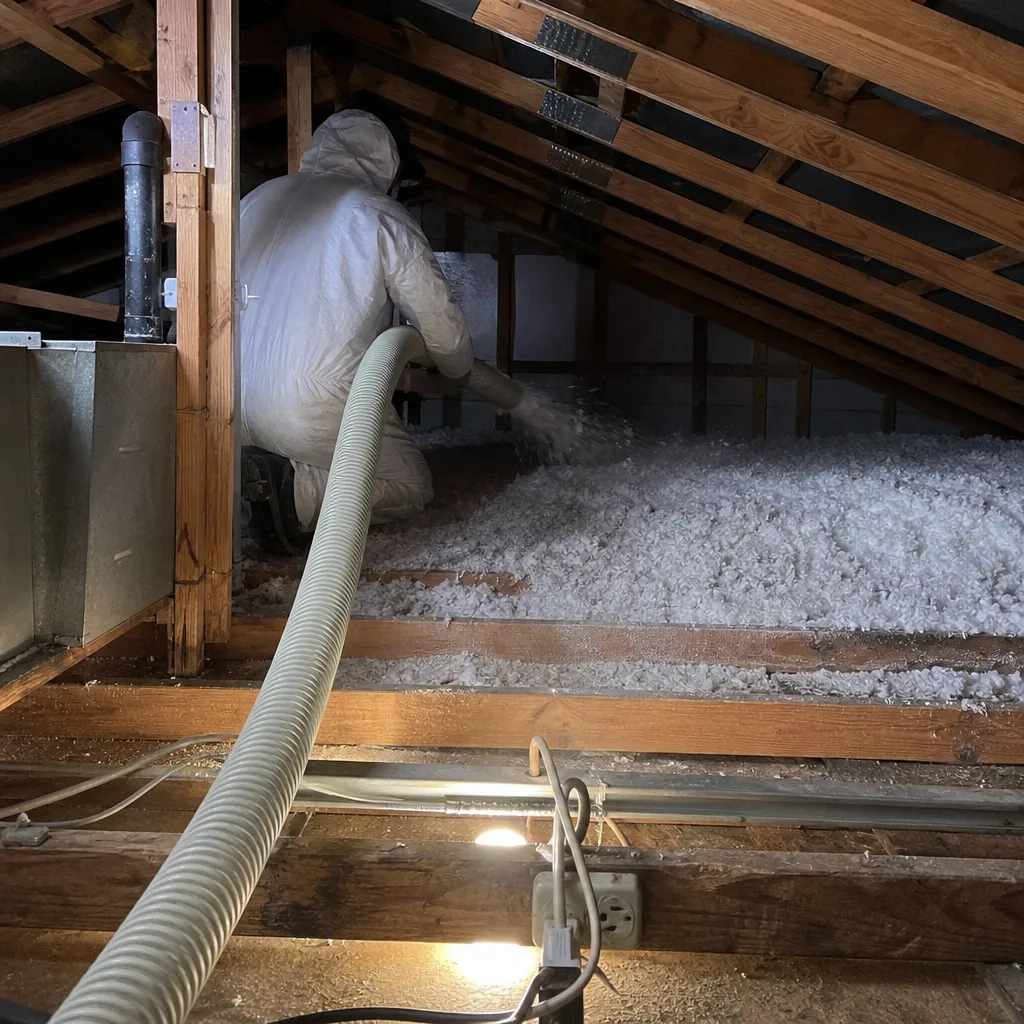
- Why Long Beach’s Climate Zone Map Is Misleading
- Title 24 Minimums vs. What Actually Works
- Why Your Attic May Not Be the First Priority
- Material-by-Material Comparison for Long Beach Conditions
- How to Use a Blower-Door Test to Prioritize Your Scope
- Vapor Control Strategy by Neighborhood
- The Right Installation Sequence
- Costs and What to Expect in Long Beach
Why Long Beach’s Climate Zone Map Is Misleading
The International Energy Conservation Code places most of Long Beach in Zone 3B: warm-dry. That classification works for annual heating and cooling degree-day calculations. It fails completely for moisture management.
Here is what Zone 3B does not capture:
- Marine layer penetration reaches 3-5 miles inland on 120+ mornings per year, saturating exterior sheathing in neighborhoods from Bluff Park to Belmont Heights
- Diurnal temperature swings near the coast average 15°F in summer versus 25-30°F inland, meaning surfaces stay cool enough for condensation longer
- South-facing walls in Alamitos Bay collect solar-driven moisture that must dry to the interior or exterior, depending on the assembly
We’ve measured attic humidity in Naples-Marina homes at 78% at 10 a.m. in July, while attic humidity in Lakewood Village, five miles northeast, read 52% the same hour. That difference determines whether open-cell spray foam is appropriate or risky, whether a vapor retarder belongs on the warm side, and whether cellulose can be installed without a conditioning strategy.
The practical implication: insulation specifications for Long Beach must be written ZIP code by ZIP code, not climate zone by climate zone. A contractor quoting from a Zone 3B table without local moisture data is specifying for a home in Victorville.
Title 24 Minimums vs. What Actually Works
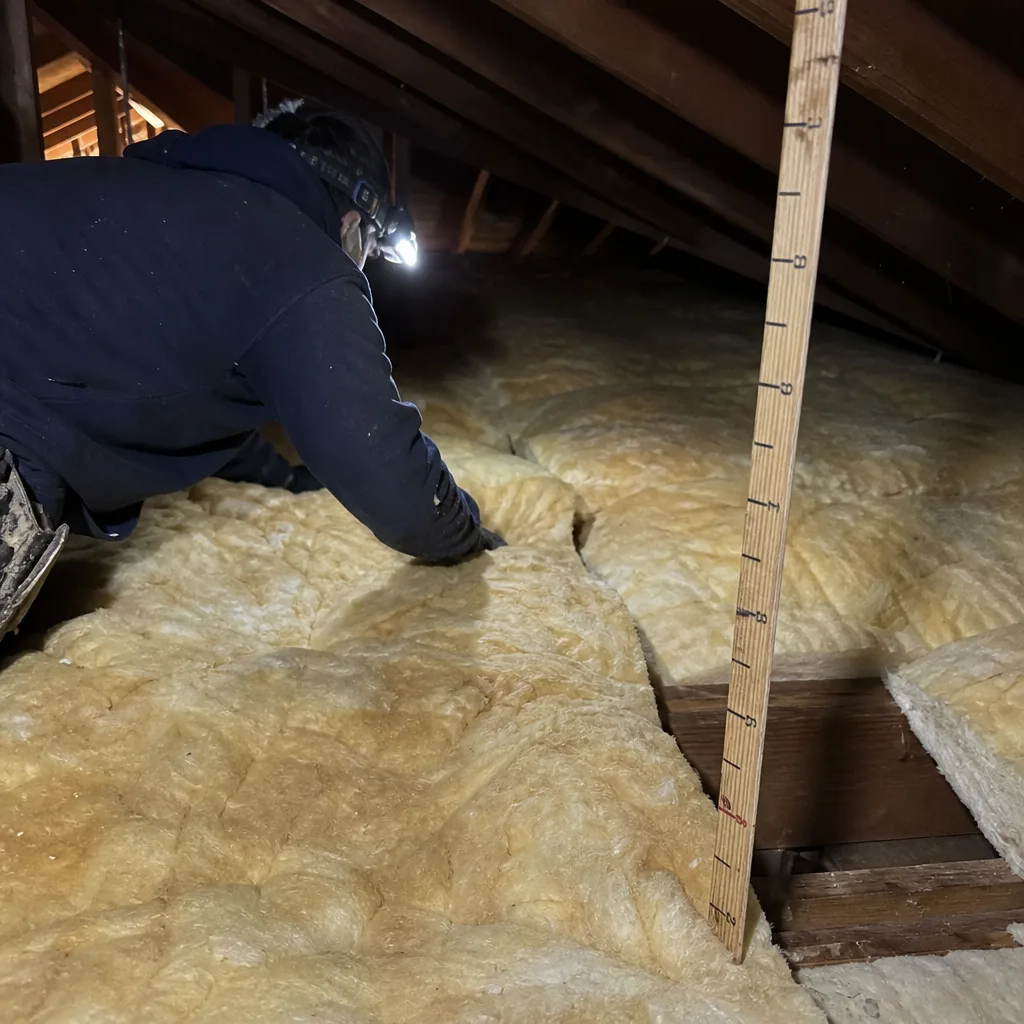
California’s Title 24, Part 6 sets the legal floor for insulation in new construction and alterations. In Long Beach’s jurisdiction, the prescriptive requirements are:
| Location | Title 24 Minimum (Wood-Frame) | Performance Target for 1950s-1980s Homes |
|---|---|---|
| Attic, vented | R-38 | R-49 to R-60 |
| Attic, unvented | R-30 (at roof deck) | R-38 to R-49 |
| Walls, above grade | R-13 (cavity) or R-20 (continuous) | R-19 to R-21 (cavity) + air sealing |
| Floor over crawl space | R-19 | R-25 to R-30 |
| Slab edge | R-5 | R-10 where accessible |
| Crawl space wall | R-13 | R-19 + vapor barrier |
Title 24 minimums assume a relatively tight building envelope. Most Long Beach homes built before 1990 test at 3,500-7,000 CFM50 on a blower door, meaning they leak at 2-4 times the rate of a new home. At that leakage rate, R-38 in the attic performs like R-25 because conditioned air escapes faster than insulation can slow it.
We’ve documented this repeatedly. A 1962 ranch in Bixby Knolls tested at 5,200 CFM50 before any work. After air sealing to 2,800 CFM50 and adding blown fiberglass to R-49, the homeowner’s summer cooling load dropped 34%. A neighbor with an identical floor plan added R-49 without sealing first; their load dropped 12%. The R-value was identical. The performance was not.
For Long Beach homeowners, the actionable target is: meet or exceed Title 24, but treat air sealing as the primary upgrade and insulation as the secondary upgrade. The combined assembly performs; either alone underperforms.
Why Your Attic May Not Be the First Priority
Standard advice says “heat rises, insulate the attic first.” In Long Beach, this is often backwards.
The city’s housing stock is weighted toward postwar construction with vented crawl spaces and minimal wall insulation. These homes leak in three directions simultaneously:
- Stack effect in winter: Warm air exits through attic bypasses, pulling cool, moist air through crawl space vents and rim joists
- Wind washing in summer: Onshore breezes pressurize the building envelope, forcing conditioned air out through walls and pulling attic heat downward through leaky ceiling fixtures
- Solar-driven moisture: Sun-heated siding drives water vapor inward through uninsulated walls, where it condenses on cool interior surfaces
In our experience, the dominant heat gain path varies by neighborhood:
- West Long Beach (Alamitos Beach, Belmont Shore, Naples): Crawl space moisture and wall bypasses often exceed attic heat gain. The marine layer keeps attic temperatures moderate but drives ground moisture through vented crawl spaces year-round.
- Central Long Beach (Rose Park, Bluff Heights, Carroll Park): Attic and crawl space are typically equal priorities. 1920s-1940s homes have balloon framing and no top plate sealing.
- North and East Long Beach (Lakewood Village, El Dorado Park, Los Altos): Attic heat gain dominates, but wall insulation is often the missing piece in 1950s-1970s tract homes with uninsulated 2×4 walls.
The correct sequence for most Long Beach homes is:
- Blower-door test to quantify leakage and locate dominant paths
- Air seal the dominant leakage zone first (crawl space, attic, or walls)
- Insulate the sealed zone to performance target
- Retest to verify the assembly
We published before-and-after blower-door numbers on a 1954 home in Virginia Country Club: 4,800 CFM50 pre-work, with 62% of leakage through the crawl space rim and wall bottom plates. Sealing and insulating the crawl space first reduced the home’s total leakage to 2,900 CFM50 before any attic work began. The attic insulation, added in phase two, then performed to its rated R-value instead of fighting a continuous draft.
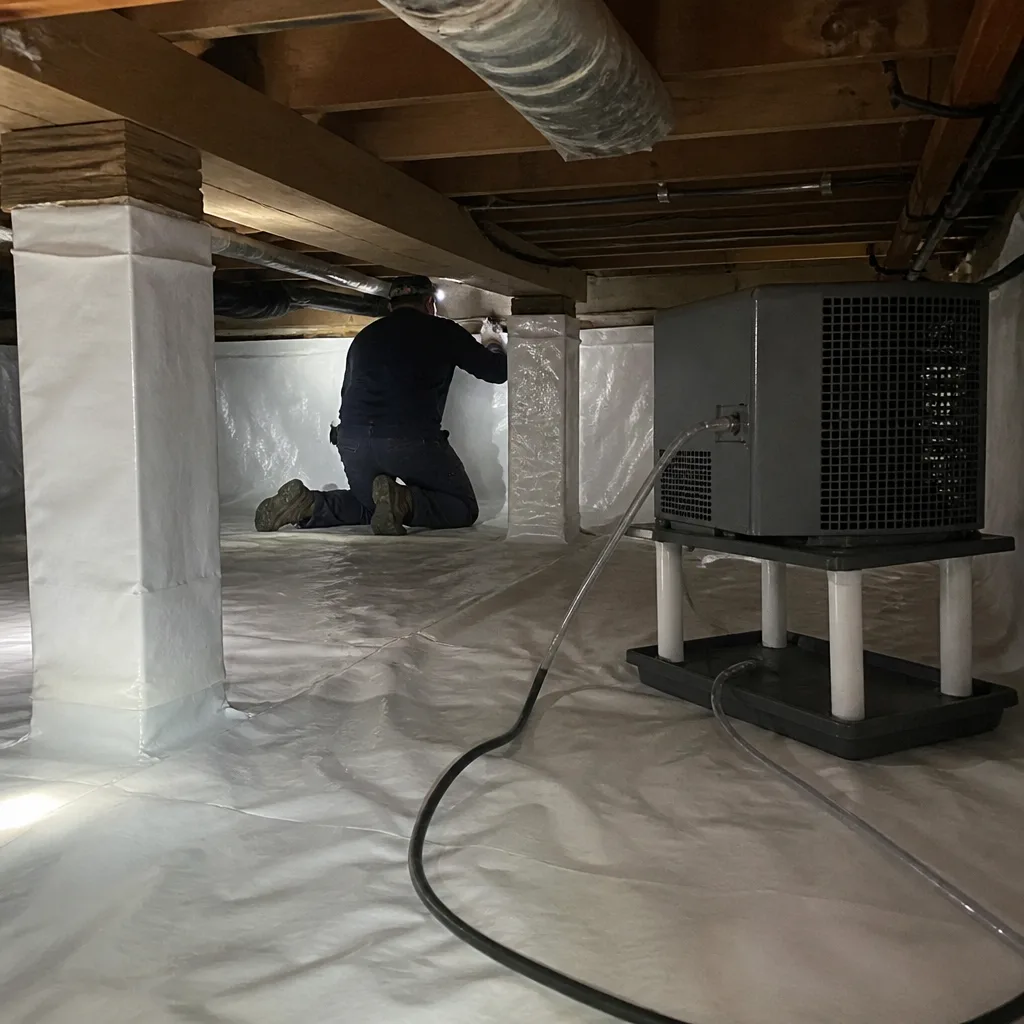
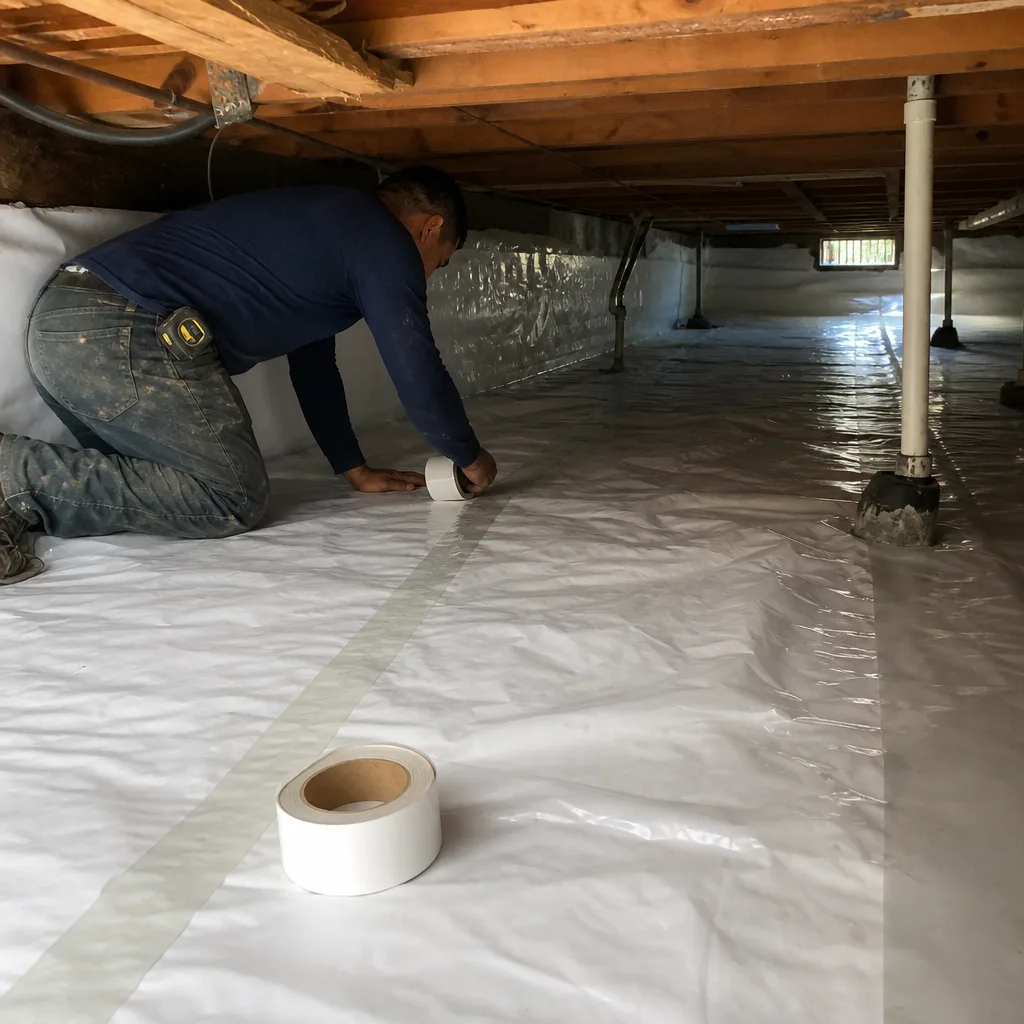
Crawl Space Encapsulation & Vapor Barrier in Long Beach addresses this priority directly for homes where the ground floor is the primary leakage path.
Material-by-Material Comparison for Long Beach Conditions
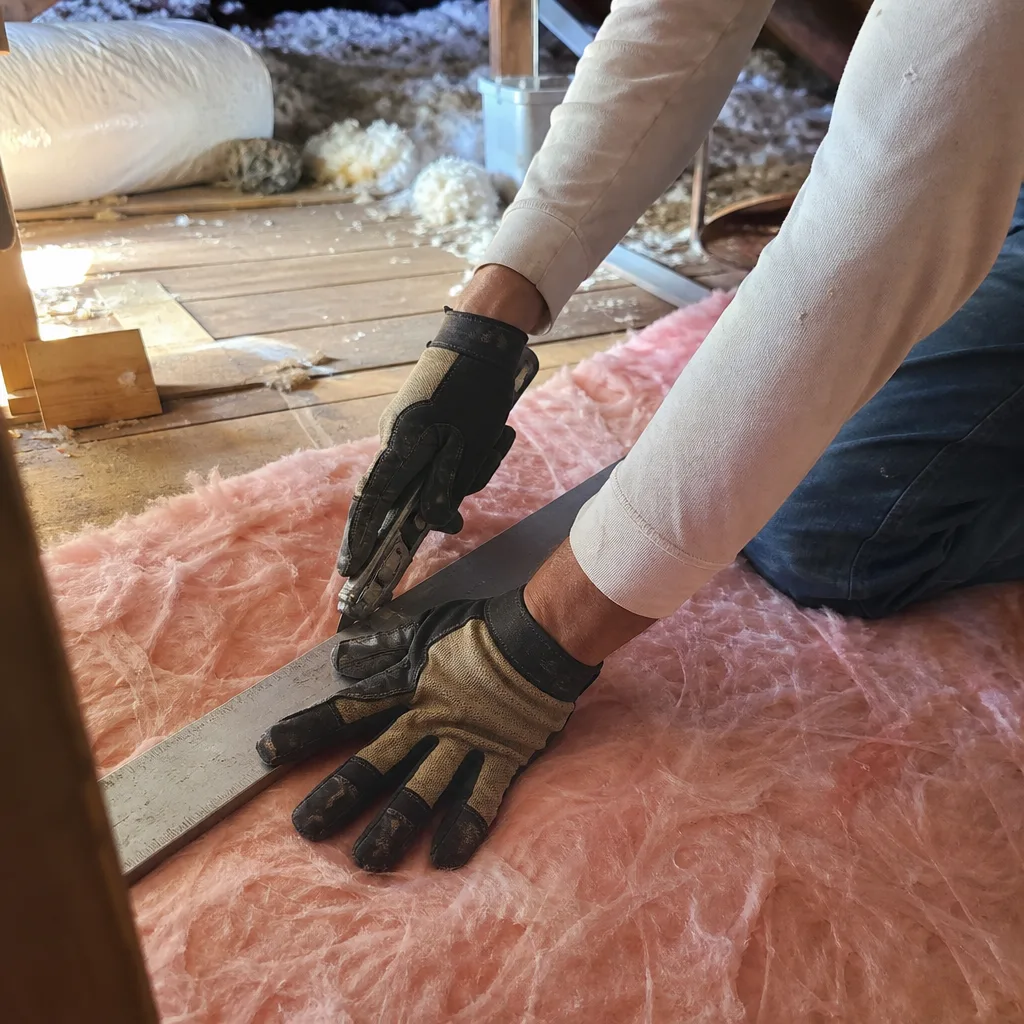
Not all insulation performs equally in marine-influenced climates. Below is a material comparison with specific applicability to Long Beach’s temperature and humidity profile.
Open-Cell Spray Foam (Icynene, Demilec)
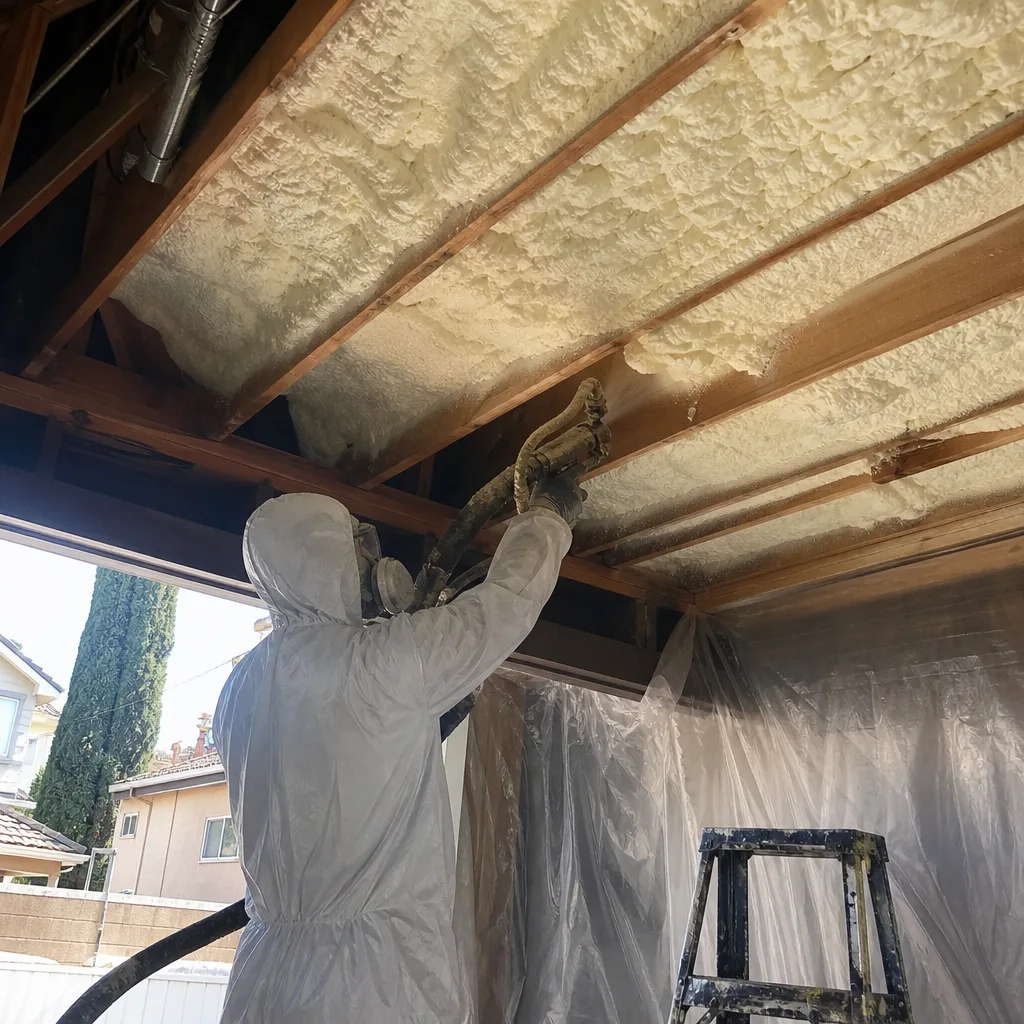
Open-cell spray foam is vapor-permeable (roughly 10-15 perms at 3.5 inches), meaning it allows moisture to pass through rather than trapping it. In Long Beach’s coastal zone, this is often an advantage: when marine-layer moisture drives inward, open-cell allows drying to the interior. In unvented attics, it forms an air-impermeable layer at the roof deck while permitting seasonal moisture redistribution.
Risk: Open-cell is hydrophilic. If roof leakage occurs, it holds water and must be removed. In Long Beach’s occasional heavy winter rains, this matters. We specify open-cell only where roof condition is verified and where the attic is conditioned space, not vented.
Best for: Unvented attics in Belmont Shore, Naples, and Bluff Park where roof decks are in good condition and the homeowner wants conditioned attic storage.
Closed-Cell Spray Foam
Closed-cell spray foam is vapor-impermeable (below 1 perm at 2 inches) and adds structural rigidity. Its R-value per inch (approximately R-6.5) is the highest of any cavity-fill material. In Long Beach, we use it primarily for:
- Crawl space rim joists, where ground moisture meets conditioned air
- Steel-framed buildings where cavity depth is limited
- Retrofit applications where removal of existing material is impractical
Risk: Impermeability cuts both ways. In a home with seasonal interior moisture spikes (common in winter with portable humidifiers), closed-cell on the interior can trap vapor against cold sheathing. We specify it for exterior-facing assemblies and pair it with mechanical ventilation calculations.
Dense-Pack Cellulose
Dense-pack cellulose, installed at 3.2-3.5 pounds per cubic foot, fills irregular cavities and provides both insulation and significant air-flow resistance. Its permeance varies with density but generally allows drying. In Long Beach, it performs well in:
- Balloon-framed walls in Rose Park and Carroll Park, where fire-blocking is absent and continuous fill is necessary
- Netted ceiling applications where attic floor irregularities prevent uniform batt installation
Risk: Cellulose is hygroscopic. At sustained relative humidity above 70%, its R-value degrades and mold susceptibility rises. In Long Beach’s coastal zone, we do not install cellulose in vented crawl spaces or against below-grade concrete without a vapor barrier and drainage plane. In attics, we specify borate-treated material and verify attic ventilation rates.
Fiberglass Batts (Knauf, CertainTeed)
Fiberglass batts are vapor-permeable, non-combustible, and cost-effective. Their performance depends entirely on installation quality. In Long Beach, we use blown fiberglass (loose-fill) more often than batts because it fills irregular joist bays without gaps. Batts are appropriate for:
- New wall construction with consistent cavity dimensions
- Supplemental layers over existing insulation where uniform thickness is achievable
Blown fiberglass (Knauf Jet Stream, CertainTeed InsulSafe) achieves higher coverage density and eliminates the voids that plague batt installation. In our documented jobs, blown fiberglass at R-49 with proper air sealing outperforms R-60 batts with bypasses.
Mineral Wool (Rockwool)
Rockwool is hydrophobic, fire-resistant, and dimensionally stable. Its permeance is similar to fiberglass, but it does not absorb liquid water. In Long Beach, we specify it for:
- Exterior walls where fire rating is required (common in multi-family and attached housing near downtown)
- Cavity applications where bulk water intrusion is a known risk
- Sound control in homes near Long Beach Airport flight paths or the 405 corridor
Cost per R-value is higher than fiberglass or cellulose, but in specific applications the durability premium is justified. See our Insulation Cost Breakdown: The Long Beach Homeowner’s Reference for 2026 for full pricing across all materials.
Spray Foam Insulation in Long Beach covers open-cell and closed-cell applications in more detail for homeowners comparing foam to fiber.
How to Use a Blower-Door Test to Prioritize Your Scope
A blower-door test is a pressurization measurement that shows, in one number, how much air your building envelope is losing. The reading is expressed in CFM50: cubic feet per minute of airflow at 50 Pascals of pressure difference. For context, a new home built to current code typically tests at 1,500-2,500 CFM50. A 1960s Long Beach home typically tests at 3,500-6,000 CFM50.
The number alone does not tell you where to work. The diagnostic value comes from combining the total with:
- Zonal pressure testing: With the house pressurized, we measure pressure differences between rooms, the attic, and the crawl space. A zonal reading of 45 Pascals between the living room and the attic means the attic is essentially outside; any insulation on the attic floor is fighting continuous outdoor air.
- Infrared imaging during depressurization: Thermal cameras reveal bypass locations - top plates, recessed can lights, duct chases, plumbing penetrations - that are invisible to visual inspection.
- Smoke pencil tracing: At key leakage sites, we visualize airflow paths to distinguish dominant from minor leaks.
Here’s how we applied this on a 1978 split-level in El Dorado Park:
- Initial blower door: 4,200 CFM50
- Zonal test: 48 Pascals to attic, 12 Pascals to crawl space, 8 Pascals to garage
- Infrared: top plates unsealed, two bathroom exhaust fans dumping into attic, one return chase pulling from garage
Scope priority was clear: seal attic bypasses first, verify with mid-work blower door, then insulate. Final result: 2,100 CFM50, with before-and-after documentation delivered to the homeowner. The attic insulation, added after sealing, performed to specification instead of filtering airborne dust for three years.
Without this sequence, the homeowner would have received R-38 batts over a leaky attic floor. The batts would have been black with filtration staining within 18 months, and the effective R-value would have degraded to approximately R-22.
We do not begin any insulation job without a pre-installation blower-door test. Under Haven Standard Clause 1, the written scope includes the target CFM50 reduction and the specific sealing locations. The post-work test verifies it.
Vapor Control Strategy by Neighborhood
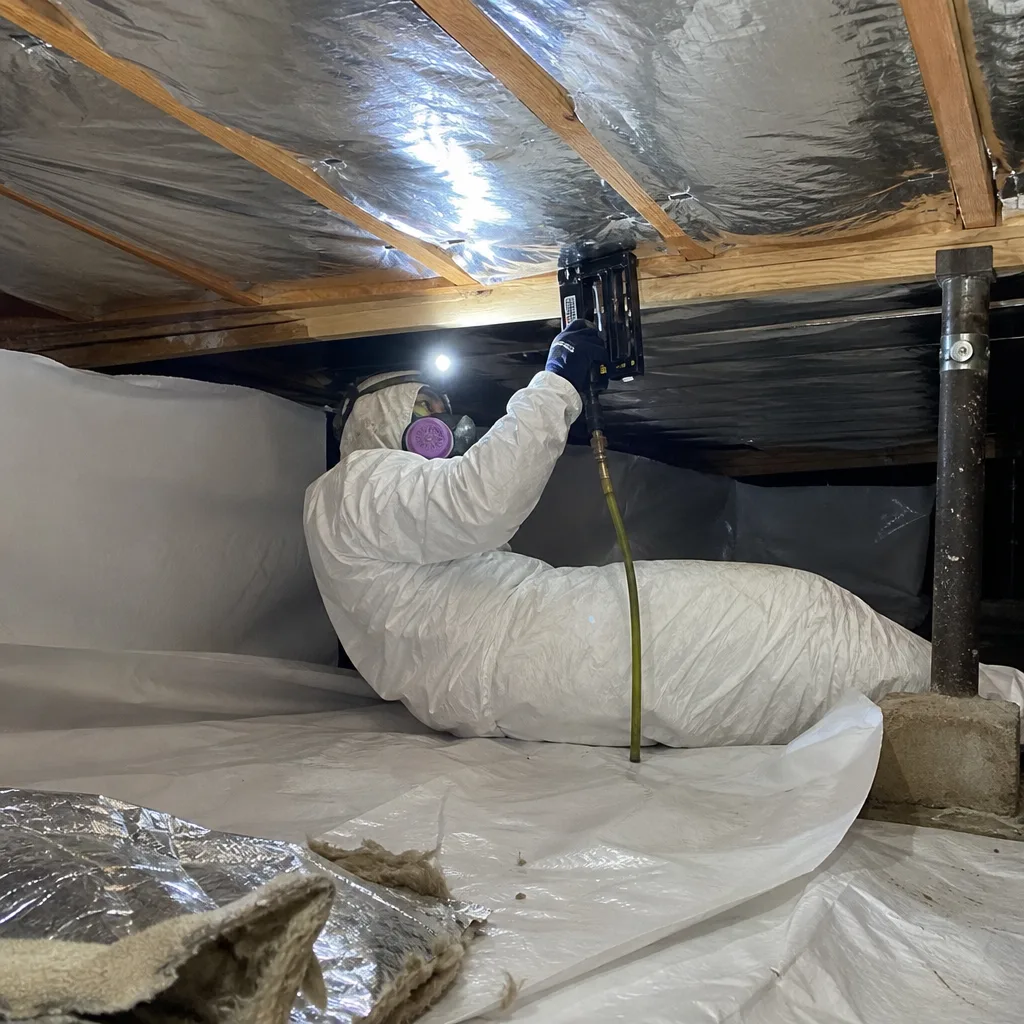
Vapor control in Long Beach is not a single prescription. The city spans three distinct moisture regimes:
Coastal Zone (ZIP 90802, 90803, parts of 90804)
Homes within one mile of the water experience 80-95% nighttime relative humidity for 6-8 months annually. Vapor drive is primarily inward in summer (warm, moist outside to cool, conditioned inside) and outward in winter (interior moisture to cold sheathing).
Strategy: Vapor-variable assemblies. Use vapor-permeable insulation (open-cell foam, unfaced fiberglass, Rockwool) with smart vapor retarders (variable-perm membranes like CertainTeed MemBrain) on the interior side of walls. In crawl spaces, full encapsulation with closed-cell rim joist treatment and dehumidification. Never install polyethylene sheeting on the interior of above-grade walls; it traps summer moisture.
Transitional Zone (ZIP 90804, 90814, 90815, parts of 90808)
These neighborhoods see marine layer influence 3-4 mornings weekly in summer, with humidity dropping to 50-60% by afternoon. Vapor drive is less extreme but still bidirectional.
Strategy: Standard vapor retarder paint (perm rating ~1.0) on interior drywall, with attention to attic ventilation rates. In crawl spaces, vapor barrier on ground plus sealed vents, with insulation on crawl space walls rather than floor joists. This keeps ducts and plumbing in conditioned space.
Inland Zone (ZIP 90805, 90807, 90808, 90810)
Drier conditions, wider temperature swings, minimal marine layer penetration. Vapor drive is primarily outward in winter, minimal in summer.
Strategy: Class III vapor retarder (standard latex paint) is generally sufficient. Focus on air sealing over vapor retarder complexity. Crawl spaces may remain vented with floor insulation if ground cover is installed and maintained, though wall insulation with sealed vents is still preferred for duct efficiency.
The material point: a contractor specifying the same wall assembly for a home in Belmont Shore and a home in North Long Beach is ignoring a 40-point humidity swing that changes whether moisture accumulates or dries.
The Right Installation Sequence
Insulation performance is determined more by what happens before the material arrives than by the material itself. Our sequence, applied to every job since 2016:
- Pre-installation blower-door test and infrared survey
Document baseline CFM50, locate dominant leakage paths, photograph existing conditions. Written scope developed from this data, not from a visual guess. - Air sealing of identified bypasses
Top plates, can lights, duct penetrations, chimney chases, plumbing stacks, electrical wiring holes. Seal with appropriate materials: fire-rated caulk at penetrations, rigid foam and tape at large openings, spray foam at irregular gaps. No insulation touches the attic floor until this is complete. - Mid-work blower-door test (on applicable jobs)
Verify that sealing achieved target reduction before insulation covers the work. If not, locate remaining leaks while they are still accessible. - Insulation installation to specified depth and density
Blown product: verify depth with rulers at 300 square foot intervals. Spray foam: verify thickness with core samples. Batts: friction-fit without compression, no gaps. - Post-installation blower-door test and photo documentation
Final CFM50 recorded, thermal images of completed work, depth measurements photographed. Documentation delivered to homeowner with written warranty.
This sequence adds 4-6 hours to a typical attic job. It also adds 15-25 years to the insulation’s effective lifespan by preventing the filtration, moisture accumulation, and compression that ruin poorly installed material.
We’ve removed and replaced insulation in Long Beach homes that was installed 3-5 years prior by contractors who skipped steps 1-3. The material was not defective. The installation was incomplete. The cost of removal plus reinstallation exceeds the cost of doing it correctly once.
Attic Insulation in Long Beach details our specific attic workflow for homeowners beginning with that zone.
Costs and What to Expect in Long Beach
Insulation costs in Long Beach reflect labor intensity, material type, access difficulty, and the extent of preparatory air sealing. Below are typical ranges for homes we work on, based on 9,000+ jobs since 2016. Every job receives a written price before any work starts; these ranges help homeowners budget before calling.
| Scope | Typical Range (Long Beach Market) | What Drives the Variation |
|---|---|---|
| Attic air sealing + blown fiberglass to R-49 (1,200 sq ft attic) | $2,800 - $4,500 | Existing insulation removal, can light count, ductwork in attic |
| Attic spray foam (open-cell, unvented, 1,200 sq ft) | $5,500 - $9,000 | Roof pitch, sheathing condition, need for ignition barrier |
| Crawl space encapsulation + wall insulation (1,000 sq ft) | $4,000 - $7,500 | Standing water history, foundation height, pest damage |
| Wall dense-pack cellulose (2,000 sq ft home, exterior walls) | $3,500 - $6,000 | Siding type, balloon vs. platform framing, electrical obstructions |
| Insulation removal and replacement (attic, contaminated) | $2,000 - $4,500 | Contamination type, volume, disposal requirements |
| Whole-home air sealing + insulation package | $8,000 - $15,000 | Home size, number of zones, pre-work CFM50 starting point |
Factors that increase cost in Long Beach specifically:
- Homes built 1900-1940 with balloon framing and knob-and-tube wiring require electrical coordination before wall insulation
- Coastal-zone homes with active moisture issues need drainage or dehumidification before encapsulation
- Multi-family and condo buildings in downtown Long Beach may require HOA coordination and fire-rated assemblies
Factors that do not affect our pricing: urgency (we do not charge more for faster scheduling), neighborhood (same price in Belmont Shore as in North Long Beach), or whether you mention a competing quote (we offer a Free Second Opinion on any written estimate, no penalty for using it).
Every written price includes: scope of work, material specifications by brand and R-value, warranty terms, and payment schedule. No work starts without this document signed. Haven Standard Clause 1.
Common Mistakes to Avoid
- Installing insulation over unsealed attic bypasses. This creates a filter that traps dust and moisture, degrading R-value within two years. We see this in approximately 60% of Long Beach attics we inspect.
- Specifying vapor-impermeable assemblies in coastal humidity zones. Polyethylene sheeting on interior walls in Belmont Shore traps summer moisture and causes mold in 3-5 years. Permeable assemblies with variable retarders perform better.
- Ignoring crawl space moisture before insulating. A vented crawl space in Naples with 80% relative humidity will saturate floor insulation from below. Encapsulate first, insulate second.
- Treating R-value as the only metric. An R-38 attic with 3,000 CFM50 of leakage performs like an R-22 attic that is tight. Air sealing provides more performance per dollar than additional R-value in most Long Beach homes.
- Using recessed can lights as contact points for insulation. Non-IC-rated fixtures overheat; IC-rated fixtures still leak air. We box and seal all can lights before insulation approaches them.
- Skipping post-work verification. Without a final blower-door test, you do not know whether the work achieved its target. We deliver before-and-after numbers on every applicable job so the homeowner has evidence, not assumptions.
- Selecting material by price alone. The lowest bid often omits air sealing, uses lower-density blown product, or skips verification. The cost difference between a complete job and a partial job is 20-30%; the performance difference is 200-300%.
When to Call a Professional
Call a professional when: your home was built before 1990 and has never had a blower-door test; you notice uneven temperatures between rooms, dust streaks around ceiling fixtures, or musty odors from crawl spaces or walls; your energy bills spike in summer despite thermostat settings that haven’t changed; or you’re considering insulation after a roof replacement, addition, or major HVAC upgrade. These are moments when envelope performance can be verified and improved with minimal disruption.
Topside Attic Insulation Long Beach offers free estimates in Long Beach - call (424) 415-7031. Every estimate includes a blower-door test on homes where we can access the attic and crawl space, and every written scope is delivered before any work starts. We also provide a Free Second Opinion on any written estimate from another contractor; bring us their scope and we’ll review it with you, line by line.
Frequently Asked Questions
Most attic insulation jobs in Long Beach run between $2,800 and $4,500 for air sealing plus blown fiberglass to R-49 in a 1,200 square foot attic. Open-cell spray foam for an unvented attic of the same size typically ranges from $5,500 to $9,000. The exact price depends on existing insulation condition, can light count, and whether ductwork runs through the attic. Call (424) 415-7031 for a written estimate - estimates are free, and we deliver the price before any work starts.
California Title 24 requires R-38 minimum in vented attics for new construction and major alterations, but we target R-49 to R-60 for existing homes because the leakage in older construction degrades effective performance. Walls benefit from R-19 to R-21 in retrofits, and crawl spaces from R-19 to R-30 depending on whether insulation is at the floor or walls. The specific target for your home depends on blower-door results and which zones leak most. We specify R-value after testing, not before.
Open-cell spray foam is worth considering for unvented attics in coastal Long Beach where humidity management and conditioned storage are priorities. Closed-cell is justified for crawl space rim joists and steel-framed buildings where space is limited. In dry inland Long Beach neighborhoods, blown fiberglass or dense-pack cellulose often delivers equivalent performance at lower cost. The decision depends on your home’s specific leakage paths and moisture conditions, which we assess with a blower-door test.
Hot upper floors in insulated homes usually indicate air bypasses (leaky top plates, duct chases, or recessed lights), insufficient insulation depth at the attic perimeter, or ductwork running through a vented attic. In Long Beach specifically, wind washing from onshore breezes can pressurize the attic and force conditioned air downward through ceiling leaks. A blower-door test with zonal pressure readings identifies which cause applies. We’ve solved this in homes from Los Altos to Belmont Heights by sealing bypasses that insulation alone could not address.
Properly installed insulation lasts 25-30 years or more. Improperly installed insulation - installed over unsealed bypasses, compressed into cavities, or exposed to moisture - degrades in 3-10 years. In Long Beach’s coastal zone, moisture exposure is the primary accelerator of failure. We’ve removed 5-year-old fiberglass that was black with filtration staining and 15-year-old cellulose that was still performing because the home was properly sealed first. The installation quality matters more than the material age.
You can add over existing insulation only if the old material is dry, uncontaminated, and not compressed. In Long Beach, we frequently find old insulation compromised by roof leaks, rodent activity, or prior vapor problems. We inspect and photograph existing conditions before recommending overlay versus removal. When we do overlay, we air seal first, then add new material to achieve uniform depth. The Documented Photo Record on every visit shows you what we found and what we did.
The Bottom Line
Long Beach’s marine-influenced climate creates insulation requirements that generic Southern California advice gets wrong. The humidity gradient from coast to inland, the prevalence of vented crawl spaces in postwar housing, and the leakage rates of pre-1990 construction mean that material selection, vapor control, and air-sealing priority must be determined home by home, not ZIP code by ZIP code. The most expensive insulation is the kind that underperforms because it was installed over leaks, in the wrong sequence, or with materials mismatched to local moisture conditions. Start with a blower-door test. Seal what leaks. Insulate what remains. Verify the result. That sequence, applied consistently, is why we’ve documented performance improvements across 9,000+ homes since 2016.
Ready to see what your home’s envelope is actually doing? Topside Attic Insulation Long Beach home - call (424) 415-7031 for a free estimate with blower-door testing, written pricing before any work starts, and before-and-after documentation you can keep.
Written by Wes Okafor, Owner at Topside Attic Insulation Long Beach, serving Long Beach since 2016.