
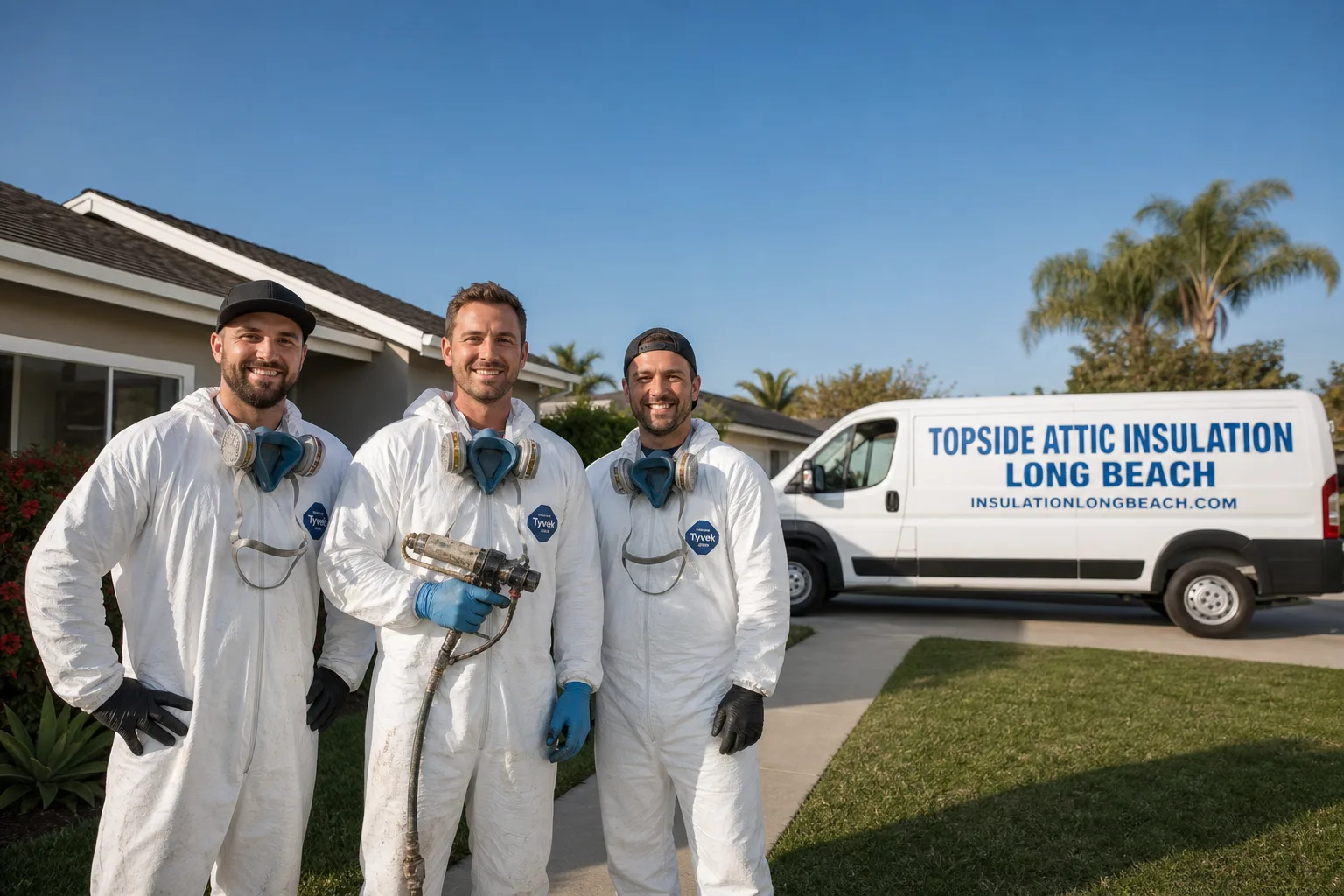
How Much Does Spray Foam Insulation Cost in Long Beach?
Our Spray Foam Insulation services in Long Beach, CA typically cost between $1.50 and $4.50 per board foot, depending on foam type, application area, and access conditions. Most homeowners in Long Beach spend between $1,800 and $6,500 for a full attic or crawl space project, with closed-cell foam running significantly higher than open-cell. Same-day quotes with written pricing are available through Envelope Insulation Co. – call (424) 415-7031.
Spray Foam Insulation Cost Breakdown (2026)
Spray foam pricing in Long Beach breaks down by foam type and application zone. Below are the ranges we see on actual jobs here – not national averages, but numbers from homes in Bixby Knolls, Los Cerritos, Wrigley, Naples, and the Signal Hill corridor.
| Application / Foam Type | Typical Cost Range | Notes |
|---|---|---|
| Open-cell spray foam (attic rafters, 3.5″) | $1.50 – $2.00 per board foot | Common in older Long Beach craftsman bungalows; good for sound as well as thermal |
| Closed-cell spray foam (attic rafters, 2″) | $2.75 – $4.50 per board foot | Higher R-value per inch; the right call in coastal-zone homes with moisture exposure |
| Closed-cell spray foam (crawl space rim joists) | $1,200 – $2,800 per project | Rim joist sealing is one of the highest-ROI applications in Long Beach’s older stock |
| Open-cell spray foam (interior wall cavities) | $1.80 – $2.50 per board foot | Often done during a remodel when drywall is already open |
| Closed-cell spray foam (under-floor / raised foundation) | $2,400 – $5,500 per project | Common in the elevated-foundation homes throughout Belmont Shore and Alamitos Heights |
| Flash-and-batt hybrid (closed-cell flash coat + batt) | $2.00 – $3.25 per board foot | A cost-effective middle path that still gives you the air seal of closed-cell |
| Spray foam for garage ceiling / bonus room | $900 – $2,200 per project | Typically 500-1,000 sq ft; very common in the post-war tract homes north of Willow Street |
| Full attic rafter encapsulation (open-cell, average 1,200 sq ft home) | $2,800 – $4,800 per project | Moves the thermal boundary to the roof deck; brings ducts inside conditioned space |
A board foot is one square foot of foam at one inch of thickness. So a 1,200 square foot attic with a 3-inch application of open-cell foam is 3,600 board feet. At $1.75 per board foot, that’s $6,300 before any air sealing work. The math matters, and we always show it to you in writing before a crew shows up.
What pulls a job toward the low end of the range: straightforward access, minimal obstructions, open attic with no active pest evidence, and a simple rectangular footprint. What pushes it toward the top: attic heights under 24 inches (we see this constantly in the 1940s and 1950s homes in Wrigley and the westside), previous spray foam that needs to be removed, or significant existing moisture damage that has to be addressed before foam goes in. Foam applied over a wet or damaged substrate fails – which is exactly why Envelope Insulation Co. documents conditions with photos before any material is touched.
What Affects Spray Foam Insulation Pricing in Long Beach
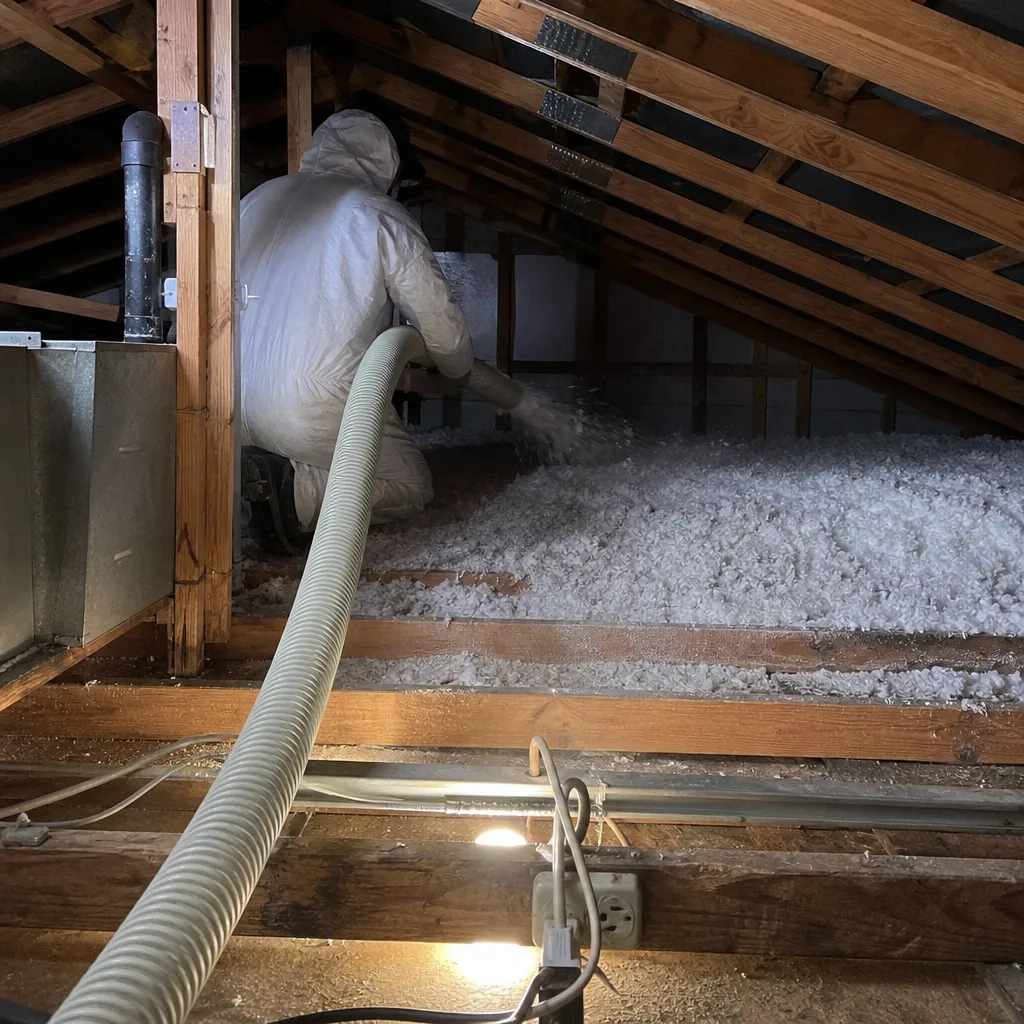
Six factors move the price on nearly every Long Beach spray foam job we see. Understanding them helps you compare quotes accurately – a $3,800 quote and a $5,200 quote for what looks like the same project may actually be covering very different scopes.
- Foam type: open-cell vs. closed-cell. Closed-cell foam (roughly R-6 to R-7 per inch) costs two to three times more per board foot than open-cell (roughly R-3.5 to R-4 per inch), but it also acts as a vapor retarder – a meaningful distinction in coastal Long Beach neighborhoods like Belmont Shore and Naples, where summer marine layer and humidity are persistent, not occasional. The right foam type depends on the application, not on what’s cheapest.
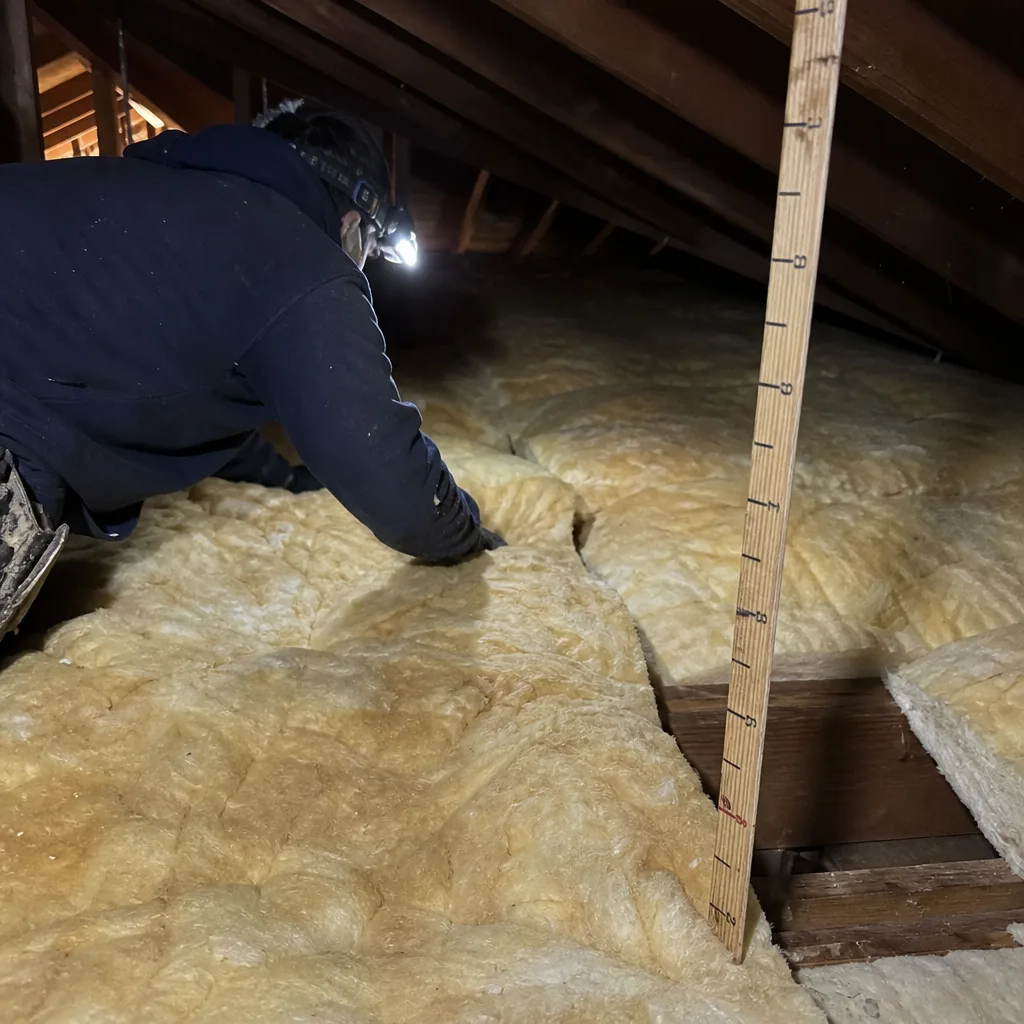
- Existing insulation removal. If you have old fiberglass batts or deteriorating cellulose that needs to come out first, add $0.75 to $1.50 per square foot for removal and disposal. A 1,400-square-foot attic can add $1,000 to $2,100 to the total before the foam rig even arrives. We won’t cover poor-condition substrate with new foam and call it done.
- Air sealing prerequisites. At Envelope Insulation Co., air sealing isn’t an optional line item – it’s a hard prerequisite. Top plates, can light penetrations, HVAC boot surrounds, and plumbing chases get sealed before any foam or blown product goes in. This adds cost upfront but is the reason our blower-door readings move. In Long Beach homes built before 1980, we regularly measure pre-sealing readings above 3,500 CFM50; after sealing, those numbers typically fall by 30 to 50 percent.
- Access and attic geometry. Homes in the Zaferia and Wrigley districts often have low-pitch roofs with less than 18 inches of clearance at the eaves. Restricted access means slower work, smaller equipment, and more labor time per board foot installed. Flat or near-flat roofs common in some of Long Beach’s commercial corridors and ADUs add another variable. We measure clearance and document it in the photo record before pricing the job.
- Square footage and application thickness. Obvious, but often underestimated. The California Energy Code (Title 24) requires minimum R-19 in attic applications for climate zone 8 – which covers most of Long Beach. Achieving R-19 with closed-cell foam means roughly 3 inches of product. At $3.50 per board foot on a 1,000-square-foot attic, that’s $10,500 in foam alone before labor and air sealing. Flash-and-batt hybrid systems exist precisely to reach code compliance at a lower total material cost.
- Existing damage, pests, or moisture. Rodent activity – which we see regularly in the older multi-family stock along Atlantic Avenue and in the North Long Beach area – requires remediation before insulation can go in. Moisture intrusion at roof penetrations, common near the marine layer zone, has to be resolved. Adding these services extends the project timeline and cost but skipping them guarantees a callback within a year or two. We document every finding with photos so you can see exactly what we found and why the scope includes what it does.
Open-Cell vs. Closed-Cell Foam: Which Makes Sense in Long Beach?
This question comes up on almost every job. The short answer is: it depends on where the foam is going and how much moisture that location sees.
Open-cell spray foam is softer, more vapor-permeable, and significantly less expensive. It does a very good job in interior wall cavities and in attic rafter bays where the roof assembly has reliable waterproofing and the home is far enough inland that humidity at the roof deck isn’t a major concern. Neighborhoods like Bixby Knolls, Stratford Square, and Los Cerritos – roughly east of the 710 and north of 4th Street – tend to see less marine-layer moisture intrusion than the beachfront zones. Open-cell can work well there, particularly for homeowners trying to bring ducts inside conditioned space without a massive budget.
Closed-cell spray foam has a higher R-value per inch (typically R-6.5 vs. R-3.7 for open-cell), functions as a vapor retarder, and is structurally rigid once cured. For crawl spaces, rim joists, under-floor applications in homes near the Port of Long Beach, and roof assemblies in the coastal zip codes (90803, 90814, 90815), closed-cell is usually the correct technical choice. It costs more. It also performs more reliably in the conditions that actually exist in those locations.
A flash-and-batt hybrid is sometimes the most cost-efficient path to code compliance: a one-inch flash coat of closed-cell provides the vapor control and air seal, and fiberglass or mineral wool batts fill the remainder of the cavity to hit the R-value target. On a Spray Foam Insulation in Long Beach project, we’ll lay out the numbers for each approach in writing so you can see the cost-per-R-value comparison before committing to anything.
Does Long Beach Require a Permit for Spray Foam Insulation?
For most residential spray foam applications in Long Beach – attic rafter encapsulation, crawl space, rim joist work – a building permit is generally not required if no structural work is involved. However, if the spray foam project involves changes to the thermal boundary that affect the mechanical system’s design, or if it’s part of a larger Title 24 compliance project requiring CalGreen documentation, a permit may be triggered. Long Beach Building and Safety (under the City’s Community Development Department) has tightened inspections on energy-related work since 2024.
We recommend confirming permit requirements with the City of Long Beach on any project that also involves ductwork, HVAC replacement, or significant structural changes. Envelope Insulation Co. will tell you in the written scope whether a permit is required for your specific job – and if it is, what that adds to the timeline and cost.
One practical note: Title 24, Part 6 (California’s residential energy code) applies to any permitted addition, alteration, or repair in Long Beach. If your project triggers a permit for any reason, the insulation work has to meet current code minimums. For climate zone 8 – which covers Long Beach – attic insulation must reach at least R-19 (R-38 is the prescriptive standard for full attic insulation). We design every project to meet or exceed the applicable code, and the written scope specifies the R-value being installed.
The Air Sealing Step That Most Spray Foam Quotes Skip
Here’s something worth understanding before you collect quotes: a lot of contractors will spray foam your attic rafter bays or crawl space and call it a complete job. The foam addresses thermal resistance – slowing the rate of heat transfer through the assembly. But if the top plates at every interior wall, the gaps around recessed can lights, the plumbing penetrations at the attic floor, and the HVAC boot surrounds haven’t been sealed, conditioned air is still escaping through those paths. The foam didn’t touch them.
We measure this with a blower-door test – a pressurization device that shows, in one number (CFM50 – cubic feet per minute at 50 pascals of pressure), how much air the building envelope is losing. Spray foam alone, applied without prior air sealing at penetrations, often moves that number by 10 to 20 percent. Air sealing completed before insulation typically moves it by 30 to 55 percent, sometimes more in Long Beach’s older single-family stock.
Envelope Insulation Co.’s position is straightforward: we seal first, then insulate. The air sealing of top plates, can lights, and penetrations is completed before any foam or insulation product goes in. Before-and-after blower-door readings are provided on applicable jobs so you can see, in an actual number, what changed. If a competing quote doesn’t include an air sealing line item or doesn’t mention a blower-door test, ask them what their plan is for penetrations. The answer will tell you a lot.
This is part of what we call The Haven Standard – the framework under which Envelope Insulation Co. has operated since 2016. It isn’t a marketing concept; it’s a written set of operating rules that govern every job we take on. The air sealing prerequisite is one of them.
How to Save on Spray Foam Insulation in Long Beach
A few approaches reliably reduce the total cost without cutting into the quality of the air seal or the thermal performance.
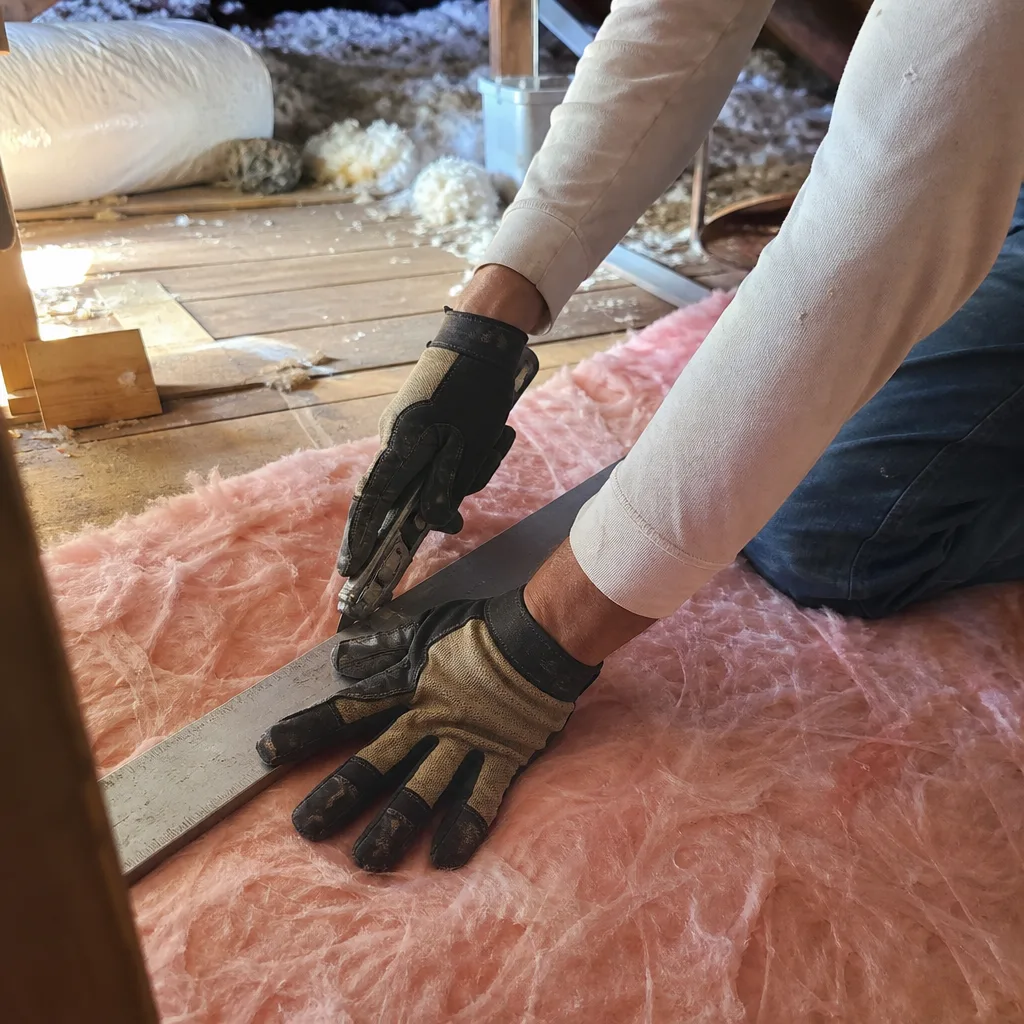
- Consider a flash-and-batt hybrid instead of full closed-cell. A one-inch closed-cell flash coat gives you the vapor control and the air seal at the foam surface. Fiber insulation fills the rest of the cavity to hit your R-value target. Material cost drops significantly. Performance, for most applications, is very close to full closed-cell.
- Bundle the air sealing with the insulation project. Mobilizing a crew costs money. If air sealing and spray foam are done on the same visit, you pay one mobilization cost instead of two. We scope them together by default.
- Check Southern California Edison and SoCalGas rebates. Both utilities offer rebate programs for qualifying insulation upgrades. Amounts change year to year, but $200 to $600 in rebates is realistic on a mid-size Long Beach project that hits specific R-value thresholds. We can identify whether your project qualifies when we scope the job.
- Get a second opinion on any quote you’ve received. Under Haven Standard Clause 1, Envelope Insulation Co. offers a free second opinion on any written estimate. Bring us the competing scope; we’ll read it with you and tell you what’s included, what’s missing, and whether the price is reasonable for the Long Beach market. Call (424) 415-7031 to set that up – no commitment required.
- Address only the highest-impact areas first if budget is a constraint. In most Long Beach homes, the attic thermal boundary and the rim joists return the most energy savings per dollar spent. Rim joist spray foam on a 1,200-square-foot raised-foundation home might run $1,400 to $2,200 and make a measurable difference on summer cooling bills. We’ll tell you where your money moves the needle most in the written scope.
- Don’t delay if you have existing damage. Moisture damage and rodent activity in an uninsulated or poorly insulated attic compound over time. A Long Beach attic that has moisture intrusion at a failed roof penetration will cost more to remediate in 18 months than it costs today. The remediation cost grows; the insulation cost stays roughly the same.
What the Written Price Includes (and What to Ask if It Doesn’t)
The single most useful thing you can do when comparing spray foam quotes is read each scope line by line and ask what’s excluded. Here’s what Envelope Insulation Co.’s written price always covers:
- A documented pre-job condition assessment, including photos of the existing substrate, any visible moisture or pest evidence, and the existing insulation state
- Air sealing of top plates, can lights, and penetrations before any foam is applied
- The spray foam application at the specified thickness and R-value (both stated in writing)
- Post-installation photos showing coverage and thickness indicators
- A blower-door before-and-after reading on applicable jobs (attic air sealing and full encapsulation projects)
- Written warranty documentation delivered before the crew leaves
If a competing written estimate doesn’t specify the thickness being installed, the R-value being achieved, or whether air sealing is included, those are the questions to ask. R-value without air sealing is a partial solution. A number on a quote without a specified thickness is impossible to verify after the foam cures.
Under Haven Standard Clause 1: a flat price, written scope, and written warranty are provided before anyone lifts a tool. Every job. No exceptions. Wes Okafor built that requirement into the company’s operating structure in 2016 because the alternative – pricing after the fact or adjusting scope mid-job – is how homeowners end up with a different number than they agreed to.
Spray Foam Safety: What Homeowners Should Know
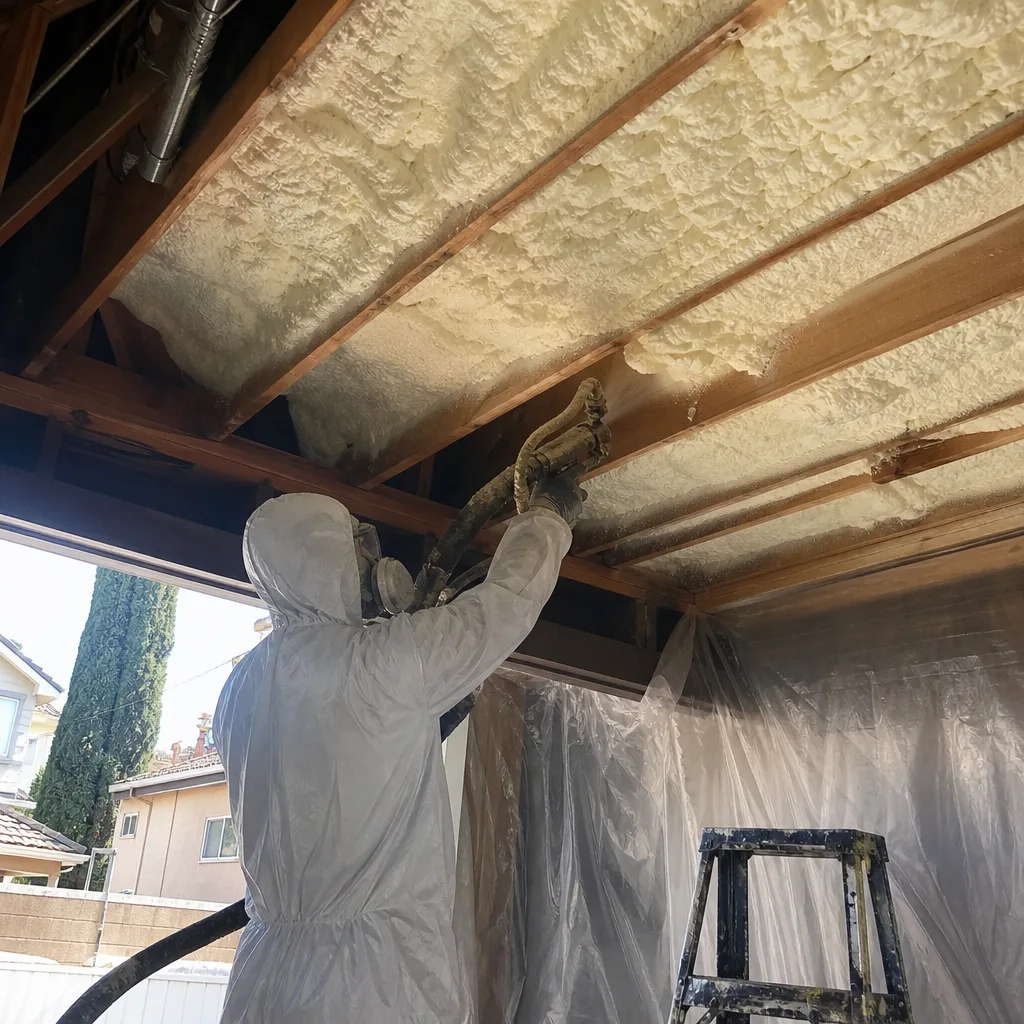
Spray foam installation involves chemical components that require proper ventilation, protective equipment, and curing time before occupancy. The two-part isocyanate chemistry used in both open-cell and closed-cell foam produces off-gassing during and immediately after application. A professional installer will advise you on the required vacate time for your specific product – typically 24 hours minimum, sometimes longer for closed-cell in a less-ventilated space.
This is one reason we don’t recommend spray foam as a DIY project for homeowners. The mixing ratios, temperature requirements, and equipment calibration required for proper foam adhesion and curing are not forgiving of improvisation. Off-ratio foam – foam where the two components aren’t mixing correctly – looks fine on the surface and fails at the substrate. It’s also one reason we document coverage and thickness indicators with photos: if there’s ever a question about what went in, the record exists.
For high-tension components like spring systems or electrical work that may be encountered during an attic project, we flag those in the photo record and recommend the appropriate trade. We insulate; we don’t repair structural or mechanical systems that fall outside the building envelope scope.
FAQs – Spray Foam Insulation Cost in Long Beach
How much does spray foam insulation cost per square foot in Long Beach, CA?
Spray foam in Long Beach runs between $1.50 and $4.50 per board foot, depending on foam type and application. Open-cell foam is typically $1.50 to $2.00 per board foot; closed-cell runs $2.75 to $4.50. For a 1,000-square-foot attic with a 3-inch open-cell application (3,000 board feet), you’re looking at roughly $4,500 to $6,000 before air sealing. Call (424) 415-7031 for a written estimate specific to your home’s square footage and current substrate condition.
Is spray foam insulation worth the cost in Long Beach’s climate?
For most Long Beach homes, yes – with an important caveat about location. Coastal properties in the 90803 and 90814 zip codes (Belmont Shore, Alamitos Beach, Naples) see persistent marine layer humidity that makes vapor control a real concern, and closed-cell foam’s vapor-retarding properties justify the higher cost in those zones. Inland neighborhoods like Los Cerritos and Bixby Knolls can often achieve similar performance goals with open-cell foam or a flash-and-batt hybrid at lower cost. The blower-door readings we measure before and after air sealing and encapsulation typically show 30 to 50 percent reductions in air leakage on homes built before 1985, which translates to measurable cooling load reduction through Long Beach’s hot inland-event days.
How long does spray foam insulation last in Long Beach?
Both open-cell and closed-cell spray foam, properly installed, last 80 years or more without significant degradation. They don’t settle like blown cellulose, don’t sag like fiberglass batts, and don’t absorb moisture if the right foam type is used for the application. The caveats: foam that was applied off-ratio, foam covering an unresolved moisture source, or foam applied without prior air sealing at penetrations will fail faster – and often in ways that aren’t visible until the problem is significant. The Documented Photo Record from every Envelope Insulation Co. job gives you a baseline for any future inspection.
Can I spray foam my attic myself to save money?
The short answer is that DIY spray foam kits exist, but they’re not the right tool for a full attic or crawl space application. Kits produce small volumes of off-ratio foam that rarely adheres consistently across large surfaces, and the mixing chemistry requires specific temperature and humidity conditions to cure correctly. An attic that looks foamed but has poor adhesion or incorrect density provides significantly lower R-value than labeled. Beyond performance, the off-gassing during application requires proper respiratory protection that most homeowners don’t have. For rim joist spot applications under 50 board feet, a kit can work. For anything larger, the cost of doing it over exceeds the savings from doing it yourself the first time.
Does spray foam insulation require a permit in Long Beach?
For most standalone residential spray foam projects in Long Beach – attic encapsulation, crawl space, rim joist sealing – a building permit is typically not required, provided no structural modifications are involved. If the project is part of a permitted addition, HVAC replacement, or Title 24 compliance package, the energy work gets pulled into the permit scope. Long Beach Building and Safety has increased scrutiny on energy work tied to mechanical permits since 2024. Envelope Insulation Co. will specify in your written scope whether a permit applies to your project, what it adds to the timeline, and how we handle the documentation if it does. Never assume – always confirm with the City before work starts on any project that touches permitted systems.
Key Takeaways
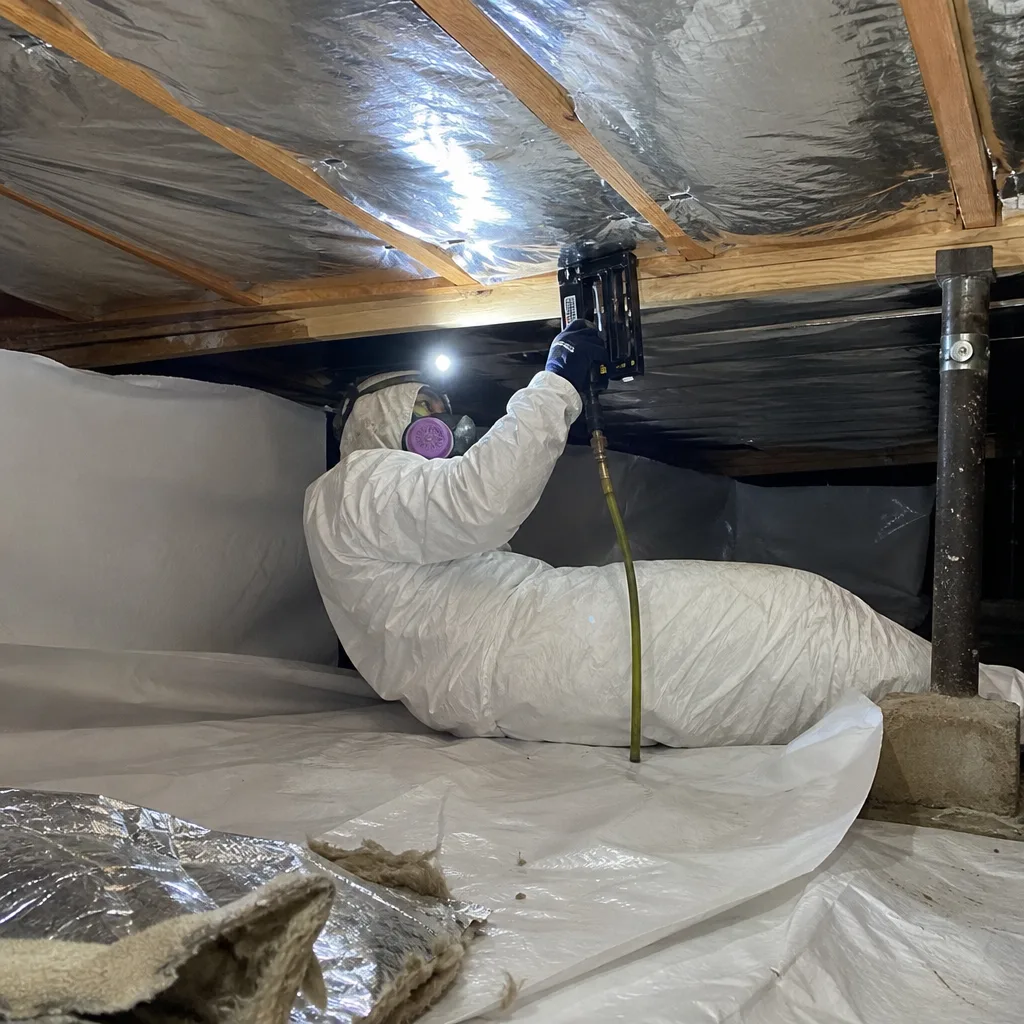
- Spray foam in Long Beach costs $1.50 to $4.50 per board foot; full project costs typically land between $1,800 and $6,500 depending on foam type, square footage, and access.
- Closed-cell foam is the technically correct choice for coastal Long Beach zip codes with persistent marine layer exposure; open-cell and hybrid systems are often more cost-effective for inland neighborhoods.
- Air sealing at penetrations – top plates, can lights, HVAC boots – must happen before foam goes in, or the thermal improvement is only partial. Blower-door readings confirm the difference.
- Flash-and-batt hybrid systems can reach Title 24 compliance at lower material cost than full closed-cell – worth evaluating on any budget-constrained project.
- Southern California Edison and SoCalGas rebates can reduce net project cost by $200 to $600 on qualifying upgrades.
- A written price, written scope, and written warranty before any work starts is the only way to compare quotes accurately. Ask for it from every contractor.
- Envelope Insulation Co. has completed work on 9,000+ homes since 2016 under The Haven Standard. Every job begins with a written price. Every job ends with a Documented Photo Record. On applicable projects, before-and-after blower-door readings are provided.
Get a Written Price for Your Long Beach Spray Foam Project
If you’re ready to know what spray foam insulation actually costs for your specific home in Long Beach – not a range from a national average, but a flat written price for your attic, crawl space, or wall assembly – Envelope Insulation Co. provides free estimates with no obligation. Wes Okafor and the team operate under The Haven Standard: a written price before any work starts, a documented photo record when the crew leaves, and a 365-Day Done Right Promise backing every completed job.
We also offer a free second opinion on any written estimate you’ve already received. Bring us the competing scope and we’ll read it with you – line by line, in plain language, so you understand exactly what you’re being quoted for.
To schedule your free estimate or request a second opinion, call (424) 415-7031. A live person answers – not a voicemail system, not a callback window. If you want to explore the full range of services we offer across the building envelope, the home page covers every service line from attic air sealing to crawl space encapsulation.
Written by Wes Okafor, Owner at Envelope Insulation Co. (operating as Topside Attic Insulation Long Beach), serving Long Beach, CA since 2016. Pricing reflects the Long Beach market as of 2026. Topside Attic Insulation Long Beach offers free estimates – call (424) 415-7031.
What Our Customers Say
"They air-sealed the attic floor before insulating and showed me the blower-door number before and after. The upstairs is finally the same temperature as downstairs."
- Marisol D."Fixed price, clean work, and they hauled the old material away as agreed."
- Todd M."Crawl space encapsulation done properly. Photographs of the vapour barrier at every seam, and the damp smell in the hallway is gone."
- Ainsley P.