
Rockwool Attic Insulation: The Long Beach Owner’s Guide
Rockwool attic insulation installation in Long Beach typically runs $2.80-$4.20 per square foot for batt installation, or $3.50-$5.50 per square foot for blown-in Comfortbatt and Comfortbatt R-23 or R-30 dense-pack applications in our market. We stock Rockwool Comfortbatt, AFB, and Safe ‘n’ Sound on our Long Beach trucks, and most attic jobs can start same-day once we’ve completed the pre-work blower-door test and written scope. Most homeowners realize their Rockwool insulation is failing when upstairs rooms won’t stay cool during Long Beach’s September heat waves despite the AC running constantly, or when they pull back a section in the attic and find batt compression, moisture staining, or gaps where the original installer left top plates and can-light penetrations wide open to the soffit air.
Which Rockwool Models This Applies To
We install and replace three Rockwool product lines common in Long Beach attics: Comfortbatt (semi-rigid batts in R-15, R-23, and R-30, sized to standard 16-inch and 24-inch joist spacing), Comfortbatt Firestop (the higher-density variant required for party-wall and garage-ceiling assemblies under California Title 24), and AFB (Acoustical Fire Batt, found in older Long Beach duplex conversions and fourplexes near Alamitos Beach where sound transmission between units was the original goal).
Identification is straightforward once you’re in the attic. Comfortbatt has a distinct brown/tan color and fibrous, wool-like texture; the R-value and dimensions are printed every 24 inches along the edge. AFB is off-white, denser, and noticeably heavier. If you’re seeing yellowed fiberglass, compressed cellulose, or vermiculite, you don’t have Rockwool and this page doesn’t apply.
Topside Attic Insulation Long Beach is an independent service provider with no affiliation to Rockwool International. We source Rockwool through our normal distribution channel alongside Owens Corning, Johns Manville, and Knauf. For most Long Beach attics, we recommend sticking with OEM Rockwool rather than aftermarket mineral wool substitutes. The density spec matters: Comfortbatt runs 4.0-8.0 pounds per cubic foot depending on R-value, and we’ve seen aftermarket batts at 2.5 pcf that sag within two seasons in our coastal humidity. We measure existing density with a simple core sample before quoting replacement.
Signs Your Rockwool Attic Insulation Is Failing
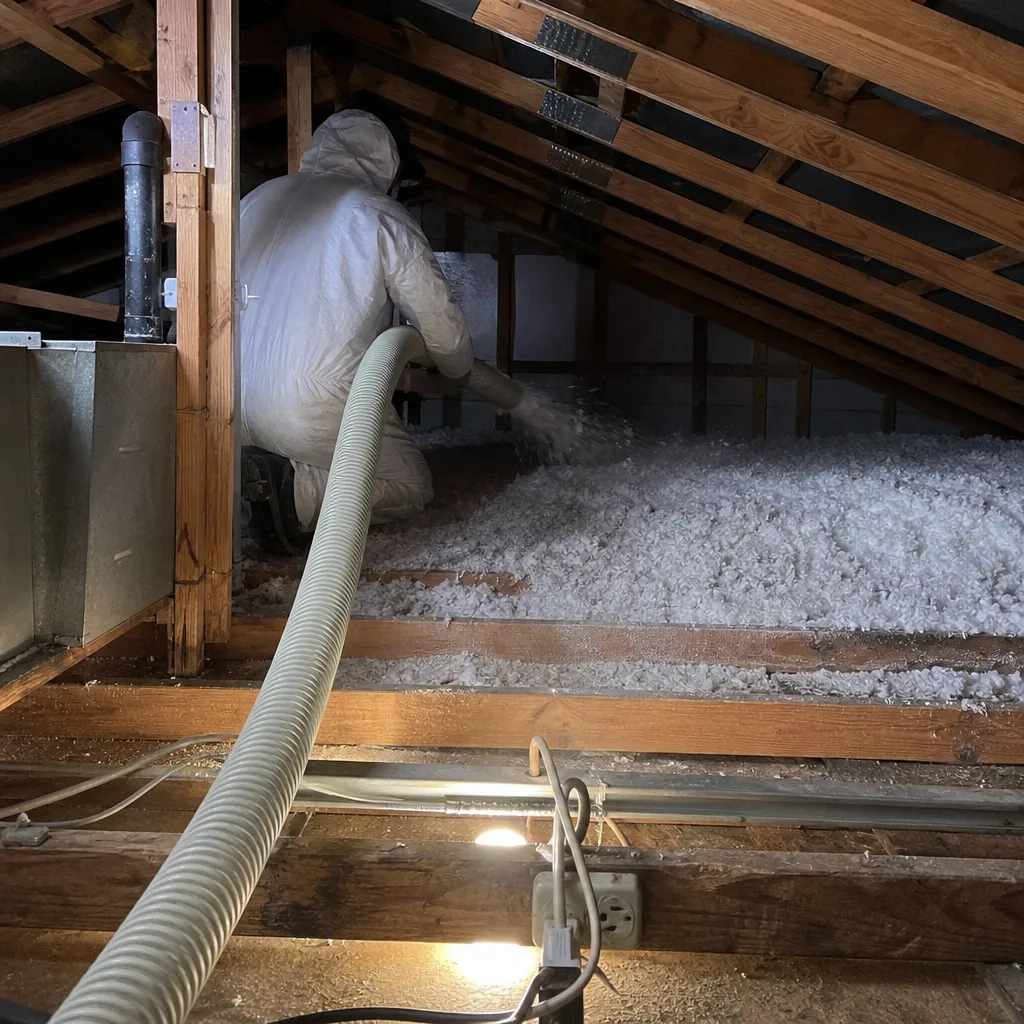
- Uneven temperature floors. The upstairs bedroom runs 8-12 degrees hotter than the thermostat setting while the downstairs over-cools. In Long Beach’s 1920s Bixby Knolls bungalows, this usually means the original Rockwool batts have settled away from the top plates, creating a thermal bypass where attic air pours down the wall cavities.
- Moisture or mildew on ceiling drywall. Rockwool is hydrophobic and won’t hold water like cellulose, but if it’s installed over an unsealed attic floor, humid Long Beach marine air condenses on the cool drywall above. The insulation itself looks fine; the problem is the air gap underneath it.
- Compressed or displaced batts. Homeowners or prior contractors walking in the attic have crushed Comfortbatt to half its labeled thickness. An R-30 batt compressed to R-19 depth performs at roughly R-19. We see this constantly in attics near Rancho Los Cerritos where HVAC techs have run ductwork over the years.
- Rodent nesting and soiling. Rockwool’s mineral composition doesn’t appeal to rodents as nesting material, but the gaps around poorly fitted batts create highways. If you’re finding droppings or compressed tunnels, the insulation isn’t the failure; the installation detail is.
- Ice damming or excessive summer heat gain. In Long Beach’s more exposed hillside homes near Signal Hill, inadequate R-value combined with air leaks lets solar heat radiate through the roof deck all afternoon. The Rockwool may be intact but underspecified for the assembly.
Replacement Cost & What’s Included
Most Rockwool attic insulation replacements in Long Beach run between $2,800 and $6,400 for a typical 1,200-2,200 square foot home, depending on whether we’re adding insulation over existing material or removing failed product first. Removal and disposal of contaminated or compressed Rockwool adds $1.20-$1.80 per square foot. Air sealing of top plates, can lights, and plumbing/electrical penetrations runs $0.85-$1.40 per square foot and is completed before any new insulation goes in.
What drives the range: attic accessibility (cathedral ceilings through scuttle holes cost more), existing R-value depth we need to build over, and whether we find Title 24 fire-blocking requirements in multi-family conversions. Every quote is a flat, written price under Haven Standard Clause 1. No work starts without it. The 365-Day Done Right Promise covers all completed work, and you’ll receive a Documented Photo Record showing pre-install conditions, air-sealing locations addressed, and post-install depth readings verified with a ruler.
DIY or Call Us?
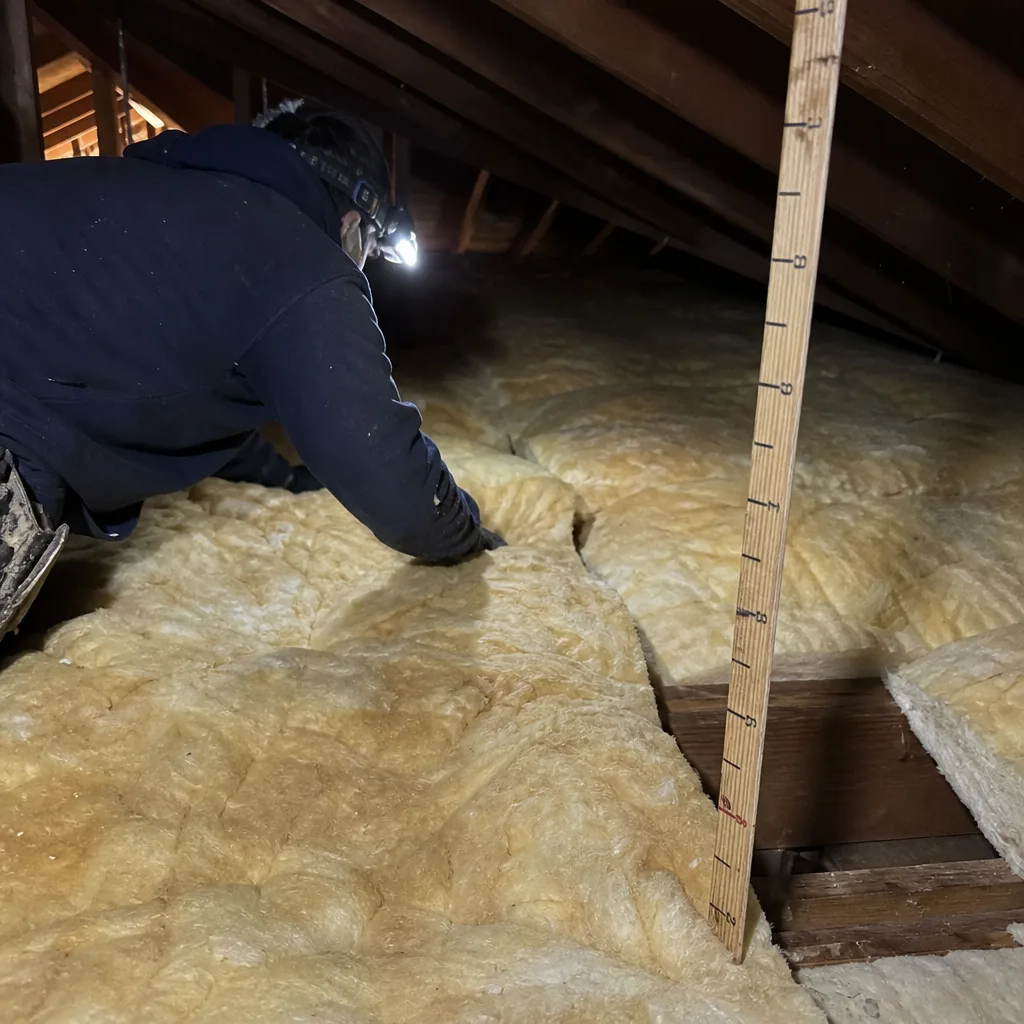
There’s nothing inherently dangerous about handling Rockwool, though the fibers are irritating and you’ll want a proper respirator, not a dust mask. A homeowner can safely check: the product label for R-value and dimensions, whether batts are continuous across the joist bay or gapped, and whether you can see light from the soffit vents between the top plate and the insulation edge.
Where DIY goes wrong: compressing batts to fit, leaving thermal bypasses at penetrations, and blowing new insulation over an unsealed attic floor. Wes Okafor’s rule, learned at Olive-Harvey College and applied on thousands of Long Beach jobs: measure first, then insulate - otherwise you’re just trapping the problem. We don’t sell Rockwool by the bag for self-install. We do provide free second opinions on any written estimate you’ve already received. Call (424) 415-7031.
FAQs
Rockwool mineral wool itself is inert and doesn’t degrade chemically; we’ve found properly installed Comfortbatt performing to spec after 30 years in dry Long Beach attics. The failure point is almost always installation detail: compression, moisture intrusion from roof leaks, or air bypasses that render the R-value irrelevant. In coastal Long Beach with higher humidity exposure near the marina, batts in vented attics can show surface dust accumulation and minor fiber breakdown after 20-25 years. Call (424) 415-7031 and we’ll core-sample your existing material to check density and condition.
Localized compression or displacement can sometimes be addressed by lifting and refluffing batts, though Rockwool doesn’t rebound the way fiberglass does. If the batt is permanently compressed below 80% of labeled thickness, or if there’s any moisture staining or rodent soiling, replacement is the only sound option. We won’t quote patchwork on contaminated material. Bring us a competing written estimate and we’ll review it with you at no charge.
A standard 1,500-square-foot attic with removal, air sealing, and new Rockwool Comfortbatt installation takes one full day for our crew of two. Jobs requiring blown-in dense-pack application or working through limited attic access in older Long Beach homes may extend to a second day. We arrive with the material on the truck; no waiting for delivery. You’ll get a text when the crew is en route and a named technician who stays on the job start to finish.
Yes. We carry Comfortbatt in R-23 and R-30 for standard joist bays, plus AFB for fire-rated assemblies common in multi-family buildings near downtown Long Beach. Specialty thicknesses or R-38 batts for raised-heel trusses are typically next-day from our distributor. We don’t install Rockwool over unsealed attics, period. The blower-door test and air-sealing work happen first, with before-and-after numbers published on every applicable job.
Written by Wes Okafor, Owner, Topside Attic Insulation Long Beach at Topside Attic Insulation Long Beach, serving Long Beach and nearby areas.