
Rockwool Attic Air Sealing: The Long Beach Owner’s Guide
Rockwool-compatible attic air sealing in Long Beach typically runs $1,800-$3,400 for a complete top-plate and penetration seal on a 1,200-2,000 square foot home, and we stock the specialized fire-rated caulk, expanding foam, and gasket materials on every truck. Most Rockwool retrofits in Long Beach neighborhoods like Bixby Knolls and the Craftsman districts near Rancho Los Cerritos are completed same-day once the blower-door baseline is established. Homeowners usually discover the failure when their recently installed Rockwool batt or blown-in system isn’t delivering the expected temperature drop, or when their HVAC contractor points out that the insulation is doing its job but the air moving through it isn’t.
Which Rockwool Models This Applies To
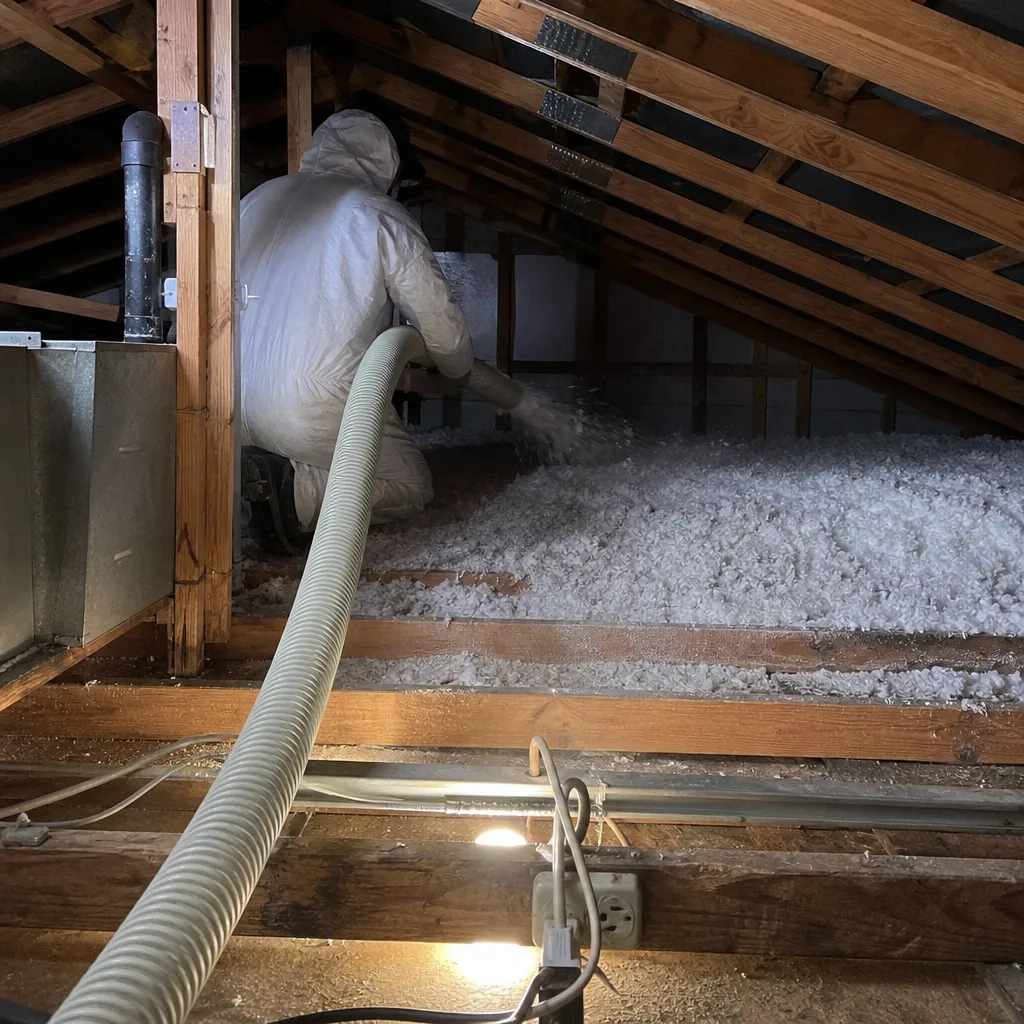
Rockwool’s residential attic line in California falls into three series that matter for air-sealing compatibility: ComfortBatt (semi-rigid batts, R-23 and R-30, common in 2×6 and 2×8 rafter bays), ComfortBoard 80 (rigid board, used for thermal breaks and exterior continuous insulation, occasionally found in conditioned attic assemblies), and TopRock DD (loose-fill blown wool, the most common retrofit we see in Long Beach’s 1940s-1970s housing stock). The critical identifier is the product density, printed on the batt facing or bag label: ComfortBatt runs 2.5-3.0 lbs/ft³, while TopRock DD is significantly lighter at 1.3-1.7 lbs/ft³. That density difference determines which air-sealing strategy works.
ComfortBatt’s rigidity means it can bridge small gaps and create a false sense of seal; we’ve found 3/8-inch gaps along top plates in Belmont Heights homes where the batt compressed but never sealed. TopRock DD, being loose, will settle and reveal leaks within the first heating season if the air sealing beneath it was skipped. We use OEM-spec Rockwool-compatible sealants, including the pink fire-rated acrylic caulk Rockwool specifies for penetration sealing, though we’ve also validated Tremco’s Smoke ‘N’ Sound as an equivalent aftermarket product that meets the same ASTM E-814 rating at roughly 15% lower material cost. The compatibility gotcha: ComfortBoard 80 in cathedral ceiling assemblies requires a different gasket approach than batt or loose-fill systems, and mixing the two strategies creates thermal bypasses we have to tear back out.
Signs Your Rockwool Attic Air Sealing Is Failing
- Dust streaking on the Rockwool surface. Air moving through gaps in the top plate or electrical penetrations carries attic dust and deposits it on the insulation face. In Long Beach’s dry, Santa Ana-prone climate, this shows within 18-24 months of a skipped or incomplete seal.
- Uneven temperature rooms below, especially under eaves. The Rockwool is performing at spec, but conditioned air is escaping through the rim joist and soffit connections that were never sealed before installation. We see this pattern consistently in the smaller bungalows near Virginia Country Club.
- Ice damming or moisture staining on the roof deck. Warm, moist interior air leaks past the Rockwool and condenses on the cold sheathing. Even in Long Beach’s mild climate, January nights drop into the 40s, enough to create condensation cycles that darken plywood over two to three winters.
- HVAC runtime longer than neighbors with similar homes. Your blower-door number is the objective check here. A home sealed to 3.0 ACH50 or better should show markedly shorter cycles; if you’re still running 4.5+ ACH50 with new Rockwool, the air sealing failed or was skipped.
- Can lights or bathroom fans feel drafty when the system is off. These penetrations are the most commonly missed detail. Rockwool batts stuffed around them without a pre-sealed box or gasketed trim create a direct chimney effect from conditioned space to attic.
Replacement Cost & What’s Included
In Long Beach, a complete Rockwool attic air sealing runs $1,800-$3,400 installed, with the range driven by three factors: attic accessibility (cathedral ceilings with limited scuttle access add 20-30% labor), the number of penetrations to seal (a home with 12 can lights and two bath fans versus one with four fixtures), and whether we’re working over existing Rockwool or pulling it back to seal the deck properly. We don’t seal over loose-fill without temporary relocation; the Haven Standard requires the air barrier to be continuous and visible.
That price includes: blower-door pre-test and post-test with documented CFM50 readings, fire-rated caulk and expanding foam for all top plates and penetrations, gasketed electrical box covers or sealed can-light housings as needed, temporary containment and replacement of existing Rockwool, and the Documented Photo Record delivered before we leave. Under our 365-Day Done Right Promise, any gap we sealed that shows measurable leakage on a follow-up blower-door test gets reworked at no charge. We also provide a Free Second Opinion on any written estimate you’ve already received, and we’ll walk through the scope line by line.
DIY or Call Us?
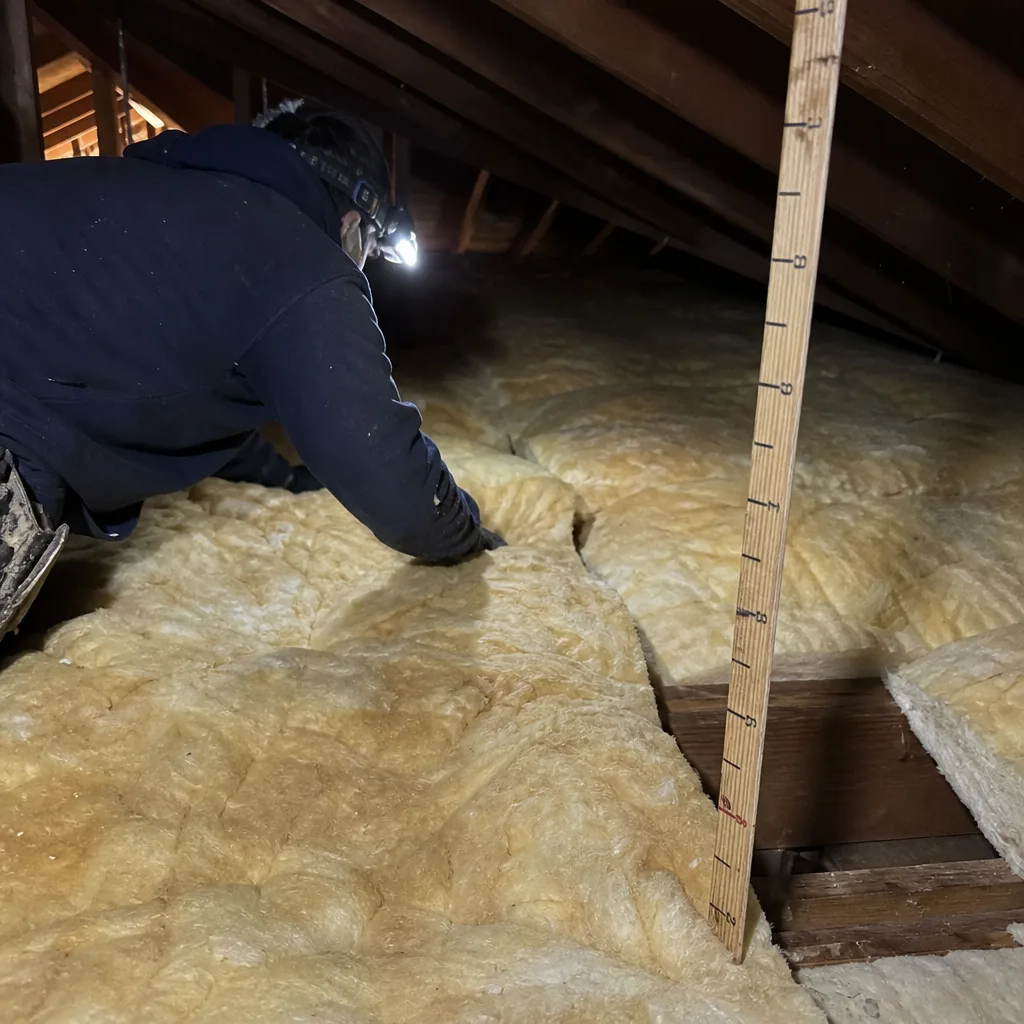
There’s a short, honest list of what a homeowner can safely check: lift the attic hatch and look for obvious gaps along the top plate with a flashlight, verify that bath fan housings have a damper and that the duct is actually connected, and confirm can lights are IC-rated (insulation contact) if Rockwool is touching them. What you cannot safely or effectively do yourself: run a blower-door test to establish your actual leakage number, work around energized electrical in a hot attic, or properly seal the complex geometry where rafters meet top plates in older Long Beach framing.
The fire-rated sealants Rockwool specifies require specific application temperatures and cure times that most homeowners misjudge in attic conditions. And without the pressurization test, you’re guessing at whether the seal held. Wes Okafor’s standard line on every job: “Measure first, then insulate - otherwise you’re just trapping the problem.” If your Rockwool is already in place and you’re seeing the symptoms above, call (424) 415-7031. We’ll run the blower-door test, show you the number, and give you a written price before any work starts.
FAQs
Properly installed air sealing with fire-rated caulk and foam gasket materials lasts 20-30 years, typically outliving the Rockwool insulation itself. In Long Beach’s coastal climate, UV degradation isn’t a factor in attics, though we do see some acrylic caulks stiffen faster in homes with poor ventilation; our material spec accounts for this. Call (424) 415-7031 for an exact quote on your home - estimates are free.
Partial repair is possible if the original sealant is still flexible and the failure is isolated to one or two penetrations. If the prior installer used non-fire-rated generic foam or skipped the top plates entirely, we recommend a complete redo; patching over a fundamentally broken air barrier yields blower-door numbers that don’t improve enough to justify the cost. Call (424) 415-7031 and we’ll assess what’s salvageable.
Most Rockwool attic air sealing jobs in Long Beach are completed in one working day, including the blower-door pre-test, sealing work, and post-test verification. Complex cathedral ceilings or homes requiring temporary Rockwool relocation may extend to a second day. We schedule with a named technician and text when they’re en route.
Yes - every truck carries Rockwool-specified fire-rated acrylic caulk, one-component expanding foam for penetration sealing, gasketed electrical box covers, and the specialized backer rod for larger gaps in older Long Beach framing. We also stock Reflectix-compatible sealing components for homes with hybrid insulation systems. Topside Attic Insulation Long Beach is an independent service provider, not affiliated with Rockwool.
Written by Wes Okafor, Owner, Topside Attic Insulation Long Beach at Topside Attic Insulation Long Beach, serving Long Beach and nearby areas.