
Knauf Vapor Barrier Installation: The Long Beach Owner’s Guide
We stock and install Knauf-compatible vapor barriers for attics and crawl spaces throughout Long Beach, with most residential jobs running between $1,200 and $2,800 depending on square footage and whether the space needs prep work first. Same-day installation is available when we have your dimensions and a photo of the existing barrier, which most Long Beach homeowners can text to (424) 415-7031 before we roll. Most people discover their vapor barrier has failed when they pull down attic stairs and smell mustiness, or when their energy bill spikes during a Long Beach marine layer season that should have kept cooling costs flat.
Which Knauf Models This Applies To
Knauf manufactures vapor barrier materials by roll specification rather than by a discrete model number, so the match depends on three things: the permeability rating you need, the square footage of your conditioned envelope, and whether your existing insulation is Knauf Ecoseal, Jet Stream, or a loose-fill product like Insulation Solutions blown fiberglass. The label you’re looking for is on the existing poly sheet itself, usually printed in the corner: a perm rating of 0.1 or lower for Class I vapor retarders, which is what Long Beach’s mixed-humidity climate calls for per California Title 24.
We source Knauf materials through standard distribution channels, not through any exclusive arrangement. For most Long Beach homes built between 1940 and 1980, we see 6-mil polyethylene that has degraded to the point of tearing at staple lines. The OEM-equivalent we stock is Knauf’s 10-foot by 100-foot 6-mil roll with reinforced scrim, or the 8-mil version for crawl spaces with soil contact. Aftermarket equivalents from Reef Industries or Stego Wrap perform identically on a blower-door test but carry different warranty terms. We document which material we used, and why, on every written scope.
Signs Your Knauf Vapor Barrier Installation Is Failing
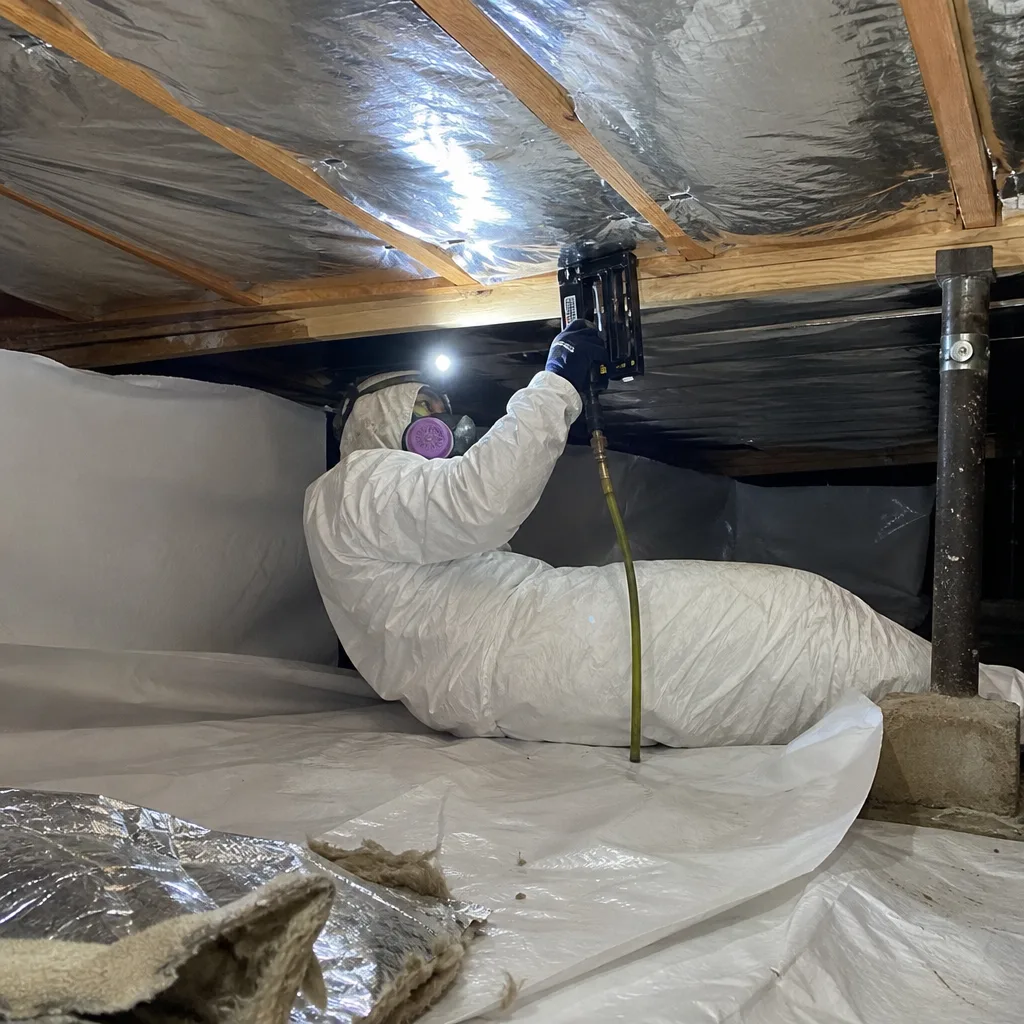
- Tears or sagging along joist lines. The staple or adhesive bond fails first in Long Beach’s coastal climate, where temperature swings between morning marine layer and afternoon sun cause expansion and contraction cycles that fatigue poly sheeting within 8 to 12 years.
- Condensation on the underside of roof decking. When the vapor barrier no longer blocks soil moisture or interior humidity, water vapor hits the cold roof deck and condenses. In Bixby Knolls, we regularly see this in 1920s bungalows where the original barrier was never upgraded after bathroom exhaust fans were added.
- Musty odor that returns after cleaning. The smell means mold is eating organic material in your attic or crawl space. A functioning vapor barrier keeps relative humidity below 70 percent, which is the threshold for active mold growth in our climate zone.
- Insulation that appears darker or clumped. Fiberglass that has absorbed moisture loses its loft and its R-value. We measure existing depth before quoting, and we’ve pulled Knauf loose-fill that was performing at less than half its rated R-value because the barrier beneath it had failed.
- Peeling paint or efflorescence on interior walls below the attic. This is the late-stage signal. Moisture is migrating through the ceiling assembly, carrying salts from drywall compound or plaster that crystallize on the surface. By this point, the barrier has been compromised for months.
Replacement Cost & What’s Included
For a typical Long Beach single-family home, vapor barrier replacement runs $1,200 to $2,800 installed. The low end covers a clean, accessible crawl space under 1,000 square feet with straightforward perimeter sealing. The high end reflects attic work with cathedral ceilings, rodent-damaged substrate that needs repair first, or homes in the Bluff Park area where tight access adds labor hours.
Every quote breaks out materials and labor separately. The material line includes the Knauf or equivalent barrier, seam tape, mechanical fasteners, and any transition membrane needed at penetrations. Labor covers removal of the failed barrier, surface prep, installation, and a post-install photo record. Work under The Haven Standard since 2016 means you get the written price before anyone lifts a tool, plus a 365-Day Done Right Promise on the installation. We don’t charge separately for the blower-door test when vapor barrier work is bundled with air sealing.
DIY or Call Us?
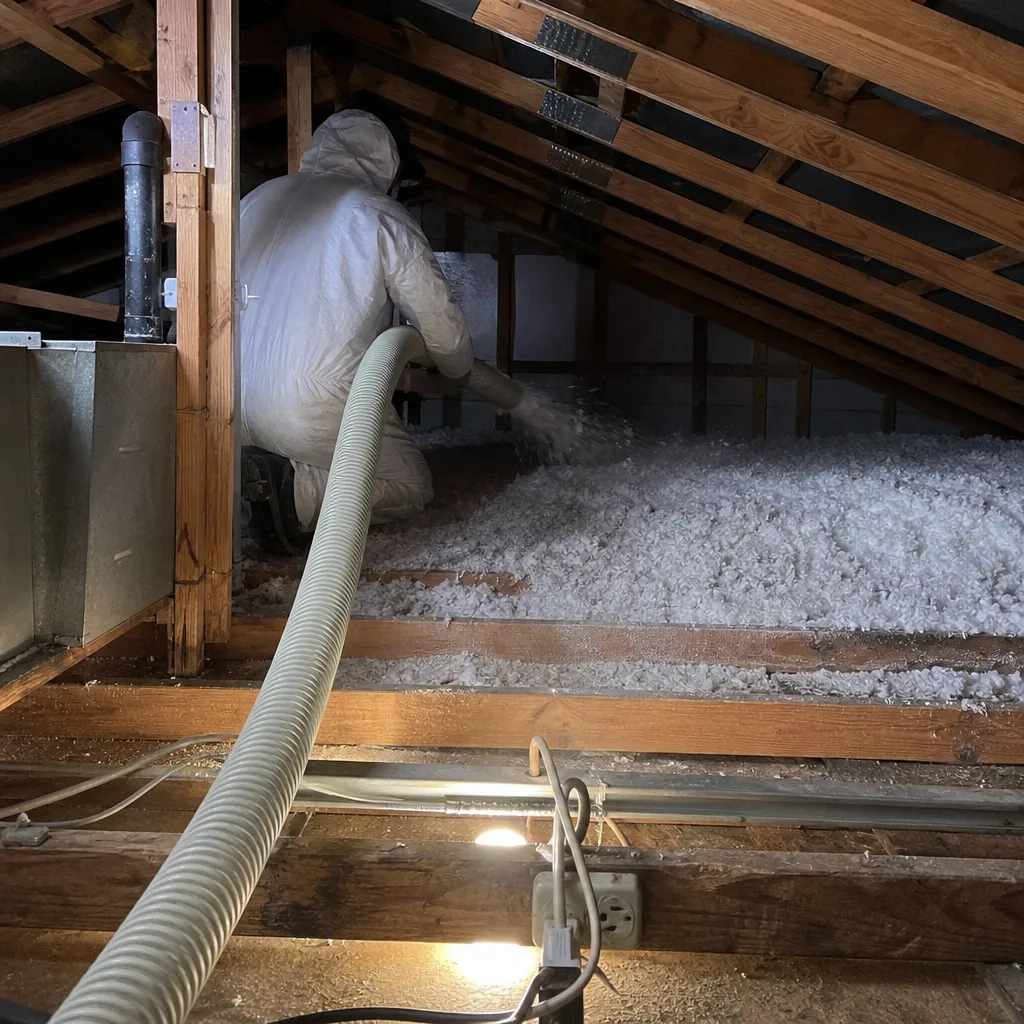
There’s nothing inherently dangerous about laying poly sheeting, but there are two places DIY goes wrong fast. First, working in a crawl space or attic without proper respiratory protection means you’re inhaling decades of accumulated fiberglass dust, rodent droppings, and possibly disturbed mold spores. Second, most homeowners staple the barrier to joists and call it done, missing the critical seam sealing that actually stops vapor drive. We use pressure-sensitive tape at all overlaps and acoustic sealant at perimeter terminations, then verify with a smoke pencil where the envelope is penetrated by plumbing or wiring.
What you can safely check: the condition of your existing barrier from the access hatch, using a flashlight and a camera. What you should not attempt: removal of contaminated material, work near knob-and-tube wiring, or any job where the crawl space clearance is less than 18 inches. Measure first, then insulate - otherwise you’re just trapping the problem. When you’re ready for a written price, text photos to (424) 415-7031 or call and a live person will pick up.
FAQs
In Long Beach’s marine climate, a properly installed 6-mil polyethylene barrier lasts 15 to 20 years, though we see premature failure at 8 to 10 years in unvented crawl spaces with soil moisture issues or where the original installer skipped seam taping. The 8-mil reinforced product we specify for soil-contact applications adds roughly 5 years to that span. Call (424) 415-7031 for an exact quote on your space - estimates are free.
Patching works for isolated punctures smaller than a dinner plate, but tape repairs over degraded poly tend to peel within a season because the substrate has lost its flexibility. When we find multiple tears, staple-line sagging, or any mold on the soil side, we recommend full replacement so the warranty and the blower-door result are clean. Call (424) 415-7031 and we’ll tell you which category you’re in.
Most residential vapor barrier replacements in Long Beach take 4 to 6 hours for a crawl space, or a full day for an attic with complex geometry. We arrive with the material on the truck, so there’s no second trip. You’ll get the documented photo record and the written scope before we leave.
We stock 6-mil and 8-mil reinforced poly in 10-foot widths, which covers the majority of Long Beach foundations without seams. For Knauf-specific facings or fire-rated assemblies, we order to the job and still hit same-day start if you call before noon. Call (424) 415-7031 to confirm stock for your dimensions.
Ready to stop the moisture migration? Call (424) 415-7031 or text photos of your crawl space or attic access. We’ll reply with a written price and a scope you can compare, no visit required for most straightforward replacements. Every job closes with a Documented Photo Record and, where air sealing is part of the work, before-and-after blower-door numbers you can keep.
Written by Wes Okafor, Owner, Topside Attic Insulation Long Beach at Topside Attic Insulation Long Beach, serving Long Beach and nearby areas.