
Knauf Attic Insulation: The Long Beach Owner’s Guide
Knauf attic insulation installed in Long Beach homes typically runs $1.80 to $3.40 per square foot for blown-in fiberglass, with most complete attic jobs falling between $2,400 and $5,800 depending on accessibility and whether existing material needs removal. We stock Knauf EcoFill and Jet Stream MAX on every truck, and we can usually inspect and quote same-day. Most Long Beach homeowners discover their Knauf insulation is failing when they notice the second-story bedrooms won’t stay cool in August, or their winter gas bill jumps 30% even though the thermostat never moved.
Which Knauf Models This Applies To
We work with the full Knauf residential line: EcoFill Wx blown-in fiberglass (the white bags with the green stripe, typically R-38 to R-60 in attics), Jet Stream MAX for high-velocity dense-pack sidewalls and cathedral ceilings, and Knauf Insulation Atmosphere products when a homeowner wants formaldehyde-free batts for a partial retrofit. The critical compatibility gotcha in Long Beach is ceiling joist spacing: pre-1950s homes in Bixby Knolls and California Heights often have true 2×6 joists on 16-inch centers with irregular spacing, and Jet Stream MAX at 1.5 pounds per cubic foot can overfill and compress if the tech doesn’t adjust the hopper gate. We identify the right product by measuring existing depth with a ruled probe, checking the bag label for manufacturing date (Knauf changed binder formulations in 2021, and the newer material has slightly different settling characteristics), and matching the original installer’s spec sheet when it’s available. OEM Knauf is what we install; we’ve tested aftermarket blown-in that claims compatibility, but the fiber diameter distribution is inconsistent and we’ve seen it settle 15% more in the first year.
Signs Your Knauf Attic Insulation Is Failing
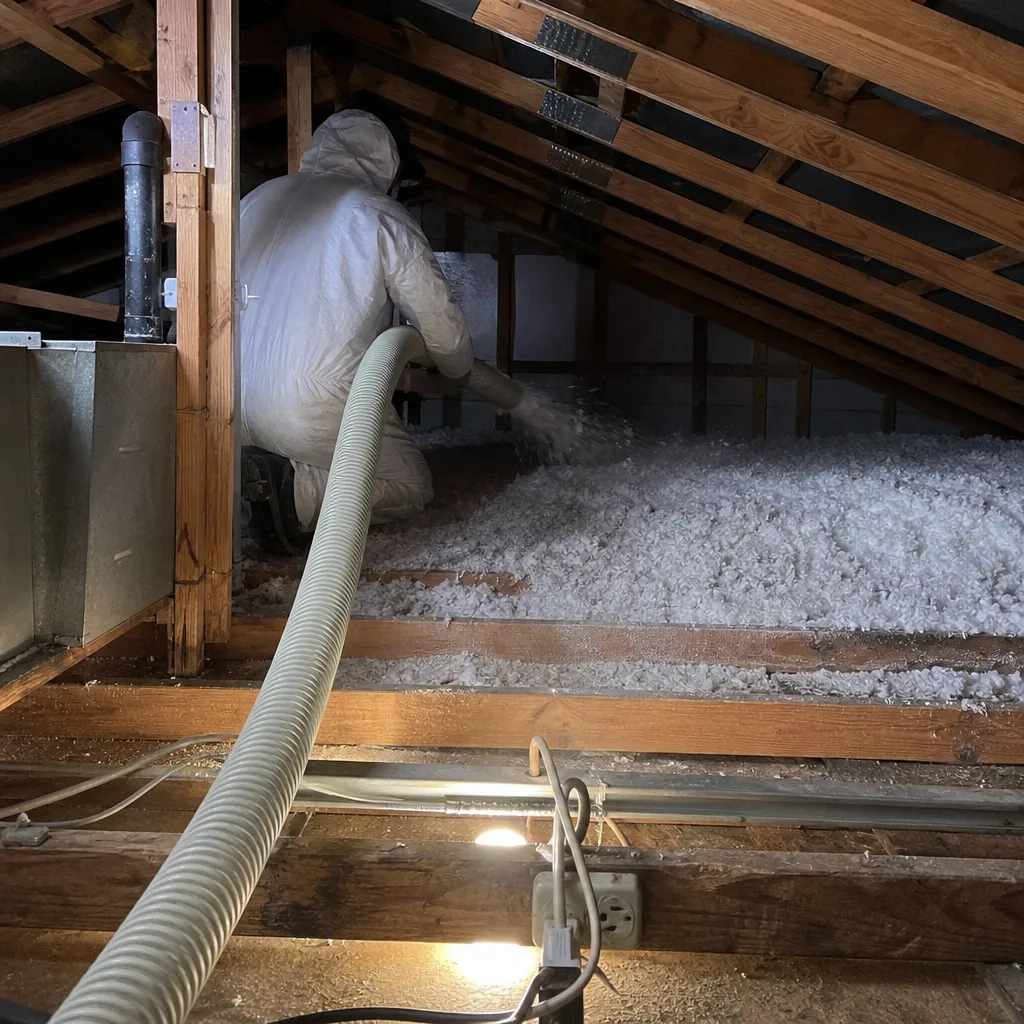
- Uneven temperature rooms. The upstairs hallway hits 78°F while the master bedroom stays at 68°F. This usually means the Knauf EcoFill has shifted or settled away from the eaves, creating thermal bypasses where conditioned air escapes.
- Spiking energy bills with no rate change. Your SCE or SoCalGas bill climbs 20-40% year-over-year. When Knauf fiberglass compresses or gets moisture-loaded from roof leaks, its R-value drops proportionally; we’ve measured 14-inch installs that had compressed to 9 inches after a slow leak in Belmont Shore.
- Drafty ceilings in winter. You feel air movement near recessed can lights or the attic hatch. Knauf insulation doesn’t stop air movement by itself; if the original installer skipped top-plate sealing, the insulation becomes a filter, not a barrier.
- Visible insulation on the attic floor. You peek up and see gray, dirty patches or areas where the white fiberglass has turned yellow-brown. That’s airborne particulate from your HVAC system pulling attic air through bypasses; the Knauf material is doing its job as a filter, which means it’s not doing its job as insulation.
- Ice damming or persistent roof edge staining. Even in Long Beach’s mild climate, poor attic insulation creates temperature differentials that concentrate condensation at the roof deck. We’ve found saturated Knauf batts in Naples and Belmont Heights where warm, moist interior air hit cold sheathing for years.
Replacement Cost & What’s Included
Most full Knauf attic insulation replacements in Long Beach run $2,400 to $5,800, with smaller partial retrofits (1,200 square feet or less, no removal) starting around $1,800. The range depends on four things: whether we’re removing old material ($0.60-$1.10 per square foot), how much air sealing the attic floor needs, whether the attic has safe decking for crew access, and the target R-value (R-38 is code minimum; R-49 or R-60 is what we quote for homes in the Signal Hill wind corridor). Every job includes removal and bagging of old insulation, blower-door-guided air sealing of top plates and penetrations, installation of new Knauf material to specified depth, and a Documented Photo Record showing pre-install depth readings, post-install depth readings, and the air-sealing locations addressed. Under Haven Standard Clause 1, you get a written price before any work starts. The 365-Day Done Right Promise covers settling, coverage gaps, or any installation defect.
DIY or Call Us?
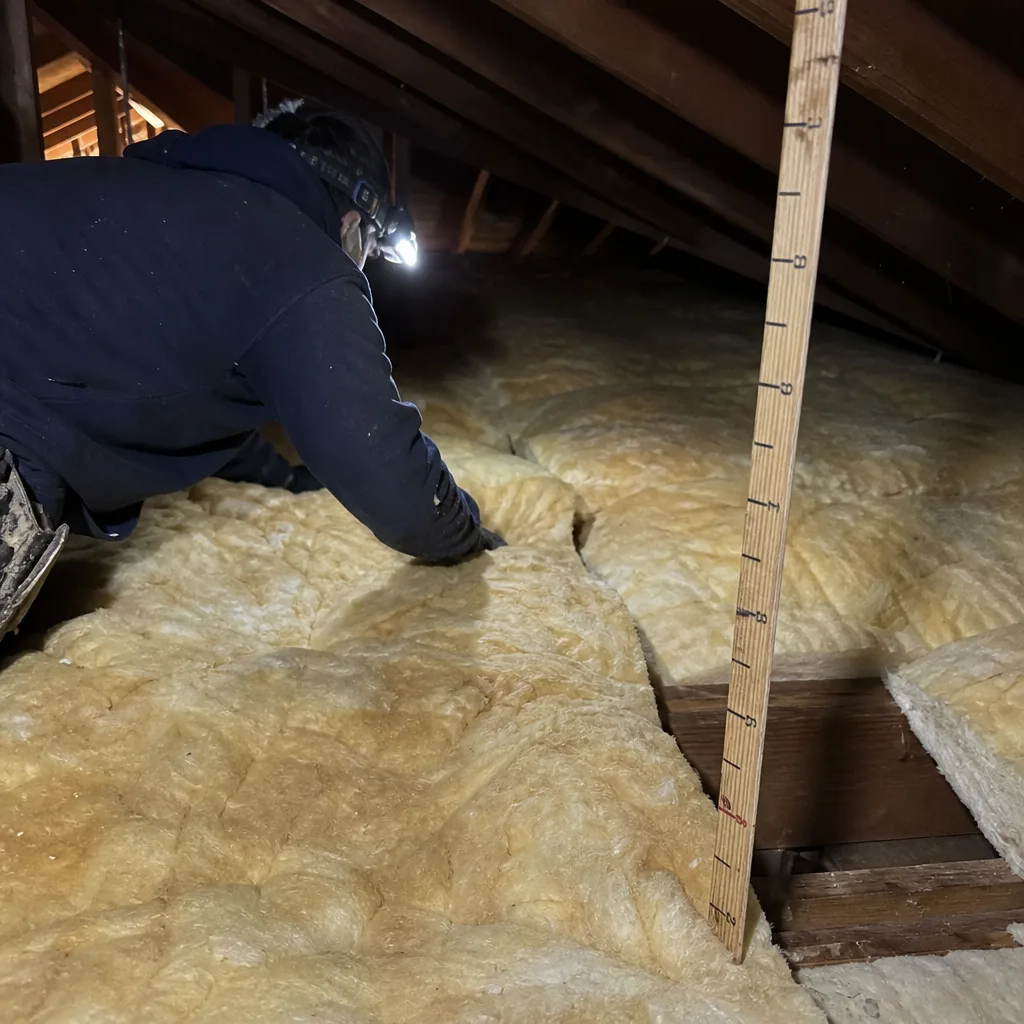
There’s no high-tension danger in insulation work, but there are three places DIY goes wrong fast. First, without a blower-door test, you can’t locate the air leaks that are making your existing Knauf insulation underperform; blowing new material over unsealed bypasses traps moisture and masks the real problem. Second, attic work in Long Beach’s older stock means navigating around knob-and-tube wiring, recessed cans rated for contact or not, and compromised decking; we’ve found live exposed splices in attics from the 1920s. Third, the Knauf hopper settings for density and coverage are calibrated to machine type and hose length, and getting it wrong means underweight installs that settle and lose R-value within two seasons. What you can safely check: measure your existing insulation depth with a ruler at five points, photograph any water staining on the roof deck, and note your highest summer electric bill. Then call us at (424) 415-7031. We’ll bring the blower door, the thermal camera, and the right Knauf spec.
FAQs
Properly installed Knauf fiberglass attic insulation lasts 80 to 100 years, but its effective R-value degrades if it gets wet, compressed, or installed over unsealed air leaks. In Long Beach’s marine climate, we’ve found that homes within two miles of the coast see more moisture cycling in attics, which can accelerate binder breakdown and settling; measure first, then insulate - otherwise you’re just trapping the problem. Call (424) 415-7031 for an exact quote - estimates are free.
Spot repair works only if the existing Knauf material is dry, uncompressed, and was originally installed to full depth; otherwise, you’re layering new over compromised old, which creates thermal discontinuities. We typically recommend removal when existing depth has settled more than 20% below spec, when there’s any rodent activity, or when the original install predates 2010 and likely lacks proper air sealing. Call (424) 415-7031 for an exact quote - estimates are free.
Most residential Knauf attic jobs in Long Beach take one day for crews of two: half a day for removal and air sealing, half a day for installation and cleanup. Larger homes over 2,500 square feet, or jobs requiring extensive deck repair for safe access, may extend to a second day. Call (424) 415-7031 for an exact quote - estimates are free.
We stock Knauf EcoFill Wx and Jet Stream MAX on every truck, sourced through our regular supplier network alongside Owens Corning, Johns Manville, and Rockwool; no proprietary lock-in means we match the right product to your home. Same-day inspection and quote is standard, and installation typically schedules within 48 hours. Call (424) 415-7031 for an exact quote - estimates are free.
Topside Attic Insulation Long Beach is an independent service provider and is not affiliated with, endorsed by, or a distributor for Knauf Insulation. Knauf is a registered trademark of its respective owner.
Written by Wes Okafor, Owner, Topside Attic Insulation Long Beach at Topside Attic Insulation Long Beach, serving Long Beach and nearby areas.