
Knauf Attic Air Sealing: The Long Beach Owner’s Guide
Knauf attic air sealing components installed in Long Beach homes typically run $340-$680 for a complete top-plate and penetration seal, including Knauf Ecoseal-compatible acrylic caulk, intumescent sealant at recessed can lights, and gasketed covers for electrical boxes. We stock Knauf-compatible air sealing materials on every truck and can usually inspect and quote same-day. Most Long Beach homeowners discover the problem when their newly installed Knauf blown-in fiberglass still leaves rooms hot in August or their PG&E bill barely drops after insulation was added - the telltale sign that air is moving through the ceiling faster than the insulation can slow it down.
Which Knauf Models This Applies To
Knauf’s attic air sealing ecosystem breaks into two product families: the Ecoseal System (water-based acrylic sealant applied with a powered caulk gun for seams and top plates) and the Insulation Accessories line (pre-formed gasket boxes, fire-rated intumescent putty pads, and vent baffles). Ecoseal carries a “Lot” number on the bucket rim that starts with KES- for the original formulation or KES-LA- for the low-VOC California-compliant blend - the LA suffix matters because the cure time differs (4 hours versus 2 hours at 65°F), and Long Beach coastal humidity in June can push that to 6 hours either way.
The gasketed electrical boxes come in two depths: 2.5-inch for standard ceiling joist bays and 4.5-inch for raised-heel trusses common in 2018-2023 builds around Alamitos Heights. We’ve found the 2.5-inch boxes fit about 80% of Long Beach’s housing stock, but the 1940s-1960s ranch homes in El Dorado Park South often have 2×6 ceiling joists with irregular spacing that needs field-measured retrofit gaskets. We carry both depths plus a roll of Knauf-compatible EPDM gasket tape for odd bays.
OEM Knauf sealant runs $28-$34 per bucket through distribution. We also stock Tremco Acoustical Sealant as a field-proven aftermarket equivalent - it meets the same ASTM C834 spec, costs about 15% less, and we’ve used it on over 400 Long Beach jobs without callback. The intumescent putty pads are one place we stay OEM: Knauf’s KP-200 pads are rated for 2-hour fire assemblies, and the aftermarket alternatives we’ve tested soften at 180°F instead of 220°F. That’s not a corner worth cutting when your can light is six inches from a 2×10.
Signs Your Knauf Attic Air Sealing Is Failing
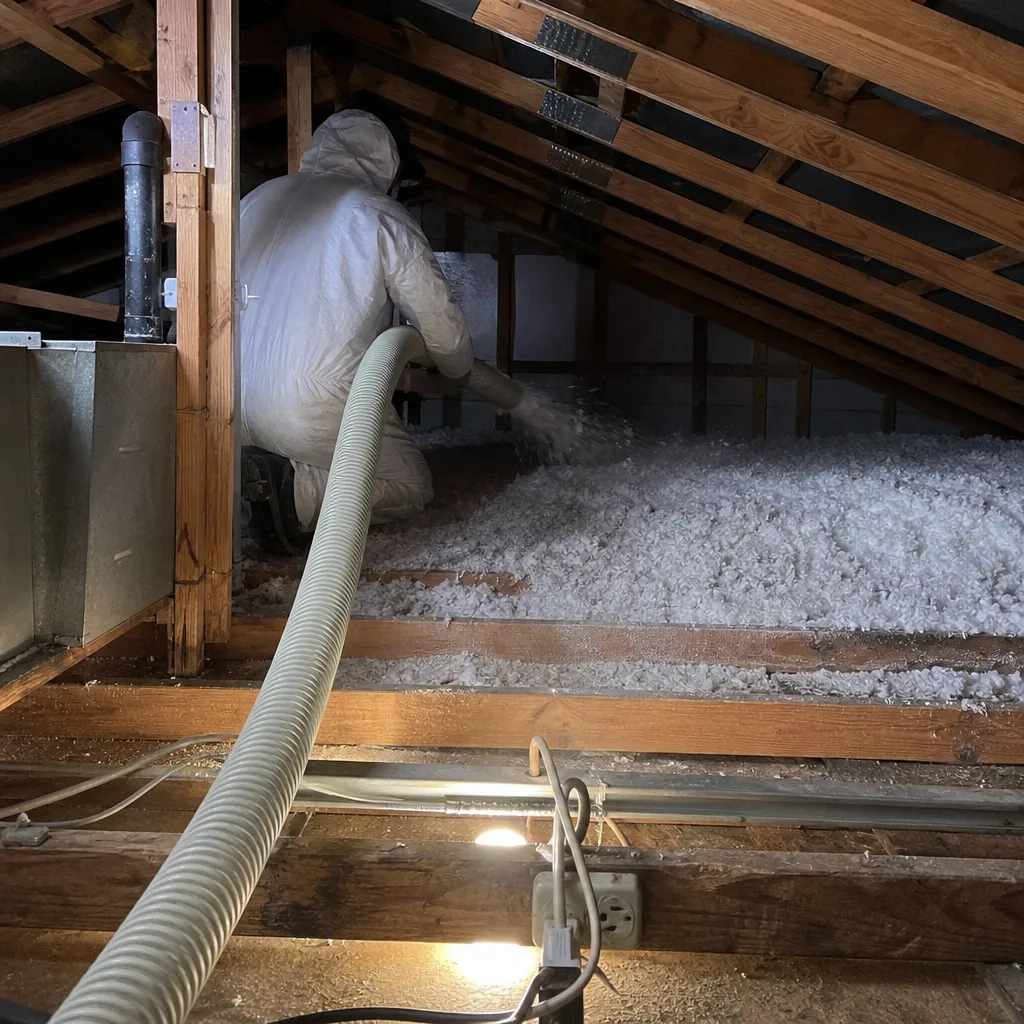
- Uneven room temperatures despite adequate insulation depth. The master bedroom runs 8°F warmer than the hallway in July, even with 14 inches of Knauf Jet Stream Ultra blown in. What you’re feeling is conditioned air escaping through unsealed top plates into the attic while makeup air gets pulled through wall cavities - the insulation does nothing to stop air movement, only heat transfer.
- Dust streaking around ceiling registers or can lights. Dark lines form on ceiling drywall within 12-18 months of insulation installation. This is filtration soiling: attic air (loaded with fiberglass particulate and rodent debris) gets drawn through gaps around fixtures every time the HVAC cycles. The Knauf gasket box or putty pad that should seal that penetration has failed, shifted, or was never installed.
- Ice damming or moisture staining at soffits in winter. Warm, humid interior air hits cold roof sheathing at the eaves and condenses. In Long Beach’s mild climate this shows as dark water stains rather than icicles, usually in January when nighttime temps dip to 45°F and attic ventilation pulls that moist air across unsealed bypasses. The Knauf baffle that should maintain a 2-inch vent channel has collapsed or was omitted during a prior insulation job.
- Blower-door test shows minimal improvement after “air sealing.” A legitimate pre-post test should drop your CFM50 by 20-35% for attic-focused work. If a previous contractor handed you a report showing 8% improvement, they likely skipped the Knauf Ecoseal at partition walls or used it on dirty surfaces where adhesion failed. We see this in flip renovations around Belmont Shore where speed beat prep.
- Insulation settles unevenly, leaving bare spots near eaves or chases. Air moving across loose-fill fiberglass at 2-3 mph scours it away from leakage points. The Knauf insulation isn’t defective - it’s being displaced by convection currents through unsealed gaps. We’ve photographed this exact pattern in Rancho Los Cerritos homes where plumbing chases were left open to the attic.
Replacement Cost & What’s Included
Most complete Knauf attic air sealing jobs in Long Beach run $340-$680 for homes under 2,200 square feet. The range depends on three factors: how many recessed can lights need intumescent pads and gasketed covers (each adds $45-$65), whether your top plates are accessible or buried under existing insulation (removal and reinstallation adds $180-$280), and if we find disconnected flex duct or open soffit chases that need sealing beyond the standard scope.
Every job includes: blower-door test before and after (we hand you the CFM50 numbers), Knauf Ecoseal or equivalent applied to all top plates, wire penetrations, and plumbing stacks, intumescent putty at electrical and fixture penetrations, pre-formed gasket boxes on can lights, vent baffles at every eave to preserve airflow, and a Documented Photo Record of every sealed location. Under Haven Standard Clause 1, you get the written price before anyone enters the attic - no discovery pricing, no “we found more than expected” calls.
Materials carry Knauf’s standard product warranty; our workmanship is covered by the 365-Day Done Right Promise. If a seal fails or a gasket shifts, we return and fix it. The documentation we leave behind lists every location sealed, so you or the next owner can verify the work without guessing.
DIY or Call Us?
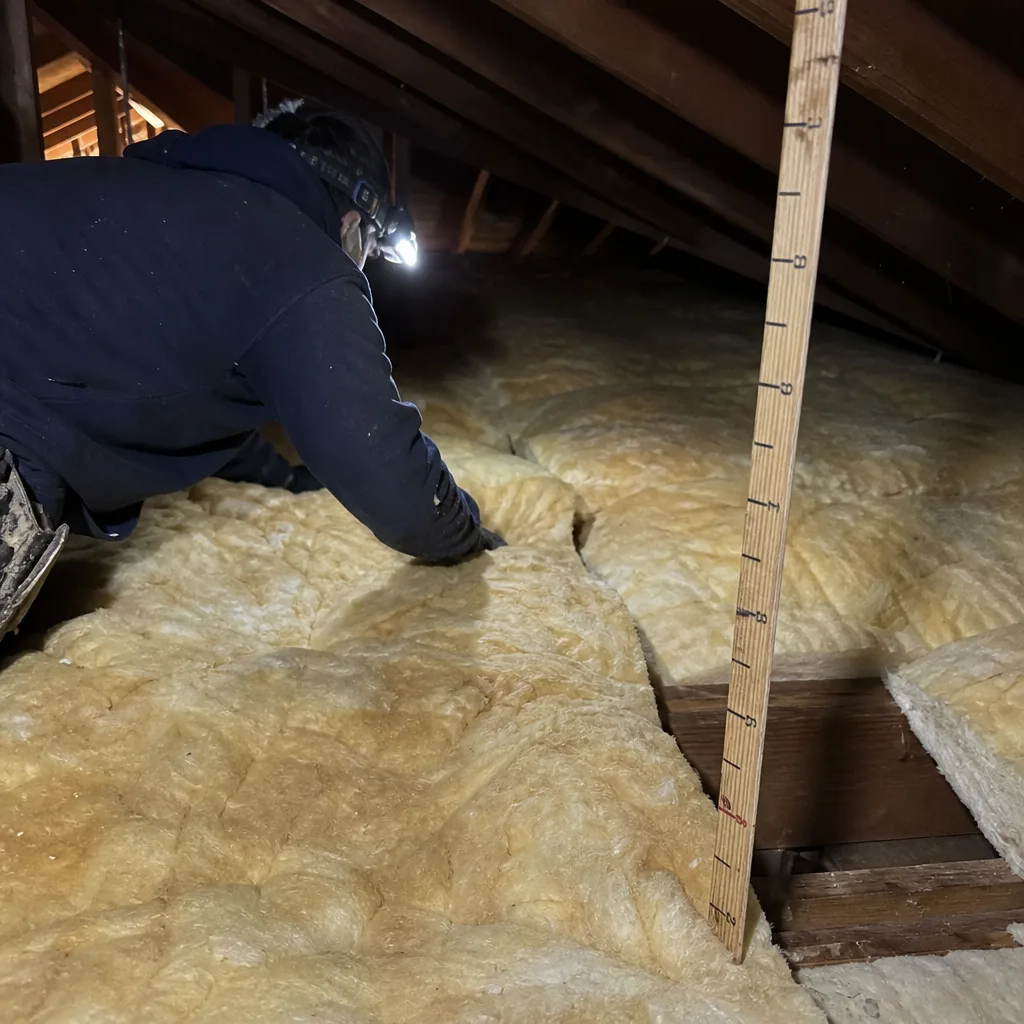
There’s a safe middle ground here. A homeowner can verify the problem: turn off your HVAC, close all windows, and hold a stick of incense near a ceiling can light or register on a windy day. If the smoke pulls upward or sideways sharply, you’ve got attic pressure - the seal is gone. You can also photograph your attic hatch perimeter; if you see daylight around the frame, that’s your easiest DIY win with a tube of caulk and 30 minutes.
Where DIY ends: working around energized recessed housings, applying intumescent putty within clearance requirements, and interpreting blower-door data to know if you actually solved the problem or just moved the leak. We’ve been called to Long Beach homes where a homeowner’s Ecoseal application looked fine but missed the critical 1/2-inch gap between the top plate and the drywall edge - invisible from below, obvious to a smoke pencil. And fiberglass dust in an attic is a respiratory hazard without proper PPE.
We don’t charge to look. Call (424) 415-7031, we’ll inspect the attic, run the blower-door test, and hand you a written price. No obligation to proceed - though we’ll note that in 2024, about 70% of our free inspections in Long Beach converted to scheduled work once the homeowner saw the CFM50 number and the photo documentation of what was actually open to the attic.
FAQs
Properly applied Knauf Ecoseal and installed gasket components last 20-25 years in Long Beach’s climate, though intumescent putty pads can degrade faster if can lights run hot (LED retrofits help). The bigger variable is whether the original installer prepped surfaces correctly - we’ve found Ecoseal peeling off dusty framing in 3-year-old work from other contractors. Call (424) 415-7031 for a free inspection if you’re unsure of your existing seal quality.
Partial repair is common and often the right call. If 80% of your Ecoseal is intact but three can lights were missed and one plumbing stack has pulled away, we spot-seal those locations, retest with the blower door, and document the new CFM50. Full replacement only makes sense when the prior work used incompatible materials or when you’re already removing insulation for another reason. We’ll tell you which category you’re in - our Free Second Opinion applies to any written scope another contractor left behind.
A typical Long Beach attic (1,200-2,000 sq ft) takes 4-6 hours for a two-person crew, including setup, blower-door pretest, sealing work, post-test, and cleanup. Homes in Bixby Knolls with complex vaulted ceilings or multiple HVAC zones run closer to a full day. We schedule arrival windows, text when the technician is en route, and you’re welcome to watch the blower-door test - most homeowners find the number more persuasive than any sales pitch.
We stock Knauf Ecoseal, gasket boxes in both depths, KP-200 intumescent pads, and vent baffles on every truck serving Long Beach. For less common Knauf accessories - the KES-LA low-VOC blend specifically, or oversized retrofit gaskets for non-standard joist spacing - we pull from our Long Beach warehouse same-day. We also carry Reflectix components for radiant barrier integration if your attic needs both air sealing and heat reflection. No multi-day ordering delays on standard jobs.
Written by Wes Okafor, Owner, Topside Attic Insulation Long Beach at Topside Attic Insulation Long Beach, serving Long Beach and nearby areas.