
Johns Manville Radiant Barrier Installation: The Long Beach Owner’s Guide
We stock and install Johns Manville-compatible radiant barrier systems in Long Beach, with most attic installations running between $1,800 and $3,400 depending on square footage and whether the attic floor needs air sealing first. Same-day installation is available when we have your measurements and attic access confirmed by 10 a.m. Most Long Beach homeowners discover their radiant barrier is failing when their summer electric bill jumps 20-40% or their second-story rooms won’t cool below 78°F even with the AC running flat out.
Which Johns Manville Models This Applies To
Johns Manville produces radiant barrier products under two main lines: the AP Foil-Faced polyiso board series and the ComfortTherm reflective insulation rolls. The AP line runs from 1/2-inch to 2-inch thicknesses with foil facing on one or both sides, while ComfortTherm comes in 16-inch and 24-inch widths designed for standard joist spacing. Check the printed edge tape on polyiso boards for the JM logo and R-value stamp; rolls will have a lot number and ASTM C1224 marking.
Here’s where Long Beach homeowners get tripped up: the AP Foil-Faced boards are not interchangeable with standard unfaced polyiso. The foil facing acts as the radiant barrier layer, and installing the unfaced version leaves you with R-value but no reflective performance. We’ve found this exact mismatch in three Belmont Shore attics this past year, where a previous contractor used generic polyiso and called it a radiant barrier.
For the OEM-versus-aftermarket question: Johns Manville does not sell direct-to-consumer radiant barrier installation as a service, only the material. We source JM materials through authorized distribution and install to manufacturer spec. We also stock Reflectix as an alternative when the attic configuration calls for a draped-barrier approach rather than rigid board. Topside Attic Insulation Long Beach is an independent service provider with no affiliation to Johns Manville.
Signs Your Johns Manville Radiant Barrier Installation Is Failing
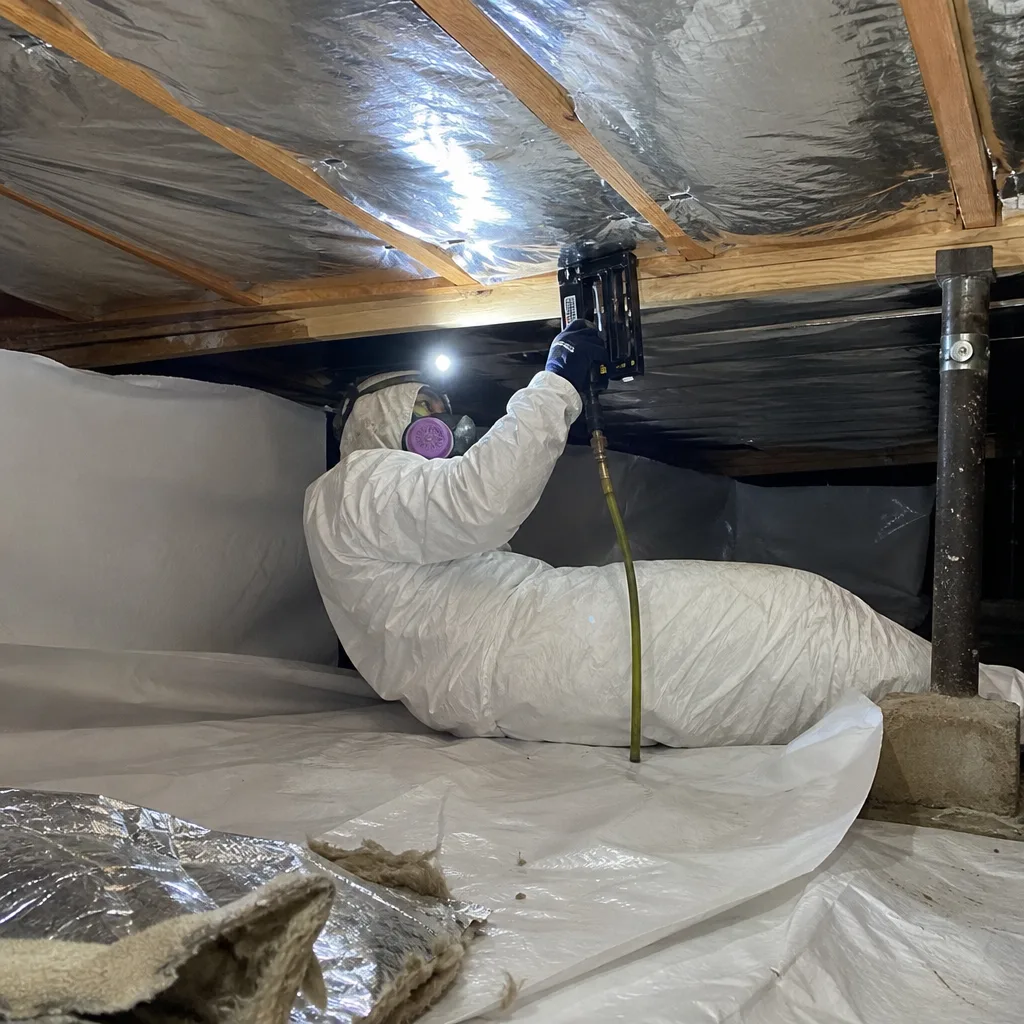
- Hot ceiling surfaces in late afternoon. A working radiant barrier should drop ceiling surface temperatures 20-30°F below ambient attic air. When the foil delaminates or gets coated with dust, that reflective surface stops working and heat radiates straight through the drywall. We see this most in Long Beach homes near the port where marine layer dust settles thick.
- AC runs continuously from 2 p.m. to 8 p.m. The radiant barrier’s job is blocking solar heat gain during peak roof temperatures. If your cooling load shifts later into the evening, the barrier has likely degraded or was installed with the reflective surface facing the wrong direction.
- Visible dust coating on foil surfaces. Dust accumulation is the silent killer of radiant barriers in Southern California. JM’s foil facing holds static charge that attracts particulates; after 5-7 years without maintenance, reflectivity can drop from 95% to under 60%. We document this with light-meter readings during every inspection.
- Sagging or torn sections between rafters. Staple fatigue is common in older Long Beach installations, especially in the 90807 and 90815 zip codes where 1940s-1960s roof structures have wider rafter spacing. A sagging barrier creates an air gap that actually traps heat rather than reflecting it.
- Water staining on the foil or backing. This indicates a roof leak that has compromised the barrier and likely the insulation beneath it. JM foil facing will show dark oxidation spots where moisture has sat; we treat this as a full removal and replacement scenario, never a patch job.
Replacement Cost & What’s Included
Most Johns Manville radiant barrier replacements in Long Beach run between $1,800 and $3,400 for attics under 1,500 square feet. That range breaks down as follows:
| Component | Price Range |
|---|---|
| JM AP Foil-Faced board (installed, per sq ft) | $2.80 - $4.20 |
| JM ComfortTherm roll (installed, per sq ft) | $1.90 - $3.10 |
| Attic air sealing (top plates, penetrations) | $450 - $890 |
| Old barrier removal and disposal | $340 - $580 |
What moves the number: rafter height (steep pitches add labor), existing insulation that must be temporarily moved, and whether we find unsealed can lights or open top plates that need addressing first. We won’t install new radiant barrier over an unsealed attic floor; that’s Haven Standard Clause 1, and it’s non-negotiable. Every replacement includes our 365-Day Done Right Promise, a written scope before work starts, and a Documented Photo Record showing before, during, and after. On applicable jobs, we run a blower-door test - a pressurization reading that shows, in one number, how much air your building envelope was losing before and after our air sealing.
DIY or Call Us?
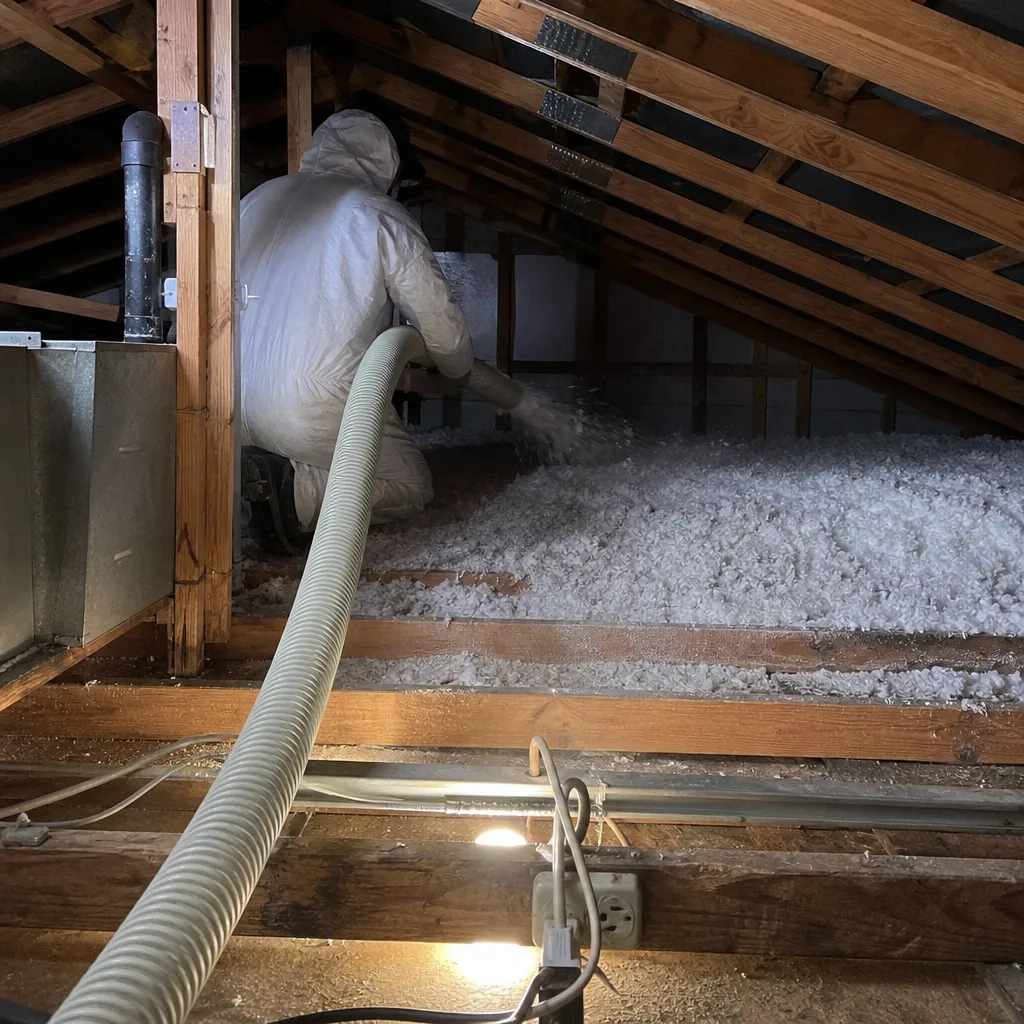
There’s a short list of what a homeowner can safely check: confirm the reflective surface is still shiny (not dust-dulled), verify nothing is sagging or torn, and peek for water stains during daylight hours. Do not attempt to walk your attic joists to reposition or replace radiant barrier material. Attic falls cause serious injury, and Long Beach’s older housing stock - especially the bungalows around Bixby Knolls and the ranch homes off Pacific Coast Highway - often has 2×4 joists spaced 24 inches on center with no walk boards.
The actual failure is rarely the material itself; it’s the building-science context around it. We’ve seen homeowners install beautiful JM foil-faced boards with the reflective surface facing the insulation instead of the air gap, which renders them expensive R-value board and nothing more. We’ve seen stapling patterns that compress the foil and create thermal bridges. Measure first, then insulate - otherwise you’re just trapping the problem. If your summer bills are climbing and the attic is getting harder to ignore, call (424) 415-7031. We’ll read what you have, show you what we find, and give you a written price before any work starts.
FAQs
JM foil-faced products carry a 20-year warranty, but in Long Beach’s coastal climate with marine layer moisture and port-area particulates, effective reflectivity typically holds 10-14 years before dust accumulation and oxidation degrade performance. Annual inspection and light compressed-air cleaning can extend that. Call (424) 415-7031 and we’ll show you what condition yours is in - estimates are free.
Small tears in draped barrier can be patched with foil tape rated for high temperatures, but delaminated foil facing or widespread dust saturation requires full replacement. We don’t quote patch jobs on polyiso board because the facing is factory-bonded; once it separates, the board’s radiant performance is gone. Call (424) 415-7031 for an exact quote on replacement - estimates are free.
Most residential attic replacements in Long Beach take one full day for crews of two, assuming standard gable access and no roof leak repairs needed. Homes with cathedral ceilings, tight scuttle holes, or active rodent issues may stretch to a second day. We give you a written timeline with your written price before anyone lifts a tool.
We stock JM AP Foil-Faced board in 1-inch and 1.5-inch thicknesses and ComfortTherm rolls in 24-inch width on every Long Beach service vehicle. Odd sizes or large commercial quantities we pull same-day from regional distribution. If you have a model number or photo of your existing barrier, text it to (424) 415-7031 and we’ll confirm compatibility before we arrive.
Written by Wes Okafor, Owner, Topside Attic Insulation Long Beach at Topside Attic Insulation Long Beach, serving Long Beach and nearby areas.