
Demilec Vapor Barrier Installation: The Long Beach Owner’s Guide
Demilec vapor barrier installation in Long Beach typically runs $2,800-$4,600 for a standard crawl space or basement envelope, and we stock Demilec-compatible rolls and seam tape for same-day starts on most jobs. Most homeowners discover the barrier has failed when they notice musty odors returning after a dry winter, or when a pest inspection reveals polyethylene sheeting that’s gone chalky and brittle from Long Beach’s salt-air exposure.
Which Demilec Models This Applies To
Demilec doesn’t sell vapor barrier as a standalone branded SKU; rather, their 6-mil and 10-mil reinforced polyethylene sheeting ships as specification-grade material for closed crawl space and basement encapsulation systems. The compatibility question isn’t model-number matching - it’s matching the mil rating and reinforcement grid to what your original installer used.
We see three configurations in Long Beach homes: the standard 6-mil clear poly installed over dirt crawl spaces in the 1980s-2000s, the 10-mil woven reinforcement used in post-2010 encapsulations, and Demilec’s newer 12-mil string-reinforced product specified for commercial-grade jobs. Check the edge stamp for “ASTM E1745 Class A” or “ASTM E154” - that’s your performance baseline. If your existing barrier is stamped only with a generic mil rating and no ASTM class, it was likely a box-store equivalent, not spec-grade material.
We source Demilec-compatible barrier through our distributor network; we also stock Reflectix foil-faced products where condensation control is the primary concern rather than soil-gas blocking. Topside Attic Insulation Long Beach is an independent service provider, not affiliated with Demilec.
Signs Your Demilec Vapor Barrier Installation Is Failing
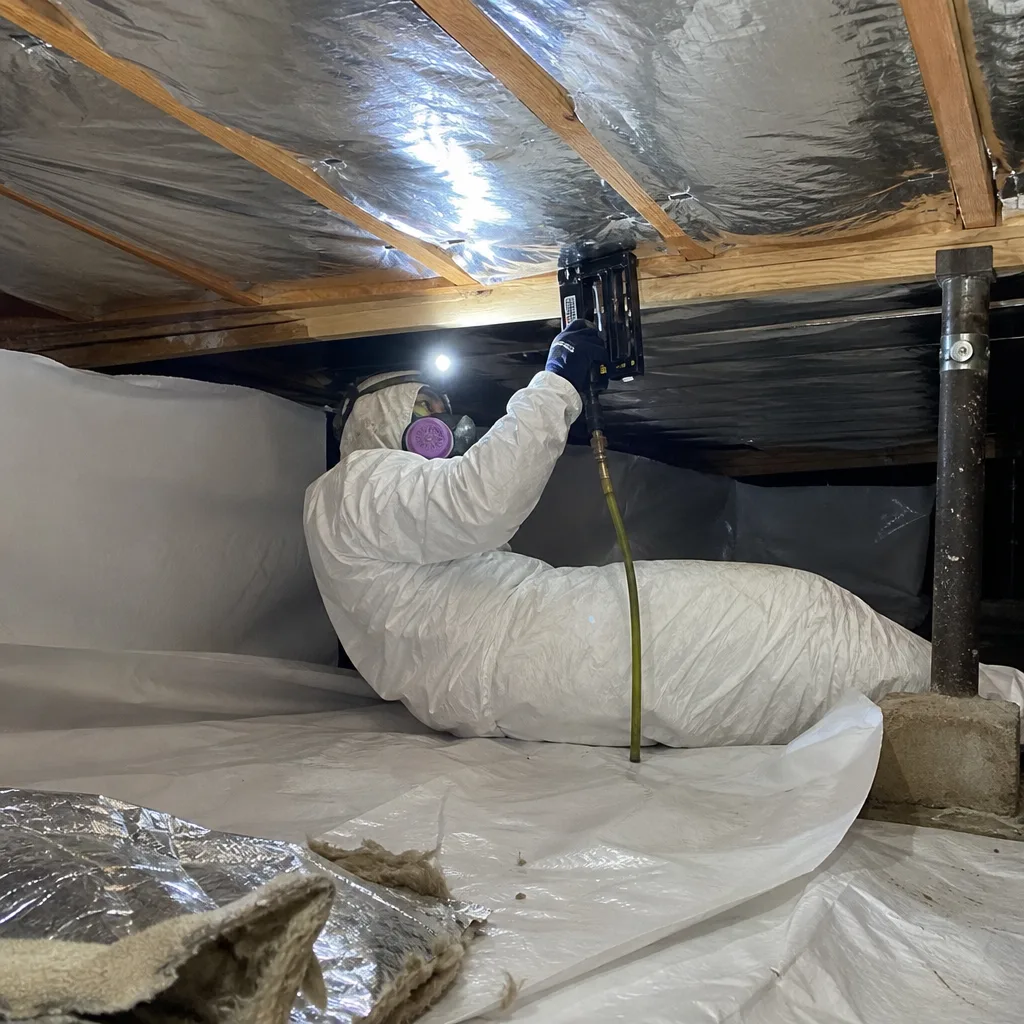
- Chalking or powdering on the surface. Long Beach’s marine layer deposits salt that degrades polyethylene over time. When you rub the barrier and your hand comes away white, the UV and oxidation inhibitors have depleted. The material is now porous to moisture vapor.
- Seam separation at overlaps and piers. Demilec systems rely on acrylic-based seam tape or double-sided vapor-barrier tape. In coastal humidity cycles, tape adhesive hydrolyzes. Gaps at seams let soil moisture rise at 10-15× the designed rate.
- Ponding or slow drainage on top of the barrier. A functioning vapor barrier sheds water to a sump or perimeter drain. If water sits for days after rain, the barrier has settled, torn at a pier, or the original installer skipped the drainage matting layer beneath.
- Return of musty odor after dry weather. This is the tell: if your crawl space smells damp in August when it hasn’t rained in months, soil vapor is migrating through a compromised barrier. The nose detects what the eye misses.
- Wood moisture readings above 20% on floor joists. We bring a pinless moisture meter to every crawl space evaluation. Readings over 20% on the underside of subfloor decking mean the vapor barrier isn’t holding the soil-moisture line. In Long Beach’s older Bixby Knolls bungalows, we’ve seen this trigger cupping in oak strip flooring above.
Replacement Cost & What’s Included
For a typical Long Beach crawl space - 1,200-1,800 square feet with standard pier spacing - Demilec-compatible vapor barrier replacement runs $2,800-$4,600 installed. That range breaks down as follows:
- Material (10-mil woven reinforced, ASTM E1745 Class A): $1.10-$1.40/sq ft
- Seam tape, mastic, and mechanical fasteners: $180-$320
- Removal and disposal of existing degraded barrier: $400-$650
- Labor for layout, cutting, sealing to walls/piers, and quality check: $1,200-$2,100
What moves the needle: access height (crawling vs. walking), number of piers to cut around, whether the existing barrier is glued to foundation walls (removal labor jumps), and if we find unsealed penetrations that need addressing first. Under Haven Standard Clause 1, you get a written price before any work starts - flat, not time-and-materials. Every job closes with a Documented Photo Record and, where applicable, before-and-after moisture readings.
DIY or Call Us?
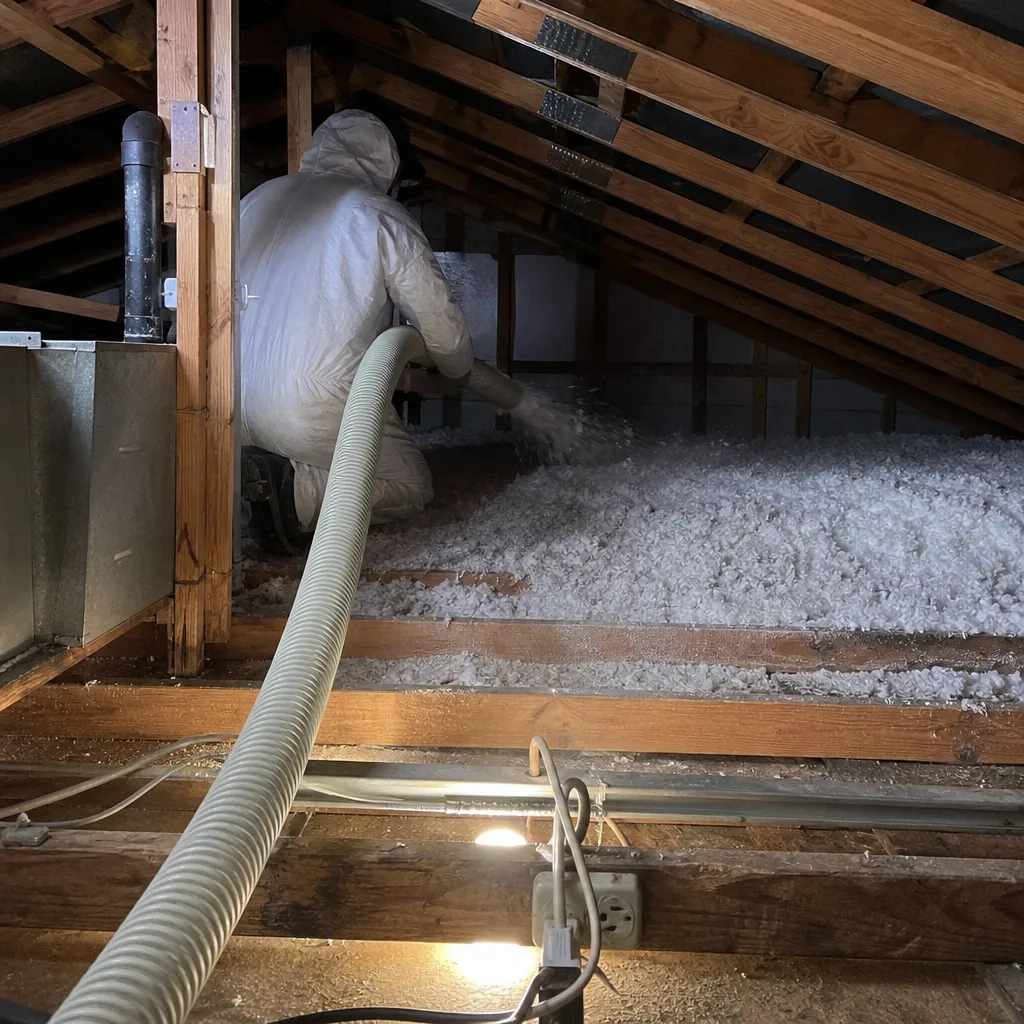
What you can safely check: verify the mil rating stamped on your existing barrier, photograph any seam failures for reference, and measure the crawl space square footage. A tape measure and flashlight tell you plenty.
Where DIY goes wrong: vapor barrier installation looks like rolling out plastic, but the failure points are invisible - inadequate overlap (6 inches minimum, 12 preferred), wrong tape for the humidity cycle, and sealing to foundation walls without proper termination bars. We’ve been called to Long Beach homes where a homeowner’s weekend project trapped moisture against sill plates because the barrier sealed the crawl space but didn’t address the bulk water source. That’s rot you don’t see for two years.
And if your crawl space has active rodent damage or mold staining above 10 square feet, that’s outside the scope of barrier replacement alone. Call (424) 415-7031 and we’ll read the space with you - free second opinion on any written estimate you already have.
FAQs
A properly installed 10-mil woven barrier in a ventilated crawl space typically lasts 15-20 years in Long Beach’s climate, though salt-air exposure within two miles of the coast can shorten that to 10-12 years. We warranty our installations under the 365-Day Done Right Promise; the material itself carries a manufacturer’s defect warranty that we pass through in writing. Call (424) 415-7031 for an exact quote - estimates are free.
Patching works for isolated punctures smaller than a quarter using compatible tape and mastic, but chalking, widespread seam failure, or brittleness means the material has aged out and patches will peel within a season. We don’t quote patch jobs on degraded substrate - it’s a waste of your money. Call (424) 415-7031 for an exact quote - estimates are free.
Most residential crawl spaces in Long Beach take one day for removal and replacement, or two days if we discover unsealed top plates or can lights that need addressing first - we seal first, then barrier, in that order. Wes Okafor’s crew arrives with the material on the truck, so there’s no delivery delay. Call (424) 415-7031 for an exact quote - estimates are free.
We stock 10-mil and 12-mil woven reinforced rolls, seam tape, and termination bars on every Long Beach crew truck, so most jobs start same-day once the written price is approved. For commercial-grade 15-mil or specialty fire-rated barriers, we pull from our Carson warehouse with next-morning delivery. Call (424) 415-7031 for an exact quote - estimates are free.
Measure first, then insulate - otherwise you’re just trapping the problem. That’s the approach Wes Okafor learned at Olive-Harvey College and has applied across Long Beach neighborhoods from Bixby Knolls to Rancho Los Cerritos for the past several years.
Topside Attic Insulation Long Beach has independently owned and operated under The Haven Standard since 2016. We’ve sealed and insulated 9,000+ homes, every one with a written price before work started and a documented record when the crew left. Our materials come from Owens Corning, Johns Manville, Knauf, Rockwool, CertainTeed, Icynene, Demilec, and GreenFiber - no proprietary lock-in, ever.
Ready to stop the moisture? Call (424) 415-7031. A live person answers 24/7, and you’ll get a written price before any work starts - always.
Written by Wes Okafor, Owner, Topside Attic Insulation Long Beach at Topside Attic Insulation Long Beach, serving Long Beach and nearby areas.