
Demilec Attic Insulation: The Long Beach Owner’s Guide
Demilec attic insulation in Long Beach typically runs $2.80-$4.20 per board foot for open-cell spray foam and $5.50-$7.80 for closed-cell, with most retrofits in a 1,200-square-foot attic landing between $3,200 and $5,800 installed. We stock Demilec Heatlok HFO Pro and Demilec Sealection 500 on our Long Beach trucks, and we can usually start the job within 48 hours of your written approval. Most homeowners realize their Demilec insulation is failing when their summer AC bills spike 30-40% above neighbors’ or when a thermal camera shows 15-20°F temperature deltas across the attic floor during a routine home energy audit.
Which Demilec Models This Applies To
Demilec’s residential attic line breaks into three families that matter for Long Beach homes: Heatlok HFO Pro (closed-cell, 2.0 lbs/ft³ density, R-6.1 per inch), Sealection 500 (open-cell, 0.5 lbs/ft³, R-3.7 per inch), and the older Heatlok Soy 200 series that we still encounter in 2012-2018 builds around Belmont Shore and Alamitos Heights. The label is usually on a tag stapled to a roof rafter or on the rim joist in the attic; if you can’t find it, we can identify the product by cell structure and density during a site visit.
The OEM-versus-aftermarket question for Demilec is straightforward: we use Demilec-manufactured material because the blowing-agent chemistry (HFO-1234ze for current Heatlok, water-blown for Sealection) is proprietary, and mixing manufacturers within the same envelope assembly voids the Demilec system warranty. We do not stock generic “equivalent” spray foam. For board-stock or hybrid applications where Demilec is being supplemented, we carry Owens Corning Foamular NGX and Rockwool Comfortbatt as complementary layers, never substitutes.
One compatibility gotcha specific to Long Beach: homes built 2015-2019 in the Bixby Knolls historic district often have 2×4 roof rafters with only 3.5 inches of depth. Sealection 500 open-cell at full lift (5.5 inches) won’t fit without furring or a dropped ceiling. We measure rafter depth with a borescope before quoting, because “Measure first, then insulate - otherwise you’re just trapping the problem.”
Signs Your Demilec Attic Insulation Is Failing
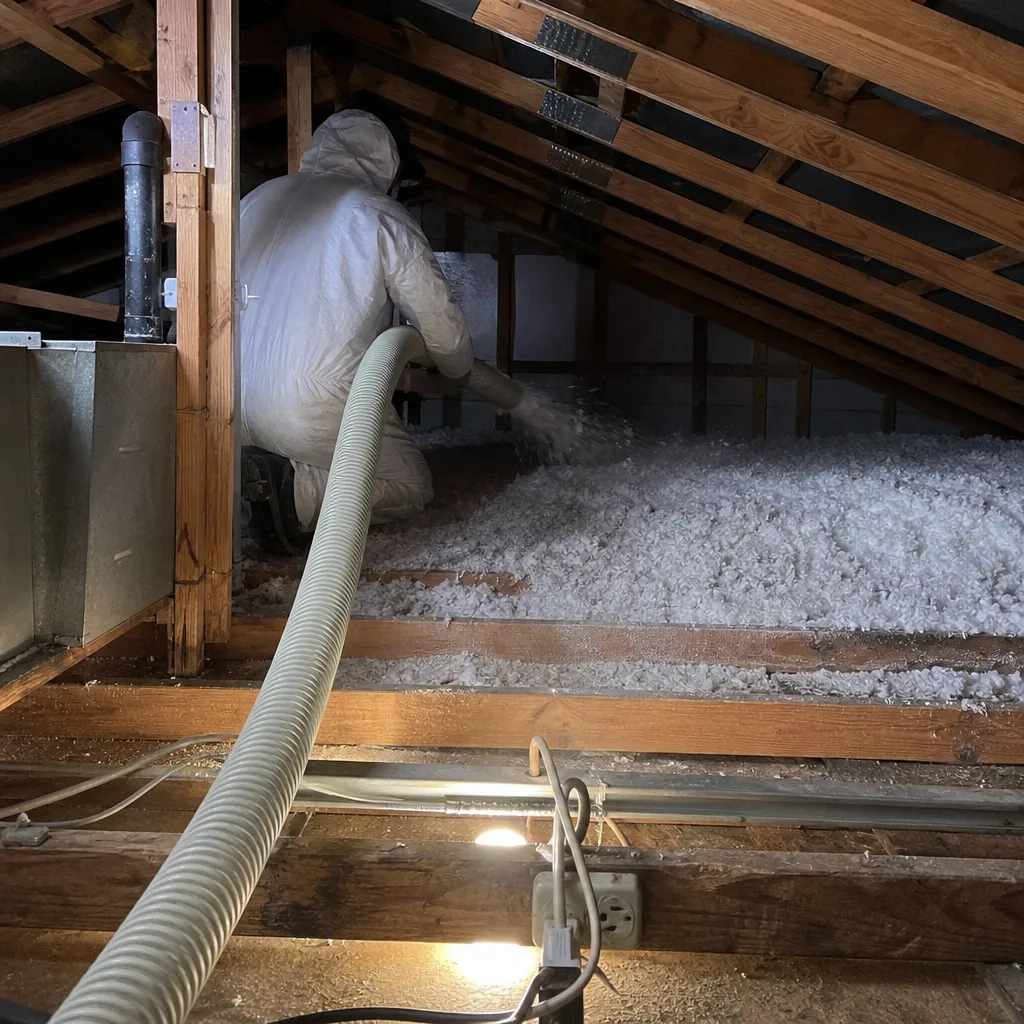
- Hot second-floor rooms in August while the AC runs continuously. Demilec open-cell can settle 10-15% over its first decade, creating thin spots at the eaves where Long Beach’s afternoon sun load is highest. We find this most often in homes where the original installer skipped the critical first pass at reduced pressure.
- Musty attic smell after winter rains. Closed-cell Demilec is a vapor barrier at 1.5 inches; open-cell is not. When open-cell is used against roof sheathing without a separate vapor retarder, the winter moisture drive from Pacific storms can condense on the cold side. We’ve pulled saturated Sealection 500 from Rancho Los Cerritos homes where the installer ignored the climate-zone requirement for a Class II vapor retarder in Climate Zone 3B.
- Visible yellowing or powdery residue on the foam surface. This is UV degradation from gable vent light or recessed can-light leakage, not age. Demilec’s acrylic topcoat was omitted or failed. The foam beneath may still perform, but the surface is now friable and will continue to degrade.
- Ice-cold drywall around ceiling penetrations in January. Even perfect Demilec insulation won’t compensate for unsealed top plates and can lights. We use a blower-door test - a pressurization reading that shows, in one number, how much air your building envelope is losing - to separate insulation failure from air-leakage failure before we recommend any material replacement.
- Pest activity in the attic with visible foam damage. Rodents don’t eat Demilec, but they’ll tunnel through open-cell to nest. The damage is usually localized, but the thermal bridge it creates is disproportionate. We document this with photos and mark the compromised bays for targeted removal and refoam, not a full attic redo.
Replacement Cost & What’s Included
Most Demilec attic retrofits in Long Beach run $3,200-$5,800 for open-cell and $5,100-$8,400 for closed-cell, based on a 1,200-square-foot attic with 2×6 joists and standard pitch. The range moves with four factors: how much existing material we need to remove (Demilec bonds aggressively to wood), whether the roof deck needs a vapor retarder upgrade to meet current Title 24, accessibility (cathedral ceilings in Bluff Heights add labor), and whether we’re air-sealing first - which we always do, per Haven Standard protocol.
Every Demilec job we quote includes: removal and disposal of failed foam, HEPA vacuuming of the substrate, air sealing of all top plates and penetrations with acoustical sealant and fire-rated foam, the Demilec spray application at specified lift thickness, and a post-job blower-door test with before-and-after readings published on your invoice. Under Haven Standard Clause 1, you get a flat written price, a written scope, and a written warranty before anyone lifts a tool. The 365-Day Done Right Promise covers adhesion failure, off-ratio curing, or any settling beyond manufacturer spec.
DIY or Call Us?
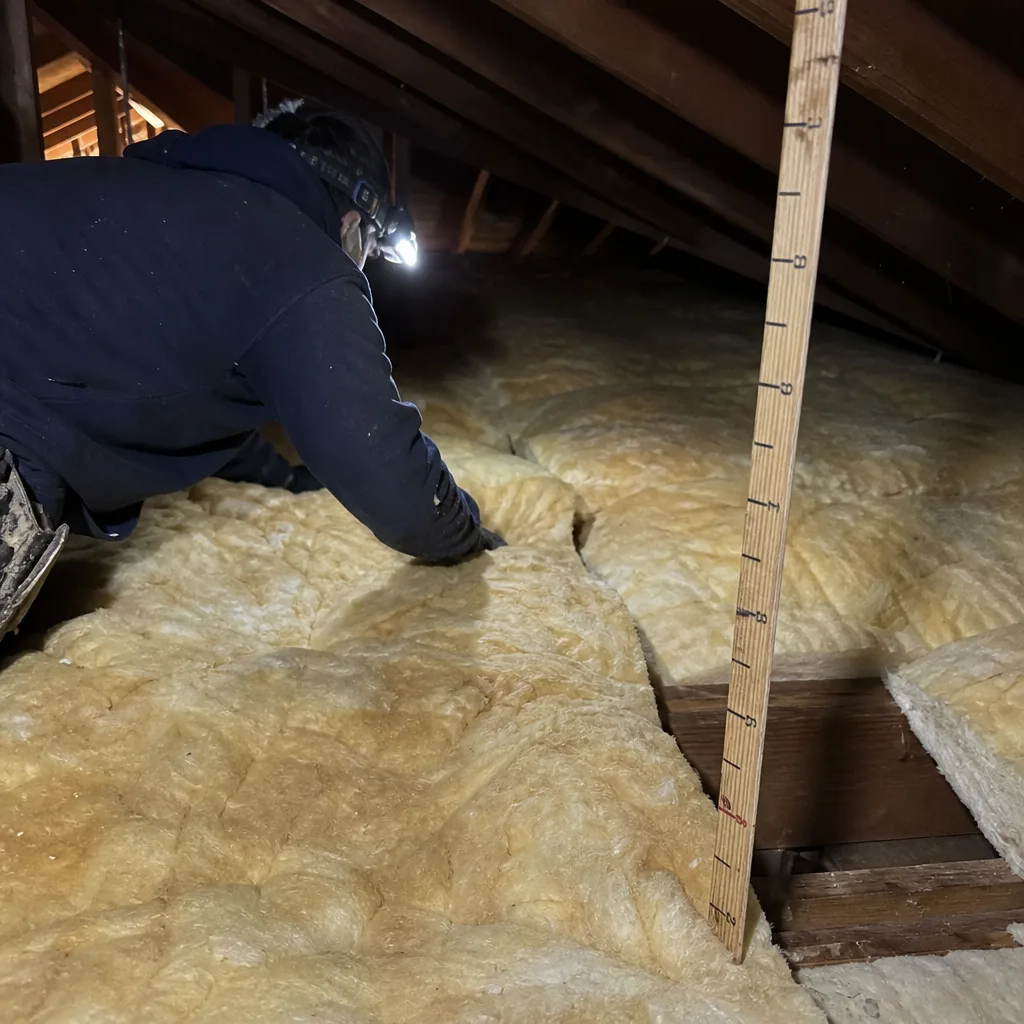
Here’s what you can safely check yourself: locate the Demilec label if it’s visible, photograph any discolored or damaged areas from the attic hatch with your phone’s flash, and note which rooms correlate with temperature complaints. Do not, under any circumstance, attempt to remove or apply spray foam yourself. The two-component isocyanate chemistry in Demilec’s A-side resin is a respiratory sensitizer; once sensitized, you can react to trace exposure permanently. The application also requires controlled temperature, humidity, and substrate moisture content - outside the spec window, the foam won’t adhere or will off-gas indefinitely.
We carry full-face respirators with organic vapor cartridges, forced-air ventilation, and temperature-controlled rigs for a reason. Wes Okafor learned this protocol at Olive-Harvey College’s building-science program, and we’ve refined it across 9,000+ homes since 2016. If your Demilec insulation is showing any of the symptoms above, call (424) 415-7031. We’ll bring a thermal camera, a blower door, and a written price before any work starts - always.
FAQs
Properly installed Demilec spray foam should perform for 25-30 years in Long Beach’s marine climate, but the salt-air exposure within two miles of the coast can accelerate UV degradation on any exposed surfaces. We inspect for this during our annual check-ins and reapply protective coating as needed. Call (424) 415-7031 to schedule a condition assessment - estimates are free.
Localized damage from pests, moisture, or mechanical disruption can be spot-repaired by cutting out the compromised foam and refoaming the bay; we do this regularly in Long Beach’s older stock. Widespread settling, off-ratio curing, or chemical breakdown requires full removal and reapplication. We won’t know which category you’re in until we inspect. Call (424) 415-7031 for a free second opinion on any written estimate you’ve already received.
Most residential Demilec attic jobs in Long Beach take one to two days: half a day for removal and prep, half a day for air sealing, and one day for spray application with mandatory re-entry timing per manufacturer spec. We won’t rush the cure chemistry. You’ll receive a Documented Photo Record at completion, including pre-install depth readings, post-install depth readings, and the air-sealing locations addressed.
We stock Demilec Heatlok HFO Pro and Sealection 500 on our Long Beach trucks in standard temperature-rise formulations; specialized densities or fire-rated assemblies order in with a five-day lead time. We are an independent service provider with no affiliation to Demilec, though we source factory-direct to maintain batch consistency and warranty eligibility. Call (424) 415-7031 to confirm current stock for your specific application.
Written by Wes Okafor, Owner, Topside Attic Insulation Long Beach at Topside Attic Insulation Long Beach, serving Long Beach and nearby areas.