
Demilec Attic Air Sealing: The Long Beach Owner’s Guide
We stock and install Demilec-compatible attic air sealing components for Long Beach homes, with most completed jobs running between $1,800 and $3,400 depending on attic square footage and accessibility. Same-day service is available when you call before 10 a.m., and we carry Demilec-applicable foam, tape, and gasket stock on every truck. Most Long Beach homeowners discover their attic air sealing has failed when their upstairs rooms won’t cool below 78 degrees in August despite the AC running nonstop, or when they pull back insulation in a Bixby Knolls crawl space and find daylight shining through the top plate.
Which Demilec Models This Applies To
Demilec’s attic air sealing line breaks into two families: the Heatlok HFO High Lift series, common in California new construction from 2018 forward, and the older Heatlok XT formulations found in retrofits across Long Beach’s 1940s-1970s housing stock. The HFO series uses a higher-density closed-cell foam (2.0-2.5 lb/ft³) with a specific ASTM E84 flame-spread rating that matters for L.A. County permit compliance, while XT formulations vary by batch year and can range 1.7-2.2 lb/ft³. Check the spray-foam drum label or the documentation left by your original installer; Demilec stamps a lot code and density spec on every set.
We are an independent service provider with no affiliation to Demilec. We source OEM-equivalent foam from our normal supply chain, which includes Demilec, Icynene, and Johns Manville products, and we match spec-for-spec rather than chasing brand names. The gotcha in Long Beach is permit-era compatibility: foam installed before 2019 may not meet current Title 24 requirements, and patching it with modern HFO can create a density mismatch that cracks at the joint within two seasons. We measure existing foam density with a simple core sample before quoting, so the repair integrates rather than sits on top.
Signs Your Demilec Attic Air Sealing Is Failing
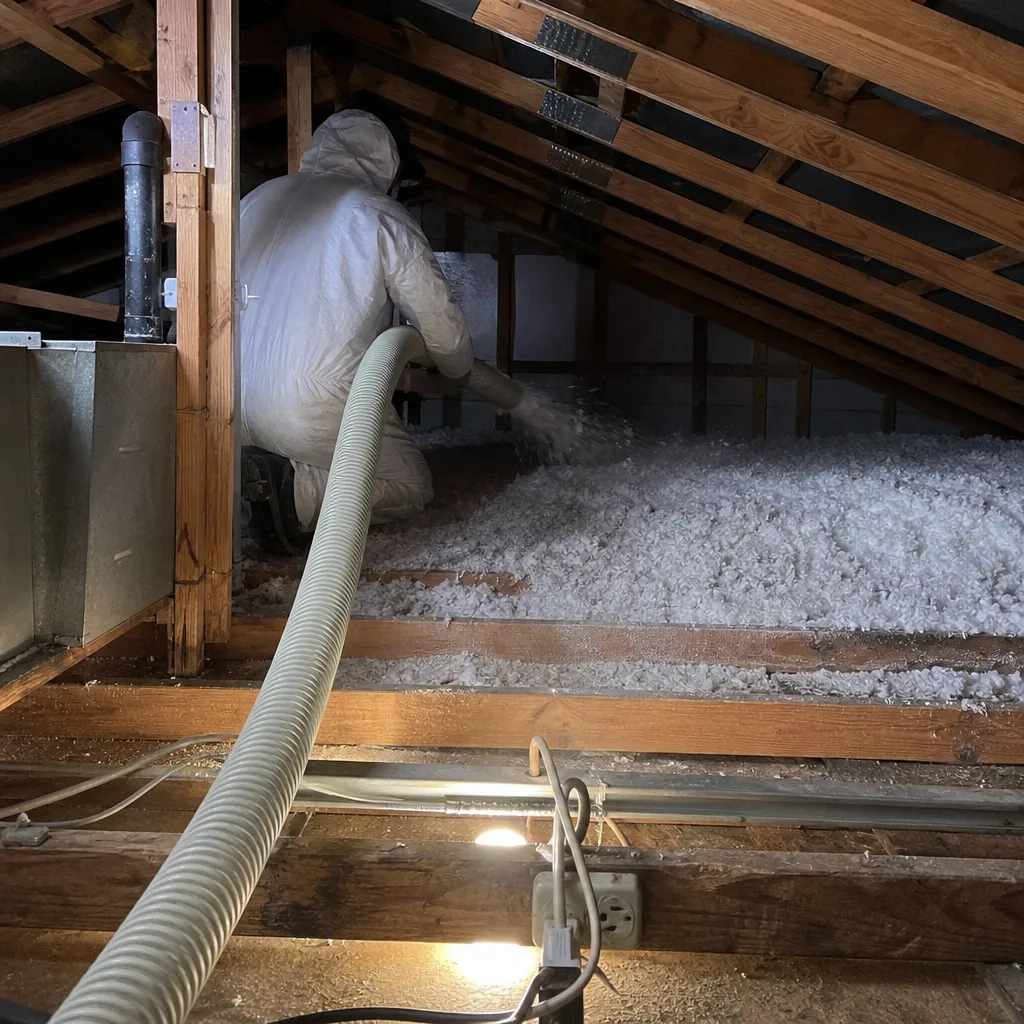
- Uneven room temperatures across the second floor. When Demilec foam shrinks or pulls away from top plates, conditioned air escapes into the attic vent path. The room directly below the gap becomes the hottest or coldest in the house, and the pattern follows the roofline rather than the duct layout.
- Dust streaks on ceiling drywall near interior walls. Air moving through a failed seal carries attic particulate with it; over time, this deposits a faint gray track where the ceiling meets the wall. In Long Beach’s marine climate, the streaking often includes salt residue if the home is within a mile of the water.
- Ice damming or moisture staining on roof sheathing. Warm, humid interior air hitting cold sheathing in winter (yes, even in Long Beach during January cold snaps) condenses and freezes at the leak point. Demilec foam that has delaminated from wood creates exactly this thermal bypass.
- Energy bills climbing year-over-year with no rate change. A blower-door test we ran last month on a Belmont Heights bungalow showed 3,800 CFM50 before sealing and 1,900 after; the homeowner’s summer cooling load had crept up 23% over four years because the original Demilec seal had shrunk 3/8 inch off the top plates.
- Rodent activity concentrated at attic penetrations. Gaps in air sealing create highways. We find this constantly in the smaller 1920s homes near Rancho Los Cerritos, where original Demilec retrofits from the 2010s missed plumbing stack seals and rats have since enlarged the openings.
Replacement Cost & What’s Included
| Scope | Typical Range in Long Beach |
|---|---|
| Partial re-seal (localized failure, under 200 sq ft) | $1,800 - $2,400 |
| Full attic re-seal (1,000-1,500 sq ft, including top plates, can lights, penetrations) | $2,800 - $3,400 |
| Blower-door verification (before/after, included on all applicable jobs) | No additional charge |
| Core density testing of existing Demilec foam | No additional charge |
What drives the range: attic accessibility (cathedral ceilings in Belmont Shore add labor), the condition of existing insulation that must be moved and replaced, and whether we find undocumented penetrations once we’re inside. Every job gets a Written Price Before Any Work Starts under Haven Standard Clause 1, and every completed seal includes a Documented Photo Record showing before, during, and after. On applicable jobs, we publish before-and-after blower-door numbers so you can verify the result in a single figure.
DIY or Call Us?
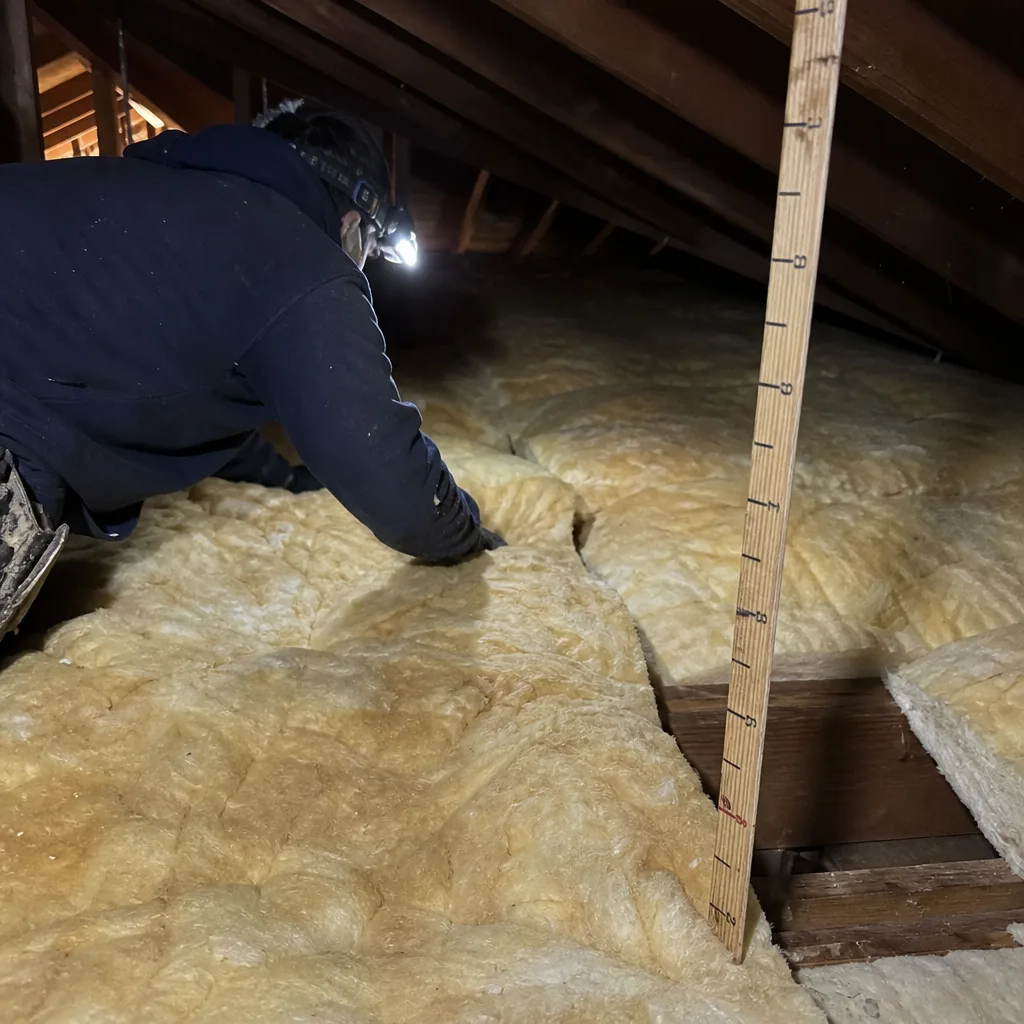
There’s a safe middle ground here. A homeowner can pull back attic insulation and visually inspect: look for shrunken foam, gaps at top plates, or daylight through penetrations. Take photos; we offer a Free Second Opinion on any written estimate, and we’ll review your pictures before you decide.
Where DIY goes wrong: Demilec foam application requires controlled temperature, humidity, and substrate moisture content, or the foam delaminates within months. Two-component spray foam also releases isocyanates during cure; without a supplied-air respirator and proper ventilation, you’re working in a hazardous atmosphere. And in Long Beach’s older housing stock, knob-and-tube wiring often lurks near attic penetrations; disturbing it without testing is a genuine fire risk. We background-check and uniform every technician precisely because they’re working around these hazards daily. If you’ve found a failure, call (424) 415-7031 and we’ll give you a written scope and price before anyone lifts a tool.
FAQs
Properly installed Demilec foam should perform for 20-25 years, but Long Beach’s combination of marine humidity and intense summer attic heat accelerates shrinkage in installations from the 2010-2015 era. We’ve replaced Demilec seals in Long Beach homes as young as eight years old where the original application was too thin or the substrate wasn’t properly primed. Call (424) 415-7031 and we’ll core-test your existing foam to give you a real condition assessment.
Localized patching works if the surrounding foam is still well-bonded and the density matches; we core-test to confirm. If the original installation used an older Demilec formulation that’s now discontinued, we typically recommend a broader re-seal to avoid the patch cracking at the interface within two years. We quote both options when possible so you can decide based on the numbers.
Most partial re-seals finish in four to six hours; full attic re-seals run one to two days depending on square footage and how much insulation must be moved and replaced. We schedule a morning arrival, text you when the technician is on the way, and leave you with a Documented Photo Record and written blower-door result before we leave.
We stock Demilec-compatible foam, tape, and gasket materials on every truck, along with density-matched equivalents from Owens Corning, Johns Manville, and Icynene so we’re not waiting on a single supplier. For your specific job, we’ll match the spec that integrates with your existing seal, not just the brand name. Call (424) 415-7031 to confirm same-day availability.
Measure first, then insulate - otherwise you’re just trapping the problem. Wes Okafor learned that rule at Olive-Harvey College, running his first blower-door test before he ever touched a bag of blown-in cellulose, and it’s how we still run every attic in Long Beach.
Ready to stop losing conditioned air through your attic? Call (424) 415-7031 for a free estimate. We’ll give you a Written Price Before Any Work Starts, a documented photo record when we’re done, and before-and-after blower-door numbers so you can see exactly what changed.
Written by Wes Okafor, Owner, Topside Attic Insulation Long Beach at Topside Attic Insulation Long Beach, serving Long Beach and nearby areas.