
CertainTeed Vapor Barrier Installation: The Long Beach Owner’s Guide
We stock and install CertainTeed-compatible vapor barrier systems in Long Beach, with most crawl space or attic floor jobs running between $1,800 and $3,400 installed. Same-day starts are available when we have your dimensions and access type ahead of the call. Most homeowners in Long Beach first notice the problem when they pull back insulation in a damp-smelling crawl space and find the polyethylene sheeting brittle, white with mineral deposits, or pulled away from the foundation walls where it was supposed to stay sealed.
Which CertainTeed Models This Applies To
CertainTeed manufactures vapor barrier materials under several product lines, and matching the right one matters for warranty coverage and permeance ratings. The MemBrain smart vapor retarder (variable permeance, 1.0 to 36 perms) is the most common retrofit we see in Long Beach homes built between 1985 and 2010, particularly in the crawl spaces of the California bungalows around Bixby Knolls and the ranch-style houses near Rancho Los Cerritos. The CertainTeed VC-13 and VC-17 reinforced polyethylene sheets are the standard Class I vapor retarders used in full encapsulations. To identify what you have, look for the printed roll marking along the edge; CertainTeed stamps the product code, mil thickness, and ASTM E1745 compliance class every 24 inches. If the marking has degraded, measure the thickness with a caliper: MemBrain is 2.5 mil, VC-13 is 13 mil, VC-17 is 17 mil.
We are an independent service provider with no affiliation to CertainTeed. We source OEM CertainTeed material when the existing system is still under manufacturer warranty or when the homeowner wants matching permeance characteristics. For older VC-13 installations where the warranty has expired, we also install quality reinforced polyethylene from Reflectix and other suppliers that meet or exceed the same ASTM standards at a lower material cost. The gotcha in Long Beach’s marine climate: standard 6-mil hardware-store polyethylene degrades in 3-5 years here due to salt air infiltration in vented crawl spaces. We see this failure pattern regularly in homes within a mile of the Shoreline Village elevation. CertainTeed’s VC-17 or equivalent 15-mil+ reinforced product is the minimum we will install below grade in this zip code.
Signs Your CertainTeed Vapor Barrier Installation Is Failing
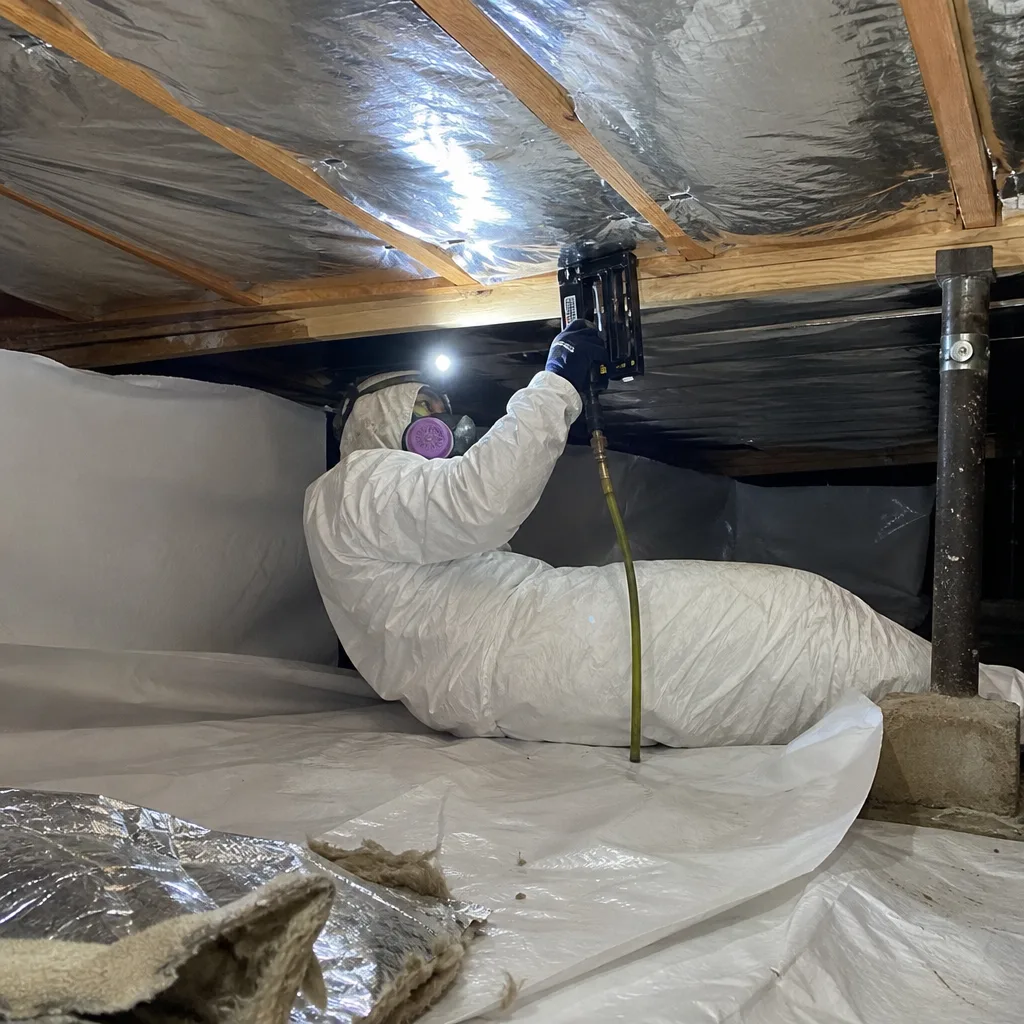
- White chalky residue or efflorescence on the barrier surface. This is mineral salts left behind as groundwater evaporates through or around a compromised seam. In Long Beach’s clay-heavy soil zones, this usually means the barrier has separated at the perimeter or a seam has opened where the tape failed.
- Brittle sheeting that cracks when you pinch it. Polyethylene oxidizes in warm, humid conditions. A 13-mil barrier that should flex like a heavy-duty trash bag instead snaps like old cellophane. We measure this with a simple fold test; if it cracks at a 90-degree bend, the material has passed its service life.
- Musty odor that returns within 48 hours of ventilation. A functioning vapor barrier keeps wood moisture content below 20%. When it fails, floor joists and subfloor decking stay damp. The smell is microbial growth, and it means the barrier is no longer blocking soil moisture migration.
- Insulation sagging or falling between joists in a crawl space. Fiberglass batts lose R-value when they absorb moisture. The vapor barrier’s job is to stop that moisture at the ground plane. Sagging insulation is often the first visible symptom of a barrier that has pulled away from the walls or torn at a penetration.
- Increasing energy bills with no change in thermostat setting. Wet insulation conducts heat rather than resisting it. We’ve measured crawl space fiberglass at 40% of rated R-value due to moisture loading. The vapor barrier failure is invisible, but the HVAC runtime increase shows up on the SCE bill.
Replacement Cost & What’s Included
| Scope | Typical Range in Long Beach |
|---|---|
| Standard crawl space, 1,000-1,500 sq ft, VC-13 or equivalent | $1,800 – $2,600 |
| Full encapsulation with VC-17, seam taping, and perimeter attachment | $2,400 – $3,400 |
| Attic floor vapor retarder (MemBrain or similar) with air sealing prep | $2,200 – $3,100 |
| Additional: sump pit or condensate management, if needed | $400 – $900 |
What drives the range: access difficulty (crawl height, debris removal), linear feet of perimeter wall to seal, whether the existing barrier is fully removed or overlaid, and whether we find active rodent damage that requires exclusion work before the new barrier goes down. Every quote is a written price before any work starts, per Haven Standard Clause 1. The 365-Day Done Right Promise covers installation workmanship and seam integrity. Material warranty runs through the manufacturer: 10 years on VC-13, 15 years on VC-17 when installed to CertainTeed’s published guidelines.
DIY or Call Us?
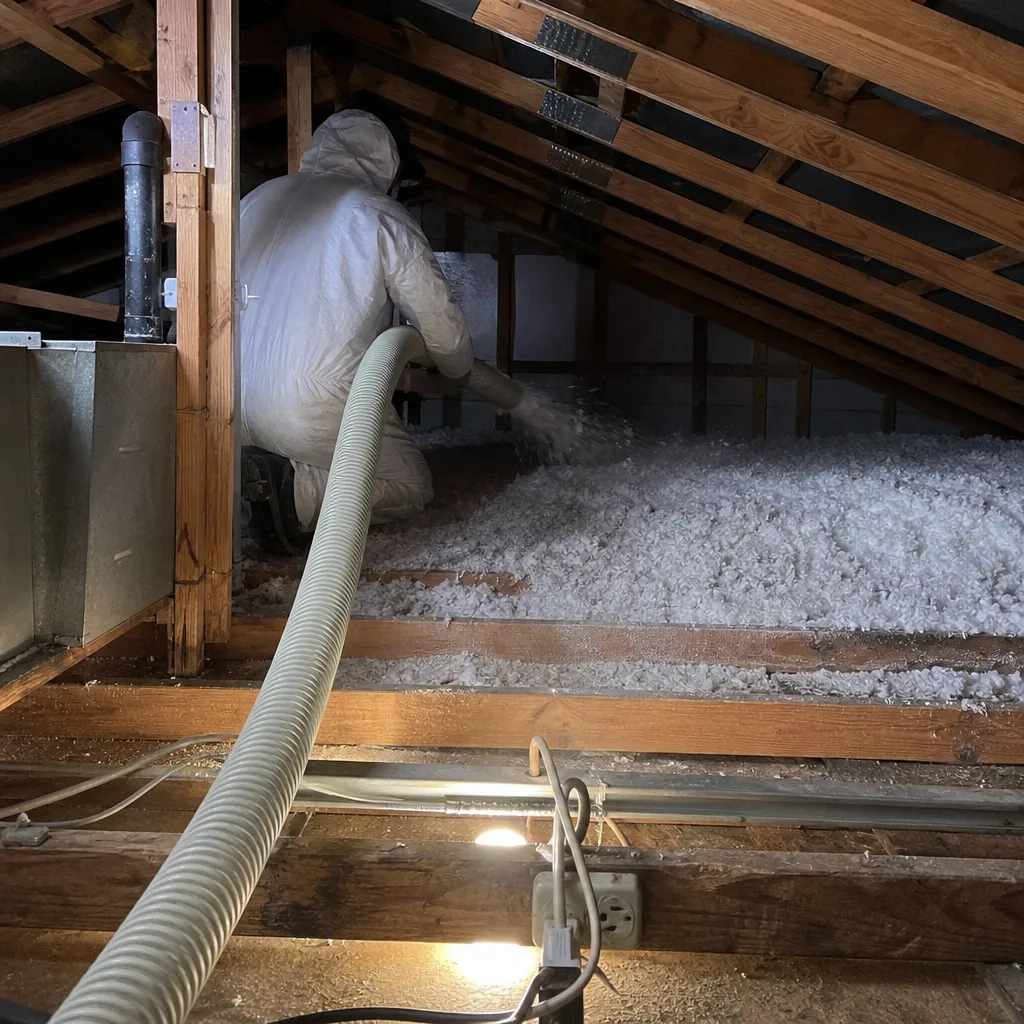
What you can safely check: walk your crawl space with a headlamp and look for the product markings, seam gaps, and the perimeter attachment at the foundation walls. Measure the square footage and note any standing water or rodent activity. This information saves us time and gets you a tighter quote.
Where DIY goes wrong: vapor barrier installation looks like rolling out plastic, but the performance lives in the details. Perimeter attachment must withstand hydrostatic pressure and seasonal soil movement. Seams require pressure-sensitive tape rated for polyethylene, applied to clean, dry surfaces in overlapping strips. In Long Beach’s older homes, especially the 1920s stock near the traffic circle, we regularly find floor joists at 22% moisture content because a homeowner laid 6-mil sheeting without sealing to the walls. That moisture is now rotting the rim joist. We do not recommend DIY for full encapsulations or any installation where you will be working in confined space around electrical or plumbing penetrations. Call (424) 415-7031 and we’ll measure first, then insulate - otherwise you’re just trapping the problem.
FAQs
In Long Beach’s marine climate, a properly installed VC-13 typically lasts 10-12 years; VC-17 or MemBrain installations reach 15-20 years. Salt air accelerates oxidation in vented crawl spaces, so we see shorter lifespans in homes west of Pacific Coast Highway where morning fog penetration is heaviest. Call (424) 415-7031 for a free moisture assessment and we’ll tell you what you’re working with.
Small seam separations or isolated punctures can be patched with compatible tape if the surrounding material is still supple. If the polyethylene is brittle, chalky, or failing at multiple points, patching is false economy; the labor to patch approaches replacement cost, and the patches rarely last. We provide a Documented Photo Record showing exactly what we found and whether repair or replacement is the honest recommendation.
Most crawl space vapor barrier replacements in Long Beach are completed in one day, assuming clear access and no debris removal. Full encapsulations with VC-17, perimeter sealing, and conditioning take two days. We text you a named technician and arrival window under Haven Standard: Arrive on schedule.
We keep VC-13, VC-17, and MemBrain in stock for Long Beach jobs, along with compatible seam tape and mechanical fasteners. For same-day starts, we need your crawl space dimensions and photos of the access point. If you have a competing quote, bring it; we offer a Free Second Opinion on any written estimate and will read it with you line by line.
Written by Wes Okafor, Owner, Topside Attic Insulation Long Beach at Topside Attic Insulation Long Beach, serving Long Beach and nearby areas.