
Attic Baffles & Ventilation Prep in Long Beach, CA
Attic baffles – also called rafter vents or vent chutes – are rigid channels installed between roof rafters that keep a clear airflow path from your soffit vents to the ridge, even after blown-in insulation fills the attic floor. In Long Beach, where marine air from the Pacific pushes coastal humidity into attic cavities year-round, blocked soffit vents are one of the most consistent causes of premature roof deck deterioration and summertime heat gain we document on blower-door jobs. Ventilation prep means ensuring that air can actually move before any insulation goes in – not as an afterthought, but as a prerequisite.
This page covers exactly what baffle and ventilation prep work involves, what it costs in the Long Beach market, and the documentation you receive when we leave. If you want context on the broader scope of work, our Attic Insulation in Long Beach page lays out the full picture. Or call us directly at (424) 415-7031 – a live person picks up, every time, without a callback window.
Envelope Insulation Co., operating as Topside Attic Insulation Long Beach under The Haven Standard since 2016, has completed ventilation prep as part of more than 9,000 sealed and insulated homes across the greater Los Angeles area. Every job starts with a written price before anyone touches a tool – that is Haven Standard Clause 1, and it applies here without exception.
Why Attic Ventilation Prep Matters More in Long Beach Than Inland Cities
Long Beach sits at the western edge of the Los Angeles Basin, where the ocean breeze moderates daytime temperatures but deposits consistent moisture in the air – particularly in neighborhoods west of the 710 freeway: Wrigley, Bixby Knolls, and the homes closest to Alameda Corridor. Attic relative humidity readings in these areas regularly read 10 to 15 percentage points higher than what we measure in Downey or Lakewood during the same week. That moisture has to go somewhere, and when soffit vents are buried under insulation or baffle channels are absent, it condenses on the underside of the roof sheathing.
We have documented roof decks in the California Heights and Los Altos neighborhoods where OSB sheathing had softened noticeably – not from roof leaks, but purely from trapped attic humidity. The fix, at that stage, is no longer an insulation job. Baffles and a clear ventilation pathway are the mechanism that prevents that outcome before insulation is added.
Long Beach also has a higher proportion of older Spanish Revival and Craftsman bungalows – built between the 1920s and 1950s – where the original roof design used shallow rafter cavities that leave almost no room for both insulation depth and airflow. In those homes, the baffle selection and installation angle matter a great deal, and the ventilation prep step cannot be skipped or compressed.
When You Need Attic Baffles and Ventilation Prep
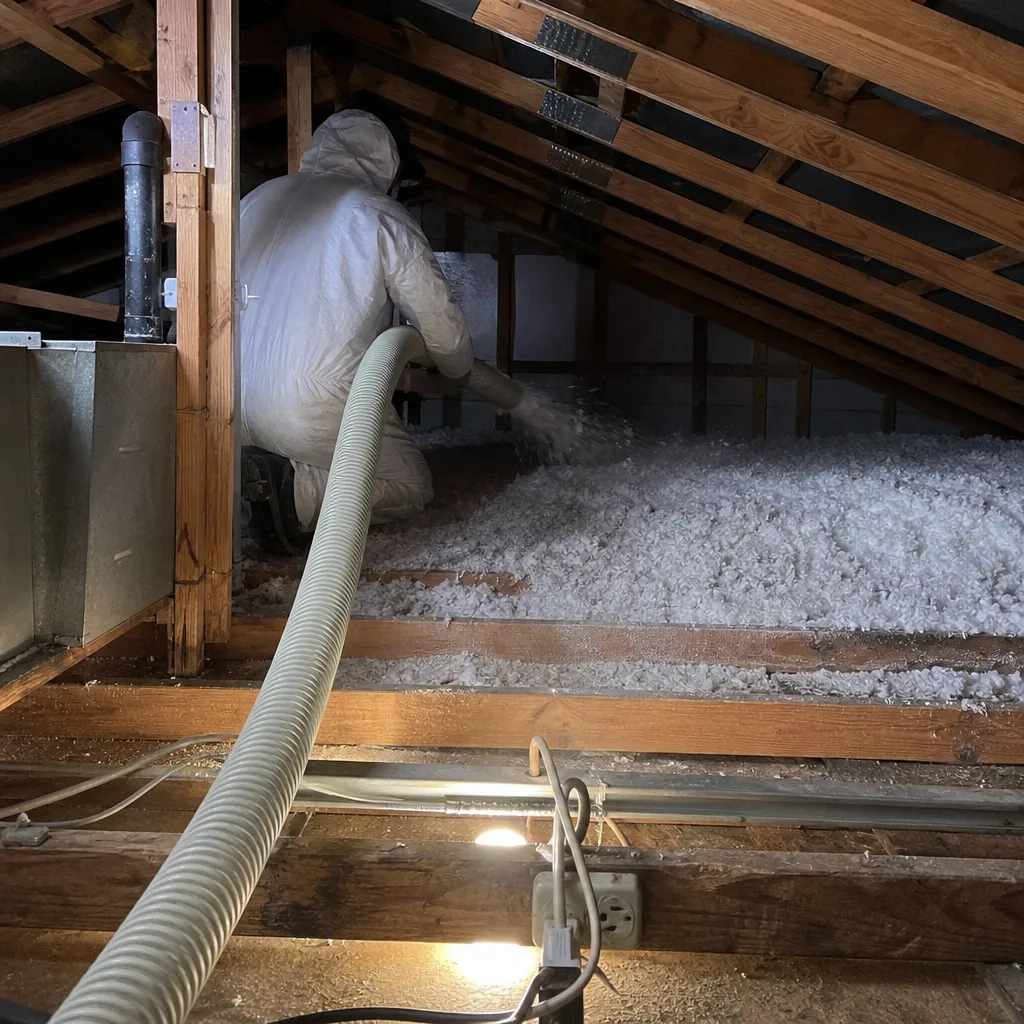
- Your attic has no baffles and you’re adding blown-in insulation. GreenFiber or Owens Corning blown-in cellulose or fiberglass fills the rafter bays from the inside and will block soffit vents entirely if there is nothing holding the channel open. Once those vents are buried, the ventilation system stops working regardless of how many ridge vents the roof has.
- You’ve noticed dark staining or streaking on attic sheathing near the eaves. In Belmont Heights and the older craftsman blocks along Cherry Avenue, this is often the first visible sign that moisture has been condensing at the cold eave line – a direct result of stagnant air and insufficient intake ventilation.
- Your energy bills spike in June through September even though you have existing insulation. Blocked intake vents let the attic supercharge to temperatures well above ambient – we have measured attic air at 147°F in a Naples Island home with a completely blocked soffit line during an August inspection. Proper baffle installation and ventilation prep bring that number down significantly.
- An inspector flagged inadequate attic ventilation on a home purchase report. Long Beach sees a consistent volume of 1940s-1960s homes changing hands in Zaferia and Poly High neighborhoods, and ventilation deficiencies are among the most commonly flagged attic conditions. Addressing the baffle and vent prep work now prevents a more expensive conversation later.
- Your existing insulation was added without baffles and the ridge vent isn’t doing much. A ridge vent is only as effective as the intake vent area below it. If the soffit vents are buried, a ridge vent is essentially a decorative cap – warm, humid air cannot exhaust because nothing is drawing it upward. Retrofitting baffles and clearing the soffit line restores the thermal stack effect that makes passive ventilation work.
- You’re in a home where the original soffit was enclosed or converted during a past renovation. In parts of East Long Beach and Lakewood Village, we regularly find homes where a prior owner boxed in the original open soffit and either did not install vented soffit panels or installed them in positions that don’t align with the rafter bays. Ventilation prep here means a full intake assessment before any insulation quote is written.
Our Attic Baffles and Ventilation Prep Process
- Written scope and price before we schedule a crew day. Under Haven Standard Clause 1, you receive a flat written price that covers materials, labor, and the documented photo record before anyone enters the attic. We do not write vague estimates and add line items later. If the scope changes because of something we find in the attic – say, a blocked soffit run we couldn’t see from the access hatch – we stop, document it with photos, explain what we found, and get your written approval before the scope expands.
- Attic access inspection and soffit vent mapping. The technician enters the attic and traces the soffit perimeter, measuring net free area at each vent location and noting which rafter bays have open intake pathways and which are blocked – by existing insulation, debris, or the absence of vented soffit panels. In many Long Beach homes built before 1970, we find that only a fraction of the soffit panels are actually vented, leaving large sections of the attic eave without any intake. This is documented photographically before any work begins.
- Air sealing of the attic floor – completed before baffles go in. This is the step that separates a ventilation prep job done correctly from one done fast. Top plates, penetrations from can lights (IC-rated or not), plumbing vents, and electrical chases are sealed with spray foam or fire-rated caulk before any baffle is installed. Blown-in insulation cannot seal these gaps – it sits around them. If the air sealing step is skipped or compressed, the blower-door reading after insulation will reflect it. We will not install baffles and then blow insulation over an unsealed attic floor; it is not how we work, and it is not how the Haven Standard allows us to work.
- Baffle installation in each rafter bay at the eave line. We use rigid polystyrene or cardboard rafter vent channels – sized to the rafter bay width – stapled in place so they hold the intake airflow path open from soffit to ridge, regardless of how deep the insulation goes above them. In shallow rafter cavities common in Long Beach’s older Spanish Colonial stock, we select the thinnest-profile baffle that still maintains the minimum one-inch clear airway required by California Title 24. Each bay gets its own channel; we do not skip bays and assume adjacent channels will compensate.
- Ridge and exhaust vent verification. Intake ventilation without adequate exhaust does not create meaningful airflow. Before declaring the ventilation prep complete, the technician checks ridge vent continuity, confirms that any existing power ventilators are functional, and notes whether the net free area at the exhaust matches the intake area within the ratio required by California Building Code Section R806. If it does not, this is documented in writing and discussed with you before insulation is scheduled.
- Blower-door reading and documented photo record. On applicable jobs, we take a blower-door measurement before and after the air sealing phase – a pressurization test that produces a single CFM50 number showing how much conditioned air the building envelope was losing before the work and after it. Both numbers are included in the documentation you receive when the crew leaves. The photo record covers the attic floor condition before work, each sealed penetration, baffle installation at the eave line, and the finished insulation surface depth. You are not asked to take our word for anything.
Attic Baffles and Ventilation Prep Pricing in Long Beach
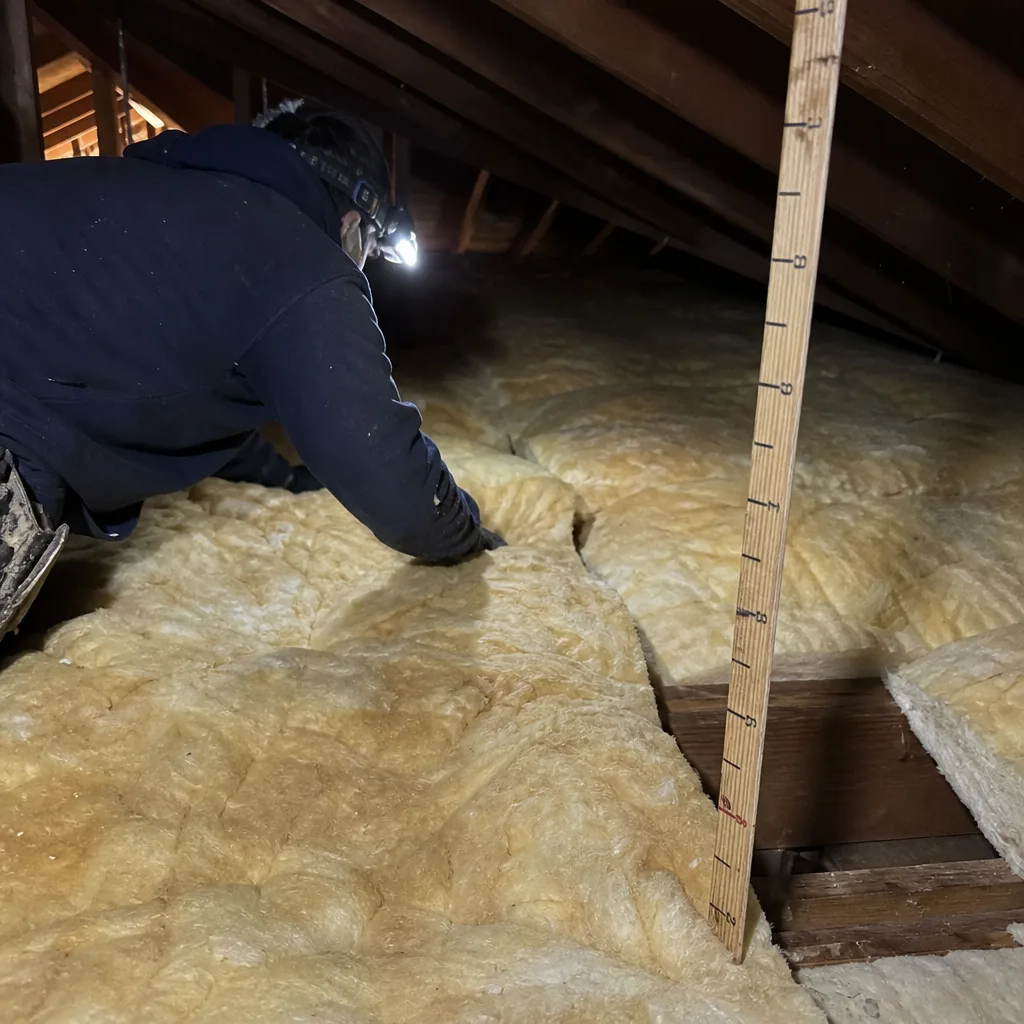
Most standalone attic baffle and ventilation prep jobs in a typical Long Beach single-story home – roughly 1,200 to 1,800 square feet of attic floor – run between $380 and $850, depending on attic access conditions and the number of rafter bays requiring baffles. When baffle installation is part of a full attic insulation project, the prep work is priced as a line item within the overall scope and typically adds $280 to $600 to the total job cost. These are Long Beach market figures based on jobs completed in the area; they are not national averages.
| Scope | Typical Long Beach Range | What Drives the Cost |
|---|---|---|
| Baffle installation only (no new insulation) | $380 – $850 | Number of rafter bays, attic height, access difficulty |
| Baffle + air sealing prep (pre-insulation) | $550 – $1,200 | Number of penetrations, can light count, top plate condition |
| Baffle + ventilation correction (soffit or ridge work needed) | $750 – $1,600 | Extent of soffit panel replacement, ridge vent condition |
| Blower-door test (standalone, pre/post) | $200 – $350 | Home square footage, number of stories |
Several factors affect where a specific Long Beach home lands in these ranges. Attic access – whether it’s a standard pull-down stair or a tight 22×30-inch hatch with no flooring – directly affects labor time. Homes in Bixby Knolls with original plaster ceilings often have smaller, less cooperative access openings than newer builds in Signal Hill or near the Belmont Shore corridor. Can light count matters significantly: a 1960s ranch in Lakewood Village with 24 recessed fixtures requires more air sealing labor than a 1940s Craftsman with none. And in homes where the soffit panels are not vented at all and need to be replaced before baffles are installed, material costs rise accordingly.
A written price covering all of this is produced before any crew is scheduled. That is not a figure of speech – it is how every job at Topside Attic Insulation Long Beach starts, without exception. If you have a competing written estimate in hand, bring it; we will read it with you as a free second opinion and explain what is included and what may not be.
Call (424) 415-7031 to schedule your inspection and receive a written estimate at no charge, or search attic insulation near me in Long Beach, CA to find our local team.
FAQs: Attic Baffles and Ventilation Prep in Long Beach
What exactly is an attic baffle and do I actually need one?
An attic baffle – also called a rafter vent or vent chute – is a rigid channel, typically polystyrene or cardboard, installed between roof rafters at the eave line to keep the airflow pathway from your soffit vents to your ridge vent clear after insulation is added. You need one in every rafter bay where blown-in or batt insulation would otherwise block the intake vent opening. Without baffles, the insulation itself seals off the soffit line, and the passive ventilation your roof depends on stops working – leading to elevated attic temperatures in summer and trapped moisture in winter. In Long Beach specifically, where coastal humidity is a year-round factor, this is not a minor concern. Call (424) 415-7031 for a free inspection and written assessment of your current soffit vent condition.
Can baffles be installed in an older Long Beach home without removing existing insulation?
In most cases, yes – baffles can be retrofitted without removing all existing insulation, but it depends on how deep the current insulation is and whether it is covering the eave line. In practice, the technician typically needs to pull back insulation from the eave area to clear the soffit vent opening and staple the baffle channel in place, then redistribute or supplement the insulation after. In Long Beach homes with original blown-in insulation from the 1980s – common in Park Estates and Los Altos – we often find that the material at the eaves has settled and compacted, which makes the retrofit more straightforward than in homes with thick batt layers. A photo record is provided before and after the eave work so you can see exactly what was done. Call (424) 415-7031 for a free written estimate specific to your home’s configuration.
How does attic ventilation prep affect my energy bills in Long Beach?
Restoring proper soffit-to-ridge airflow reduces the attic air temperature during Long Beach summers – we have measured drops of 20 to 35 degrees Fahrenheit in attic air temperature after ventilation prep and insulation on homes in Wrigley and North Long Beach. A cooler attic means less radiant heat pushing through your ceiling into living spaces, which reduces the load on your air conditioning system. The blower-door test we run before and after the air sealing portion of the job documents the envelope tightness improvement with a specific CFM50 number – not an estimate of expected savings, but a measured result you can verify. On applicable jobs, both readings are included in the documentation you receive when the crew leaves.
Do I need a permit for attic baffle and ventilation prep work in Long Beach?
Attic baffle installation on its own generally does not require a permit in Long Beach under the current California Residential Code – it is considered a repair and maintenance activity. However, if the ventilation prep work involves modifying the roof structure, adding ridge vent openings, or replacing soffit panels in a way that alters the exterior, Long Beach Building and Safety may require a permit depending on scope. We identify permit requirements during the written scope phase and include any applicable permit costs in the written price before work starts – Haven Standard Clause 1 means no surprises after the fact. Call (424) 415-7031 if you have a specific situation you want to walk through before scheduling.
What You Receive When We Leave
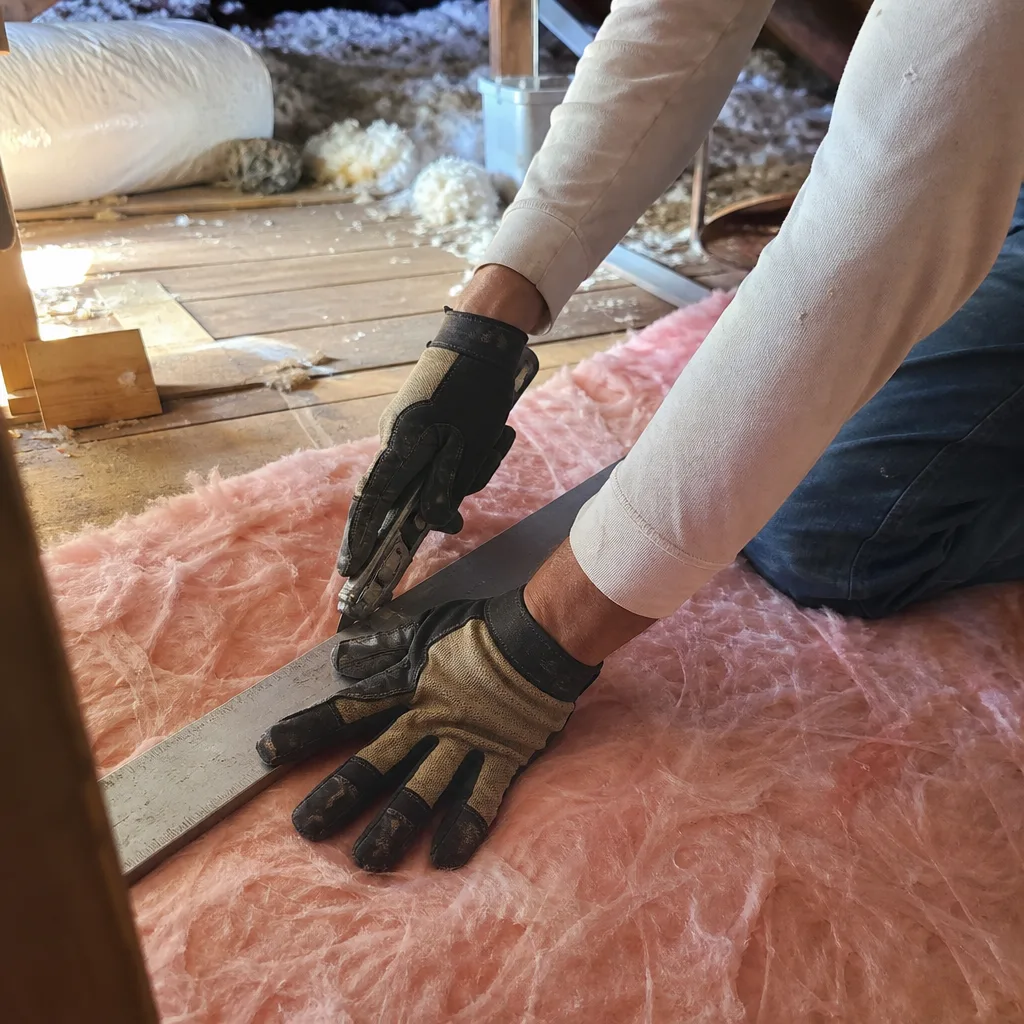
The documentation at job close is not something you have to ask for. Every Topside Attic Insulation Long Beach job closes with a written record that includes: the blower-door reading before and after air sealing (on applicable jobs), a dated photo record of attic conditions before work, each sealed penetration, baffle installation at the eave line, and the finished insulation surface with a depth measurement. The 365-Day Done Right Promise applies to every completed job – if something is not right within the first year, we make it right. That promise is in writing before anyone starts, not offered verbally after the fact.
Wes Okafor leads the team at Topside Attic Insulation Long Beach. If you have a question about a specific condition in your attic, you can ask for Wes by name when you call. The answer you get will be specific to your home, not a script.
For a written estimate on attic baffle installation and ventilation prep in Long Beach, call (424) 415-7031. A live person answers. There is no voicemail loop and no callback window measured in business days.
Topside Attic Insulation Long Beach is an independently owned and operated insulation contractor serving Long Beach and the surrounding Los Angeles Basin under The Haven Standard since 2016. Our full service line, including blown-in insulation, spray foam, crawl space encapsulation, and home energy audits, is described on our home page.
Written by Wes Okafor, Owner at Topside Attic Insulation Long Beach, serving Long Beach.