
Attic Insulation Replacement in Long Beach, CA
Our Attic Insulation services for replacement in Long Beach typically run between $1,800 and $4,500 for a standard single-story home, depending on square footage, the condition of existing material, and whether air sealing is needed before new insulation goes in. Most jobs are completed in one day. If your home is running warm in summer despite the air conditioning working fine, or your energy bills have climbed without an obvious explanation, deteriorated attic insulation is one of the first places worth investigating.
At Topside Attic Insulation Long Beach, we’ve been handling attic insulation replacement under The Haven Standard since 2016. Wes Okafor leads every job with the same sequence: air sealing first, then insulation – never the other way around. That order matters. Blowing new material over an unsealed attic floor locks air leaks in place and guarantees you’ll still feel them in your utility bills. We don’t do that. Before any insulation goes in, top plates, can lights, and penetrations are sealed. Then we install. Then we hand you a blower-door reading – a pressurization measurement that shows, in a single number, how much conditioned air your home was losing before versus after. That number is yours to keep.
This page covers what replacement actually involves, what it costs in Long Beach specifically, and how the process works from first visit to final documentation. If you’d rather talk through your situation directly, call (424) 415-7031 – a live person answers, no voicemail. Or keep reading; everything you need to make a decision is on this page.
Replacement is one component of the broader Attic Insulation in Long Beach service we provide – which also covers new installation, R-value upgrades, and radiant barrier additions. And if you’re still orienting yourself on the topic, our home page outlines the full building-envelope services we offer.
When You Need Attic Insulation Replacement
Not every underperforming attic needs a full tear-out. Sometimes an Attic Insulation Top-Up is enough. But in Long Beach, several conditions make replacement the more sensible call – and identifying them early saves money on a job that would otherwise need to be redone.
- Insulation that has been compressed or settled below R-19. Older blown-in fiberglass or cellulose loses loft over time. Once it’s compressed, adding material on top doesn’t fix the air-movement problem underneath – it only adds thickness to a layer that’s no longer performing. In Long Beach’s mild but occasionally humid coastal climate, compressed attic insulation also holds moisture longer than it should, which accelerates the problem.
- Rodent activity or nesting. Long Beach sees significant rodent pressure in older neighborhoods like Wrigley, Bixby Knolls, and California Heights. Rats and mice nest in blown-in insulation and contaminate it with urine and feces – material that is biohazardous and cannot be left in place. Replacement is required, not optional, once nesting is confirmed.
- Water intrusion or mold contamination. A roof leak that went undetected – common in homes built before 1980 in North Long Beach and the neighborhoods around Houghton Park – can saturate batt insulation to the point where it holds mold spores even after the roof is repaired. Wet insulation loses essentially all of its R-value and creates an ongoing air quality problem.
- Insulation installed before 1990 with vermiculite or asbestos-containing material. Some homes in Long Beach’s Signal Hill and Los Cerritos corridors still have original blown material that should be tested before anyone works in the attic. If testing confirms hazardous content, removal requires licensed abatement and replacement with certified-clean material.
- Post-renovation attics where the original material was disturbed. HVAC work, electrical upgrades, or ductwork replacements often tear through existing insulation and leave gaps and compressed channels. Patching those gaps produces uneven R-values across the attic floor – a condition that doesn’t show up visually but does show up in heating and cooling bills.
- Energy audits flagging attic performance as the primary loss point. A blower-door test on a 1,600-square-foot Long Beach home that reads above 3,500 CFM50 often traces most of that air loss to a poorly sealed, under-insulated attic. If your audit pointed here, replacement paired with air sealing is almost always the higher-return fix compared to window upgrades or door weatherstripping.
Our Attic Insulation Replacement Process
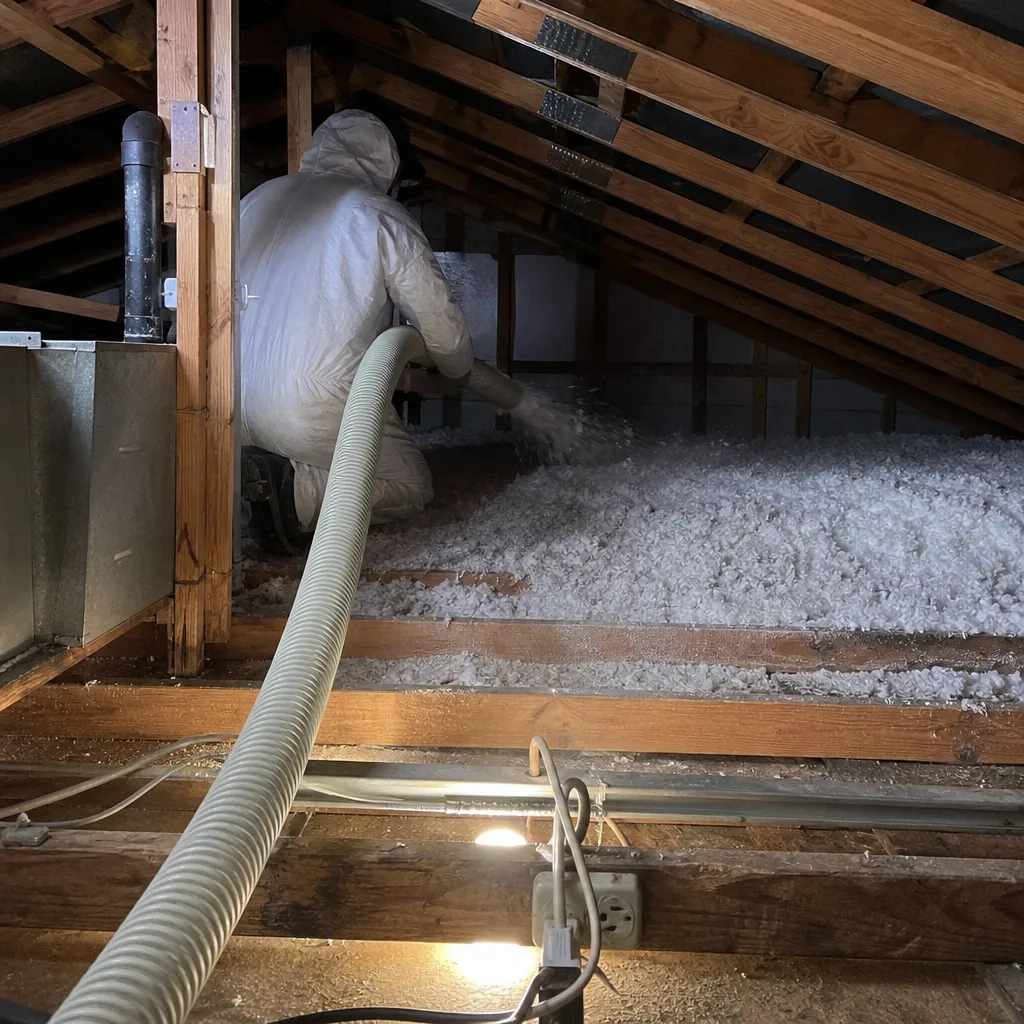
The sequence below is how every replacement job runs under the Haven Standard. The order isn’t arbitrary – skipping or swapping steps produces worse results, and we can show you the blower-door numbers to prove it.
- Written scope and price before anything else. Wes Okafor or a trained technician inspects the attic, measures square footage, assesses existing material depth and condition, and documents what’s there with photos. You receive a flat written price – one number, covering removal, disposal, air sealing, and installation – before we schedule a crew. Haven Standard Clause 1: no work starts without a written price in your hand. If you have a competing written estimate, we’ll read it with you under our Free Second Opinion offer and explain line by line what it does and doesn’t include.
- Safe removal of existing material. We use commercial HEPA-filtered vacuums to extract blown-in insulation and remove batt material by hand where necessary. All extracted material is bagged and disposed of in accordance with California waste disposal requirements – which are stricter than most other states for material that may contain rodent contamination or older mineral fibers. The attic substrate is left clean before the next phase begins.
- Air sealing – completed before any insulation is added. This is the step most contractors skip or treat as an upsell. We don’t. Every top-plate gap, can-light penetration, HVAC boot, plumbing chase, and electrical chase is sealed with two-component spray foam or fire-rated caulk before insulation goes in. In a typical Long Beach home built between 1950 and 1985, this phase alone reduces air loss by 30 to 50 percent. Covering those gaps with insulation instead of sealing them is like insulating around an open window – you get the R-value on paper and the air loss in practice.
- Installation to the specified R-value. Long Beach falls under California Climate Zone 8, where the California Energy Code recommends a minimum of R-38 for attic insulation in existing homes. We install to that number or higher based on your home’s specific configuration. Depending on the job, we work with blown-in cellulose from GreenFiber, blown-in fiberglass from Owens Corning, or batts from Owens Corning’s EcoTouch line – material selection is based on attic geometry, budget, and performance targets, not on which product we happen to have in the truck.
- Blower-door test before and after – documented, not estimated. On applicable jobs, we run a blower-door test – a pressurization measurement that depressurizes the home to 50 pascals and reads how much air is moving through the building envelope – before air sealing and again after installation is complete. The before-and-after numbers are included in your job documentation. “We significantly improved your home’s efficiency” is a feeling. “The blower-door read 3,800 CFM50 before sealing and 2,050 after” is a fact. You’ll have the fact.
- Documented Photo Record and written warranty delivered at closeout. Before the crew leaves, you receive a complete photo record of the attic floor: pre-work conditions, air-sealing points, and post-installation insulation depth. The 365-Day Done Right Promise applies from that date: if the work isn’t right, we make it right – and that’s in writing before anyone starts.
Attic Insulation Replacement Pricing in Long Beach
Most attic insulation replacement jobs in Long Beach run between $1,800 and $4,500. That range covers removal, air sealing, and reinstallation for a typical single-story home between 1,000 and 2,000 square feet of attic floor area. Larger homes, more severe contamination, or complex attic geometry move the number higher. Here’s how the line items typically break out:
| Scope item | Typical range (Long Beach market) |
|---|---|
| Insulation removal and disposal (blown-in or batt) | $600 – $1,200 |
| Attic air sealing (top plates, can lights, penetrations) | $350 – $900 |
| Blown-in or batt installation to R-38 | $900 – $1,800 |
| Blower-door test (before and after, on applicable jobs) | Included on applicable jobs |
| Documented Photo Record | Included on every job |
Several factors move the price within or above that range for Long Beach homes specifically:
- Rodent contamination. Nesting material requires additional handling, bagging protocols, and sometimes attic sanitation before new insulation can go in. Jobs in older Wrigley or North Long Beach homes with confirmed rodent activity typically add $300 to $600 to the removal phase.
- Older construction with difficult attic access. Long Beach has a significant inventory of pre-1960 homes – particularly in the Zaferia and Poly High neighborhoods – where attic access is through a small pull-down stair or a single hatch. Tight access slows removal and installation and affects labor cost.
- Attic depth and knee walls. Some Long Beach homes, particularly Craftsman-era bungalows, have partial attics with knee-wall cavities that need to be treated separately. Those add to the square footage being insulated.
- Hazardous material testing or abatement. If the existing insulation may contain asbestos or vermiculite, California law requires licensed testing before removal. If abatement is needed, that work is performed by a licensed abatement contractor and priced separately – we’ll help you coordinate it, but we don’t quote abatement scope ourselves.
The written price you receive before any work starts is a flat number covering the full scope. There are no “we found something additional” change orders after the crew arrives – the pre-job inspection is specifically designed to surface those conditions upfront.
Call (424) 415-7031 for a free estimate. You’ll get a named technician, a scheduled inspection time, and a written price – not a ballpark figure over the phone.
FAQs – Attic Insulation Replacement
How long does attic insulation replacement take in Long Beach?
Most standard attic insulation replacement jobs in Long Beach are completed in one day – typically six to eight hours for a 1,200 to 1,800 square foot attic. Larger homes or jobs involving significant rodent remediation may run into a second day. During your pre-job inspection, Wes Okafor or the assigned technician will give you a specific time estimate based on your attic’s actual conditions, not a generic range. That timeline is part of your written scope. Call (424) 415-7031 to schedule the inspection.
Do I need to replace all the insulation, or can you just add more on top?
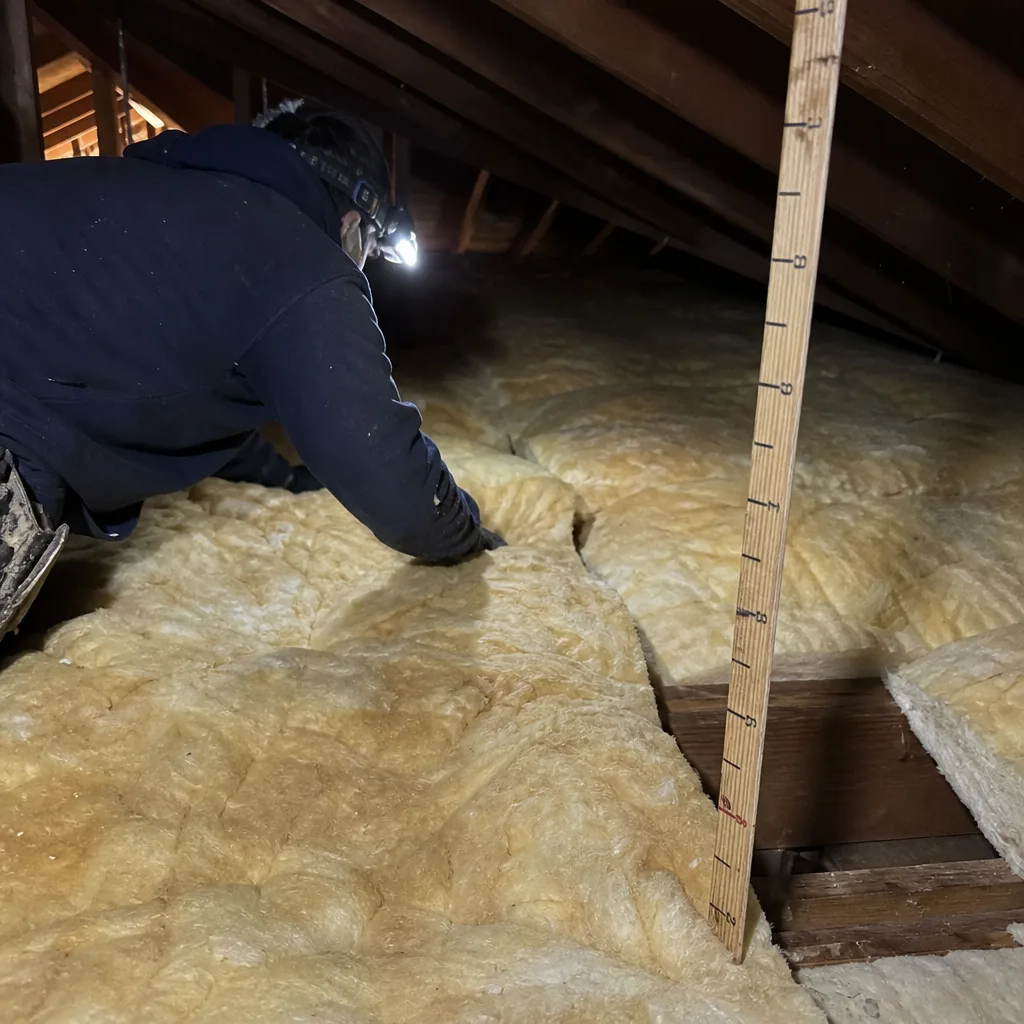
Blown-In Attic Insulation added on top of existing material is appropriate when the current layer is clean, dry, undisturbed, and simply below the target R-value. Replacement is necessary when the existing material is contaminated, compressed beyond recovery, water-damaged, or when air sealing needs to be done at the attic floor – which requires clearing the area to access top plates and penetrations. During the inspection, we document what’s there with photos so you can see exactly what condition the existing material is in before deciding. There’s no sales pressure either direction; the documentation is there so you can make an informed call.
Does California require a permit for attic insulation replacement in Long Beach?
In most cases, straight insulation removal and replacement in Long Beach does not require a building permit under California residential code – it’s classified as a repair or like-for-like replacement of building components. However, if the scope includes Attic Baffles & Ventilation Prep, altering HVAC duct configurations, or any structural work in the attic space, those elements may trigger a permit requirement. If your job has any of those components, we’ll identify that during the inspection and tell you upfront. We work within Long Beach’s permitting requirements, and the written scope will note if a permit is part of the process.
What R-value should replacement insulation be in Long Beach?
Long Beach sits in California Climate Zone 8, and the California Energy Code currently recommends a minimum of R-38 for attic insulation in existing residential construction. Most replacement jobs we complete here are installed to R-38, with some homeowners opting for R-49 when budget allows and the attic geometry supports the additional depth. R-38 in blown-in GreenFiber cellulose requires approximately 10 to 11 inches of installed depth; in blown fiberglass, closer to 12 to 14 inches depending on the product. The written scope specifies the target R-value and the material being used, so you know exactly what you’re getting before the crew arrives. Call (424) 415-7031 to get an exact recommendation based on your home’s configuration.
Why Long Beach Homeowners Use Topside Attic Insulation Long Beach
Long Beach is an unusual market for insulation contractors. The city spans neighborhoods with wildly different housing stock – mid-century concrete block construction in Belmont Shore, 1920s Craftsman bungalows in Los Cerritos, post-war ranch homes in Lakewood-adjacent East Long Beach, and dense older multi-family in downtown corridors. Each building type has a different attic configuration, different original insulation vintage, and a different failure mode. What worked in a 1955 Wrigley ranch doesn’t apply in a 1990s California Heights infill build. We’ve worked in enough of those specific attics since 2016 to know the difference before we quote the job.
The air-sealing-first protocol isn’t a marketing position. It’s the reason our blower-door numbers move. In homes where we’ve documented both readings, the average post-sealing CFM50 drop is substantial – and it’s visible in the documentation we leave with you. Wes Okafor built the Haven Standard around that kind of evidence because “trust us, it worked” is not a substitute for a number on a page.
Since 2016, we’ve sealed and insulated more than 9,000 homes. Every one of them started with a written price. Every one of them closed with a Documented Photo Record. The 365-Day Done Right Promise has been on every job from the beginning – not because it’s a good marketing line, but because a replacement job that fails six months in is a replacement job we haven’t finished yet.
If you have a written estimate from another contractor, bring it. Our Free Second Opinion offer means we’ll go through it line by line with you – what’s included, what isn’t, and whether the scope addresses the air sealing step before the insulation goes in. Most estimates we review don’t price that separately, which usually means it isn’t happening.
To get a written price for your Long Beach home, call (424) 415-7031. A live person will answer – no voicemail, no callback window measured in business days. Or if you want to start by reading about the broader service, the Attic Insulation in Long Beach page covers every component of what we do in this market.
Written by Wes Okafor, Owner at Topside Attic Insulation Long Beach, serving Long Beach since 2016.