
Icynene Crawl Space Encapsulation: The Long Beach Owner’s Guide
We stock and install Icynene-compatible crawl space encapsulation systems in Long Beach, with most complete jobs running $3,800-$7,200 depending on square footage and existing moisture damage. Same-day installation is available for standard vapor-barrier and closed-cell foam combinations on homes under 1,500 square feet. Most Long Beach homeowners discover their encapsulation has failed when they notice a sharp musty smell returning after months of absence, or when their spring energy bill jumps despite mild weather - both signs that the Icynene foam layer has separated from the rim joist or the polyethylene ground barrier has torn at the seam.
Which Icynene Models This Applies To
Icynene’s crawl space line breaks into two families: the open-cell LD-C-50 series (light-density, 0.5 lbs/ft³) and the closed-cell MD-C-200 series (medium-density, 2.0 lbs/ft³). The LD-C-50 was common in Long Beach installations from 2012-2018, especially in Bixby Knolls and Belmont Heights retrofits where contractors paired it with 6-mil poly sheeting. The MD-C-200 became standard after 2019 for homes in the flood-adjacent zones near the Los Angeles River, where the higher compressive strength (25 psi vs. 3.5 psi) matters for ground-contact applications.
To identify your system, check the spray-foam surface for the Icynene batch stamp - usually found on the rim joist access panel or a tag left by the original installer. The LD-C-50 feels spongy and returns slowly when pressed; the MD-C-200 feels rigid, like cutting board material. We carry both OEM Icynene replacement foam kits and Demilec-compatible aftermarket equivalents that match the 2.0 lb density and R-6 per inch rating. The aftermarket saves roughly 15-20% on material cost without changing the thermal performance, though we always verify vapor permeance ratings (measured in perms) against the original spec sheet before quoting.
Signs Your Icynene Crawl Space Encapsulation Is Failing
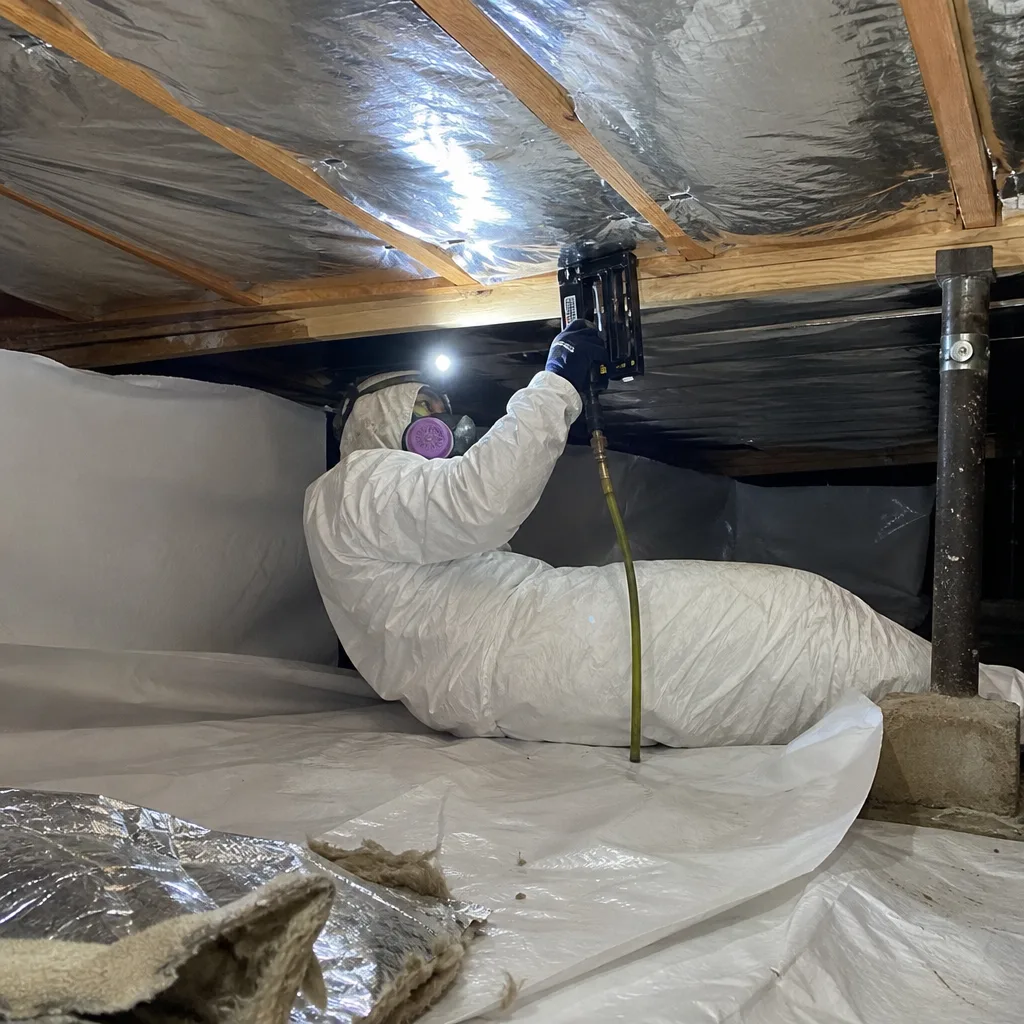
- Musty odor returning in humid months. The Icynene vapor barrier has likely torn at the seam tape or the closed-cell layer has pulled away from the foundation wall, letting soil moisture bypass the seal. In Long Beach’s marine layer months - May through July - this shows up first in homes without perimeter drainage.
- Condensation on ductwork or plumbing lines. When the encapsulation’s R-value drops due to foam degradation or gaps, the dew point shifts. Cold supply lines in the crawl space sweat because the air reaching them is no longer conditioned and dehumidified by the sealed envelope.
- Increased rodent or insect activity. Icynene foam, especially the open-cell LD-C-50, can become a nesting substrate if the poly barrier above it is compromised. We see this in Long Beach’s 1920s bungalows near Rancho Los Cerritos where subfloor gaps were never fully sealed during the original install.
- Buckling or sagging of the ground vapor barrier. The 6-mil or 10-mil polyethylene has torn at a seam or the adhesive failed where it meets the pier posts. Standing water after rain events accelerates this - common in the low-lying blocks between Pacific Coast Highway and the beach.
- HVAC system working harder with no temperature change. The encapsulated crawl space was supposed to become part of the conditioned envelope. When the seal fails, the system pulls unconditioned air through floor penetrations, raising the load. We measure this with a blower-door test - a pressurization reading that shows, in one number, how much air the building envelope is losing.
Replacement Cost & What’s Included
| Component | Typical Range (Long Beach) |
|---|---|
| Complete encapsulation, LD-C-50 open-cell (under 1,200 sq ft) | $3,800-$5,400 |
| Complete encapsulation, MD-C-200 closed-cell (under 1,200 sq ft) | $5,200-$7,200 |
| Partial re-foam (rim joist only, closed-cell) | $1,800-$2,800 |
| Vapor barrier replacement (10-mil poly, taped seams) | $1,200-$2,200 |
| Dehumidifier addition/replacement (70-pint unit) | $1,400-$2,000 |
What drives the range: square footage is the baseline, but the real variables are access (crawl spaces under 18 inches require different equipment), existing moisture damage to sill plates (common in Long Beach’s pre-1940 foundations), and whether the original install included proper air sealing at the band joist. Our price includes removal of failed material, surface prep, new Icynene or equivalent foam application to manufacturer depth, 10-mil ground barrier with sealed seams, and a post-install blower-door reading so you can verify the envelope performance. Every job carries the 365-Day Done Right Promise - if it’s not done right, we make it right - with the written scope and warranty delivered before anyone starts.
DIY or Call Us?
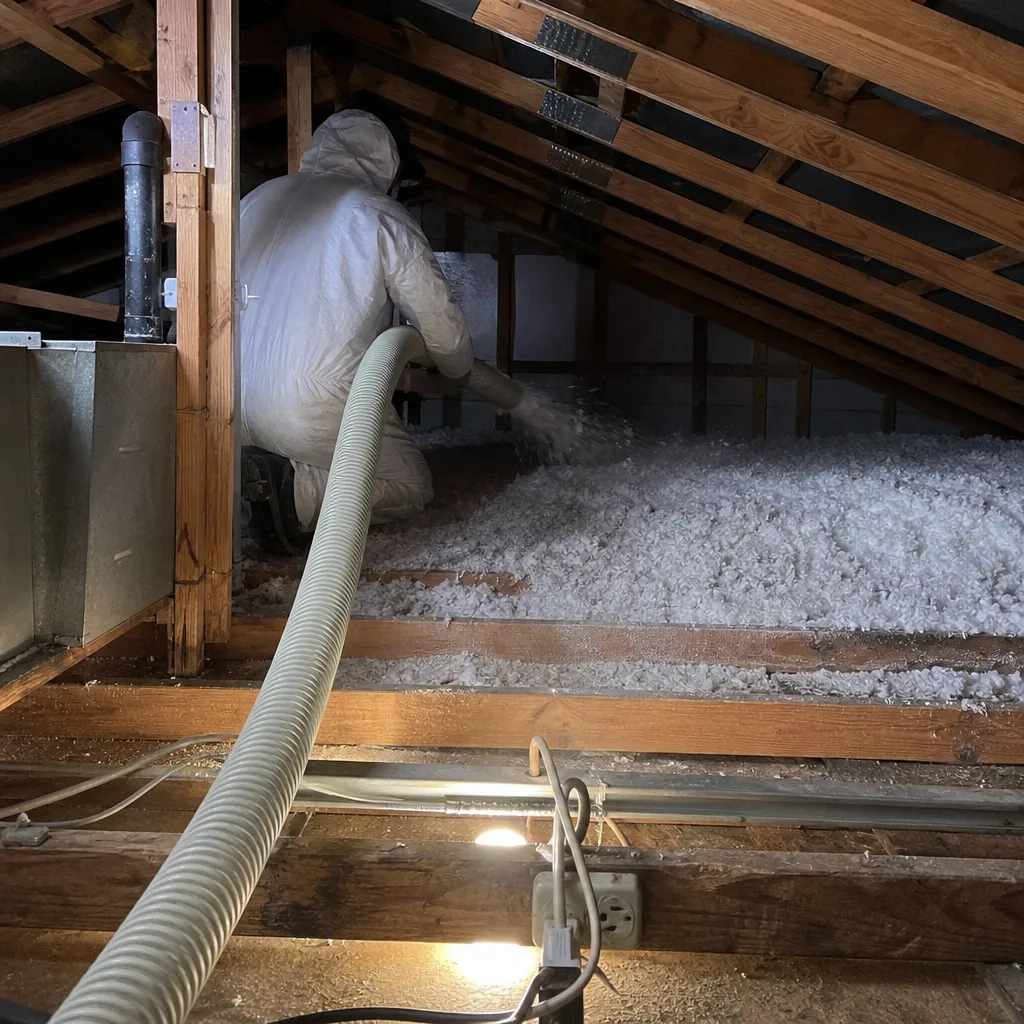
Here’s what you can safely check yourself: verify your dehumidifier is running and draining, look for obvious tears in the ground poly, and note any new odors. Do not enter the crawl space if you smell gas, see standing water near electrical, or if the access opening requires you to compress your chest - confined-space risk is real in older Long Beach foundations.
Where DIY goes wrong: Icynene foam application requires controlled temperature and humidity during cure, and the two-part closed-cell chemistry releases isocyanates that demand respirator-rated protection. More critically, most failed encapsulations we see in Long Beach failed because the air sealing was skipped or done poorly the first time - blowing new foam over unsealed gaps just traps moisture against the sill plate. Measure first, then insulate - otherwise you’re just trapping the problem. We carry both LD-C-50 and MD-C-200 formulations on the truck, along with the thermal imaging equipment to find the gaps before we quote. Call (424) 415-7031 for a free estimate with a written price before any work starts.
FAQs
Closed-cell MD-C-200 typically lasts 25-30 years when installed over a properly sealed substrate; open-cell LD-C-50 lasts 15-20 years but degrades faster if the vapor barrier above it fails. Long Beach’s marine layer and occasional flooding near the LA River can shorten both by 3-5 years if drainage is poor. Call (424) 415-7031 for a free estimate - we’ll assess your drainage and give you a realistic lifespan projection.
Patching works for isolated tears in the ground barrier or small foam gaps at the rim joist, but widespread delamination or moisture saturation of the foam layer requires full removal - trapped water behind foam causes sill rot that patching hides. We provide a documented photo record on every visit so you can see exactly what we’re seeing. Call (424) 415-7031 for a free second opinion on any written estimate.
Most complete encapsulations in Long Beach finish in one to two days: Day one for removal, surface drying, and air sealing; Day two for foam application and barrier installation. Homes under 1,000 square feet with good access sometimes finish same-day. We text you when the crew is on the way and provide a named technician under Haven Standard.
We carry both Icynene OEM and Demilec-compatible replacement formulations on every truck, plus 10-mil vapor barrier, seam tape, and dehumidifiers. For MD-C-200 jobs over 1,500 square feet, we may need to pull additional material from our Long Beach warehouse - typically next-morning availability. Topside Attic Insulation Long Beach is an independent service provider, not affiliated with Icynene. Call (424) 415-7031 to confirm same-day availability for your square footage.
Ready to fix your crawl space? Call (424) 415-7031 for a free estimate with a written price before any work starts. We serve Long Beach neighborhoods from Bixby Knolls to Rancho Los Cerritos and surrounding areas, with live-person answering 24/7.
Written by Wes Okafor, Owner, Topside Attic Insulation Long Beach at Topside Attic Insulation Long Beach, serving Long Beach and nearby areas.