
Icynene Radiant Barrier Installation: The Long Beach Owner’s Guide
We stock and install Icynene-compatible radiant barrier systems for Long Beach attics, with most retrofits running between $1,800 and $3,400 for a typical 1,200-1,800 square foot attic footprint. Same-day installation is available when we have your roof geometry on file from a prior energy audit or site visit. Homeowners usually discover the need after summer cooling bills spike 20-40% above prior years, or after a thermal camera scan shows the original radiant barrier has delaminated, torn at the staple lines, or been displaced by rodent activity in the rafter bays.
Which Icynene Models This Applies To
Icynene does not manufacture standalone radiant barrier products; rather, their open-cell and closed-cell spray foam systems (LC-50, MD-R-200, and ProSeal Eco lines) are frequently paired with radiant barrier sheathing or foil-faced insulation boards in hybrid attic assemblies common to Long Beach’s 1950s-1980s tract housing. The critical match point is the existing foam thickness and whether the radiant barrier is applied to the roof deck interior, hung as a foil drape between rafters, or integrated into a foil-faced polyiso board layered over the Icynene.
We verify compatibility in the field by measuring existing foam depth with a calibrated probe, checking for the Icynene batch label (usually found on the attic access hatch or a framing member near the scuttle), and photographing the current barrier attachment method. OEM radiant barrier materials from Icynene’s distribution partners run heavier at 0.005-0.007 inch foil with woven reinforcing; quality aftermarket equivalents we source from Reflectix and Johns Manville meet the same emissivity spec (0.03-0.05) at lower material cost but may carry shorter warranty terms. For cathedral ceilings in Bixby Knolls bungalows, we spec the reinforced woven product every time; the unbacked foil tears where it contacts nail points in the roof deck.
Signs Your Icynene Radiant Barrier Installation Is Failing
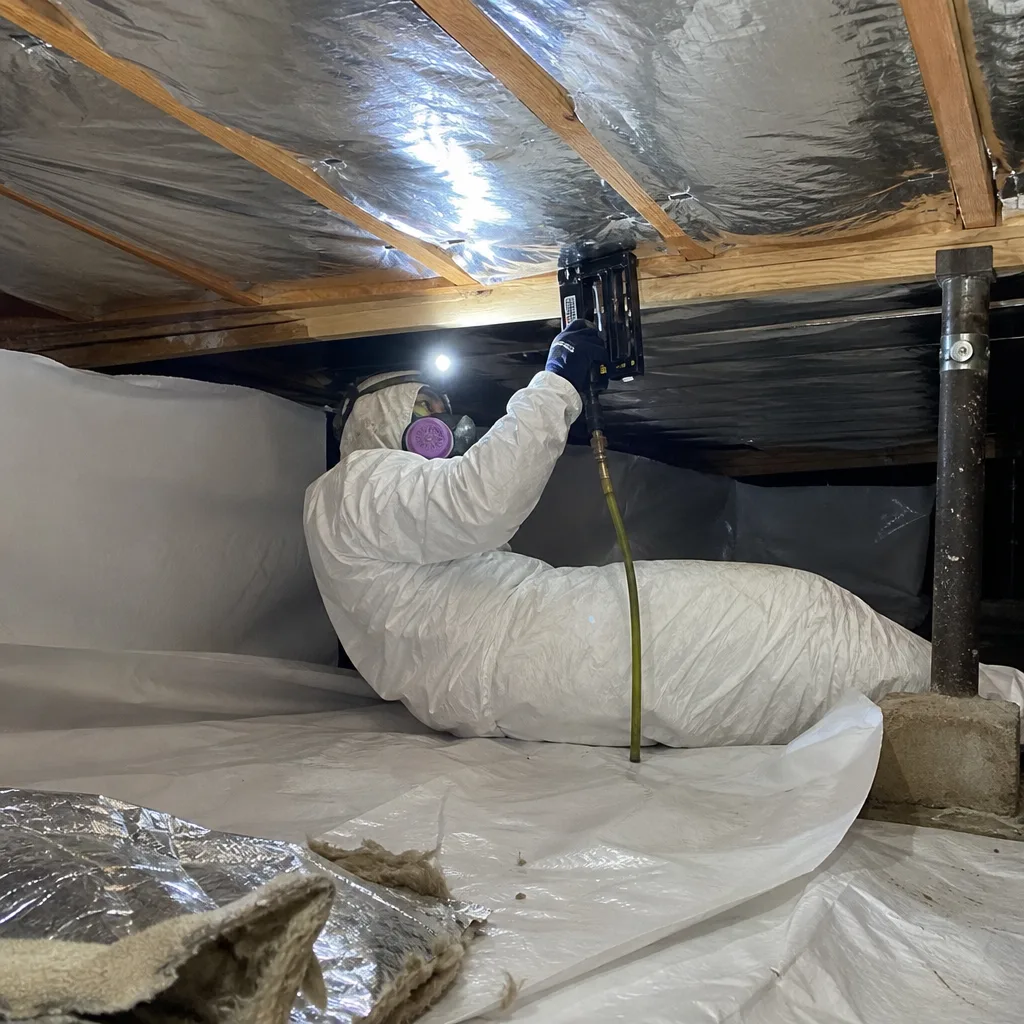
- Hot spots on the ceiling below attic spaces. The radiant barrier’s job is to reflect infrared heat back toward the roof deck. When the foil oxidizes, accumulates dust, or detaches, emissivity climbs above 0.20 and heat radiates straight through. We see this most in Long Beach homes within two miles of the coast, where salt air accelerates foil oxidation.
- Summer AC cycles that run continuously from 2 PM to sunset. A properly functioning radiant barrier reduces attic radiant heat gain by 25-40%. When it fails, the thermal mass of the roof deck dumps stored heat into the attic long after peak sun, forcing the compressor to chase a set point it cannot reach.
- Visible tearing or sagging in the foil between rafters. Staple-line failure is the most common mechanical mode we find. The original installer used narrow-crown staples into dry rafter wood; seasonal humidity swings in Long Beach’s marine climate cause the wood to expand and contract, working staples loose over 8-12 years.
- Rodent trails or nesting material on top of the barrier. Squirrels and roof rats use foil radiant barriers as convenient walkways. Their claws perforate the foil, and urine salts corrode the aluminum surface. In neighborhoods backing up to Rancho Los Cerritos, mature tree canopy provides highway access; we inspect for this specifically.
- Discoloration or powdery residue on the foil face. This indicates oxidation or chemical interaction with outgassing foam components. Icynene’s water-blown open-cell formulations are generally stable, but some early closed-cell batches interacted with certain radiant barrier adhesives; we check batch dates back to 2012-2014.
Replacement Cost & What’s Included
| Component | Price Range (Long Beach) |
|---|---|
| Radiant barrier material (per sq ft installed) | $1.40 - $2.20 |
| Attic air sealing (top plates, penetrations) | $380 - $620 |
| Old barrier removal and disposal | $240 - $400 |
| Blower-door test (before and after) | $180 - $260 |
| Typical total (1,200-1,800 sq ft attic) | $1,800 - $3,400 |
The range moves with attic height (steep pitches add labor), existing insulation depth that must be navigated or temporarily moved, and whether the Icynene foam itself needs localized repair where the old barrier pulled away substrate. Every job gets a Written Price Before Any Work Starts, flat, with no per-hour exposure. The 365-Day Done Right Promise covers installation workmanship; material defects fall to the manufacturer’s terms, which we document in your written scope before anyone lifts a tool.
DIY or Call Us?
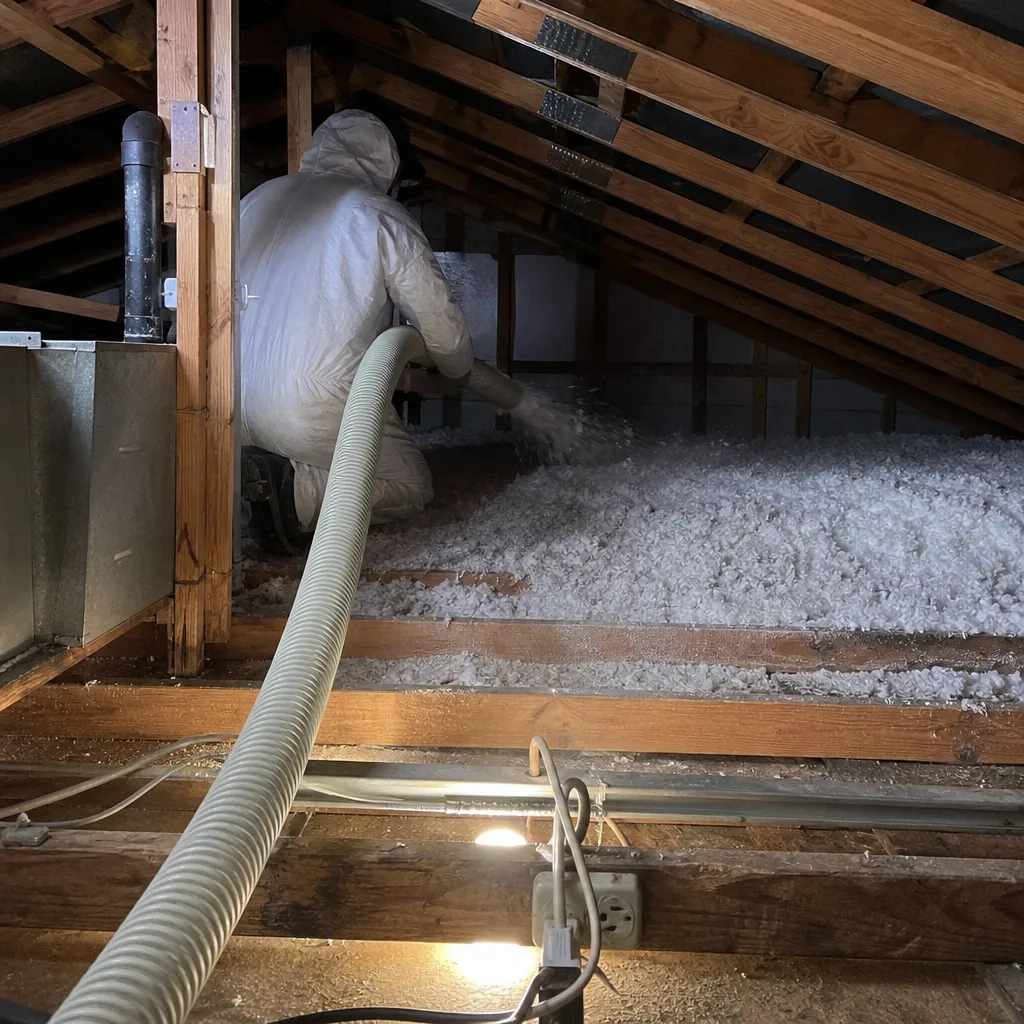
An owner can safely inspect from the attic hatch with a flashlight and phone camera: look for the five symptoms above, note any Icynene batch labels, and measure the attic footprint for rough square footage. Do not walk the attic floor without verifying it will bear weight, and do not disturb the radiant barrier if it is stapled under rafters where pulling could dislodge adjacent Icynene foam.
Where DIY goes wrong: radiant barrier installation in a conditioned attic with Icynene spray foam requires understanding the vapor profile. Foil on the wrong side of the assembly, or foil with inadequate edge sealing, can create condensation planes that wet the foam from behind. We have opened attics in Long Beach where well-meaning homeowners trapped moisture against the roof deck and grew mold in six months. Wes Okafor’s crew measures existing conditions with a thermal hygrometer before spec’ing the barrier location and attachment method. Call (424) 415-7031 for a free estimate and a documented photo record of what we find.
FAQs
In Long Beach’s marine environment, a properly installed woven reinforced radiant barrier lasts 15-25 years; unbacked foil in vented attics closer to the coast often shows staple-line failure in 8-12 years due to humidity cycling. Salt air within a mile of the beach accelerates edge oxidation. Call (424) 415-7031 for an exact condition assessment - estimates are free.
Localized re-stapling of detached sections is possible if the foil is intact and the original attachment points are accessible, but patch repairs rarely restore full emissivity performance and do not address oxidation or rodent damage. We quote both options when the damage is limited. Call (424) 415-7031 for a free second opinion on any written estimate.
Most residential attic retrofits in Long Beach take one full day for crews of two; larger homes or those with cathedral ceilings in Bixby Knolls may run into a second day. We complete air sealing first, then install the barrier, then run the post-work blower-door test before we leave. Call (424) 415-7031 to schedule - a live person answers 24/7.
We stock reinforced foil radiant barrier, Reflectix equivalent, and the fastening hardware to match most Icynene hybrid assemblies found in Long Beach. Exact material gauge and width vary by roof pitch and rafter spacing; we confirm spec at the free estimate visit and carry the matched roll on installation day. Call (424) 415-7031 to confirm availability for your specific attic geometry.
Written by Wes Okafor, Owner, Topside Attic Insulation Long Beach at Topside Attic Insulation Long Beach, serving Long Beach and nearby areas.