
Icynene Attic Insulation: The Long Beach Owner’s Guide
Most Icynene open-cell spray foam attic insulation jobs in Long Beach run between $3.80 and $5.20 per board foot installed, with a typical 1,200-square-foot attic at R-38 landing between $4,600 and $6,800 total. We stock Icynene LD-C-50 and MD-R-200 series foam on our Long Beach trucks, and we can usually inspect and quote same-day if you call before noon. Homeowners usually figure out something’s wrong when their summer Pacific Gas & Electric bill jumps $80-$140 over the prior year, or when they walk into a second-floor bedroom in August and the drywall feels warm to the touch despite the AC running.
Which Icynene Models This Applies To
Icynene’s product line breaks into two families that matter for attics: the open-cell LD-C-50 (light-density, 0.5 lbs/ft³) and the medium-density MD-R-200 (closed-cell, 2.0 lbs/ft³). The LD-C-50 is what we see in most Long Beach homes built between 2010 and 2020, especially the Spanish Revival remodels in Belmont Shore and the new construction up in Bixby Knolls. You can identify which you have by checking the job documentation from your original install - look for a yellow Icynene label on the rim joist or access hatch with a batch code starting “LD” or “MD.” If there’s no label, poke the foam with a screwdriver: open-cell feels like firm angel food cake and springs back slowly; closed-cell is rigid like refrigerated biscuit dough.
OEM Icynene foam is manufactured in Mississauga, Ontario, and shipped to regional distributors in 55-gallon sets. We source through the same supply chain, but we also carry Demilec Heatlok HFO High Lift as a chemically compatible alternative when Icynene lead times stretch past two weeks. The catch with mixing manufacturers: Demilec’s rise is slightly slower, which matters in Long Beach’s marine layer humidity - a poorly timed application below 55°F ambient can trap moisture at the substrate. We check the dew point before we spray, every time.
Signs Your Icynene Attic Insulation Is Failing
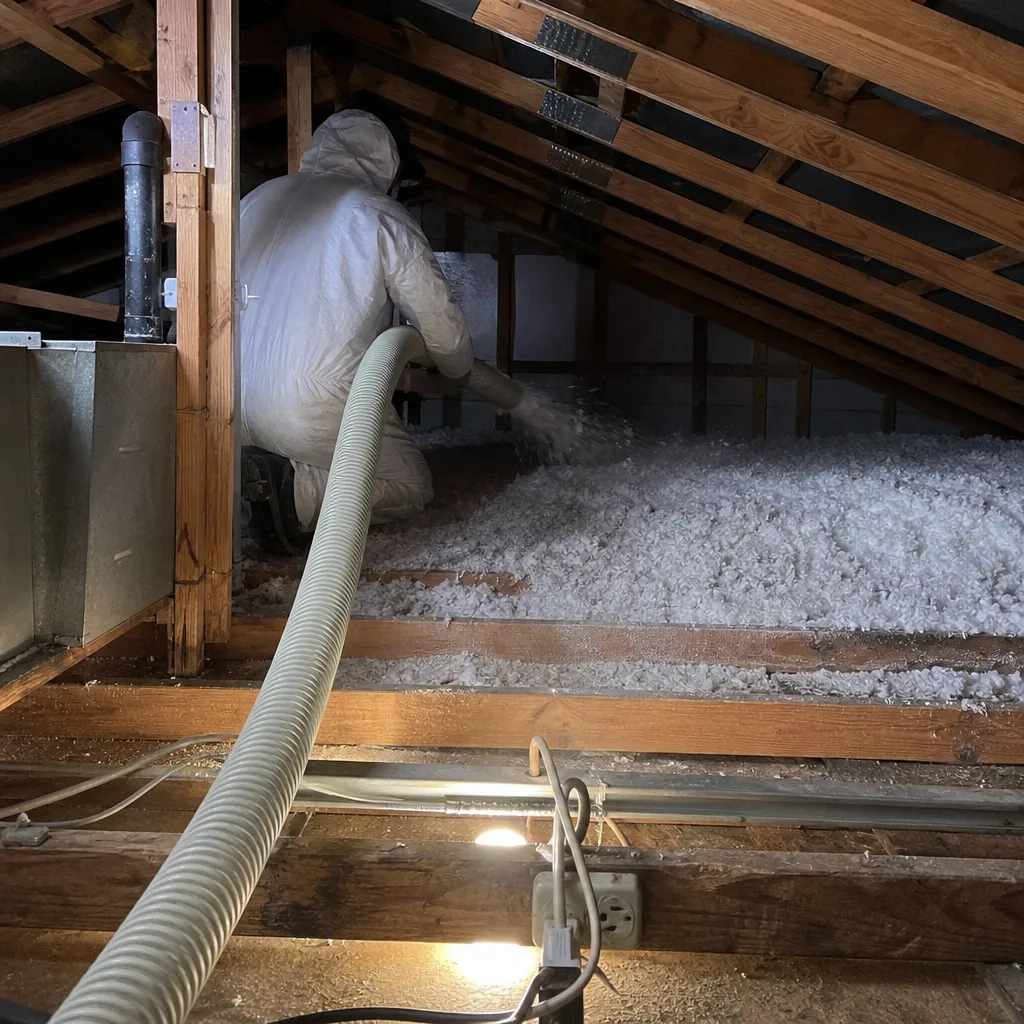
- Hot ceiling patches in summer. Icynene open-cell is vapor-permeable by design, which is fine if your attic ventilation is balanced. When soffit vents get blocked by blown-in fiberglass someone added later, moisture drives inward and the foam delaminates from the roof deck in spots. You’ll feel 6-10°F temperature stripes on the ceiling below.
- Musty smell that worsens after rain. The marine layer in Long Beach keeps roof decks below 70°F well into June. If the original installer skipped the substrate moisture check and sprayed over a deck reading 19% MC (moisture content), the foam interface harbors slow mold. We find this most in the 1940s bungalows near Rancho Los Cerritos where roof ventilation was never upgraded.
- Crumbly, yellowed foam at the attic hatch. UV degradation hits any spray foam left exposed. Icynene’s top coat of latex intumescent paint is required by California Title 24, but painters sometimes miss the hatch surround. Five years of diffuse attic light breaks down the surface cells.
- Ice-cold ductwork in winter. Icynene LD-C-50 at 3.5 inches gives you R-13, not R-38. If your original contractor quoted “R-value equivalent” based on air-sealing performance and stopped at 3 inches, your ducts are radiating heat into the attic on January mornings. We measure actual thickness with a depth gauge before we quote any supplement.
- Sagging or separated foam at the eaves. The narrow framing bays in Long Beach’s 1920s bungalows don’t always get full cavity fill. Gravity plus thermal cycling pulls underfilled foam away from the top plates over 8-12 years. You see a shadow gap where the foam meets the wall drywall.
Replacement Cost & What’s Included
For a full removal and re-spray of Icynene LD-C-50 in a typical Long Beach attic, most jobs land between $4,600 and $6,800 for open-cell at R-38, or $6,200 to $9,400 for closed-cell MD-R-200 at the same thermal performance. The spread depends on three things: whether we need to remove degraded foam first (add $1.20-$1.80/ft² for mechanical scraping and HEPA vacuuming), how many top plates and can lights need sealing before we spray, and whether your roof deck needs a vapor retarder per the 2022 California Energy Code.
Every Icynene job we run includes air sealing of all top plates, electrical penetrations, and chimney chases before the foam goes in - never after. We don’t blow or spray over an unsealed attic floor. You get a written price before anyone starts, a Documented Photo Record of every stage, and on applicable jobs, before-and-after blower-door numbers so you can see the actual air leakage reduction. The 365-Day Done Right Promise covers delamination, off-ratio curing, or any coverage shortfall we missed.
DIY or Call Us?
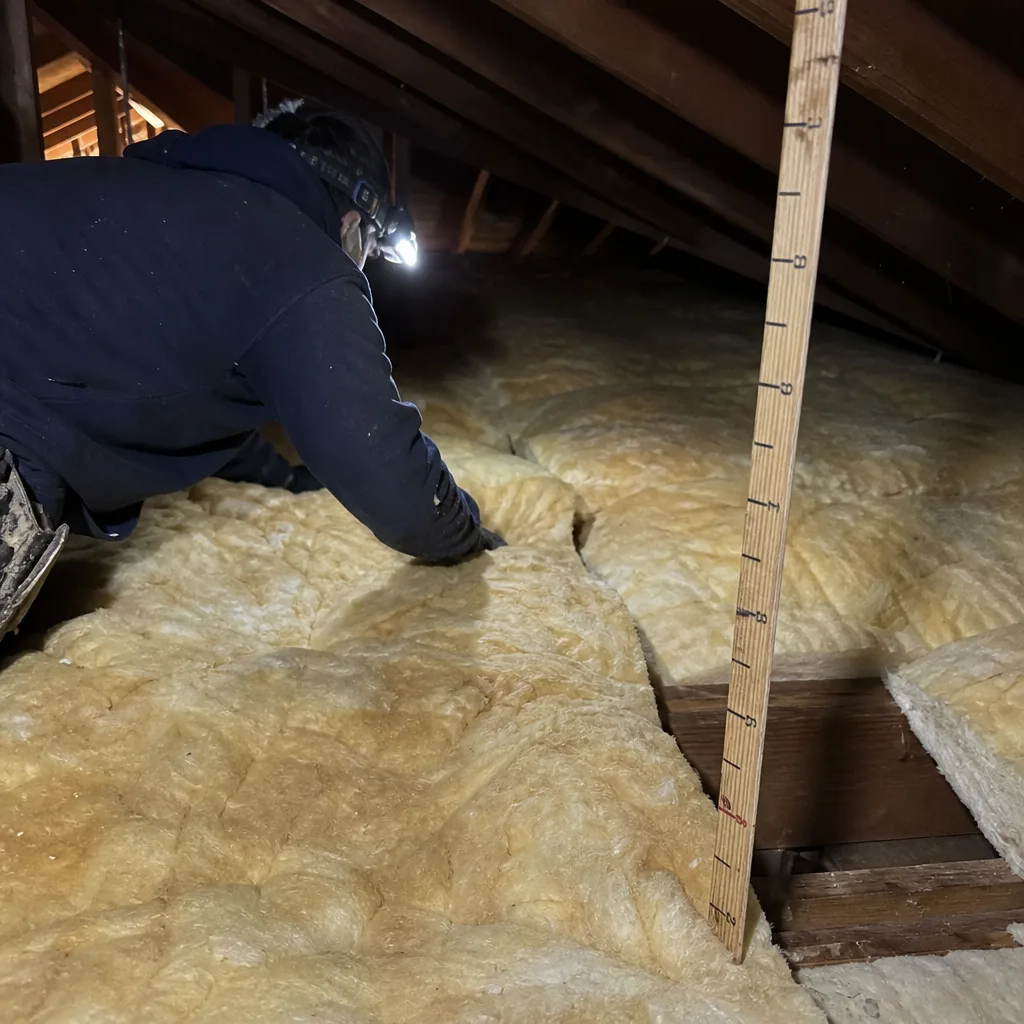
Here’s what you can safely check yourself: verify your attic ventilation isn’t blocked (soffit vents should show daylight), look for the Icynene batch label near the access hatch, and use an infrared thermometer on your ceiling at 3 PM to map hot spots. What you should not do: buy a two-component foam kit from a hardware store and spray it yourself. Icynene and equivalent closed-cell foams require respiratory protection beyond a N95 (supplied-air respirator or powered air-purifying respirator), precise substrate temperature monitoring, and real-time ratio verification - the A and B sides drift, and off-ratio foam never cures properly. We’ve been called to Long Beach homes where DIY foam shrank to half its thickness and trapped moisture against the roof deck. The remediation cost tripled the original professional quote.
We stock Icynene-compatible foam sets on our Long Beach trucks, and we can usually inspect, measure, and quote within 24 hours. Call (424) 415-7031 - a live person answers, or text if you prefer.
FAQs
Properly installed Icynene spray foam lasts the life of the building - 50+ years - but only if it was applied over a dry substrate at the correct thickness. In Long Beach’s marine climate, we see premature failure at 8-12 years when the original installer skipped moisture testing or applied below the manufacturer’s minimum temperature spec. Call (424) 415-7031 and we’ll bring a moisture meter and depth gauge to check what you actually have.
Localized delamination or UV damage can be spot-repaired by cutting back to sound foam and respraying the affected area, typically $800-$1,400 for a 50-100 square foot patch. Widespread moisture infiltration or off-ratio curing requires full removal - the bad foam is structural now, and new foam won’t bond to it. We measure first, then insulate - otherwise you’re just trapping the problem. Call (424) 415-7031 for a free inspection and written repair scope.
Most removals and re-sprays finish in two days: Day one for mechanical removal, HEPA vacuuming, and air sealing; Day two for foam application and curing. We need the attic empty of stored items and the HVAC off for 24 hours post-spray. Same-week scheduling is usually available in Long Beach if you call by Tuesday.
We carry Icynene LD-C-50 and MD-R-200 sets on our Long Beach trucks, plus Demilec Heatlok HFO as a compatible alternative if your job timing doesn’t align with Icynene’s two-week distributor lead time. We’re an independent service provider - not affiliated with Icynene - and we source from multiple manufacturers so you’re never locked into one product line. Call (424) 415-7031 to confirm current stock before we schedule.
Written by Wes Okafor, Owner, Topside Attic Insulation Long Beach at Topside Attic Insulation Long Beach, serving Long Beach and nearby areas.