
CertainTeed Crawl Space Encapsulation: The Long Beach Owner’s Guide
CertainTeed crawl space encapsulation systems installed in Long Beach homes typically run $3,800-$7,200 for a complete vapor barrier and conditioning setup, and we stock CertainTeed-compatible 12-mil and 20-mil reinforced polyethylene liners, seam tape, and dehumidifier tie-ins for same-day or next-day installation. Most Long Beach homeowners discover their encapsulation has failed when they notice musty odors returning after a dry winter, or when their annual energy bill creeps up despite no change in usage. The 1920s bungalows in Bixby Knolls and the post-war slab homes near Rancho Los Cerritos are especially prone to this, since original crawl spaces were never designed for modern humidity loads and the marine layer pushes moisture inland more days than not.
Which CertainTeed Models This Applies To
CertainTeed does not brand crawl space encapsulation as a standalone “model” like an HVAC unit. Instead, their system components ship under the CertainTeed Moisture Control product line, with reinforced vapor barriers marked by mil thickness and ASTM E1745 Class A, B, or C ratings. The Class A barrier - what we install under the Haven Standard for Long Beach’s wet winters - is the 15-mil woven polyethylene with scrim reinforcement, identifiable by the black-and-silver CertainTeed logo tape along the roll edge and a lot number starting with “MC-” followed by the year of manufacture.
Here’s how to tell what you’ve got: peel back a corner of your existing barrier and look for the embossed mil rating. If you see 6-mil or 8-mil, that’s builder-grade, not CertainTeed-spec, and it’s likely degraded after 5-7 years in Long Beach’s salt-air environment. The OEM CertainTeed 15-mil barrier runs $1.40-$1.80 per square foot material-only; we also install a Johns Manville equivalent at comparable spec when CertainTeed lead times stretch past two weeks. We do not claim exclusive or preferred status with CertainTeed - we source what performs, and we document the spec sheet in your photo record.
Signs Your CertainTeed Crawl Space Encapsulation Is Failing
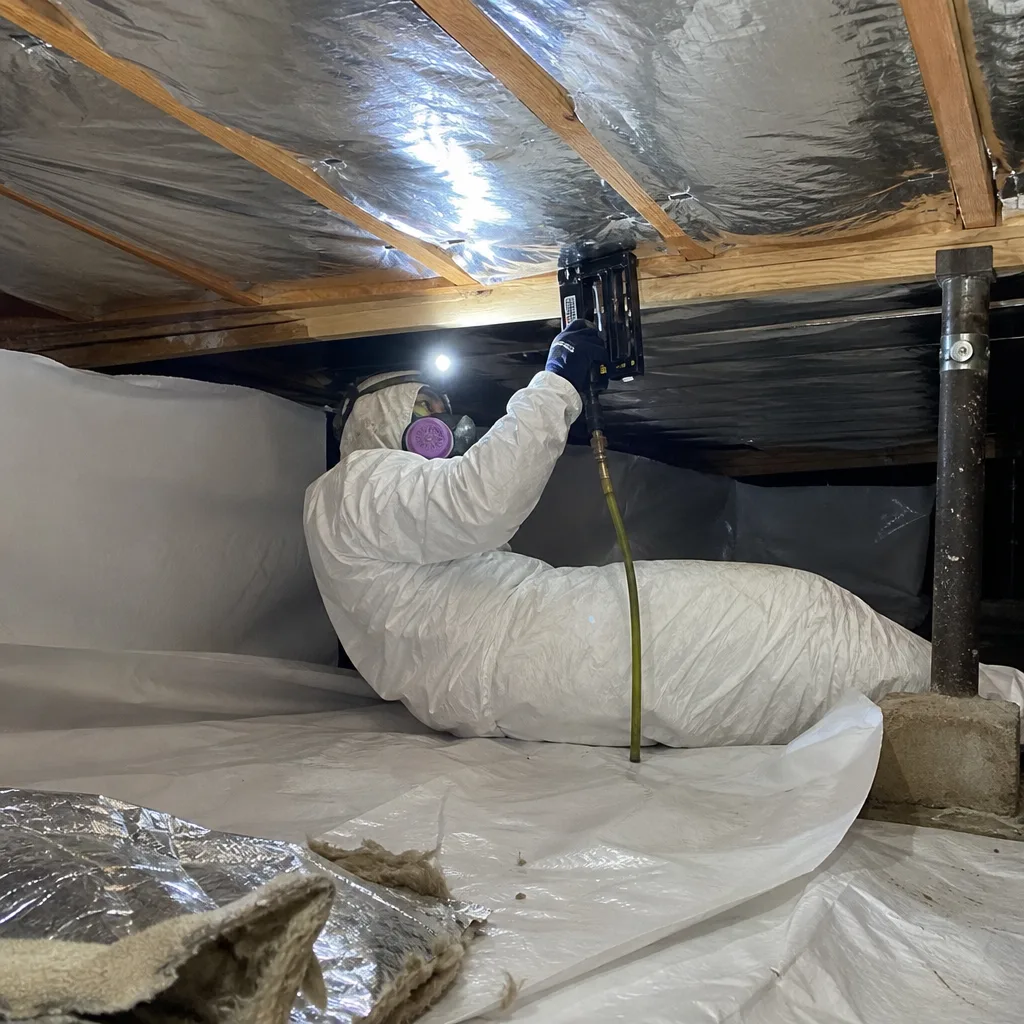
- Musty odor returning indoors, especially in morning hours. This means your vapor barrier has separated at the seams or the dehumidifier drain line is clogged. In Long Beach, the marine layer keeps relative humidity above 70% for weeks in spring; a compromised barrier lets that moisture migrate through floor joists and into conditioned space.
- Soft or bouncy floors above the crawl space. Moisture has reached the subfloor and started delaminating the OSB or plywood. We’ve measured subfloor moisture content at 22% in Belmont Shore homes where the 6-mil original barrier failed - anything above 19% risks mold and structural rot.
- White, chalky residue on the barrier surface. This is efflorescence from concrete wicking moisture upward, and it signals the barrier’s perm rating has degraded. CertainTeed’s 15-mil Class A barrier should read below 0.1 perms; when it climbs above 0.3, it’s no longer blocking vapor, just liquid water.
- Condensation on ductwork or plumbing lines in summer. Your encapsulation is supposed to keep the crawl space within 10 degrees of indoor temperature. If ducts sweat, the seal at the rim joist or the access door has failed, letting warm, humid air hit cool surfaces.
- Increased pest activity - silverfish, earwigs, or subterranean termites. These insects follow moisture gradients. A failing barrier creates microclimates they exploit, and in Long Beach’s older neighborhoods, termite inspectors flag damp crawl spaces before they flag wood damage.
Replacement Cost & What’s Included
For a typical Long Beach crawl space - 1,200 to 1,800 square feet - complete CertainTeed-compatible encapsulation runs $3,800-$7,200 installed. The low end covers a clean 12-mil barrier replacement with re-taped seams and access door sealing; the high end includes 20-mil barrier, rigid foam board insulation on block walls, a new dehumidifier tie-in, and before-and-after moisture readings with our documented photo record.
What drives the range: depth of existing debris removal, whether we need to sister rotted joists first, and if your HVAC ducting must be temporarily relocated to seal the rim joist properly. We give a written price before any work starts, always - Haven Standard Clause 1 - and that price includes labor, materials, disposal, and the 365-Day Done Right Promise. No separate “trip charge” or “diagnostic fee” gets added after.
Materials come from our normal supplier network - CertainTeed, Owens Corning, Johns Manville, and others - with no proprietary lock-in. The warranty on encapsulation workmanship is one year; barrier material defects carry the manufacturer’s own coverage, which we help you file if needed.
DIY or Call Us?
What you can safely check: verify your dehumidifier is running and draining, look for obvious seam separations or tears in the barrier, and confirm your crawl space vents are sealed per local code. Long Beach requires mechanical ventilation or conditioned crawl space status - not both - so if your vents are open and your encapsulation is intact, you’ve got a code conflict, not a product failure.
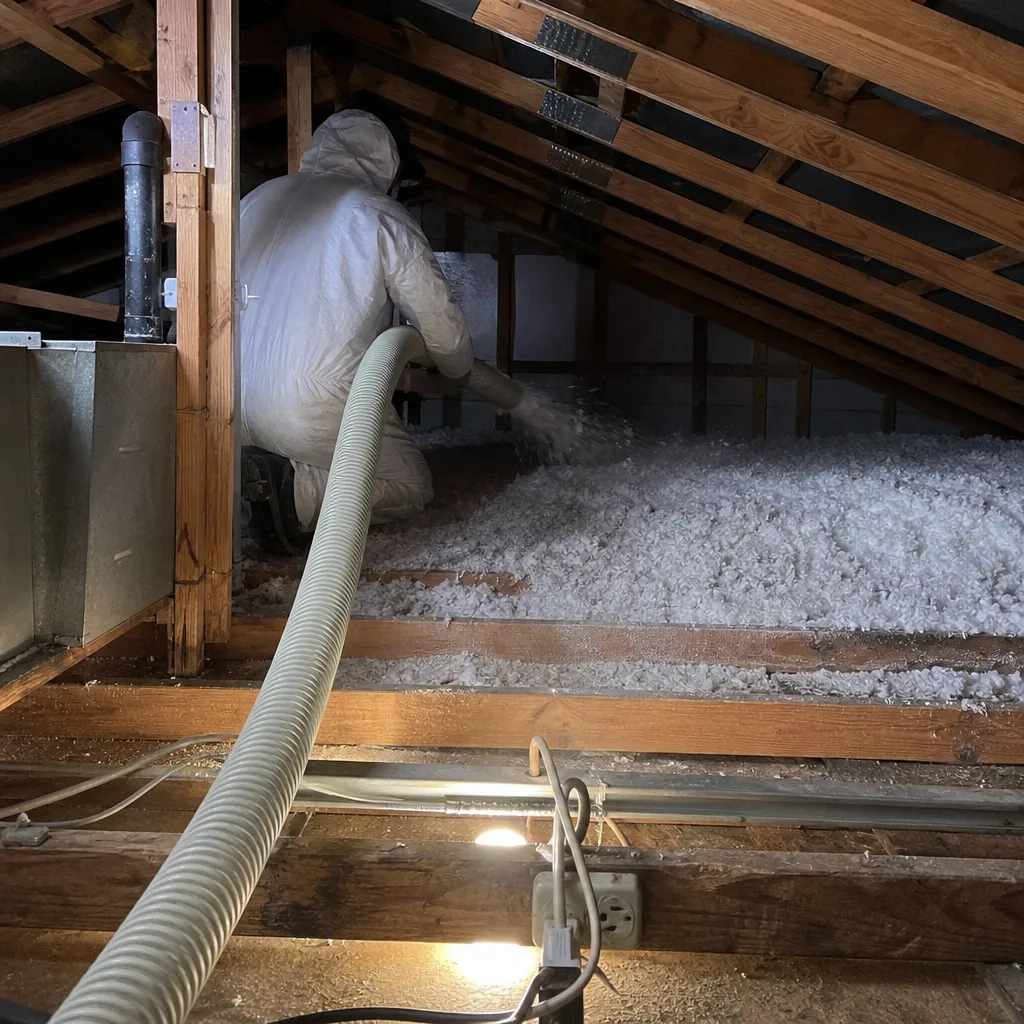
Where DIY goes wrong: crawling a 18-inch clearance with fiberglass debris and possible rodent activity, cutting barrier to fit around piers without overlapping seams correctly, and missing the rim joist seal that actually stops air infiltration. The blower-door test we run on applicable jobs - a pressurization reading showing how much air your building envelope loses - often reveals that the crawl space contributes 15-25% of total leakage even when the barrier looks fine from below. Measure first, then insulate - otherwise you’re just trapping the problem.
We’re not affiliated with CertainTeed; we’re an independent service provider who installs what performs and documents what we found. If your barrier is failing, call (424) 415-7031 for a free estimate with written pricing before anyone lifts a tool.
FAQs
A properly installed 15-mil Class A barrier in Long Beach typically lasts 12-18 years, but the salt air and seasonal groundwater table shifts in neighborhoods near the Los Angeles River can shorten that to 8-12 years. We check barrier integrity during any service call and include photos in your documented record so you can track degradation yourself. Call (424) 415-7031 for a free inspection - estimates are free.
Localized seam failures or small tears can be patched with compatible tape and an overlay of matching mil barrier, which we price by the square foot. If the barrier has become brittle, shows widespread chalking, or was originally 6-8 mil builder grade, replacement is more cost-effective than chasing individual failures. We give both options in writing before you decide.
Most Long Beach crawl spaces take one to two days: half a day for debris removal and surface prep, half a day to a full day for barrier installation, seam welding, and rim joist sealing. If we add rigid foam or dehumidifier work, plan on two to three days. We arrive on schedule, you get a named technician, and a text when they’re on the way - that’s Haven Standard.
We stock 12-mil, 15-mil, and 20-mil reinforced polyethylene barriers, vapor-proof seam tape, butyl tape for masonry adhesion, and dehumidifier drain hardware. CertainTeed-specific lot numbers we order to match existing installations when continuity matters for warranty claims. For same-day service in Long Beach, call (424) 415-7031 before noon - we can usually verify stock and schedule within the hour.
Written by Wes Okafor, Owner, Topside Attic Insulation Long Beach at Topside Attic Insulation Long Beach, serving Long Beach and nearby areas.