
CertainTeed Attic Insulation: The Long Beach Owner’s Guide
Most CertainTeed attic insulation replacements in Long Beach run $1.80 to $3.20 per square foot installed, with typical whole-attic jobs landing between $2,400 and $5,800 depending on depth, accessibility, and whether existing material needs removal. We stock CertainTeed fiberglass batts, blown-in OPTIMA, and dense-pack solutions on our Long Beach trucks, and we can usually inspect and quote same-day if you call before noon. Homeowners usually discover the problem through spiking summer cooling bills, hot second-floor rooms in September when the marine layer breaks, or a home energy audit that shows R-values have settled below code.
Which CertainTeed Models This Applies To
CertainTeed’s attic insulation line breaks into three families that we see in Long Beach homes, and matching the right one matters for both code compliance and manufacturer warranty coverage.
Fiberglass batts: Speedy 2.0, InsulPure, and Sustainable batt lines. Check the paper facing for a printed lot number and R-value stamp; unfaced batts will have a heat-set label on the fiberglass itself. The critical spec is the “Kraft facing” designation - adding unfaced over existing Kraft-facing traps moisture against the drywall in Long Beach’s humid spring months.
Blown-in loose fill: OPTIMA and InsulSafe lines, both manufactured in a .5 to 1.5 pound per cubic foot density range. OPTIMA is the higher-end product we see spec’d in Bixby Knolls renovations; InsulSafe is more common in original 1960s ranch builds around Lakewood Village. The bag label shows a “settled thickness” chart - if your attic depth reads 10 inches but the label calls for 14 inches to hit R-38, you’ve got settling failure, not necessarily product failure.
Dense-pack sidewall/ceiling: TrueComfort and OPTIMA SP, used in cathedral ceilings and knee walls. These require specific machine pressure settings; we’ve found competing quotes that missed this and blew at loose-fill pressure, which leaves gaps at the top plate.
Topside Attic Insulation Long Beach is an independent service provider with no affiliation to CertainTeed Corporation. We source through authorized distributors and can match OEM specs or recommend equivalent Johns Manville or Owens Corning products if CertainTeed lead times stretch out.
Signs Your CertainTeed Attic Insulation Is Failing
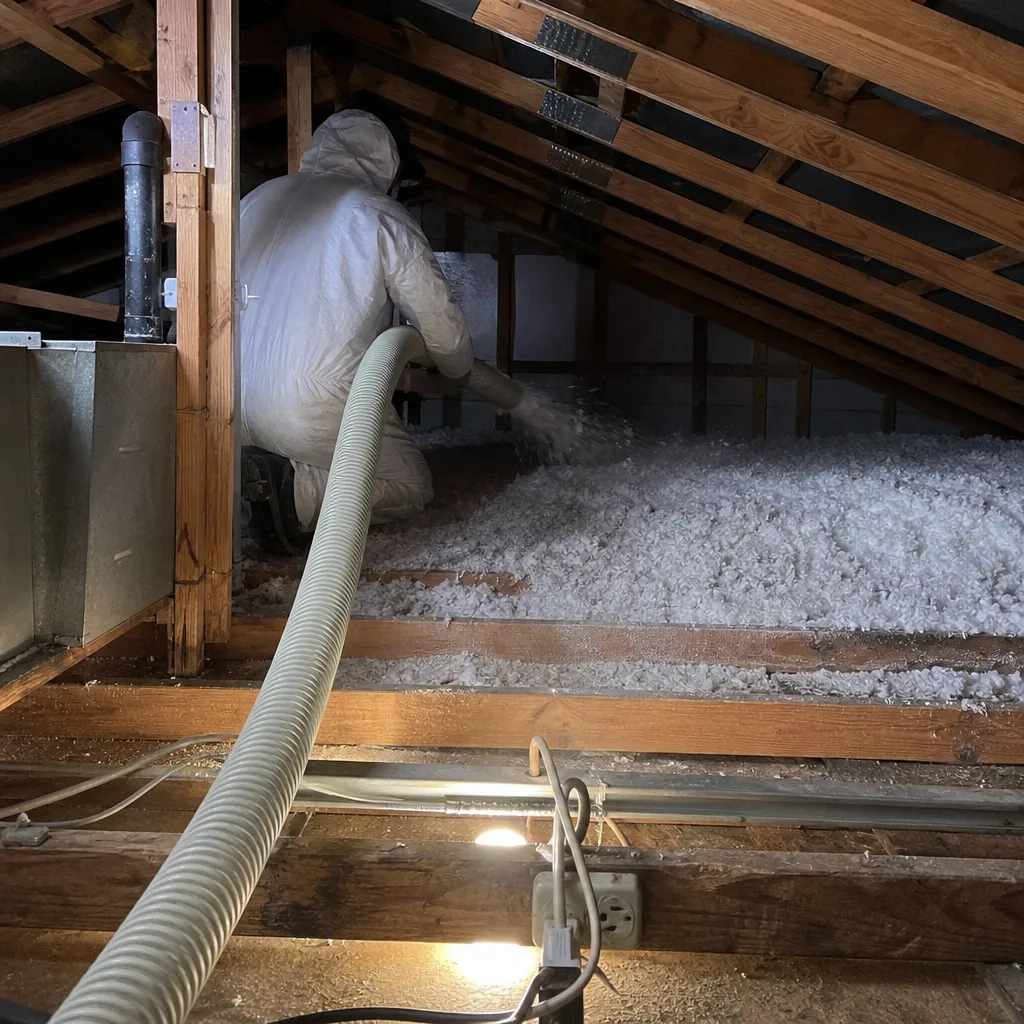
- Uneven temperature between rooms. In Long Beach’s 1920s bungalows near Rancho Los Cerritos, we regularly find CertainTeed batts that were cut short at the eaves or compressed around wiring, creating thermal bypasses. The room below reads 8 degrees hotter because the insulation never actually contacted the top plate.
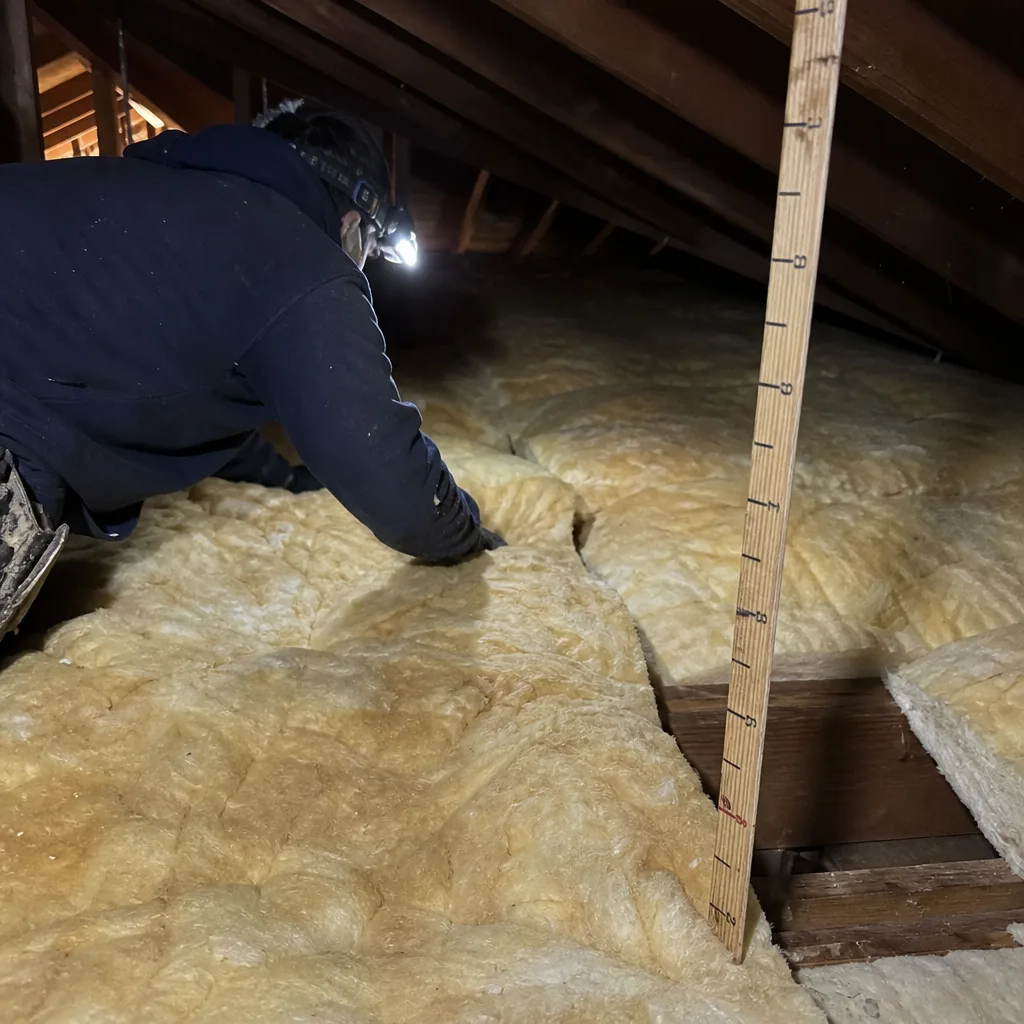
- Settled depth below the joist tops. Fiberglass loose fill settles 10 to 20 percent over its first five years; in Long Beach’s mild climate without freeze-thaw cycling, excessive settling usually means the original installer missed the specified bag count per square foot. We measure with a ruled probe before quoting.
- Visible moisture staining on the facing. Kraft paper with brown or black discoloration indicates air leakage from below carrying humidity into the attic. The insulation itself may be fine, but it’s doing the wrong job - acting as a filter for dirty air instead of a thermal barrier. This is why we seal first.
- Animal nesting or rodent trails. CertainTeed’s fiberglass is inedible, but mice tunnel through it for nesting material. In Long Beach’s Belmont Heights area, where older homes have unsealed eave gaps, we’ve pulled out batts that were 60 percent displaced by tunnels. The R-value doesn’t recover by fluffing it back.
- Energy bills climbing year-over-year with no rate change. When a homeowner’s SDG&E bill jumps 15 percent despite steady thermostat settings, we often find the original CertainTeed installation was done to pre-2019 Title 24 standards. California’s updated energy code raised attic R-value requirements; existing insulation didn’t fail, but it’s now underperforming relative to code.
Replacement Cost & What’s Included
Here’s how CertainTeed attic insulation pricing breaks down for Long Beach homes we’ve worked on:
| Scope | Price Range | Typical Home Profile |
|---|---|---|
| Batt replacement, open attic | $1.80-$2.40/sq ft | 1,200-1,800 sq ft ranch, easy access |
| Blown-in removal + replacement | $2.60-$3.80/sq ft | Existing settled cellulose or fiberglass out |
| Dense-pack cathedral ceiling | $3.50-$5.20/sq ft | Vaulted 1950s ceiling, limited access |
| Air sealing + insulation package | $2,800-$5,800 total | Whole-attic with blower-door verified sealing |
The range driver is almost always access and existing material condition, not the CertainTeed product itself. A clean attic with walk boards and a single scuttle hatch costs less than a trussed space with recessed can lights that need boxing and a 12-inch clearance gap around a B-vent chimney. Every quote we write lists the specific CertainTeed product by name, the installed R-value, and the air-sealing locations we’ll hit before the insulation goes in. Under Haven Standard Clause 1, that written price is the price - no追加 when the crew arrives.
DIY or Call Us?
There’s a safe middle ground, and then there’s where we come in.
What you can check yourself: measure your current attic depth with a ruler or yardstick, photograph any product labels you find, and note hot spots with an infrared thermometer on a sunny afternoon. These three data points tell us most of what we need for a preliminary scope.
Where DIY goes wrong: moving in an attic compresses fiberglass and destroys its R-value. Stepping between joists risks drywall cracks; stepping on joists risks electrical cable damage. More critically, most Long Beach homes built before 1980 have knob-and-tube wiring buried in insulation, and disturbing it without identifying live circuits is a genuine fire hazard. We background-check and uniform our technicians precisely because attic work carries these risks. If your inspection reveals anything beyond settled depth, call (424) 415-7031 and we’ll bring the thermal camera, the blower door, and the written scope.
FAQs
Fiberglass batts and loose fill hold their thermal performance for 80 to 100 years if kept dry and undisturbed; the failure mode is almost always moisture, compression, or animal damage, not material degradation. In Long Beach’s marine climate, the bigger risk is salt-air corrosion of fasteners and hangers that let insulation sag away from the deck. Call (424) 415-7031 for a free inspection if you’re unsure of your condition.
Spot repair works only for localized compression or displacement; if the material is moisture-stained, rodent-contaminated, or settled below 50 percent of original depth, removal and replacement is the correct approach. We don’t blow new insulation over soiled old material - the Haven Standard requires a clean substrate. Bring us any written estimate that suggests otherwise; our Free Second Opinion applies.
Most CertainTeed attic jobs in Long Beach finish in one day for batt replacement, or one to two days for blown-in removal and reinstall. Dense-pack cathedral ceilings run two to three days because of the access work and the need to verify fill density with a probe. We text you a named technician and their ETA the morning of.
We stock CertainTeed OPTIMA, Speedy 2.0 batts, and InsulSafe on our Long Beach trucks; less common densities or TrueComfort dense-pack typically arrive next business day from the Carson distribution center. If CertainTeed lead times stretch, we can cross-reference equivalent Johns Manville or Owens Corning specs with no change to the written price.
Measure first, then insulate - otherwise you’re just trapping the problem. Wes Okafor learned that rule at Olive-Harvey College, running his first blower-door test before he ever touched a bag of blown-in cellulose, and it’s been the foundation of every job since.
Ready to know what you’re actually dealing with? Call (424) 415-7031. A live person answers, 24/7. We’ll schedule a free inspection, measure your existing R-values with a ruled probe, and hand you a one-page report with pre-install depths, air-sealing locations, and a flat written price before anyone lifts a tool. That’s Haven Standard Clause 1.
Written by Wes Okafor, Owner, Topside Attic Insulation Long Beach at Topside Attic Insulation Long Beach, serving Long Beach and nearby areas.