
Rockwool Vapor Barrier Installation: The Long Beach Owner’s Guide
Rockwool vapor barrier installation in Long Beach typically runs $1,800-$3,400 for a complete attic or crawl-space application, depending on square footage and whether the existing barrier needs full removal. We stock Rockwool-compatible vapor barrier membrane and sealing tape on every truck, and most Long Beach jobs are completed in a single day. Homeowners usually discover the problem when they pull back insulation in a damp corner of the attic or catch a musty smell coming from the crawl space after a rain - the polyethylene sheet has torn at a seam, or the tape has failed where it meets the foundation wall.
Which Rockwool Models This Applies To
Rockwool does not sell a branded vapor barrier as a standalone consumer product; the barrier is the membrane installed beneath or adjacent to Rockwool batts and loose-fill in attics, walls, and crawl spaces. If your home was insulated with Rockwool Comfortbatt, Comfortboard, or AFB evo between 2015 and 2024, the vapor barrier is almost certainly a 6-mil polyethylene sheet or cross-laminated membrane that was taped at seams with acrylic or butyl tape.
To identify what you’re working with, look for the stamped code on the poly sheet edge - “6-mil ASTM E1745 Class A” indicates a high-performance barrier suitable for Long Beach’s marine climate, where ground moisture and summer humidity both push vapor upward. If the sheet is unmarked or thinner than 6 mil, it was likely a builder-grade install that degrades faster in our coastal conditions. We source replacement membrane from Johns Manville, CertainTeed, and Rockwool-compatible stock - no proprietary lock-in, and we match the existing R-value and permeance rating rather than guessing. Topside Attic Insulation Long Beach is an independent service provider, not affiliated with Rockwool.
Signs Your Rockwool Vapor Barrier Installation Is Failing
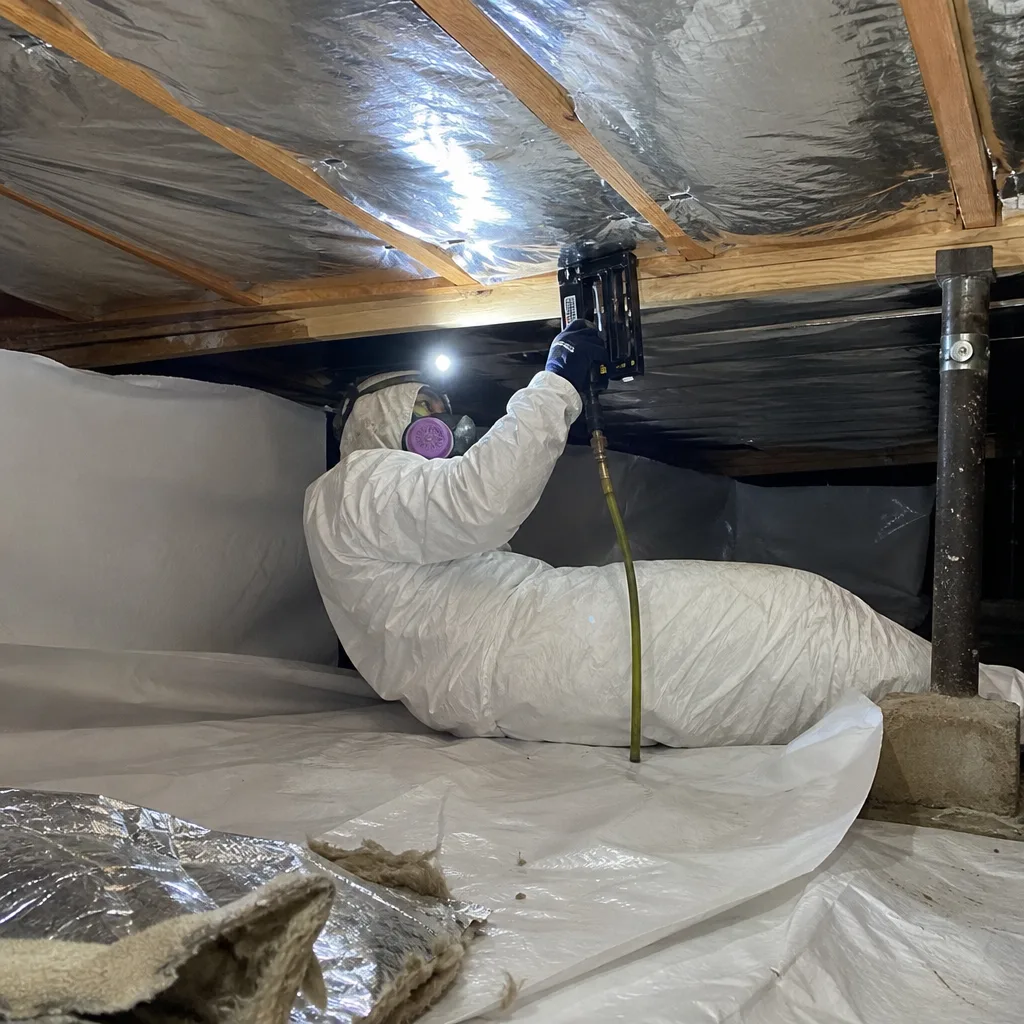
- Condensation on the underside of roof decking. Warm, moist interior air hits the cold sheathing in winter; without an intact vapor barrier, that moisture condenses and drips onto insulation. In Long Beach’s mild but damp winters, we see this most in Bixby Knolls bungalows with original venting that was never updated.
- Musty odors rising from floor registers or crawl-space hatches. The barrier has torn at a seam or pulled away from the foundation wall, letting soil moisture evaporate directly into the conditioned envelope. Once mold spores establish, the smell travels through gaps in the subfloor.
- Sagging or discolored Rockwool batts. Waterlogged insulation loses its loft and R-value; Comfortbatt that has turned gray or developed dark streaks has been wicking moisture through a compromised barrier for months.
- Peeling tape at seams or foundation wall junctions. Acrylic tape degrades in 5-8 years in our UV-exposed attics; butyl lasts longer but fails if applied over dusty surfaces. We find this on roughly half the Long Beach re-dos we quote.
- Efflorescence or white powder on concrete walls. This is mineral salt left behind as water vapor moves through the barrier, condenses, and evaporates repeatedly. It means the barrier is present but permeable - wrong product for the location.
Replacement Cost & What’s Included
Most complete vapor barrier replacements in Long Beach run $1,800-$3,400 for attics under 1,200 square feet, and $2,400-$4,200 for crawl spaces with difficult access or full perimeter taping. The range depends on three things: whether we’re removing degraded material (adds labor), whether the subfloor needs mechanical fastening for the new barrier, and how many penetrations (duct boots, electrical, plumbing) require detailed taping.
Every quote under Haven Standard Clause 1 is a flat price, written scope, written warranty before anyone lifts a tool. The installed price includes 6-mil cross-laminated polyethylene or higher-spec membrane, acrylic or butyl seam tape rated for the application, mechanical fastening at walls and piers, and a Documented Photo Record of the completed work. We also publish before-and-after blower-door numbers on applicable jobs so you can verify that sealing the envelope changed something measurable. Call (424) 415-7031 for a written price - estimates are free.
DIY or Call Us?
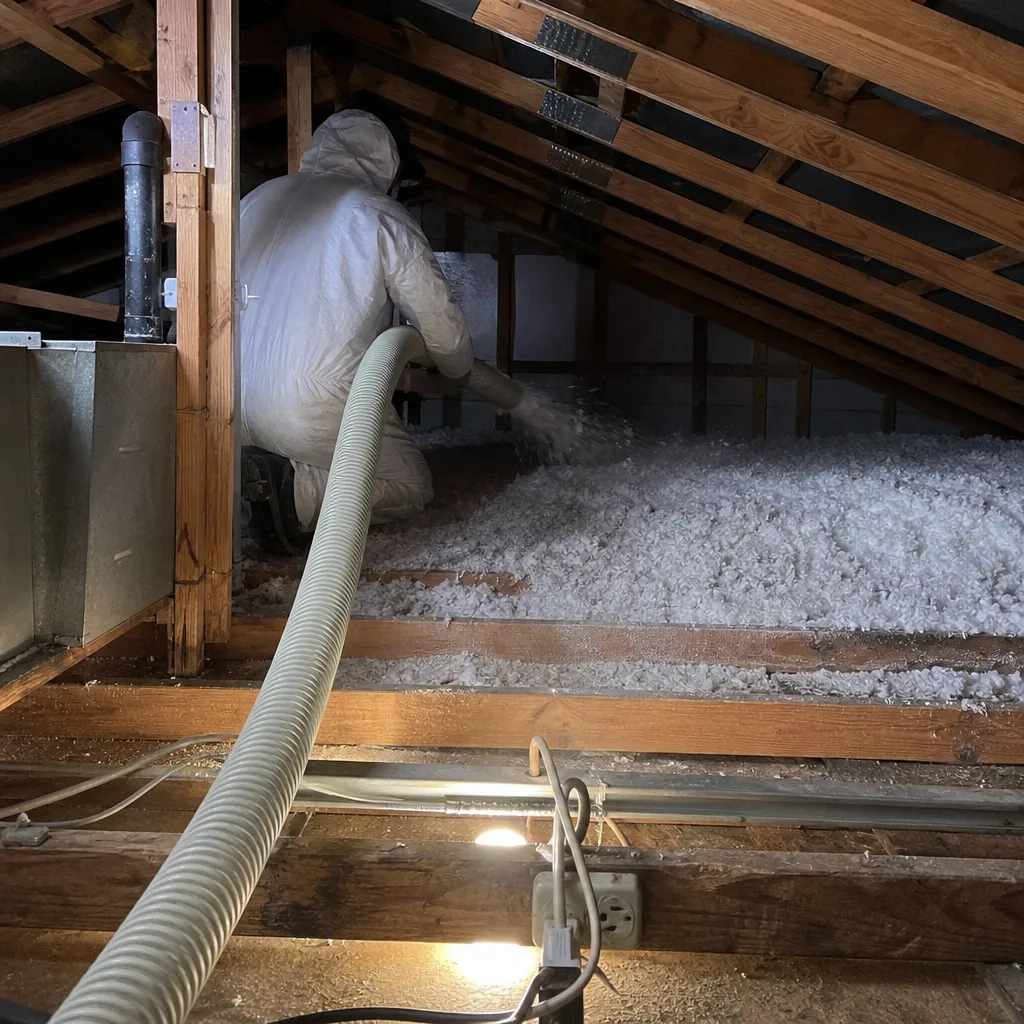
There’s a safe middle ground here. A homeowner can inspect the barrier with a flashlight and utility knife - cut a small access flap in the poly, look for standing water, mold, or tape failure, and photograph what you find. That’s useful information, and we welcome the photos when you call.
What goes wrong in DIY replacement: working in a crawl space with limited egress, handling old poly that may contain rodent droppings or asbestos in pre-1990 installs, and taping seams in confined spaces where proper overlap (6 inches minimum per ASTM E1643) is nearly impossible to achieve. The bigger risk is installing a new barrier over unsealed air leaks - you’re trapping moisture against the subfloor or roof deck with no escape path. We air-seal top plates, can lights, and penetrations before any barrier goes down. Measure first, then insulate - otherwise you’re just trapping the problem. For a job done with documented blower-door proof, call (424) 415-7031.
FAQs
A properly installed 6-mil polyethylene barrier with butyl tape seams lasts 15-20 years in Long Beach’s marine climate, though we see premature failure at 8-12 years when builders used 4-mil stock or acrylic tape on dusty surfaces. The salt air and higher ground moisture in neighborhoods near the Los Angeles River accelerate tape degradation. Call (424) 415-7031 for an exact quote - estimates are free.
Small punctures or tears under 6 inches can be patched with compatible tape and a poly patch, but seam failures, widespread embrittlement, or any mold-affected section require full replacement - patches over degraded material fail within a season. We assess this on every visit and document what we find with photos. Call (424) 415-7031 for an exact quote - estimates are free.
Most attic vapor barrier replacements in Long Beach are completed in 4-6 hours; crawl spaces with limited access or full perimeter work run 6-10 hours. We arrive with Rockwool-compatible membrane and tape on the truck, so there’s no supplier delay. Call (424) 415-7031 for an exact quote - estimates are free.
Yes - we carry 6-mil and 10-mil cross-laminated polyethylene, butyl and acrylic seam tape, and mechanical fastening systems on every truck, sourced from Johns Manville, CertainTeed, and Rockwool-compatible suppliers. No waiting on a parts run. Call (424) 415-7031 for an exact quote - estimates are free.
Written by Wes Okafor, Owner, Topside Attic Insulation Long Beach at Topside Attic Insulation Long Beach, serving Long Beach and nearby areas.