
Rockwool Crawl Space Encapsulation: The Long Beach Owner’s Guide
Rockwool crawl space encapsulation in Long Beach typically runs $3,800-$6,200 for a complete install on a standard 1,200-square-foot crawl, and we stock Rockwool Comfortboard 80 and Comfortboard 110 rigid mineral wool boards on every truck for same-day replacement of failed vapor-barrier assemblies. Most homeowners in Long Beach figure out something’s wrong when their hardwood floors cup in summer or they smell mustiness that the HVAC seems to recycle rather than remove. We see this pattern constantly in the older bungalows around Bixby Knolls and the post-war slabs near Rancho Los Cerritos, where original crawl space work either omitted mineral wool entirely or used the wrong density board for our marine climate.
Which Rockwool Models This Applies To
Rockwool does not manufacture a dedicated “crawl space encapsulation kit” under its own brand. What we install are Rockwool Comfortboard rigid mineral wool boards, typically the 80 or 110 density, integrated with a polyethylene vapor barrier and mechanical fastening to the foundation walls. The Comfortboard 80 at 8 pounds per cubic foot works for most Long Beach crawl spaces with moderate moisture; the 110 density, at 11 pounds per cubic foot, is what we spec when we’re up against the clay-heavy soils in parts of North Long Beach that hold groundwater longer after winter rains.
Identification is straightforward if the previous installer left it exposed: Rockwool boards are gold-tan, fibrous, and noticeably denser than fiberglass. Look for a printed lot number and density mark on the board edge. If you’re seeing white or yellow batts, that’s not Rockwool, and mixing the two creates a condensation plane we end up tearing out. We also stock Reflectix bubble-foil radiant barriers for homeowners who want a hybrid assembly, though we rarely recommend foil-only solutions in Long Beach’s humidity without a mineral wool backing.
Topside Attic Insulation Long Beach is an independent service provider, not affiliated with Rockwool. We source Comfortboard through standard distribution channels, same as any contractor, and we don’t push proprietary systems.
Signs Your Rockwool Crawl Space Encapsulation Is Failing
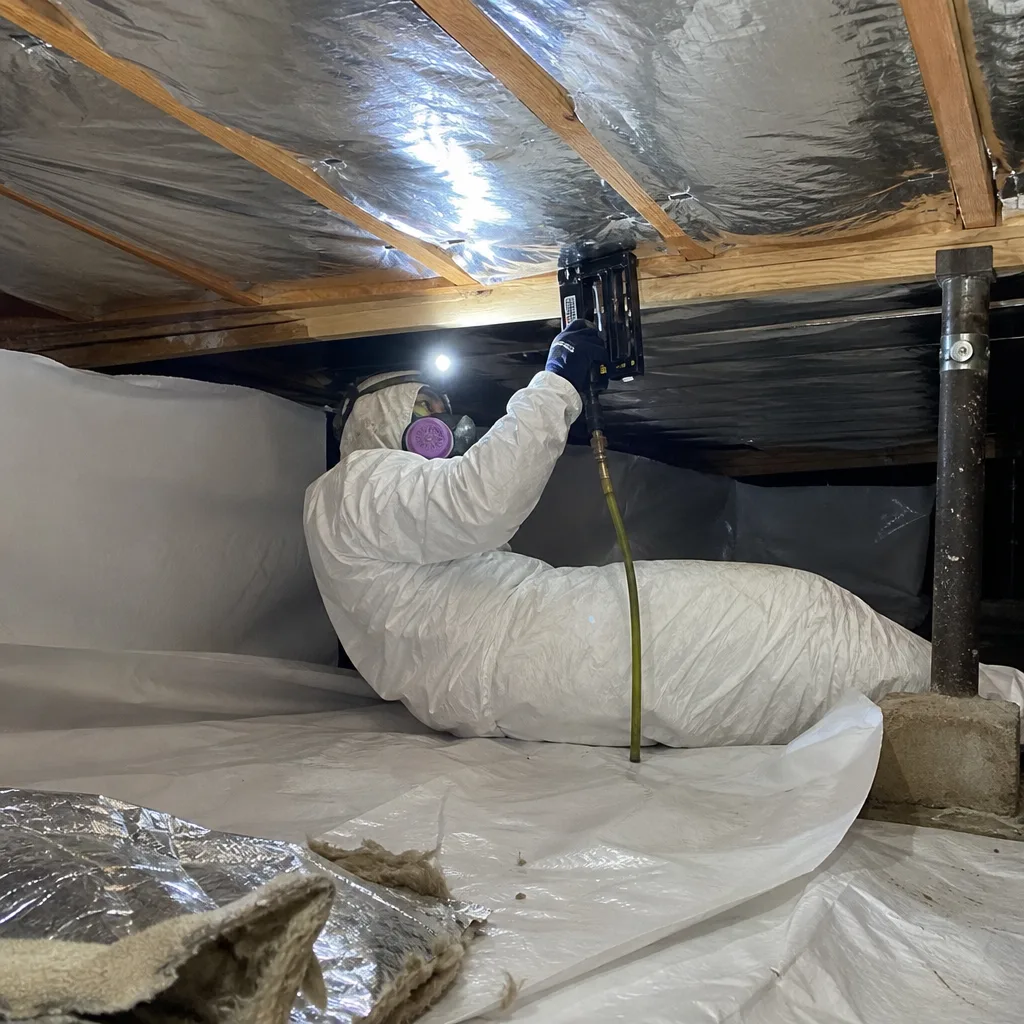
- Cupped or crowned hardwood floors above the crawl. Moisture migrating through a compromised vapor barrier swells the underside of floorboards faster than the top. In Long Beach’s spring marine layer, this shows up first in homes without perimeter drainage, especially the 1920s-era properties near California Heights where crawl heights run 18 inches or less.
- Persistent musty odor that the HVAC distributes. When the polyethylene barrier separates at seams or the Rockwool board absorbs moisture due to a failed seam tape, mold colonizes the organic dust that settles on any damp surface. Your nose notices it before your eyes do.
- Insulation boards sagging or fallen from foundation walls. Rockwool Comfortboard is heavy. Mechanical fasteners spaced too far apart, or the wrong fastener for poured concrete versus block walls, let gravity win. We find this most often in DIY or handyman installs where someone used adhesive alone.
- Condensation on ductwork or plumbing lines in summer. A properly encapsulated crawl space should read within 10 degrees of indoor temperature. When the mineral wool barrier is incomplete, warm humid outside air hits cool surfaces and sweats. We’ve documented this in Long Beach crawl spaces where the original installer skipped the rim-joist detail entirely.
- Increased energy bills with no other explanation. Failed encapsulation lets conditioned air leak out and unconditioned air leak in. The blower-door test we run before any remediation quantifies this exactly, in CFM50, so you’re not guessing.
Replacement Cost & What’s Included
Most complete Rockwool crawl space encapsulations in Long Beach fall between $3,800 and $6,200 for a 1,000-1,500 square foot crawl. The low end assumes accessible height, sound existing floor joists, and replacement of barrier and board only. The high end accounts for tight access (under 24 inches), remediation of prior mold-affected wood, or extending encapsulation to include a dehumidifier rough-in.
Our price is parts plus labor, flat, written before anyone enters the crawl. It includes: removal and responsible disposal of existing failed materials; installation of Rockwool Comfortboard at specified density; 6-mil or 12-mil polyethylene vapor barrier with overlapped and taped seams; mechanical fastening to foundation walls; and perimeter sealing to the sill plate. Every job closes with a Documented Photo Record showing before condition, installed assembly, and any air-sealing work at penetrations. Under Haven Standard Clause 1, you get that written price, written scope, and written 365-Day Done Right Promise before we start.
DIY or Call Us?
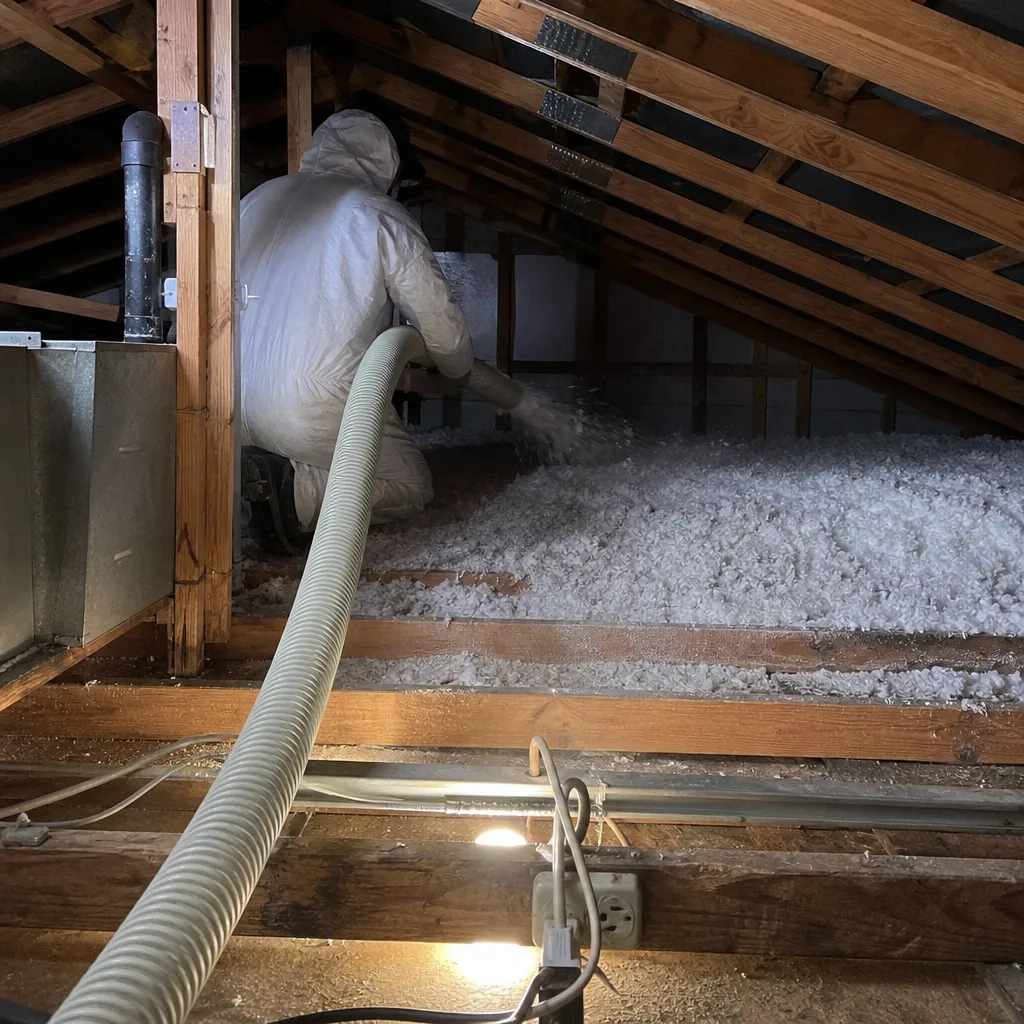
There’s no high-tension danger in crawl space encapsulation like there is with garage door springs, but there are genuine hazards: confined-space entry, possible asbestos in older vermiculite or duct wrap, and electrical lines in damp conditions. An owner can safely check the crawl access hatch for obvious standing water or fallen material, and can photograph any visible labeling for us to review.
Where DIY goes wrong is the sequencing. Rockwool boards go in after air sealing, not before. Gaps at the rim joist, plumbing penetrations, and the sill-to-foundation joint must be sealed with appropriate caulk or foam, or you’re installing a moisture trap on a leaky envelope. Measure first, then insulate - otherwise you’re just trapping the problem. Wes Okafor learned that sequencing at Olive-Harvey College’s building-science program, and we’ve verified it on over 9,000 homes since 2016. If your crawl is tight, your knees are questionable, or you want the blower-door numbers to prove the result, call (424) 415-7031. Estimates are free, and we bring a written price to every visit.
FAQs
Properly installed Rockwool Comfortboard with a sealed vapor barrier should perform for 20-25 years in Long Beach’s climate. The mineral wool itself does not degrade, but the polyethylene barrier and seam tape are the wear items, typically needing inspection at year 12-15. Our marine layer and occasional winter groundwater spikes in the Los Cerritos area accelerate tape aging compared to drier inland climates. Call (424) 415-7031 and we’ll check what you have, no charge.
Spot repairs work when the failure is isolated: a single sagging board, one torn barrier section, or a failed seam at a known location. We do not recommend patching when moisture has compromised multiple boards or mold is visible on the wood structure, because the problem is systemic and patches hide the extent. Our free estimate includes a crawl inspection with photos so you can see what we see before deciding.
Most residential crawl spaces in Long Beach take one to two working days. Day one is removal, air sealing, and board installation; day two is barrier placement, taping, and final inspection with photo documentation. Tight-access crawls or homes requiring mold remediation add a day. We schedule so you’re not without HVAC function overnight.
We stock Rockwool Comfortboard 80 and 110 in common thicknesses, plus polyethylene vapor barrier, seam tape, and mechanical fasteners for concrete and block walls. For less common densities or rigid foam hybrid assemblies, we can source within 24 hours through local distribution. Same-day starts are typical for standard Comfortboard replacements.
Written by Wes Okafor, Owner, Topside Attic Insulation Long Beach at Topside Attic Insulation Long Beach, serving Long Beach and nearby areas.