
Rockwool Insulation Removal & Replacement in Long Beach: What to Know First
We provide independent Rockwool insulation removal and replacement in Long Beach, typically completing attic jobs in one to two days with same-day assessment availability. Most Rockwool removal and replacement jobs in a home this size run between $2,800 and $6,400 depending on attic square footage, contamination level, and whether air sealing is needed first. This page is for homeowners who have identified Rockwool batts or loose-fill in their attic, walls, or crawl space and need it removed due to age, water damage, rodent activity, or pre-renovation prep. Call (424) 415-7031 for a free written estimate - we bring the price to you, not the other way around.
How Rockwool Products Fail - and How We Fix Them
- Rockwool Comfortbatt settled below labeled R-value in vaulted ceilings. The batts compress over 15-20 years in Long Beach’s marine climate, where nightly humidity cycles above 70% break down the phenolic binder. We remove the compressed batts, measure actual depth against labeled thickness, and reinstall to full uncompressed depth or switch to blown-in Rockwool AFB (acoustical fire batt) where framing depth is limited.
- Rockwool Safe ‘n’ Sound waterlogged after roof leaks near the Port or Belmont Shore. Mineral wool holds water without visible mold for months, but the added weight stresses ceiling drywall and destroys acoustic performance. We extract the saturated sections, document moisture readings with a pinned meter, and replace only the affected cavities rather than stripping entire walls.
- Rockwool Flexi Batts torn during prior electrical or plumbing work. The flexible edge strip tears when pulled repeatedly, creating gaps at stud bays that defeat the thermal barrier. We remove damaged batts entirely - partial replacement leaves seams that telegraph through - and reinstall with continuous runs cut to actual stud spacing measured on site, not nominal 16-inch.
- Rockwool granulated loose-fill contaminated by rodent activity in Bixby Knolls attics. The loose-fill binds with urine and fecal matter over time, and standard vacuuming leaves fine particulate. We use HEPA-filtered extraction with negative air machines, then treat substrates with enzyme cleaner before installing replacement insulation - never blowing new material over contaminated decking.
- Rockwool AFB (Acoustical Fire Batt) degraded by long-term kitchen grease vapor migration. In homes with vented range hoods dumping into attic spaces, the binder attracts and holds lipids, eventually hardening and cracking. We remove the embrittled batts, seal the penetration properly, and reinstall fresh AFB only after verifying the exhaust is ducted to exterior - a code requirement we document with photos.
Our Rockwool Insulation Removal & Replacement Process
- 1
Call and scheduling. A live person answers, or you text. We book a 90-minute arrival window and send a text when the technician is en route - Haven Standard: Arrive on schedule, named technician, no callback windows.
- 2
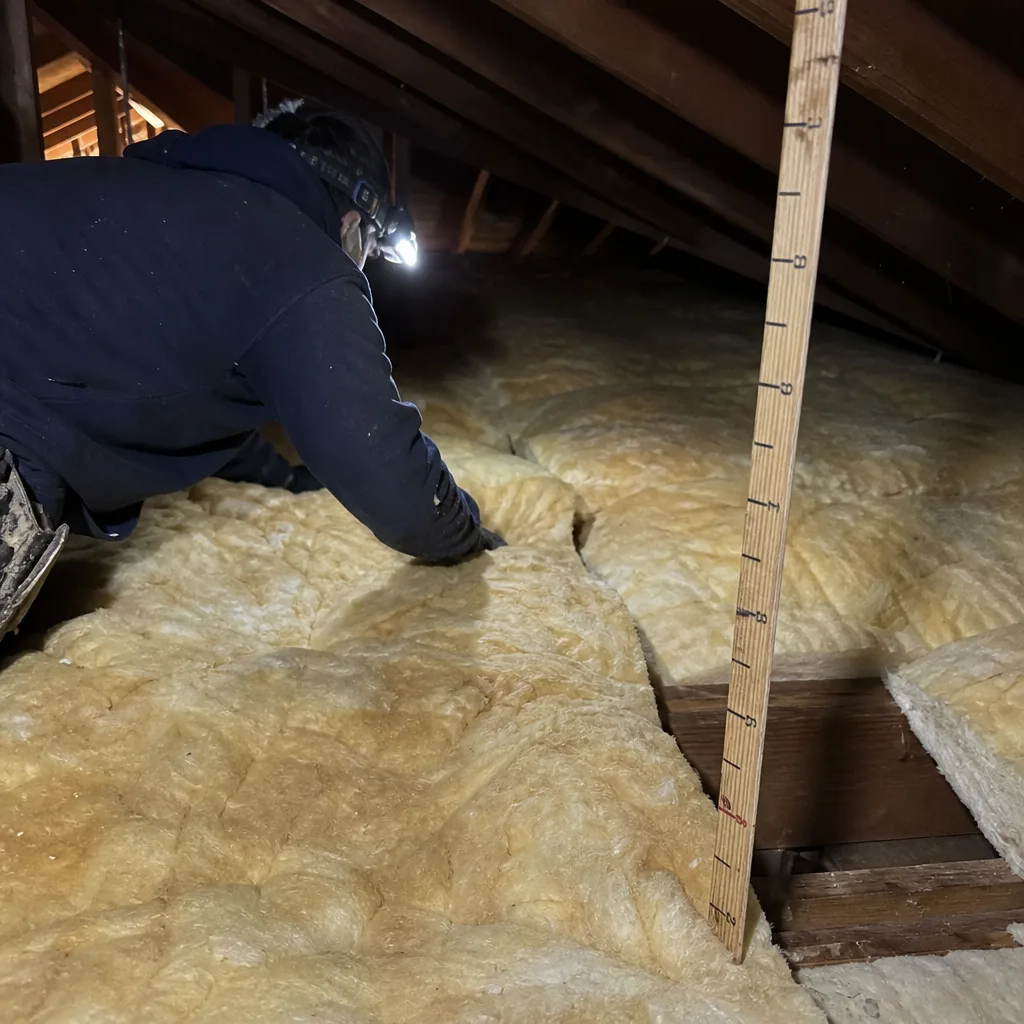
On-site assessment and measurement. We identify the Rockwool product line, measure existing R-value by depth and density, run a blower-door test if air sealing is in scope, and photograph everything. You get a one-page report with pre-install depth readings and air-sealing locations identified.
- 3
Written price before any work starts. Flat price, written scope, written warranty - Haven Standard Clause 1. No work begins without your signature on the scope.
- 4
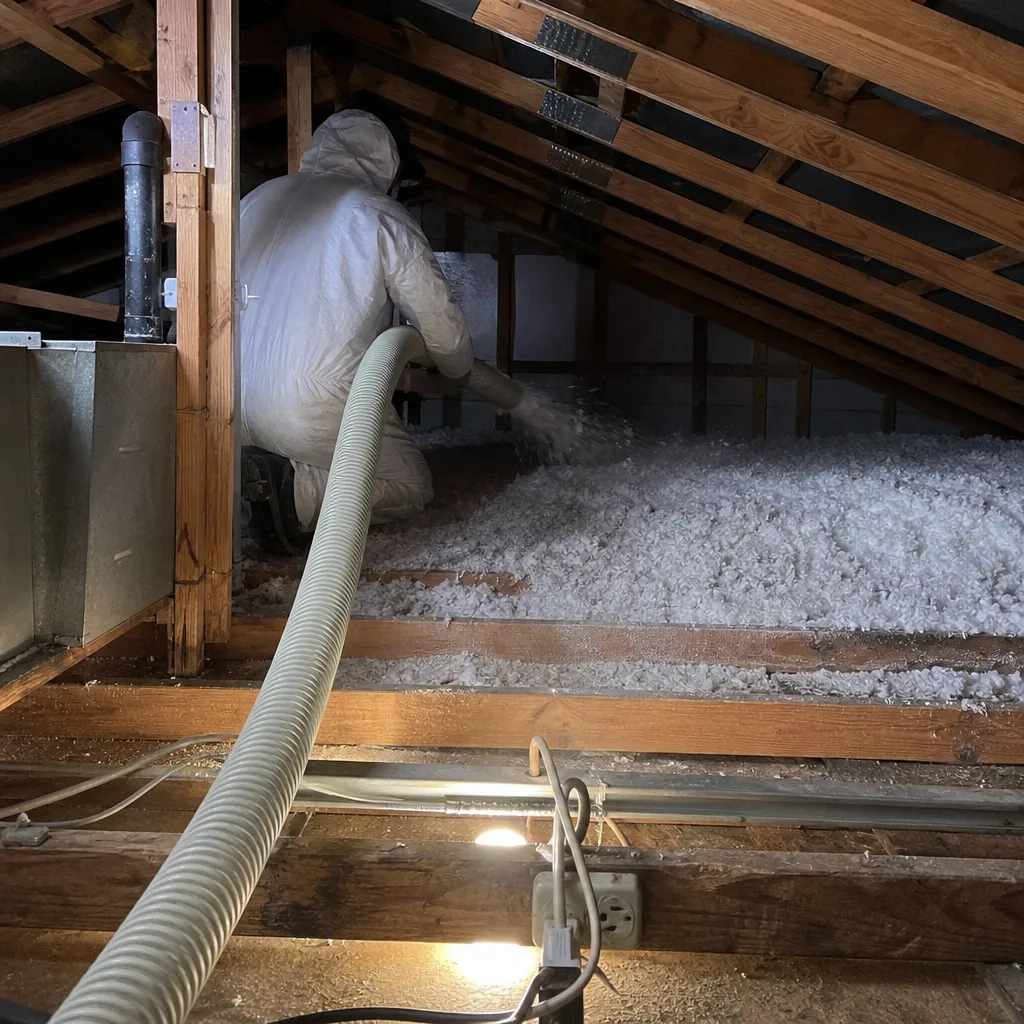
Removal and substrate prep. HEPA extraction for loose-fill; bagged removal for batts. We seal top plates, can lights, and penetrations before any new insulation goes in - sealed first, then insulated, in that order.
- 5
Replacement and verification. New Rockwool or alternative material installed to specified depth. On applicable jobs, we run the blower-door again and publish the before-and-after CFM50 reading in your documented photo record.
- 6
Cleanup and documentation. You receive the photo record, the written warranty, and the 365-Day Done Right Promise card before the crew leaves. Measure first, then insulate - otherwise you’re just trapping the problem.
What Rockwool Insulation Removal & Replacement Costs in Long Beach
| Scenario | Typical Range | What Moves the Price |
|---|---|---|
| Partial attic removal, no contamination (1,000-1,500 sq ft) | $2,800-$4,200 | Access difficulty, joist spacing, whether batts or loose-fill |
| Full attic removal with rodent contamination | $4,500-$6,400 | Extent of soiling, need for enzyme treatment, decking replacement |
| Wall cavity removal (per 100 sq ft of wall) | $1,800-$3,200 | Interior or exterior access, plaster vs. drywall, electrical present |
| Air sealing add-on (recommended) | $800-$1,600 | Number of can lights, top plate linear footage, chimney chase detail |
These are real numbers for Long Beach homes we’ve worked - from the 1920s bungalows near Rancho Los Cerritos to the mid-century tracts in Lakewood Village. Every estimate is free, written, and binding. Bring us a competing quote; we’ll read it with you - Free Second Opinion on Any Written Estimate.
Why Long Beach Homeowners Call Topside Attic Insulation Long Beach for Rockwool Work
We’ve removed Rockwool from over 9,000 homes since 2016, and we know the difference between Comfortbatt and Safe ‘n’ Sound without reading the facing - the density, the cut, how it pulls from a bay. Wes Okafor learned the trade at Olive-Harvey College in Chicago, where the building-science program put a blower-door in his hands before he ever touched insulation. That shows in how we work: every Rockwool job gets measured before it’s quoted, and every customer walks away with depth readings, air-sealing locations, and a photo record. We’re also familiar with Reflectix and other brands, so if Rockwool isn’t the right replacement for your specific assembly, we’ll say so and specify why. The 365-Day Done Right Promise applies to all completed work. Calls answered by a live person, 24/7.
FAQs
Rockwool’s limited warranty covers manufacturing defects in original installation, not subsequent removal or replacement by a third party. As an independent Rockwool service provider, we document the original product line and install date when traceable, but we do not represent Rockwool or process warranty claims on their behalf. If your batts failed due to a manufacturing issue within the warranty period, we can help you photograph and document the condition for your own claim. Call (424) 415-7031 and we’ll walk you through what to record.
We source Rockwool Comfortbatt, Safe ‘n’ Sound, AFB, and Flexi Batts through standard distribution channels - no proprietary lock-in, no forced substitutions. If your original product is discontinued or inappropriate for the assembly (for example, Safe ‘n’ Sound in a thermal application where Comfortbatt belongs), we specify the alternative in writing with the R-value and density difference explained. Materials sourced from Owens Corning, Johns Manville, Knauf, Rockwool, CertainTeed, Icynene, Demilec, and GreenFiber.
Spot repair is rarely cost-effective with Rockwool batts. The friction-fit design means disturbed batts don’t reseat properly, and color-matching aged product is impossible - new Rockwool is noticeably brighter than material that’s spent five years in a Long Beach attic. We typically recommend full-bay replacement rather than patching, which gives a continuous thermal barrier and avoids the shadow lines that show at seams. For loose-fill, partial removal is feasible if the damage is isolated to one attic zone. We’ll show you both scopes in writing and let you decide.
Most attic jobs in Long Beach are completed in one to two days: removal and air sealing on day one, replacement and verification on day two. Same-day assessment is usually available within 24 hours of your call. We don’t quote start dates until we’ve seen the space - every attic in Belmont Heights has different access, and the 1920s bungalows near Bixby Knolls often have cathedral ceilings that change the equipment list. Call (424) 415-7031 for a written estimate with a real start date.
No, but we recommend it for full-attic loose-fill removal. We run negative air machines and HEPA filtration, but mineral wool fibers are respirable and the vacuum noise is substantial. For bat removal in occupied rooms, we seal the work zone with poly sheeting and run air scrubbers. We’ll tell you during the estimate which approach your specific job requires - it’s in the written scope before you sign.
Written by Wes Okafor, Owner, Topside Attic Insulation Long Beach at Topside Attic Insulation Long Beach, serving Long Beach and nearby areas.