
Rockwool Blown-In Insulation in Long Beach: What to Know First
We provide independent Rockwool blown-in insulation service in Long Beach, typically completing attic top-ups and dense-pack wall jobs in one day with a written price delivered before any work starts. Most Rockwool blown-in jobs in a Long Beach home this size run between $1,800 and $4,200 depending on existing depth, attic accessibility, and whether air sealing is needed first. Call (424) 415-7031 for a free estimate with a written scope and documented photo record included.
This page is for homeowners who already have Rockwool insulation in their Long Beach home and need blown-in service, whether that’s topping off settled Comfortbatt in a 1940s Bixby Knolls bungalow or dense-packing Rockwool Premium Plus into open wall cavities during a remodel near Belmont Shore. We do not sell Rockwool; we service what you own, and we measure before we quote.
How Rockwool Products Fail - and How We Fix Them
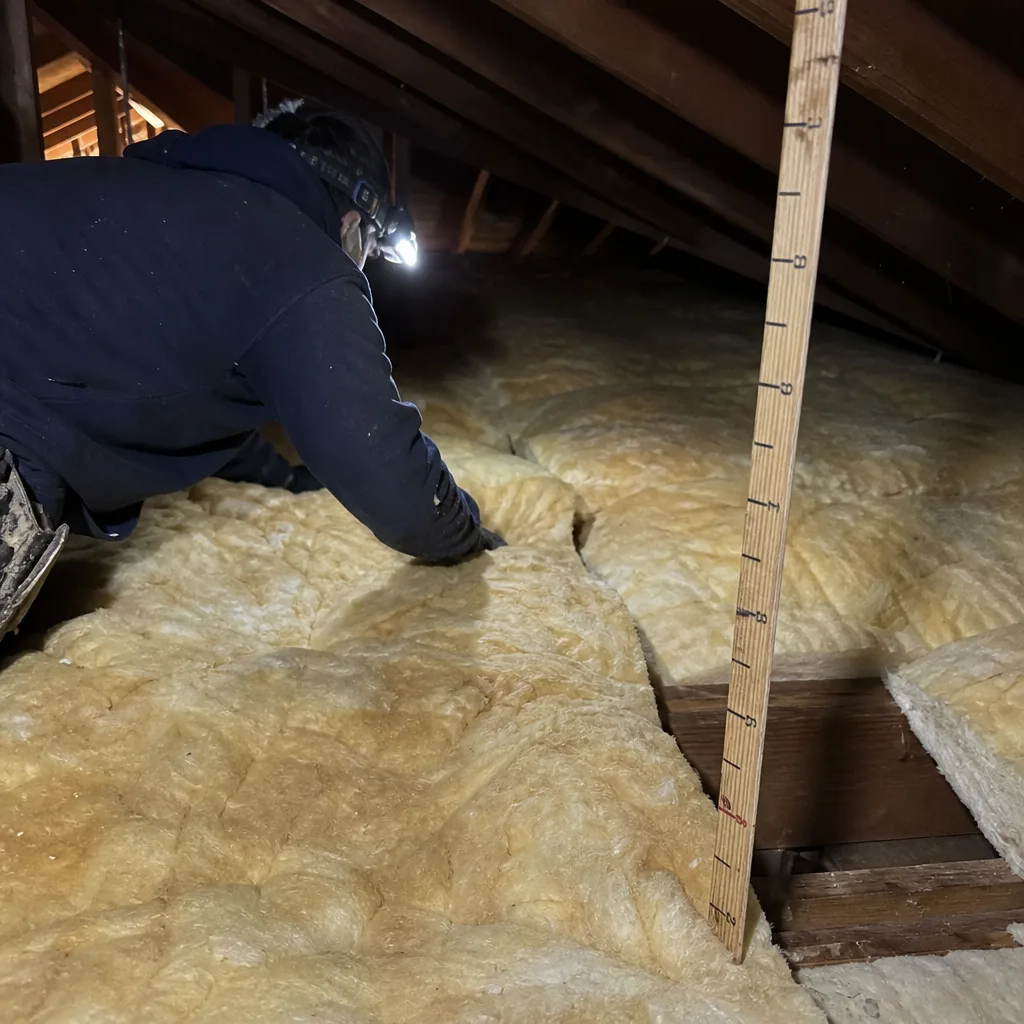
- Comfortbatt settlement in Long Beach’s marine climate. The Comfortbatt line, common in pre-2010 Long Beach attic retrofits, loses loft when coastal moisture cycles above 70% relative humidity for weeks each spring. The fibers don’t degrade, but the batts compress from 5.5 inches to 3.5 inches, dropping effective R-value from R-23 to roughly R-15. We measure existing depth with a ruled probe at twelve locations, then blow Rockwool Premium Plus loose-fill over the settled batts only after sealing top plates and can-light penetrations.
- Rockwool Premium Plus bridging over irregular joist bays. In the tight 1920s bungalows near Rancho Los Cerritos, Premium Plus blown-in can bridge across narrow 16-inch centers rather than filling to full depth, leaving thermal voids at the eaves. We spot this with thermal imaging during pre-install, then use a reduction hose and directed-fill technique to pack each bay to uniform density without overcompressing.
- FacadeRock exterior insulation trapped moisture in retrofitted walls. FacadeRock, used in some 2015-2019 Long Beach exterior retrofits, was installed without adequate rainscreen detailing on west-facing walls. The Rockwool itself doesn’t mold, but the sheathing behind it does. When we encounter this during dense-pack jobs, we document the sheathing condition with photos, air-seal the interior side with gasketed electrical boxes, and recommend remediation before adding interior blown-in.
- AFB (Acoustical Fire Batt) slumping in cathedral ceilings. AFB, specified for fireblocking between floors in multi-family conversions near downtown Long Beach, can slump when installed against sloped drywall without proper friction-fit or retaining mesh. We find this in 2018-2022 ADU conversions where the batt was never stapled. Our fix: remove the failed AFB, install blown-in Rockwool Premium Plus with proper vent baffles to maintain the 1-inch air gap, and document the finished depth.
- Rockwool loose-fill contamination from rodent activity. In Long Beach’s older neighborhoods, roof rat runs through attic loose-fill create compacted trails that read as cold spots on infrared. The Rockwool isn’t damaged chemically, but the thermal performance is fragmented. We remove contaminated sections, seal entry points with steel mesh and foam, then blow fresh Premium Plus to match the original density spec.
Our Rockwool Blown-In Insulation Process
- 1
Call and scheduling. A live person answers 24/7. We book a site visit, text you when the technician is en route, and send a named technician, not a rotating subcontractor.
- 2
On-site assessment and measurement. We probe existing insulation depth at minimum twelve points, run a thermal camera scan, and perform a blower-door test if air sealing is part of the scope. Measure first, then insulate - otherwise you’re just trapping the problem.
- 3
Written price before any work starts. You get a one-page scope with line-item pricing, the 365-Day Done Right Promise in writing, and a documented photo record commitment. No work begins until you approve in writing.
- 4
Air sealing first, then insulation. We seal top plates, wire and pipe penetrations, can lights, and chimney chases with fire-rated foam and gasketed covers. The blower-door test is repeated after sealing and before insulation, so you see the CFM50 reduction in numbers.
- 5
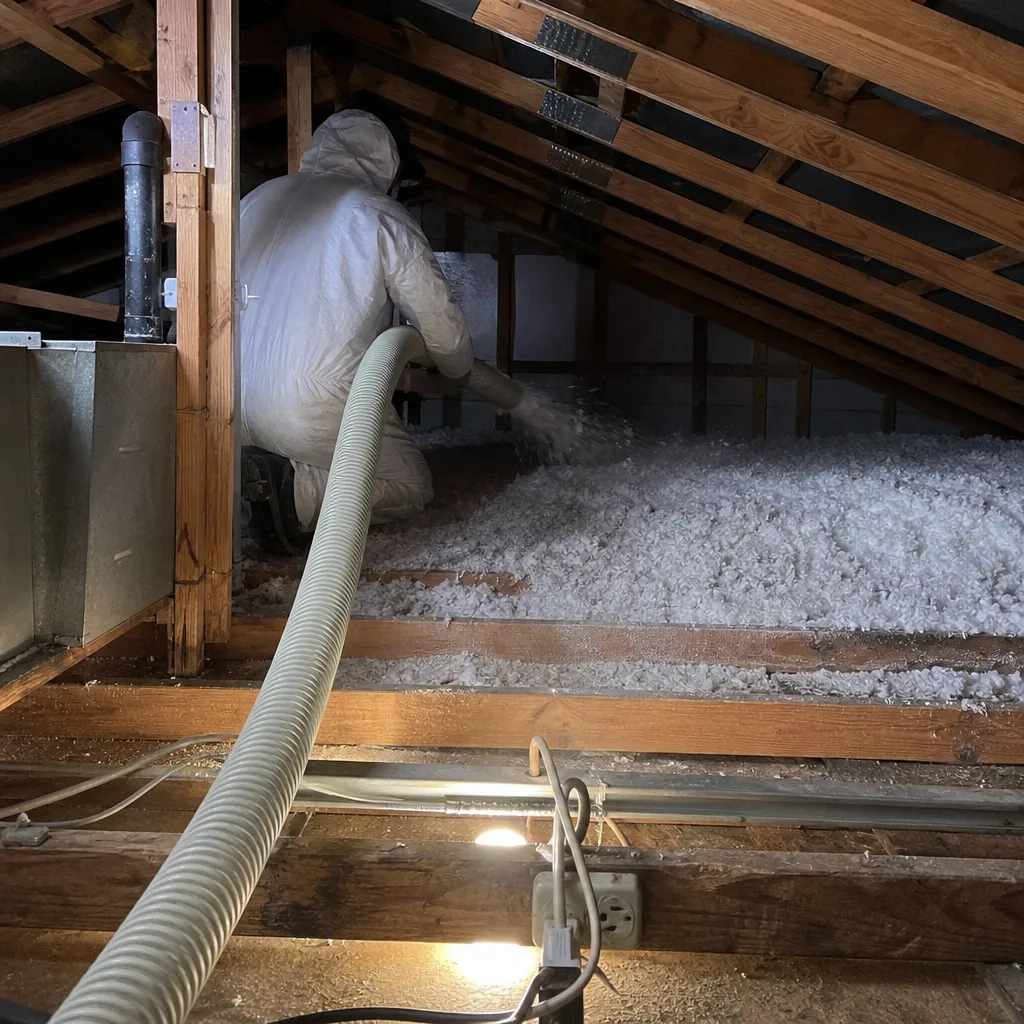
Rockwool blown-in installation. We use OEM-specified density for Premium Plus (0.6 to 2.2 pounds per cubic foot depending on application) or match existing Comfortbatt systems with compatible loose-fill. We photograph depth markers at completion.
- 6
Final documentation and walkthrough. You receive the post-work blower-door number, thermal images, depth readings, and the written warranty. We leave the attic cleaner than we found it.
What Rockwool Blown-In Insulation Costs in Long Beach
Most Rockwool blown-in insulation jobs in a Long Beach home this size run between $1,800 and $4,200. Here’s how typical scenarios break down:
- Attic top-up over existing Rockwool (1,200 sq ft, R-30 to R-49): $1,800-$2,600
- Attic removal of contaminated Rockwool, air seal, and re-blow: $3,200-$4,200
- Dense-pack Rockwool in open wall cavities (per 100 sq ft): $380-$520
- Cathedral ceiling fill with vent baffle installation: $2,400-$3,600
What moves the price: attic accessibility (scuttle vs. pull-down stairs vs. cut new access), existing insulation condition requiring removal, extent of air sealing needed, and whether we encounter FacadeRock or other exterior insulation that needs remediation first. We also service Reflectix radiant barrier systems when they’re part of the same envelope upgrade.
Call (424) 415-7031 for a written estimate - estimates are free, and we provide a Free Second Opinion on any competing written quote you bring us.
Why Long Beach Homeowners Call Topside Attic Insulation Long Beach for Rockwool Work
We’ve sealed and insulated over 9,000 homes since 2016, every one with a written price before work started and a documented record when the crew left. Wes Okafor grew up on Chicago’s South Side and learned the trade at Olive-Harvey College, where the HVAC and building-science curriculum put a blower-door test in his hands before he ever touched a bag of blown-in cellulose. That training shows in how we approach Rockwool jobs in Long Beach: we measure existing R-values before quoting, hand every customer a one-page report with pre-install depth readings, post-install depth readings, and air-sealing locations addressed, and we publish before-and-after blower-door numbers on every applicable job so you can verify the performance change you paid for.
Our materials come from Owens Corning, Johns Manville, Knauf, Rockwool, CertainTeed, Icynene, Demilec, and GreenFiber - no proprietary lock-in, so we specify what fits your home, not what moves our inventory. The 365-Day Done Right Promise applies to all completed work. Calls are answered by a live person, 24/7.
FAQs
Rockwool warranties the product itself against manufacturing defects, typically for the lifetime of the building, but only when installed to their published density and coverage specifications. As an independent Rockwool service provider, we install to those specs and document our work so any future warranty claim is supported. Our 365-Day Done Right Promise covers the installation separately. Call (424) 415-7031 if you need documentation for a warranty submission.
Rockwool blown-in insulation is a bulk material, not a parts-based system, so “parts” means matching the original product line and density. We stock Premium Plus loose-fill and can source Comfortbatt, AFB, and FacadeRock through regional distributors with typical next-day availability for Long Beach jobs. We do not claim exclusive or preferred distributor status with any brand.
Repair is cheaper when the existing Rockwool is simply settled or thin and the air sealing is already adequate; top-ups typically run $1,800-$2,600. Removal and replacement is necessary when the material is contaminated, water-damaged, or installed over an unsealed attic floor that must be accessed. In those cases, removal plus air sealing plus re-blow runs $3,200-$4,200. We tell you which category you’re in after the on-site assessment, not before.
Most attic top-ups and dense-pack wall jobs are completed in one day. Jobs requiring removal of existing material, extensive air sealing, or remediation of FacadeRock moisture issues typically take two days. We schedule within a week of your call for non-emergency work, and we text you when the technician is on the way.
Not if the attic is properly vented and the air sealing is done first. Rockwool is hydrophobic and vapor-open, so it doesn’t trap moisture the way some foam products can. The risk in Long Beach’s marine climate comes from warm, humid attic air hitting cool sheathing in spring; we mitigate this by sealing the ceiling plane so conditioned air doesn’t escape, then adding insulation to keep the sheathing temperature above the dew point. The blower-door test verifies the seal before insulation goes in.
Written by Wes Okafor, Owner, Topside Attic Insulation Long Beach at Topside Attic Insulation Long Beach, serving Long Beach and nearby areas.