
How Much Does Attic Air Sealing Cost in Long Beach?
Attic Air Sealing services in Long Beach, CA typically cost between $950 and $2,800 for a single-family home, with most jobs landing in the $1,200 to $1,900 range depending on attic size, existing insulation, and the number of penetrations that need to be sealed. Most jobs are completed in one day, and on applicable projects we document before-and-after blower-door numbers so you can verify the actual performance change – not just trust that something happened up there.
If you’ve already received a written estimate from another contractor, we’ll read it with you at no charge. That’s our Free Second Opinion offer, and it requires no commitment.
Attic Air Sealing Cost Breakdown (2026)
The table below reflects what Envelope Insulation Co. and comparable Long Beach contractors are charging in 2026. These are real job ranges, not national averages pulled from a database.
| Scope of Work | Typical Cost Range | Notes |
|---|---|---|
| Air sealing only – small home (under 1,200 sq ft) | $950 – $1,300 | Common in Belmont Shore bungalows and smaller Wrigley-area cottages |
| Air sealing only – mid-size home (1,200 – 2,000 sq ft) | $1,200 – $1,900 | Most common range for single-story ranch homes in Los Altos and Lakewood Village |
| Air sealing only – large home (2,000 – 3,000 sq ft) | $1,800 – $2,800 | Typical for two-story homes in California Heights or Signal Hill |
| Air sealing + attic insulation (combined scope) | $2,400 – $5,500+ | Pricing depends on insulation type (blown fiberglass, cellulose, spray foam) and existing R-value |
| Recessed can light sealing (per fixture) | $15 – $35 | Old “Swiss cheese” IC-rated cans in 1970s-1990s Long Beach homes add up fast |
| Top plate sealing (per linear foot) | $3 – $8 | The gap where interior walls meet the attic floor – one of the biggest air-loss points |
| Attic hatch sealing and weatherstripping | $120 – $300 | Often overlooked; a poorly fitted hatch can undo a third of the sealing work |
| Blower-door test (standalone, pre-job) | $300 – $500 | On applicable jobs at Envelope, before-and-after readings are included – not billed separately |
| Rodent damage remediation before sealing | $400 – $1,200 | Required before air sealing in compromised attics; we document what we find with photos |
What Pushes the Final Number Up or Down
The biggest single variable in Long Beach is attic accessibility. Homes in Zaferia and the older residential blocks east of Redondo Avenue frequently have attic clearances under 30 inches, and that alone adds labor time. A technician working in a tight, hot attic in August takes longer and uses more material carefully – the physics don’t change because the estimate was already written.
The number of recessed can lights is the second-biggest driver. A 1,500-square-foot home built in 1985 with 22 original recessed fixtures in the ceiling below the attic is a very different job than a 1,500-square-foot home with a clean, open attic floor. Each can is a hole punched through the thermal envelope, and each one needs to be addressed before any insulation goes in. At Envelope Insulation Co., we’ve operated under a strict sequence since 2016: seal first, then insulate – never the other way around. We won’t blow insulation over an unsealed attic floor, because doing so traps the air leaks and leaves the homeowner paying for performance they’re not getting.
Pre-existing conditions matter too. Long Beach’s older housing stock – particularly in areas like Rose Park, the Willmore City Historic District, and West Long Beach – tends to have multiple generations of insulation layered on top of one another. Before we can seal anything properly, we often need to document what’s under there. That’s why a Documented Photo Record is included on every visit, not something you have to ask for after the fact.
What Affects Attic Air Sealing Pricing in Long Beach
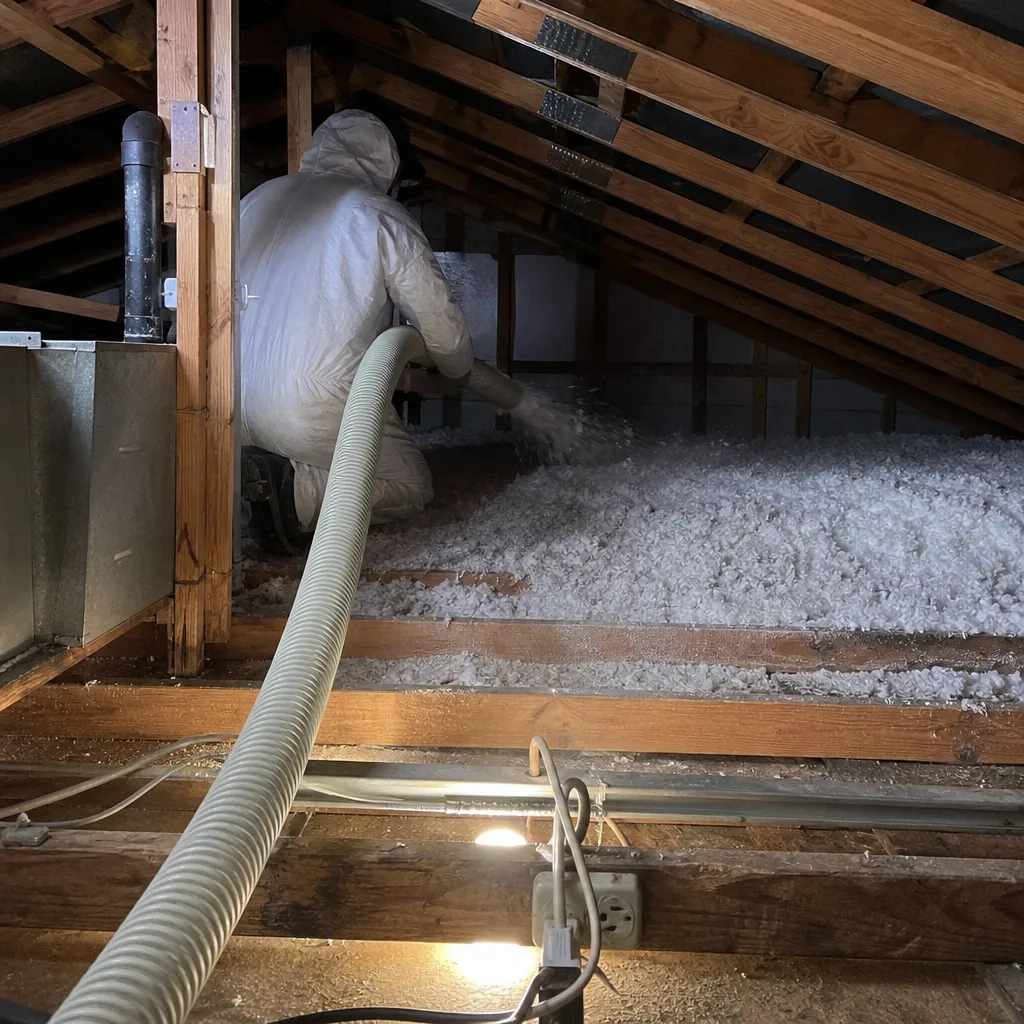
- Attic square footage and geometry. Flat, open attic decks are straightforward to work in. Hip roofs with multiple valleys – common in the craftsman bungalows of Bluff Park and Carroll Park – create dead corners that take more time to seal completely. A 2,000-square-foot footprint with a complex roofline can take as long as a 2,500-square-foot home with a simple gable.
- Number and type of penetrations. Every wire, pipe, flue, and HVAC boot that passes through the attic floor is a potential air leak. Older Long Beach homes often have cast-iron plumbing stacks with wide, unsupported gaps around them at the top plate – these require rigid-foam dams and canned spray foam, not just a bead of caulk. The more penetrations, the more material and time required.
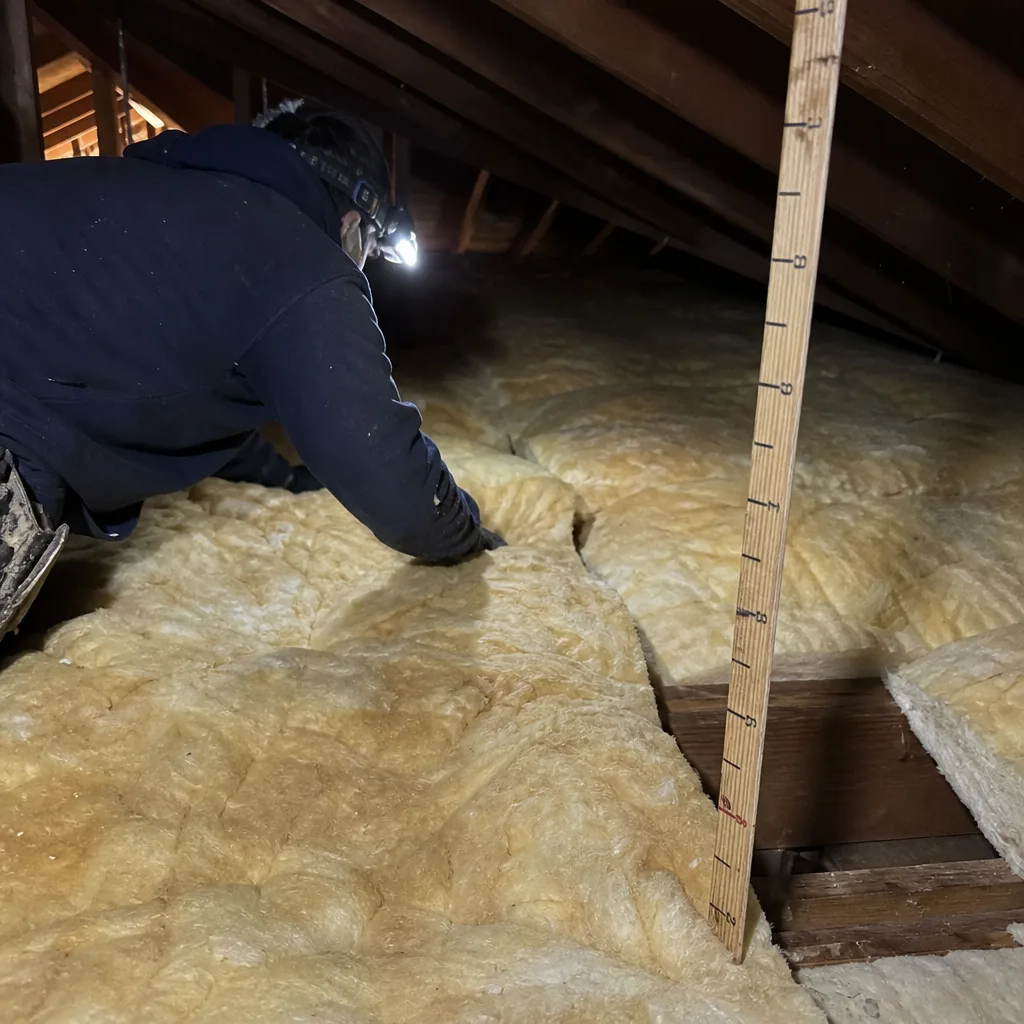
- Existing insulation depth. If blown cellulose or fiberglass is already present, it has to be moved aside to access the attic floor, and then redistributed or replaced after sealing. On some jobs the existing insulation is in poor enough condition that we recommend full insulation removal first – we’ll document what we find and give you a written price for both paths before anything is decided.
- HVAC duct leakage in the attic. Duct boots that are improperly seated against the drywall ceiling are among the worst air-bypass points in a Long Beach home. Sealing them is sometimes included in attic air sealing scope and sometimes quoted separately depending on the condition and count. We’ll identify all of them during the assessment and put it in the written scope.
- Local climate specifics. Long Beach sits close enough to the ocean that marine layer and coastal humidity affect attic moisture dynamics differently than inland Inland Empire homes. In neighborhoods like Naples Island or Shore, where salt air and morning marine layer are constants, we factor vapor management into sealing decisions – particularly around the attic hatch and any passive roof vents that may be driving humid air in at night.
- Permit requirements. Most attic air sealing in Long Beach does not require a building permit. However, if the project includes spray foam applied to roof decking (unvented attic conversion) or substantial duct work modification, the City of Long Beach Building and Safety Bureau may require a permit – currently ranging from approximately $150 to $400 depending on scope. We’ll tell you during scoping whether a permit applies to your job, and we’ll factor it into the written price.
How to Save on Attic Air Sealing in Long Beach
Combine Sealing and Insulation Into One Mobilization
The single most effective way to reduce the per-job cost of attic air sealing is to schedule it at the same time as insulation installation. A crew that’s already mobilized, already in your attic, and already familiar with your home’s layout can complete both scopes more efficiently than two separate visits. On combined jobs, the air sealing portion typically costs 10 to 20 percent less than it would as a standalone project, because setup time – driving, equipment staging, attic access setup – is shared across the scope. This is one reason we always recommend the full envelope assessment before anyone commits to a partial scope.
Use California’s Energy Utility Rebates
Southern California Edison and SoCal Gas both offer rebates for qualifying air sealing and insulation work in Long Beach homes. As of 2026, SCE’s residential weatherization program can offset $100 to $500 of the cost of a qualifying air sealing project, depending on the home’s pre-improvement infiltration rate and the documented post-improvement reduction. These programs require documentation – specifically, before-and-after blower-door readings. That’s documentation we provide on applicable jobs anyway. Ask us at the time of your estimate whether your project is likely to qualify, and we’ll factor the rebate pathway into the written scope.
Get a Proper Assessment Before Committing to Scope
One of the most common ways homeowners overspend on attic air sealing is by agreeing to a scope that was written without an actual look at the attic. A contractor who quotes a flat price over the phone and then adds on penetration sealing, hatch work, and duct-boot sealing as extras on the day of the job is not giving you upfront pricing – they’re giving you a lowball opener. Under Haven Standard Clause 1, our written price is the price. Flat. Written scope, written warranty, delivered before anyone lifts a tool. If something unexpected is found in the attic, we document it and discuss options before doing anything about it.
Take Advantage of the Free Second Opinion
If you’ve already received a written estimate from another Long Beach contractor, bring it to us. We’ll go through it line by line – what’s included, what might be missing, whether the scope addresses the actual air-bypass points or just the obvious ones. This is a no-pressure, no-commitment conversation. You can reach us directly at (424) 415-7031 to set it up, and the review is free regardless of whether you decide to move forward with Envelope Insulation Co.
Don’t Wait for Energy Bills to Force the Decision
Long Beach summers are mild compared to the San Gabriel Valley, but they’re not free. A home losing 25 to 40 percent of its conditioned air through the attic floor – which is common in pre-1990 homes we see regularly in neighborhoods like Bixby Knolls and Los Cerritos – is running its HVAC system significantly harder than it needs to. Sealing the attic now reduces that load immediately. The job pays back through lower utility costs, and the payback period on a properly documented job is typically three to seven years in the Long Beach market. Waiting another year doesn’t save money – it defers the savings.
FAQs – Attic Air Sealing Cost in Long Beach
How much does attic air sealing cost in Long Beach, CA?
Most attic air sealing jobs in Long Beach run between $1,200 and $1,900 for a typical single-family home in the 1,200 to 2,000 square foot range. Smaller homes can come in under $1,000; larger or more complex attics with many penetrations can reach $2,800 or more as a standalone project. Call (424) 415-7031 and we’ll give you a written price after an actual look at your attic – not a phone estimate built on assumptions.
Is attic air sealing worth the cost in Long Beach?
Yes, for most pre-2000 homes in Long Beach. The typical older Long Beach home loses a significant portion of its conditioned air through the attic floor – through recessed lights, top plates, plumbing and electrical penetrations, and the attic hatch. Sealing those points reduces HVAC runtime, lowers energy bills, and in many cases improves indoor air quality by reducing the draw of dusty attic air down into living spaces. We document the change with before-and-after blower-door readings – a pressurization measurement that shows, in one number, how much air the building envelope was losing before and after the work – so you’re not taking anyone’s word for it.
Does attic air sealing require a permit in Long Beach?
Standard attic air sealing in Long Beach – sealing top plates, penetrations, recessed lights, and the attic hatch with caulk, foam, and rigid blocking – generally does not require a permit from the City of Long Beach Building and Safety Bureau. If the project involves converting a vented attic to an unvented (hot roof) configuration with spray foam applied to the roof deck, or involves modifications to HVAC duct systems, permit requirements may apply. We’ll identify during scoping whether your job requires a permit and include any associated fees in the written price.
How long does attic air sealing take in a Long Beach home?
Most standalone attic air sealing jobs in Long Beach are completed in four to eight hours for a home in the 1,200 to 2,000 square foot range. Larger attics, attics with heavy existing insulation that needs to be moved, or jobs with a high fixture count can run a full day. Combined air sealing and insulation scopes typically run one full day for a standard home. We give you a time estimate as part of the written scope, so you know what the day looks like before the crew arrives.
Can I just insulate my attic without air sealing first?
You can, but the performance outcome is significantly weaker and we won’t do it that way. Adding insulation over an unsealed attic floor improves thermal resistance but does nothing to stop air movement – and moving air carries far more heat than conduction through a static material. A home with R-38 insulation and 15 unsealed recessed can lights is still losing large amounts of conditioned air. At Envelope Insulation Co., air sealing is a prerequisite, not an upsell. We seal first, then insulate – every time, on every job, without exception. That’s been our practice since 2016 across more than 9,000 homes, and the before-and-after blower-door numbers show why it matters.
What’s included in Envelope Insulation Co.’s written price?
The written price includes the complete scope of work, material specifications (we source from Owens Corning, Johns Manville, Knauf, Rockwool, CertainTeed, Icynene, Demilec, and GreenFiber depending on the application), the written warranty, and the 365-Day Done Right Promise – if it’s not done right, we make it right. When the job is done, you receive a Documented Photo Record showing what was found, what was sealed, and the before-and-after condition of the attic floor. On applicable jobs, before-and-after blower-door readings are included so you can verify the performance change in a single measurable figure.
Why Long Beach Attics Lose More Air Than You’d Expect
Long Beach’s housing stock skews older than much of Los Angeles County. The neighborhoods that see the most air sealing work – Bixby Knolls, Los Altos, California Heights, the Virginia Country Club area, Wrigley, and Rose Park – were largely built between the 1940s and the 1980s. Construction practices of that era didn’t treat the ceiling plane as an air barrier. Top plates were left open. Electrical boxes were cut through without back-sealing. Recessed lighting was installed in volume across ceilings that back directly onto attic space, and the IC-rated cans of that period are not airtight by modern standards.
The result is that a 1972 ranch home in Los Altos might test at 3,800 to 4,500 CFM50 on a blower-door test – a pressurization reading that measures, in cubic feet per minute, how much air is passing through the building envelope at a standardized pressure differential. A well-sealed home of the same size might read 1,200 to 1,800 CFM50. That gap represents real energy leaving the home every hour the HVAC runs.
Marine layer is another factor specific to Long Beach. Homes within a mile or two of the coast – Naples Island, Belmont Shore, the Alamitos Peninsula – deal with nighttime and morning humidity cycling that inland homes don’t. When warm interior air escapes through attic penetrations and meets cooler, moist outside air at the roof deck, the conditions for condensation exist. Air sealing reduces that cycling and, when combined with appropriate ventilation management, lowers the moisture load in the attic. This is one reason we factor Long Beach’s specific coastal climate into sealing decisions rather than applying a one-size procedure that might be appropriate for Riverside but wrong for a home three blocks from the ocean.
For a full picture of what the work involves before you commit to a price, the Attic Air Sealing in Long Beach service page covers the process, materials, and what the blower-door documentation looks like in practice.
The Sealing-First Sequence: Why the Order Matters
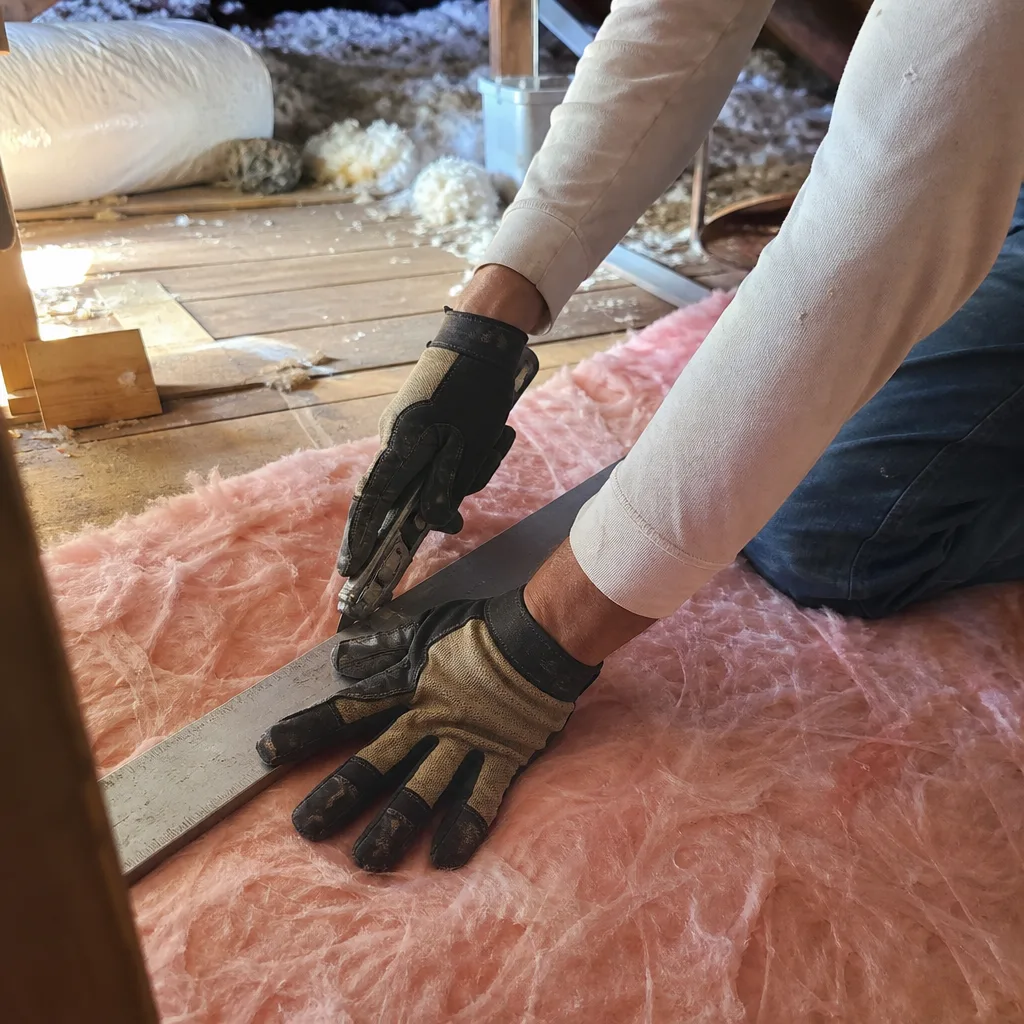
We’ve been at this since 2016, and one pattern has repeated itself more than any other on jobs where a previous contractor did the work: insulation added over unsealed penetrations. It looks like a complete job from below. The R-value numbers are correct. The invoice is paid. And yet the home is still losing 30 to 40 percent of the air it was losing before, because the leaks under the insulation weren’t closed.
This is not a contractor ethics problem in most cases – it’s a sequencing problem. If a crew is under pressure to complete an insulation job in a day, air sealing can feel like a preliminary step that eats into the schedule. On a job where the written scope didn’t explicitly require it, it often gets abbreviated or skipped. The homeowner has no way to know from the inside of the house.
The before-and-after blower-door test is what closes that information gap. A blower-door test – where a calibrated fan is mounted in the front door opening, the house is depressurized to a standard 50 Pascals, and the resulting airflow is measured in CFM50 – gives a single, auditable number for the home’s air tightness before and after work. If a contractor says they sealed your attic but the post-job reading is unchanged, the documentation tells the story. We publish those numbers on applicable jobs because the alternative – asking the customer to take the contractor’s word for it – contradicts everything the Haven Standard is built on.
If you’re on the home page looking at the full range of what Envelope Insulation Co. does, the air sealing prerequisite runs through every attic insulation job we take on. It’s not a line item you can remove from the scope – it’s the foundation the rest of the work sits on.
What to Expect on Job Day
Under the Haven Standard, you receive the technician’s name and a text when they’re on the way. The crew arrives in uniform. The written price was delivered before anyone started – it doesn’t change at the door based on what’s found in the attic, unless you’ve agreed to an explicitly conditional scope in writing.
Before sealing begins, we do a full attic floor walk to identify all penetrations: top plates, recessed can lights, electrical boxes, plumbing stacks, flue chases, HVAC boots, pull-down stair units, and any other attic bypass point. We document what we find with photos. Then we seal – using a combination of rigid-foam blocking, two-component closed-cell foam, and non-shrink caulk depending on the size and type of each opening. Recessed lights get airtight covers installed over them from the attic side. Top plates get a continuous bead of foam along their entire length.
On applicable jobs, the blower-door test runs before the crew starts and again after the work is complete. The before and after CFM50 readings go into the job documentation you receive. When the crew leaves, you have a sealed attic, a documented photo record, and a number that shows what actually changed – not a general statement that the job was done well.
Wes Okafor and the team at Envelope Insulation Co. have built this process across more than 9,000 jobs in the Long Beach area and surrounding communities since 2016. The sequence doesn’t vary because the physics don’t vary.
Key Takeaways
- Attic air sealing in Long Beach costs $950 to $2,800 for most single-family homes, with the majority of jobs falling between $1,200 and $1,900.
- The biggest cost variables are attic square footage, number of recessed can lights, attic accessibility, and existing insulation depth.
- California utility rebates (SCE, SoCal Gas) can offset $100 to $500 of the cost on qualifying jobs – rebate pathways require blower-door documentation, which we provide.
- Standard attic air sealing in Long Beach does not require a permit; spray foam roof-deck applications may.
- Air sealing before insulation is not optional at Envelope Insulation Co. – it’s how the scope is written, every time.
- Before-and-after blower-door numbers are included on applicable jobs so you have a documented record of the performance change, not just an invoice.
- Written price, written scope, written warranty – all delivered before work starts. That’s Haven Standard Clause 1, and it doesn’t have exceptions.
Get a Written Price for Your Long Beach Home
If you want a real number – not a phone estimate, not a range that widens when the crew shows up – call (424) 415-7031 to schedule an attic assessment. We’ll look at the attic, document what we find, and give you a flat written price before anyone starts. The 365-Day Done Right Promise applies to every job, and the Free Second Opinion offer is available if you’ve already received a competing estimate you’d like reviewed.
Long Beach homes that were built before 1990 almost always have sealed attic potential that’s being left on the table. The assessment tells you exactly what’s there and what it would cost to address it. There’s no commitment attached to finding out.
Written by Wes Okafor, Owner at Envelope Insulation Co. (operating as Topside Attic Insulation Long Beach), serving Long Beach since 2016.
Pricing reflects the Long Beach market as of 2026. Topside Attic Insulation Long Beach offers free estimates – call (424) 415-7031.
What Our Customers Say
"Fixed price, clean work, and they hauled the old material away as agreed."
- Todd M."Crawl space encapsulation done properly. Photographs of the vapour barrier at every seam, and the damp smell in the hallway is gone."
- Ainsley P."Two other companies quoted to blow more insulation on top of what was there. These were the only ones who said the existing material had to come out first, and explained why."
- Clifford E.