
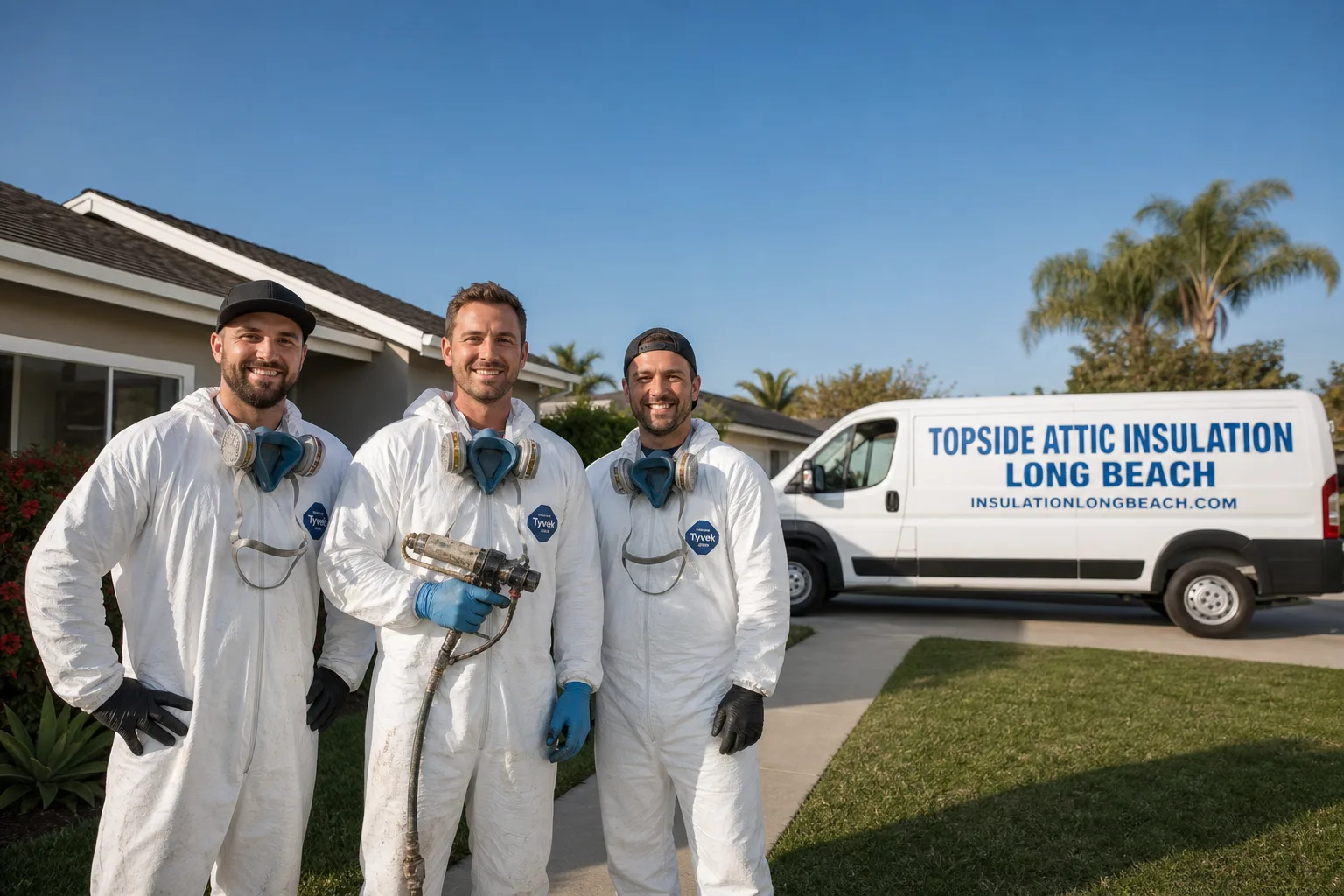
How Much Does Insulation Removal & Replacement Cost in Long Beach?
Insulation removal and replacement in Long Beach, CA typically costs between $1,400 and $4,800 for a standard single-story home, with most attic jobs landing between $1,800 and $3,200 when you factor in removal, disposal, air sealing, and new blown-in or batt installation. The wide range comes down to attic square footage, existing material type, contamination level, and whether the air-sealing work that should happen between removal and reinstallation is actually done. At Envelope Insulation Co., led by Wes Okafor, a written price is on paper before any crew member picks up a vacuum hose – that number includes everything, no line items added afterward.
Insulation Removal & Replacement Cost Breakdown (2026)
The table below reflects what Long Beach homeowners are actually paying in 2026. These are real market ranges, not national averages padded to sound reasonable. Long Beach’s older housing stock – a lot of it built between 1945 and 1980 in neighborhoods like Bixby Knolls, Wrigley, and California Heights – often turns up vermiculite, compressed fiberglass, or rodent-contaminated blown cellulose that changes the removal cost meaningfully.
| Scope of Work | Typical Long Beach Price Range (2026) |
|---|---|
| Attic insulation removal only (800-1,200 sq ft attic) | $600 – $1,100 |
| Attic insulation removal + disposal (bagged, hauled off-site) | $750 – $1,350 |
| Attic air sealing (top plates, can lights, penetrations) | $400 – $900 |
| New blown-in fiberglass or cellulose installation (800-1,200 sq ft) | $700 – $1,400 |
| New batt insulation installation (same footprint) | $650 – $1,250 |
| Spray foam air sealing + blown-in combo | $900 – $1,600 |
| Contaminated material removal (rodent droppings, mold, vermiculite) | Add $300 – $800 depending on scope |
| Attic cleaning and sanitizing (after rodent activity) | $350 – $750 |
| Full removal + air sealing + replacement (complete job, 1,000 sq ft attic) | $1,800 – $3,200 |
| Larger homes (1,400+ sq ft attic, complex roof line) | $3,000 – $4,800 |
| Wall insulation removal and replacement (blown-in dense pack) | $1,200 – $2,800 depending on linear footage |
A few things drive those numbers toward the higher end in Long Beach specifically. The city’s proximity to the port means older homes near the Douglas Park or Poly High areas sometimes show higher-than-expected moisture content in their existing insulation – coastal humidity works into gaps that were never air-sealed, and wet cellulose compresses and loses R-value faster than the homeowner realizes. That contamination costs more to remove and dispose of than clean, dry material. The lower end of the range applies to relatively clean, accessible attics where the only agenda is getting old fiberglass batts out, sealing the floor properly, and blowing in new material. That’s a straightforward job. Most Long Beach attics we see are somewhere in the middle.
One cost item that often surprises homeowners: disposal. Insulation is bulky, and in Los Angeles County, contaminated material has to be bagged, sealed, and handled differently than clean construction debris. That disposal cost is always included in our written price – there is no surprise line on the invoice when the truck leaves.
What Affects Insulation Removal & Replacement Pricing in Long Beach
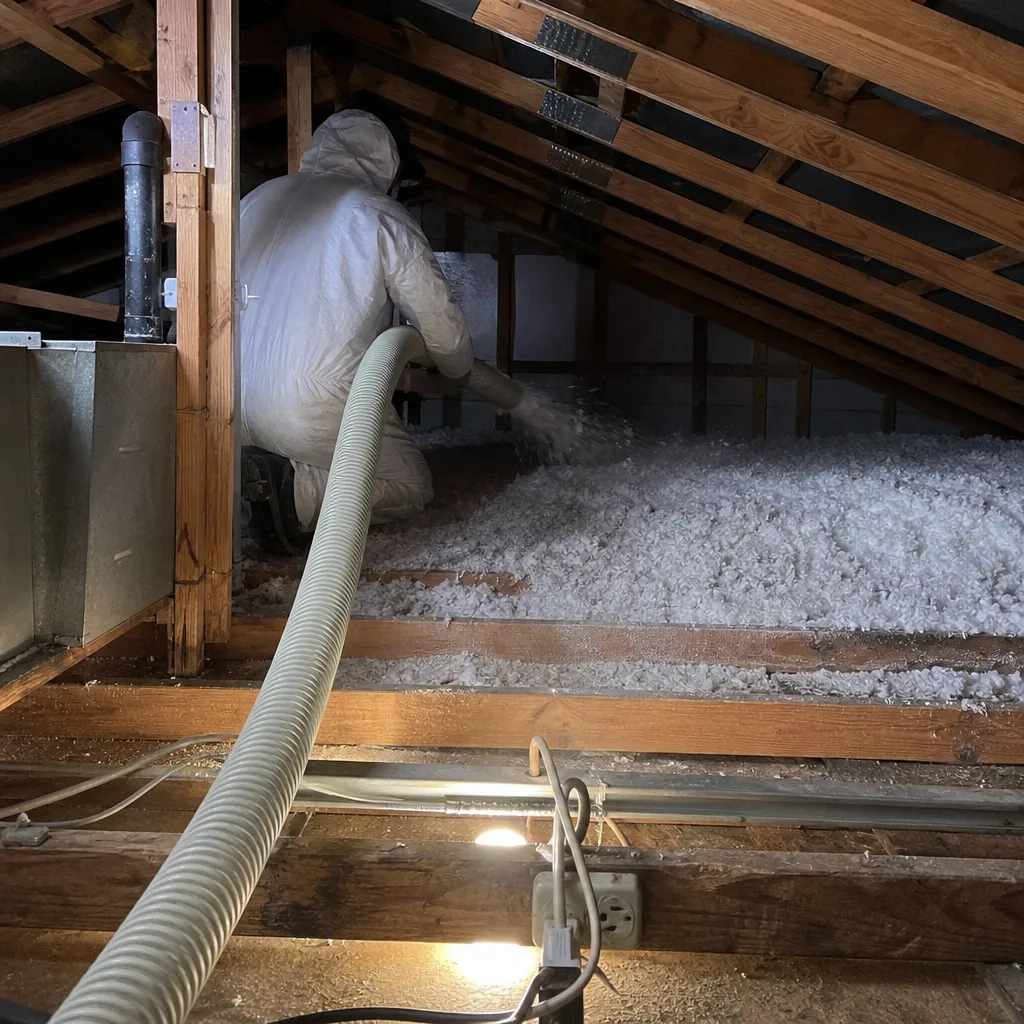
- Attic square footage and roof geometry. A 900 sq ft ranch-style attic in Lakewood Village with a simple gable roof is a different job than a 1,600 sq ft hip-roof attic in a two-story on the east side of Long Beach near Los Altos. Tight knee walls, multiple valleys, and low-clearance sections slow removal and require more labor hours. Pricing scales with usable attic area, not just total square footage.
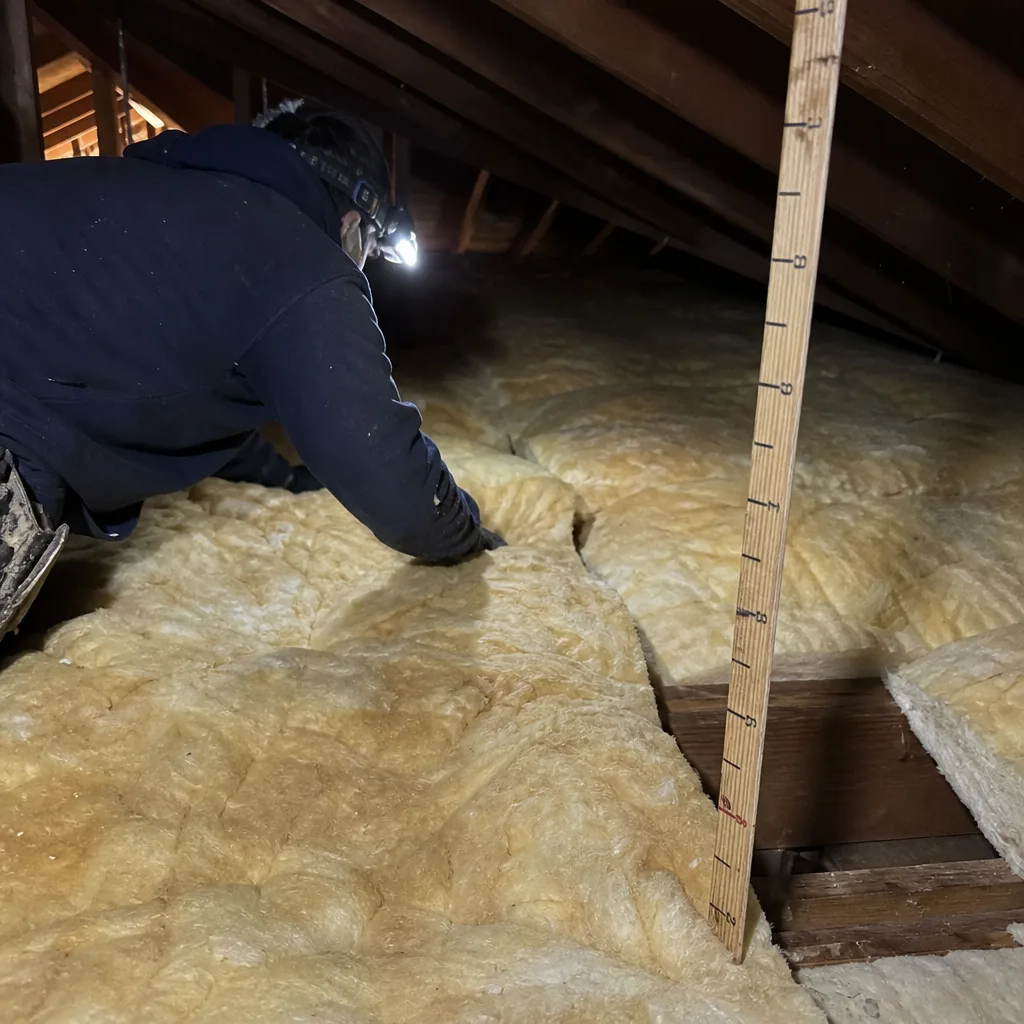
- Type and condition of existing insulation. Clean, dry fiberglass batts from a job done in the last 15 years come out faster and cost less to remove than 50-year-old compressed blown cellulose matted with rodent debris. Homes in older Long Beach neighborhoods – Zaferia, North Long Beach, Poly – commonly have both original insulation and one or two layers added over it at different times, which means the vacuum crew is pulling out mixed material that takes longer to bag.
- Contamination: rodents, mold, moisture. Long Beach’s mild climate is hospitable to roof rats year-round. Attics in older craftsman bungalows and Spanish-revival homes near the traffic circle or 4th Street corridor regularly show active or prior rodent activity. Contaminated insulation requires additional personal protective equipment, slower removal, HEPA-filtered vacuum systems, and post-removal sanitizing before new material goes in. Each of those steps adds to the line-item cost – legitimately so.
- Air sealing scope. At Envelope Insulation Co., air sealing of top plates, recessed can lights, and penetrations is a hard prerequisite before new insulation is installed – not an optional upsell. The cost of that air sealing depends on how many penetrations exist and how much spray foam or mastic is required to seal them. A 1960s Long Beach home with a dozen unsealed recessed lights and open top plates can require two to three hours of sealing work before a single bag of new insulation goes in. That labor is priced into the written quote, always.
- Accessibility. Attic hatches that are too small for standard equipment, attics with standing height under 24 inches, or spaces with limited entry points all add labor time. Some Long Beach homes – particularly mid-century tract homes in areas like El Dorado Park Estates – have small pull-down ladders or scuttle hatches that require smaller equipment and more manual work.
- New material choice and target R-value. California’s Title 24 energy code requires R-38 as the minimum standard for attic insulation in climate zone 8, which covers Long Beach. Reaching R-38 with blown-in fiberglass from Owens Corning or Knauf requires roughly 10 to 12 inches of material. Bumping to R-49 adds more material and more cost but reduces the long-term energy load – something documented on the before-and-after blower-door reading. The choice of material (blown fiberglass, blown cellulose from GreenFiber, mineral wool from Rockwool, or spray foam from Icynene or Demilec) also changes the per-square-foot material cost.
How to Save on Insulation Removal & Replacement in Long Beach
Get a written price that covers everything
The biggest hidden cost in insulation removal isn’t the removal itself – it’s the line items that appear after the job starts. Disposal fees, contamination surcharges, “additional air sealing as needed” – these are the items that turn a $1,400 estimate into a $2,400 invoice. A written price with a defined scope before work starts eliminates that entirely. Under Haven Standard Clause 1, Envelope Insulation Co. provides a flat written price, a written scope, and a written warranty before any work begins. That’s not a policy we hold during slow months; it applies to every job, including a $600 attic removal.
Don’t skip the air sealing step
This sounds counterintuitive as a “saving” tip, but it’s the most financially important one. In Long Beach’s climate zone 8, an attic that’s been air-sealed before new insulation is installed performs measurably better than one that hasn’t. The before-and-after blower-door number – a pressurization reading that shows, in one figure, how much conditioned air the building envelope is losing – demonstrates that difference. A home with unair-sealed top plates and penetrations that has R-38 of brand-new insulation blown over them will still have high cooling loads in summer because the insulation is doing work the air barrier should be doing. You’d be replacing the insulation again sooner, or running your HVAC harder for years. Doing it right once costs less over any reasonable time horizon.
Check LADWP and SoCal Gas rebate eligibility before the job starts
Long Beach is served by Los Angeles Department of Water and Power (LADWP) and SoCalGas, both of which have offered rebates for qualifying insulation upgrades as of 2025-2026. Rebate amounts change, and eligibility depends on current R-value, income thresholds in some programs, and whether the work includes verified air sealing. The time to check eligibility is before the written price is finalized, not after the insulation truck leaves. We walk through rebate documentation with every Long Beach customer who asks – it’s part of the written scope conversation, not a separate appointment.
Bundle the work when the attic is already open
If a rodent exclusion crew has recently been through the attic, or if you’re having roofing work done, the attic access is already established and the disruption to the home is already happening. Combining insulation removal, air sealing, and replacement into one scheduled visit is almost always less expensive than two separate mobilizations – each of which carries a setup cost. The same logic applies to combining Insulation Removal & Replacement in Long Beach with a radiant barrier installation or a crawl space vapor barrier project if those are needed anyway.
Use a free second opinion on any written estimate you already have
If you’ve received a competing written quote and something in the scope doesn’t add up – a disposal fee that seems high, an R-value specification that seems low, an air sealing line that’s absent entirely – bring it to us. Wes Okafor and the Envelope team will read it with you. That’s a standing offer, not a promotional window. Call (424) 415-7031 to schedule a second-opinion review at no cost.
Ask for the documented photo record
This isn’t a direct savings tip, but it protects your investment. Every job at Envelope Insulation Co. closes with a documented photo record – photos of the attic before removal, after air sealing, and after new insulation installation. Those photos confirm that the depth of material installed matches the R-value specified in the written scope. If a contractor doesn’t offer this and you’re paying for R-38, you have no way to verify what’s actually up there without going back into the attic yourself. Documentation is how you confirm you received what you paid for.
FAQs – Insulation Removal & Replacement Cost in Long Beach
How much does attic insulation removal cost in Long Beach, CA?
Attic insulation removal in Long Beach runs $600 to $1,350 for a typical 800-1,200 sq ft attic, including bagging and off-site disposal. Clean, dry fiberglass batts are at the lower end. Contaminated material – rodent droppings, mold, or heavily compressed cellulose – adds $300 to $800 depending on how extensive the contamination is. Call (424) 415-7031 to get a written price for your specific attic after a free on-site look.
What does a full insulation removal and replacement job cost in Long Beach?
A complete job – removal, disposal, air sealing of top plates and penetrations, and new blown-in installation to R-38 – runs $1,800 to $3,200 for a 1,000 sq ft attic in Long Beach. Larger attics with complex geometry or significant contamination reach $4,800 or more. That range reflects real jobs in this market, not national averages. The written price you receive before any work starts will be a flat number covering every line item, not a starting estimate subject to revision.
Is it cheaper to repair old insulation or replace it entirely?
For most Long Beach homes built before 1985, full replacement is almost always the better financial decision. Old blown cellulose and fiberglass batts that have been compressed, moisture-damaged, or contaminated have measured R-values well below their original specification. Topping that material off with new insulation locks in a degraded air barrier underneath and skips the air sealing step that drives most of the real energy performance. Partial repairs run $400 to $900 but typically don’t address the underlying problem. If the existing insulation is clean and undamaged with measurable R-value above R-19, a top-up may make sense – a blower-door test and inspection will tell you which situation you’re actually in before you spend money on either path.
How long does insulation removal and replacement take?
Most Long Beach attic jobs – removal, air sealing, and reinstallation – are completed in one full day. A straightforward 900 sq ft attic with clean material can finish in five to six hours. A larger attic with contamination, significant air sealing scope, or tight access can run into a second day. The written scope includes a projected timeline. There are no open-ended “we’ll see how it goes” timelines – the schedule is agreed before the crew arrives.
Does insulation removal and replacement require a permit in Long Beach?
In most cases, insulation removal and replacement alone does not require a building permit in Long Beach under current City of Long Beach building code. However, if work includes mechanical penetrations, structural alterations, or is part of a larger renovation that triggers a permit requirement, that changes. Any project that involves spray foam in certain configurations may also have ventilation requirements that interact with permit thresholds. We clarify permit status on every job during the written scope conversation – if a permit is needed, it’s noted in writing before work starts, not discovered after. Call (424) 415-7031 if you have a specific situation you want to run through before committing.
What R-value is required for attic insulation in Long Beach?
Long Beach falls in California Climate Zone 8. California’s Title 24 energy code sets the minimum attic insulation requirement at R-38 for most residential projects. New construction and full replacement projects are held to this standard. Some older homes with specific roof geometries may have a practical ceiling below R-38 due to rafter depth, but code compliance is the baseline the written scope is built to. Moving from a degraded R-11 or R-19 – common in Long Beach homes from the 1950s and 1960s – to code-minimum R-38 produces a measurable improvement in the blower-door reading and a real reduction in summer cooling load.
Can I get a LADWP rebate for insulation replacement in Long Beach?
LADWP has offered rebates for qualifying insulation upgrades, and SoCalGas has separate weatherization programs that can apply to Long Beach homeowners. Rebate availability and amounts change year to year and depend on factors including your current R-value, household income in some programs, and whether air sealing is included in the scope. As of 2026, it’s worth verifying current LADWP rebate offers directly before the job is priced. We include a rebate eligibility conversation in every written scope discussion – if there’s money on the table, we’d rather you know before the job than after it.
Why Envelope Insulation Co. Works Differently for Long Beach Homeowners
Since 2016, Envelope Insulation Co. has completed insulation removal and replacement across Long Beach neighborhoods from Belmont Shore to North Long Beach, Wrigley to Signal Hill. In that time, Wes Okafor and the team have seen the same pattern repeat: old insulation gets pulled out, new insulation gets blown in, and nobody touches the top plates, can lights, or plumbing penetrations in between. The homeowner gets new R-38 on paper and notices no meaningful change in their energy bills. The blower-door number – that single pressurization figure that shows how much conditioned air the envelope is losing – barely moves.
That’s why the Haven Standard at Envelope Insulation Co. treats air sealing as a hard prerequisite, not a line item you opt into. Blown insulation over an unsealed attic floor is like weatherstripping a door that’s sitting in a frame with no wall around it. The physics don’t work. We complete the air sealing of top plates, recessed can lights, and all attic penetrations before a single bag of new material is installed. Then we run the blower-door test after and give you the before-and-after numbers in writing. You can see, in one figure, what changed and by how much.
Every job across our home page service line – from attic cleaning and rodent proofing to crawl space encapsulation to radiant barrier installation – follows the same structure: written price before work starts, documented photo record when the crew leaves, and the 365-Day Done Right Promise covering all completed work. If something isn’t right within a year of completion, we make it right. That promise is in writing, delivered before anyone lifts a tool.
Materials come from Owens Corning, Johns Manville, Knauf, Rockwool, CertainTeed, Icynene, Demilec, and GreenFiber – whichever product is right for the job, not whichever product we’ve made a deal to push. Long Beach homes vary significantly in age, construction, and existing envelope condition. The material choice follows the inspection, not the other way around.
If you have a written estimate from another contractor and something in it doesn’t sit right, call (424) 415-7031. We’ll read it with you – that’s a free second opinion, standing offer, no booking required. And if you want to start with a fresh estimate, the process is the same: we look at the attic, give you the numbers, put it in writing, and don’t ask you to decide on the spot.
Key Takeaways
- Most Long Beach attic insulation removal and replacement jobs cost $1,800 to $3,200 for a 1,000 sq ft attic; larger or contaminated attics can reach $4,800.
- Removal alone (without replacement) runs $600 to $1,350 including disposal.
- Air sealing between removal and reinstallation is not optional if you want the new insulation to actually perform – it’s built into the scope at Envelope Insulation Co., not added later.
- California Title 24 requires minimum R-38 for attic insulation in Long Beach (Climate Zone 8).
- LADWP and SoCalGas rebates may reduce net cost – check eligibility before the job is priced.
- A written price before any work starts, a documented photo record, and before-and-after blower-door numbers are included on every applicable job – not available on request.
- The 365-Day Done Right Promise covers all completed work in writing.
Pricing reflects the Long Beach market as of 2026. Topside Attic Insulation Long Beach offers free estimates – call (424) 415-7031.
Written by Wes Okafor, Owner at Envelope Insulation Co., serving Long Beach since 2016.
What Our Customers Say
"Fixed price, clean work, and they hauled the old material away as agreed."
- Todd M."Crawl space encapsulation done properly. Photographs of the vapour barrier at every seam, and the damp smell in the hallway is gone."
- Ainsley P."Two other companies quoted to blow more insulation on top of what was there. These were the only ones who said the existing material had to come out first, and explained why."
- Clifford E.