
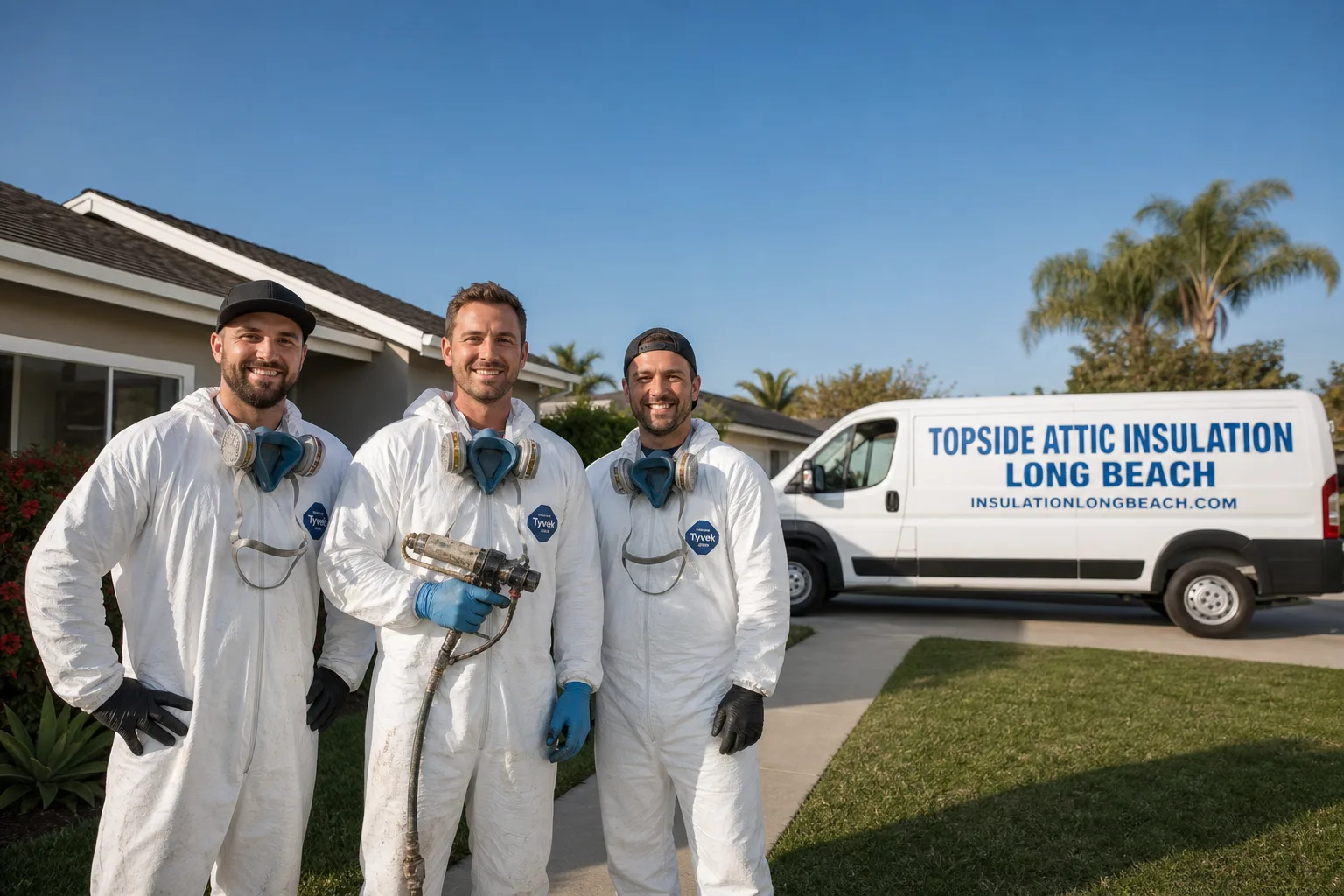
How Much Does Radiant Barrier Installation Cost in Long Beach?
Radiant Barrier Installation services in Long Beach, CA typically cost between $1,400 and $3,200 for a single-family home, with most attic jobs landing around $1,800 to $2,400 depending on attic square footage, access conditions, and whether air sealing is completed first. The price per square foot generally runs $0.85 to $1.60 installed, and most jobs in the Long Beach market are completed in a single day.
If you’ve seen quotes outside that range – dramatically lower or higher – there’s usually a reason, and it’s worth understanding what’s driving it before you sign anything. We’ll break that down below, with real line-item numbers for this market.
Radiant Barrier Installation Cost Breakdown (2026)
Radiant barrier installation in Long Beach costs what it costs for specific, traceable reasons. Here’s how the line items stack up for a typical single-family home in this market:
| Line Item | Typical Range (Long Beach, CA) | Notes |
|---|---|---|
| Radiant barrier foil material (per sq ft, installed) | $0.85 - $1.60/sq ft | Perforated foil for vented attics; solid foil for unvented |
| Labor (attic installation, standard access) | $500 - $950 | Increases with attic depth, obstructions, HVAC equipment in attic |
| Attic air sealing (top plates, can lights, penetrations) | $350 - $750 | Should precede any insulation or radiant barrier work |
| Small attic (under 1,000 sq ft) | $1,100 - $1,700 | Common in Long Beach bungalows and older craftsman homes |
| Mid-size attic (1,000 - 1,800 sq ft) | $1,600 - $2,600 | Most single-family homes in Bixby Knolls, Signal Hill, Lakewood Village |
| Large attic (1,800 - 2,800+ sq ft) | $2,400 - $3,800 | Larger homes in Los Cerritos, El Dorado Park, newer construction |
| Radiant barrier + blown-in insulation (combined scope) | $2,800 - $5,200 | Bundled jobs often reduce per-item labor cost |
| Before-and-after blower-door test (add-on or included) | $150 - $300 standalone | Included on applicable jobs at Envelope; measures actual air-loss reduction |
| Attic inspection / home energy audit | $200 - $400 standalone | Often credited toward project cost |
Those ranges reflect what we actually see on jobs in Long Beach in 2026, not a national average scaled down. The low end of the range almost always reflects a smaller, easy-access attic with no HVAC equipment overhead, no significant air leakage issues, and foil stapled to rafters in a vented attic – the cleanest version of the job. The high end shows up when the attic is cluttered, access is tight (common in some of the older 1940s and 1950s homes in Rose Park and the Willmore City area), or when the job properly includes air sealing as a prerequisite rather than skipping it.
One thing worth knowing: a radiant barrier installed over an unsealed attic floor is measurably less effective than the same material installed after top plates, recessed lights, and plumbing penetrations have been foam-sealed. We treat Radiant Barrier Installation in Long Beach as a two-step process – seal first, then install – and we don’t skip the first step because it’s inconvenient. That’s not marketing language; it’s the reason blower-door numbers move after the job instead of staying flat.
What Affects Radiant Barrier Installation Pricing in Long Beach
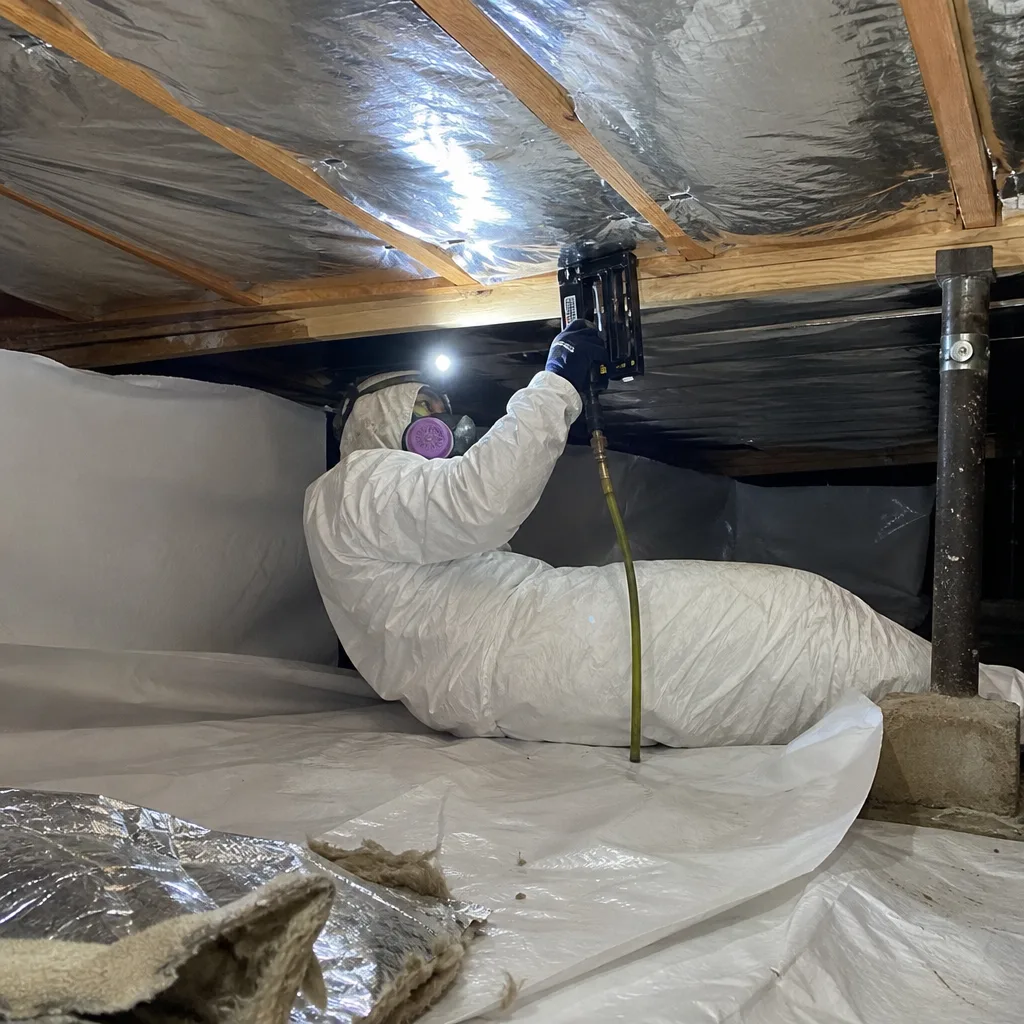
Six variables account for most of the spread between the low and high ends of the cost range. Each one is worth understanding before you get a quote, because they explain why two 1,500-square-foot homes in Long Beach can have a $600 difference in price.
- Attic square footage and configuration: This is the biggest single driver. More square footage means more material and more labor hours. But configuration matters as much as size – a 1,400-square-foot attic with a clean open span installs faster than a 1,000-square-foot attic with multiple knee walls, dropped soffits, and HVAC ductwork running through the center. Long Beach homes built between 1940 and 1965 (common in neighborhoods like Zaferia, California Heights, and Wrigley) often have more complex attic configurations than post-1990 construction.
- Attic access quality: A standard 22-by-30-inch pull-down stair is workable. A 14-inch scuttle hole is not. Tight access slows labor significantly and sometimes requires material to be cut into smaller sections to fit through the opening. Homes in the older coastal neighborhoods near Belmont Shore and Bluff Park frequently have original scuttle-style access that hasn’t been upgraded since the house was built.
- Long Beach’s climate and sun exposure: This is actually a pricing argument in favor of radiant barriers specifically in Long Beach. The city sits in a coastal Mediterranean climate, but the inland-facing neighborhoods – Lakewood Village, South of Conant, areas near the 405 corridor – experience afternoon temperatures that regularly exceed what beachside addresses see. An attic in Lakewood Village in July can read 140°F to 155°F on the roof deck surface without a radiant barrier, compared to 100°F to 115°F after installation. That thermal load is what drives the payback period on the investment, and in Long Beach’s sun-heavy summer pattern, payback timelines of 4 to 7 years are realistic for appropriately sized homes.
- Whether air sealing is included or skipped: A quote that doesn’t include attic air sealing – sealing the top plates where interior walls meet the attic floor, closing open can lights, and foaming plumbing and electrical penetrations – is a cheaper quote for a less complete job. We see attics in Long Beach where the original builder left every top plate open. A blower-door test – a pressurization measurement that shows, in one number, how much conditioned air the home is losing – taken before sealing on those homes can read 3,800 to 4,500 CFM50. After sealing, the same test typically reads 1,800 to 2,400 CFM50. That’s the difference between a job that performs and a job that looks like it was done.
- Foil type and installation method: Perforated radiant barrier foil – the standard for vented attics, which describes most Long Beach single-family homes – allows moisture vapor to pass through and is the correct product for this climate. Solid foil is used in unvented assemblies and costs slightly more. Some contractors staple foil to the attic floor between joists (faster, cheaper, less effective) rather than draping it from the rafters. Rafter installation reflects radiant heat before it enters the attic air space; floor installation does not. The difference in material handling adds roughly $0.10 to $0.25 per square foot in labor, but it’s the reason one installation outperforms the other.
- Combining radiant barrier with other envelope work: Bundling radiant barrier installation with blown-in insulation, attic air sealing, or insulation removal typically reduces the effective per-item labor cost because the crew and equipment are already mobilized. In Long Beach homes that need both upgraded insulation and a radiant barrier, the combined scope usually costs $800 to $1,400 less than scheduling each job separately. We write a single scope for the full envelope – one written price, one crew visit, one documented photo record at close.
Radiant Barrier vs. More Attic Insulation: Which One Makes More Sense in Long Beach?
This question comes up on almost every attic estimate we run in Long Beach, and the answer depends on what the attic already has.
Radiant barriers work by reflecting radiant heat – the infrared energy radiating off a hot roof deck into the attic space below. They do not add R-value – the measure of resistance to conducted heat transfer. Attic insulation (blown fiberglass, blown cellulose, batts) adds R-value but does not reflect radiant heat. In a Long Beach summer, both are happening simultaneously: the roof is radiating heat down into the attic, and that heat is also conducting through whatever insulation exists above the living space.
The practical answer for most Long Beach homes: if the attic has less than R-30 of insulation, adding insulation to reach R-38 to R-49 typically delivers a faster payback than adding a radiant barrier. If the attic already has R-30 or more, adding a radiant barrier to reflect the radiant load becomes a meaningful improvement rather than a marginal one. And in homes where the attic runs HVAC equipment or ductwork – common in tract homes in Lakewood Village and the El Dorado Park area – reducing attic temperatures directly reduces how hard the air handler works, which is where radiant barrier ROI is strongest.
We run a home energy audit – a whole-building assessment that measures air leakage, existing insulation levels, and duct performance – before recommending one over the other. That audit tells us what the attic actually needs, not what looks good on a quote sheet. You can learn more about what that process covers on our home page.
How to Save on Radiant Barrier Installation in Long Beach
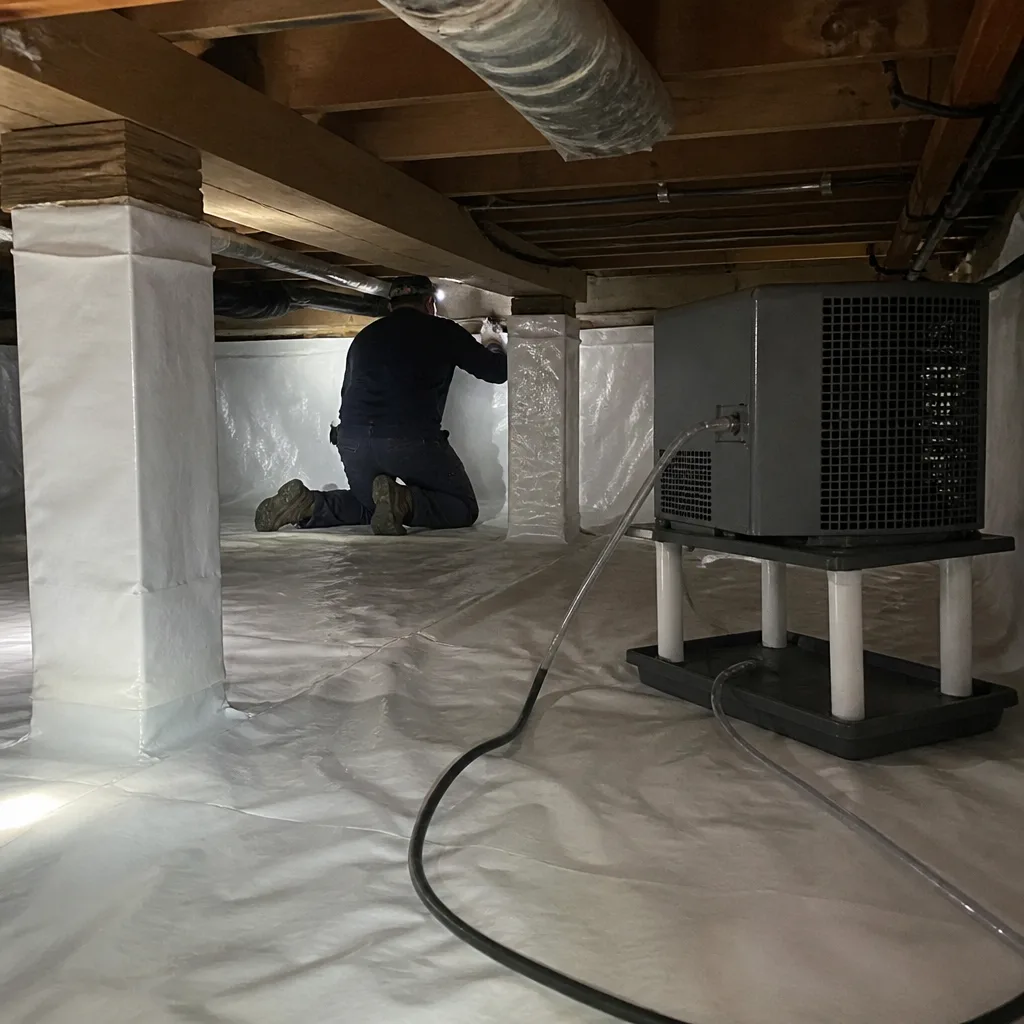
There are real ways to reduce the cost of this project, and there are ways that look like savings but aren’t. Here’s the honest version:
- Bundle the job with other attic work you already need. If your attic needs insulation topping-off, rodent-damaged insulation removed, or penetrations sealed, scheduling it as one scope instead of three separate visits reduces total labor cost. The material cost doesn’t change, but one mobilization beats three. Call (424) 415-7031 and we’ll look at the attic and tell you what the bundled scope would look like in writing, before any work starts.
- Get a second opinion on any written quote. We offer a free second opinion on any written estimate – bring us a competitor’s quote and we’ll read it with you, line by line. This isn’t a sales tactic; it’s how we make sure you understand what you’re paying for. Under the Haven Standard, that service costs you nothing and obligates you to nothing.
- Ask specifically whether air sealing is included. A quote that omits air sealing looks cheaper and delivers less. If a competitor’s quote doesn’t explicitly list top-plate sealing, can-light sealing, and penetration foam, ask whether it’s included or excluded. If it’s excluded, add $350 to $750 to the comparison number before deciding which quote is actually lower.
- Check for California and utility rebates. Southern California Edison and SoCalGas periodically offer rebates on qualifying attic insulation and air sealing work. The availability and amount change year to year, but a Long Beach homeowner with an existing energy audit on file sometimes qualifies for $200 to $600 back on a completed project. We can tell you what’s currently available when we scope the job.
- Don’t schedule the cheapest crew you find without asking what they’re skipping. The lowest radiant barrier quotes in the Long Beach market typically skip air sealing, use floor-installation rather than rafter-drape installation, or use a thinner foil product without a published emissivity rating. Any of those shortcuts produces a job that costs less and performs less. A foil product with an emissivity of 0.05 reflects 95% of incident radiant heat; a product with an emissivity of 0.25 reflects 75%. That difference isn’t visible once the attic hatch closes, which is why it’s worth asking the question before the job starts.
- Use a written price as your baseline, always. Under Haven Standard Clause 1, we provide a written scope, flat price, and written warranty before anyone lifts a tool. If a contractor won’t put a price in writing before starting, that’s a structural problem regardless of how competitive the verbal number sounds.
What the Installation Process Actually Looks Like
For a homeowner in Long Beach who hasn’t had this done before, knowing what to expect on the day of installation is worth a few paragraphs.
The job starts with the attic inspection. We’re measuring the square footage, noting the access quality, checking existing insulation levels, looking at duct routing and any HVAC equipment present, and identifying air-leakage points – open top plates, recessed lights that open directly into the attic, and any plumbing or electrical penetrations that haven’t been sealed. In Long Beach homes built before 1975, unsealed top plates are nearly universal; we find them on almost every job in neighborhoods like Poly High, North Long Beach, and the older blocks of Wrigley.
If air sealing is in scope – and it should be – that happens before the foil goes up. We foam the top plates, seal the can lights with code-compliant fire-rated covers and foam, and close every penetration we can access. Then we run a blower-door test to document what the sealing accomplished. If the pre-seal reading was 3,900 CFM50 and the post-seal reading is 2,000 CFM50, that number goes into your job record. It’s not a feeling; it’s a measurement.
The radiant barrier foil is then draped from rafter to rafter, stapled along the rafters with the foil hanging down and an air gap maintained between the foil and the roof deck. The air gap is not optional – it’s what allows the foil’s low-emissivity surface to work. Foil stapled tight against the roof sheathing with no air gap doesn’t function as a radiant barrier; it functions as a vapor retarder, which is a different product for a different purpose.
At close, we photograph the completed work – the sealed penetrations, the installed foil, the attic access condition – and those photos become part of your Documented Photo Record. You receive the blower-door readings, the written scope, and the warranty. That’s what leaving looks like before we arrive, and it’s the same on every job we run in Long Beach.
FAQs – Radiant Barrier Installation Cost in Long Beach
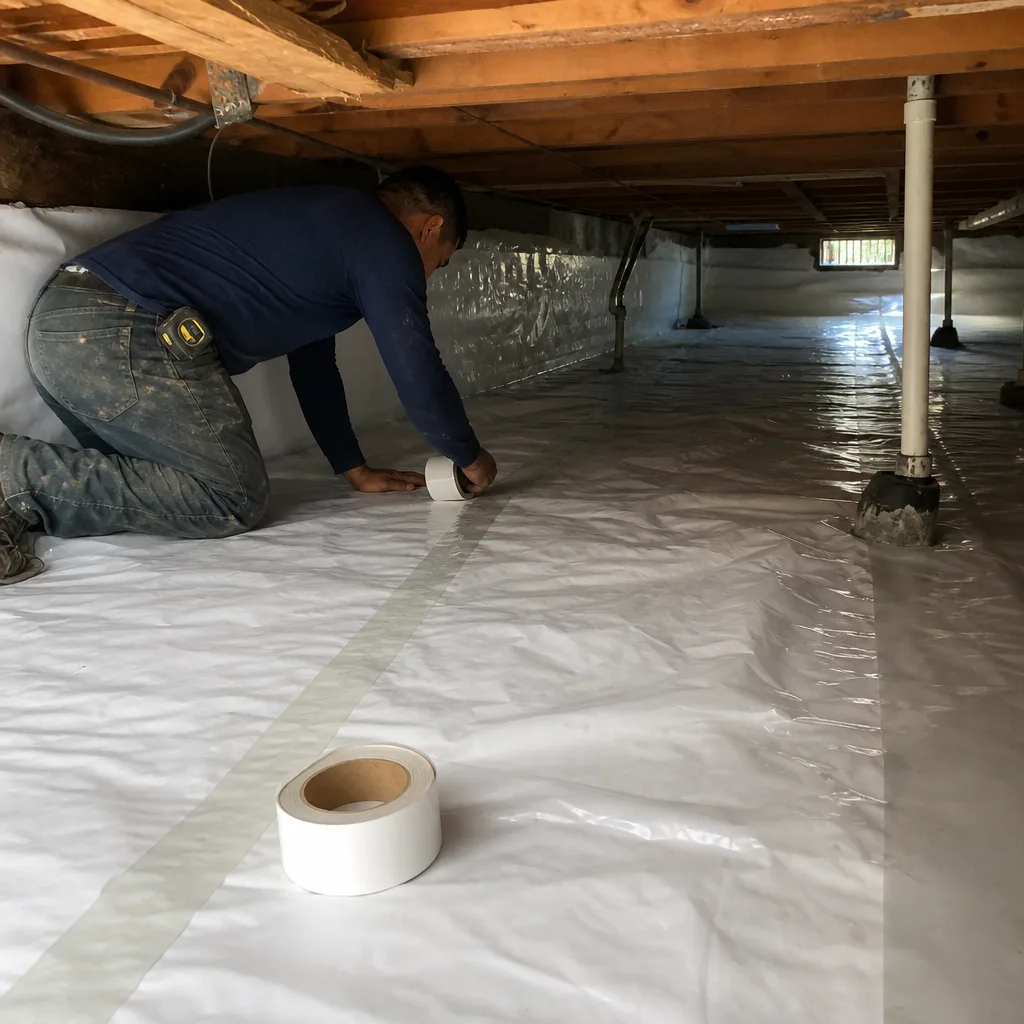
How much does radiant barrier installation cost in Long Beach, CA?
Radiant barrier installation in Long Beach costs between $1,400 and $3,200 for most single-family homes, with the per-square-foot installed price running $0.85 to $1.60. Mid-size attics – 1,000 to 1,800 square feet, the range that covers most homes in Bixby Knolls, Signal Hill, and Lakewood Village – typically fall between $1,600 and $2,600 including labor and material. If that range includes attic air sealing (which it should), expect the number to land in the upper portion of that window. For an exact written number specific to your attic, call (424) 415-7031 – the estimate is free.
Is a radiant barrier worth the cost in Long Beach’s climate?
Yes, for most Long Beach homes that already have R-30 or more of attic insulation. Long Beach’s summer heat load – particularly in inland-facing neighborhoods like El Dorado Park, Lakewood Village, and areas near the 91 freeway – produces attic temperatures of 140°F to 155°F on the roof deck without a barrier. A properly installed perforated radiant barrier reduces that attic temperature by 20°F to 30°F, which measurably reduces cooling load on the HVAC system. Typical payback in the Long Beach market runs 4 to 7 years depending on the home’s size, existing insulation levels, and how much the air conditioning system runs. Homes with ductwork in the attic see faster payback because the ducts are no longer sitting in superheated air.
Does the price include air sealing, or is that extra?
Air sealing is a separate line item on most quotes in this market, which means many quotes don’t include it at all. At Envelope, air sealing of top plates, can lights, and penetrations is completed before any radiant barrier is installed – it’s a hard prerequisite, not an upsell. The air sealing scope adds $350 to $750 to the project cost depending on the attic’s condition, but the performance difference is documented with a before-and-after blower-door test rather than taken on faith. If a quote you’re comparing doesn’t list air sealing as an included or optional line item, ask specifically – and add the cost before deciding which quote is actually lower.
How long does radiant barrier installation take in a typical Long Beach home?
Most single-family homes in Long Beach are completed in one day. A clean attic with standard access and a footprint under 1,800 square feet typically takes 4 to 6 hours including air sealing, foil installation, and close-out documentation. Larger attics, tight access, or complex duct configurations can extend the job to 7 to 9 hours. We don’t split jobs across multiple days unless the scope genuinely requires it – partial installations create attic conditions that don’t perform well until the work is complete.
Can I install a radiant barrier myself to save money?
Technically yes, but there are two practical problems with DIY installation in a typical Long Beach attic. First, the installation method matters significantly – foil that isn’t draped from rafters with a maintained air gap doesn’t perform as a radiant barrier. Many DIY installations end up with foil stapled flat against the roof deck, which eliminates the emissivity function entirely. Second, attics with HVAC equipment and older electrical wiring present real hazards that make extended work in the space risky without training. The labor component of a professional radiant barrier job – $500 to $950 for most homes – reflects both the physical conditions and the technical requirements. If the goal is cost reduction, bundling with other attic work you need tends to produce better savings than attempting the installation without the right equipment or materials.
Does Long Beach require a permit for radiant barrier installation?
Los Angeles County building code and Long Beach’s local enforcement generally do not require a permit for radiant barrier foil installation alone when it is added to an existing vented attic without structural modification. However, if the project involves replacing or adding attic insulation above a certain threshold, or any modification to HVAC equipment or ductwork, permit requirements may apply. We pull permits on any scope that requires them and will tell you specifically whether your project triggers that requirement during the estimate. A written scope that specifies exactly what work is and isn’t included is the fastest way to answer this question for your specific property.
Key Takeaways
- Radiant barrier installation in Long Beach runs $1,400 to $3,200 for most single-family homes, or $0.85 to $1.60 per square foot installed.
- Attic size, access quality, and whether air sealing is included account for most of the price variation in this market.
- Air sealing should precede installation – a barrier over an unsealed attic performs less well and doesn’t produce the blower-door improvement that a sealed-first job does.
- Long Beach’s inland neighborhoods (Lakewood Village, El Dorado Park, South of Conant) see the strongest ROI due to higher summer attic temperatures.
- Bundling radiant barrier with blown-in insulation or insulation removal typically saves $800 to $1,400 versus scheduling separately.
- Before-and-after blower-door readings are included on applicable jobs at Envelope – the performance change is measured, not claimed.
- A written price before any work starts is non-negotiable under Haven Standard Clause 1 – flat price, written scope, written warranty, before anyone touches the attic.
- Wes Okafor and the Envelope team have completed work on 9,000+ homes since 2016, every one with a written price and a documented photo record at close.
Get a Free Estimate for Your Long Beach Home
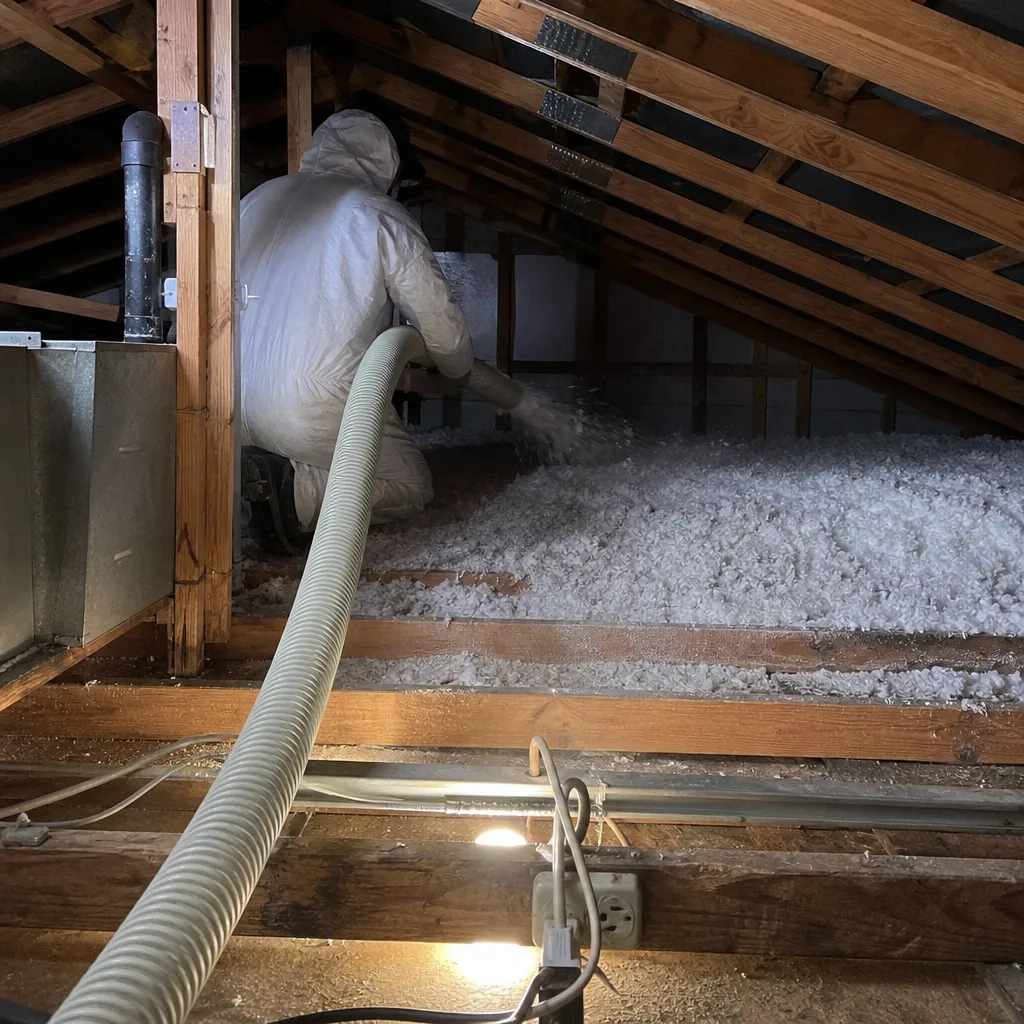
If you’re in Long Beach and trying to figure out whether a radiant barrier makes sense for your attic, the straightforward next step is an attic inspection and a written estimate. We measure the attic, check existing insulation levels, identify air-leakage points, and give you a flat price in writing before anyone starts work. No verbal ranges, no “it depends” followed by a higher number at the end of the job.
We also offer a free second opinion on any written estimate you’ve already received. Bring us the quote and we’ll read it with you – line by line – so you understand exactly what’s included and what isn’t. Under the Haven Standard, that costs you nothing and obligates you to nothing.
Wes Okafor leads every estimate team that goes out under the Envelope name, and a live person answers the phone 24 hours a day. Call (424) 415-7031 to schedule your free estimate in Long Beach. You’ll receive a written scope, a written price, and a written warranty before anyone sets foot in your attic.
The 365-Day Done Right Promise applies to every job we complete: if it’s not done right, we make it right. That’s in writing too.
Written by Wes Okafor, Owner at Envelope Insulation Co. (operating as Topside Attic Insulation Long Beach), serving Long Beach, CA since 2016.
Pricing reflects the Long Beach market as of 2026. Topside Attic Insulation Long Beach offers free estimates – call (424) 415-7031.
What Our Customers Say
"The winter gas bill dropped by about a third. They had estimated a quarter, so they under-promised."
- Genevieve R."They air-sealed the attic floor before insulating and showed me the blower-door number before and after. The upstairs is finally the same temperature as downstairs."
- Marisol D."Fixed price, clean work, and they hauled the old material away as agreed."
- Todd M.