
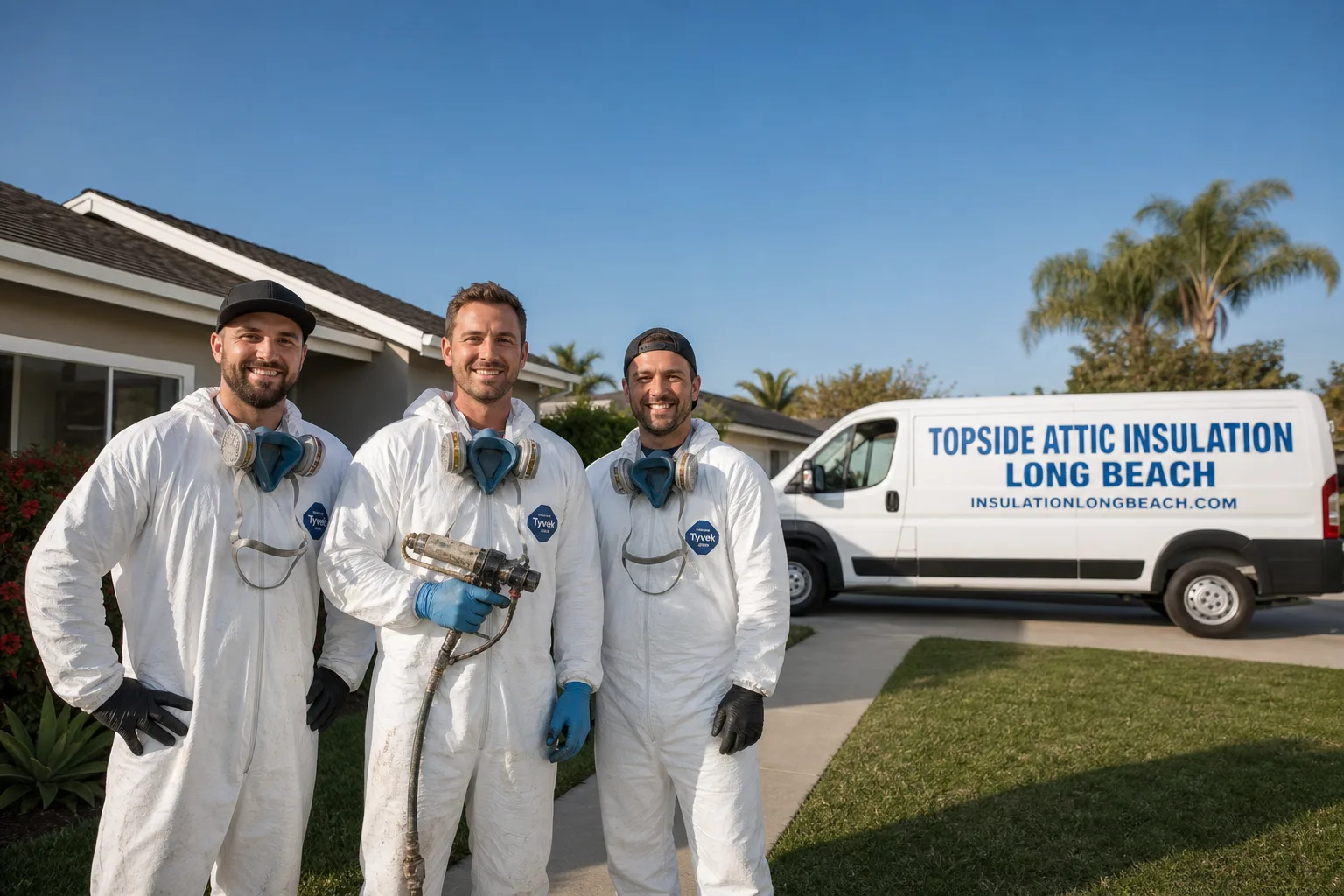
How Much Does Blown-In Insulation Cost in Long Beach?
Blown-in insulation in Long Beach, CA typically costs between $1,200 and $3,800 for a standard attic, with most single-story homes in the 1,400-2,200 sq ft range landing between $1,500 and $2,600 when attic air sealing is included. The wide range comes down to three things: how much existing insulation is already up there, whether the attic floor needs to be air-sealed before any material goes in, and the current R-value you’re starting from versus where you need to end up.
Blown-In Insulation Cost Breakdown (2026)
Blown-in insulation in Long Beach runs in a tighter band than most contractors admit on their websites. Here’s how the numbers actually break down by job type, based on current material and labor costs in the Los Angeles County market:
| Job Type | Typical Price Range | Notes |
|---|---|---|
| Attic blown-in only (existing insulation adequate, top-up to R-38) | $800 - $1,400 | Small homes under 1,200 sq ft; no removal needed |
| Attic blown-in, standard home (1,400-2,000 sq ft, R-0 to R-38) | $1,500 - $2,400 | Most Long Beach bungalows and postwar ranches |
| Attic blown-in with full air sealing (top plates, can lights, penetrations) | $1,900 - $3,200 | What we actually recommend - and what actually performs |
| Blown-in + old insulation removal (contaminated or rodent-damaged) | $2,400 - $4,500 | Common in older Long Beach homes; removal adds $0.80-$1.50/sq ft |
| Dense-pack blown-in for exterior walls (per 100 sq ft of wall) | $350 - $700 | Requires drilling; common retrofit in 1940s-1960s Long Beach builds |
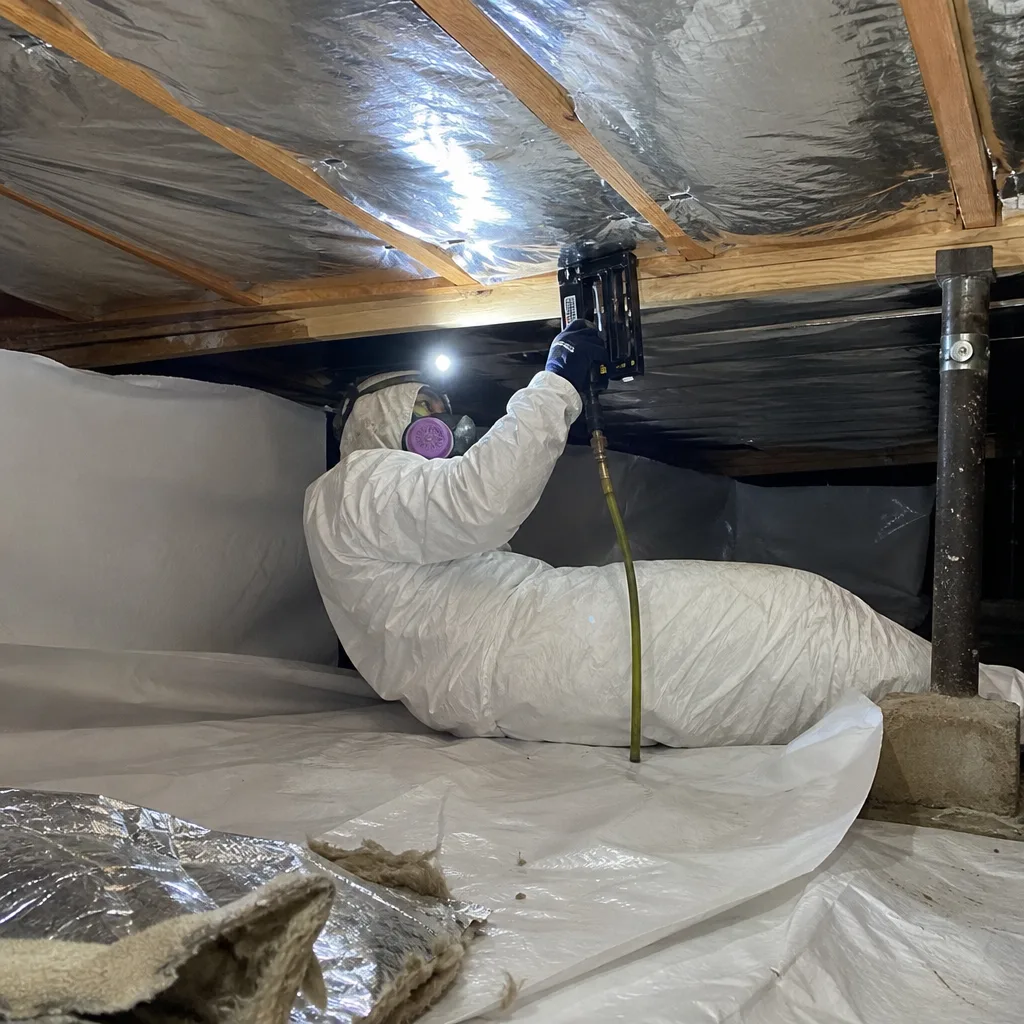
| Blown-in insulation for crawl space floor (per 100 sq ft) | $180 - $380 | Less common in LB; usually paired with vapor barrier work |
Material choice shifts the number too. Fiberglass blown-in from brands like Owens Corning or Johns Manville typically costs $0.40-$0.65 per sq ft installed, while cellulose – made from recycled paper fiber and particularly effective in Long Beach’s mild but coastal climate – runs $0.35-$0.60 per sq ft. The cost-per-sq-ft gap between fiberglass and cellulose is smaller than most homeowners expect; labor is usually the bigger variable.
What actually drives a quote up in Long Beach specifically: attic access size (a small pull-down in a Wrigley-area 1950s home takes longer to work through than a dedicated hatch), the presence of knob-and-tube wiring that requires clearance, and how deep the existing material is compressed. Quotes that skip air sealing look cheaper on paper and genuinely cost more over time – both in energy bills and in the risk of having to redo the work.
What Affects Blown-In Insulation Pricing in Long Beach
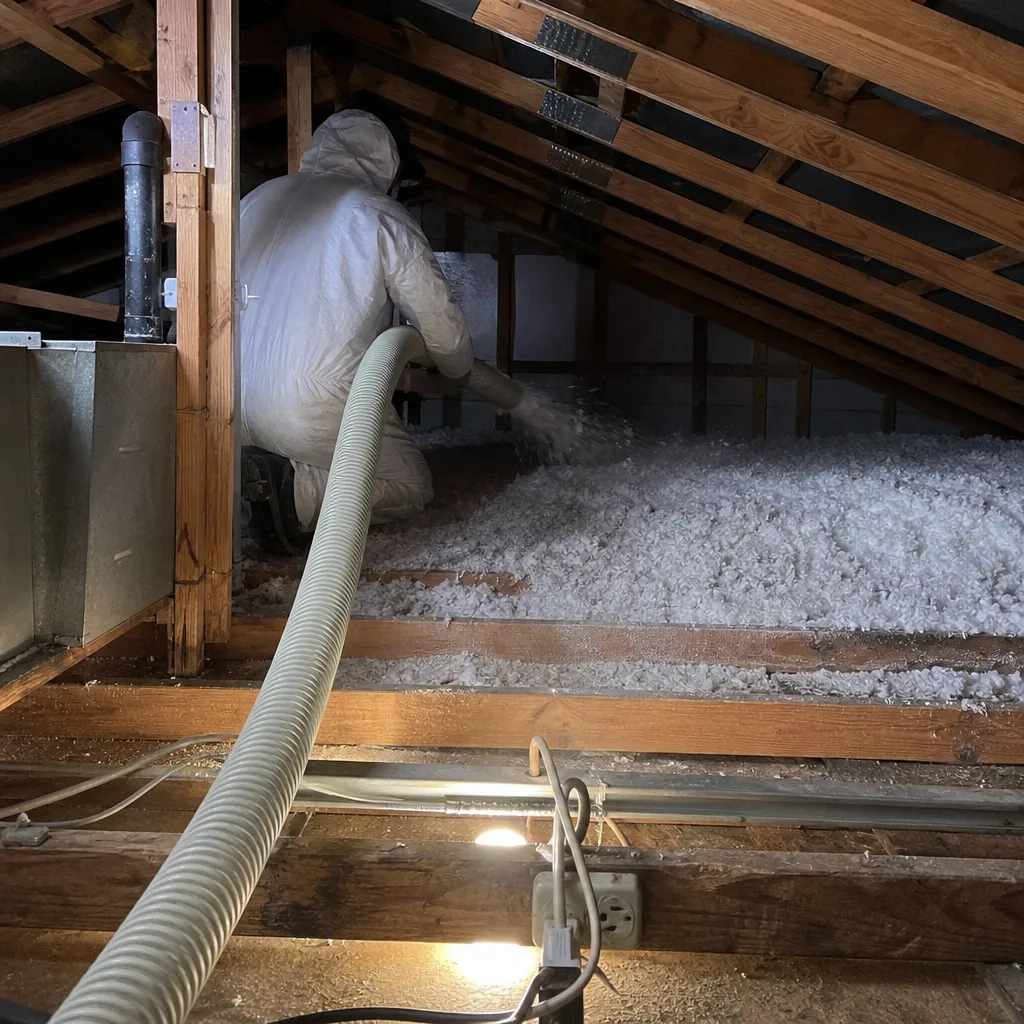
Six factors move the number up or down on nearly every Long Beach job we’ve seen since 2016. Here’s what each one actually means in practice:
- Current R-value and depth of existing insulation. California’s Title 24 energy code calls for R-38 minimum in Long Beach attics – roughly 12 inches of fiberglass or 11 inches of cellulose. Homes built before 1990 in neighborhoods like California Heights, Wrigley, or North Long Beach frequently have R-11 or less. The further you are from the target, the more material goes in, and the higher the installed cost.
- Attic square footage and configuration. A straightforward open attic in a 1,600 sq ft Belmont Shore bungalow takes far less time than a 2,400 sq ft home in Los Cerritos with low-pitch sections, dropped soffits, and HVAC equipment sitting on the floor. Tight or fragmented attic geometry adds labor hours directly.
- Air sealing scope before installation. This is the line item most contractors hide or skip entirely. Sealing the top plates, can lights, and any penetrations – before any blown-in material goes in – is not optional if you want the insulation to perform. It typically adds $400-$900 to the job, but it’s the difference between documented air-sealing results you can measure on a blower-door test and a soft layer of fluff that mostly slows convection without stopping infiltration.
- Old insulation removal. Long Beach has a significant share of homes – particularly in Signal Hill, Bixby Knolls, and the older sections of Lakewood adjacent areas – where the attic contains compressed, rodent-damaged, or moisture-affected insulation that has to come out before anything new goes in. Removal runs $0.80-$1.50 per sq ft on average; don’t let a contractor skip this if the existing material is visibly contaminated.
- Material choice: fiberglass vs. cellulose vs. mineral wool. Cellulose is denser and handles Long Beach’s occasional coastal humidity better than fiberglass in poorly ventilated attics. Mineral wool products from Rockwool are fire-resistant and perform well in multi-family buildings near downtown Long Beach, but they cost more per square foot than either fiberglass or cellulose. The right material depends on the attic, not the price sheet.
- Accessibility and safety requirements. Older Long Beach homes with active knob-and-tube wiring require a licensed electrician’s sign-off before insulation covers the wiring – this is a code requirement, not a upsell. Some homes in the historic districts near Bluff Park also require extra care around older structural elements. Both scenarios add time and, in the knob-and-tube case, a separate trade cost.
Long Beach-Specific Context: Why Coastal Climate Still Matters for Insulation
Long Beach isn’t the same as Pasadena or the Inland Empire when it comes to attic insulation performance. The marine layer keeps temperatures mild but introduces consistent morning humidity that cycles through attic spaces from May through September. In homes along the peninsula in Belmont Shore or Naples, we regularly see fiberglass batts that were installed in the 1990s holding moisture at the edges – which compresses the material and cuts its effective R-value by 20-35% compared to lab ratings.
That’s not an argument against insulation. It’s an argument for getting the ventilation and air sealing right before anything is installed. A blower-door test – a pressurization reading that shows, in one number, how much air your building envelope is losing – taken before and after the job will confirm whether the work actually changed the air exchange rate of the home. We’ve seen homes in Signal Hill where sealing alone dropped the blower-door reading from over 4,000 CFM50 to under 2,200 CFM50 before a single bag of cellulose was blown in. The insulation on top of that is what locks in the gain.
Long Beach also sits in California Climate Zone 8, which means Title 24 requires attic insulation to meet R-38 for most residential projects. If you’re pulling a permit for a renovation that touches the attic, the insulation will need to meet current code – and that’s worth knowing before you get a quote, because “bringing it to code” and “topping it off” are two different scopes with meaningfully different price tags.
How to Save on Blown-In Insulation in Long Beach
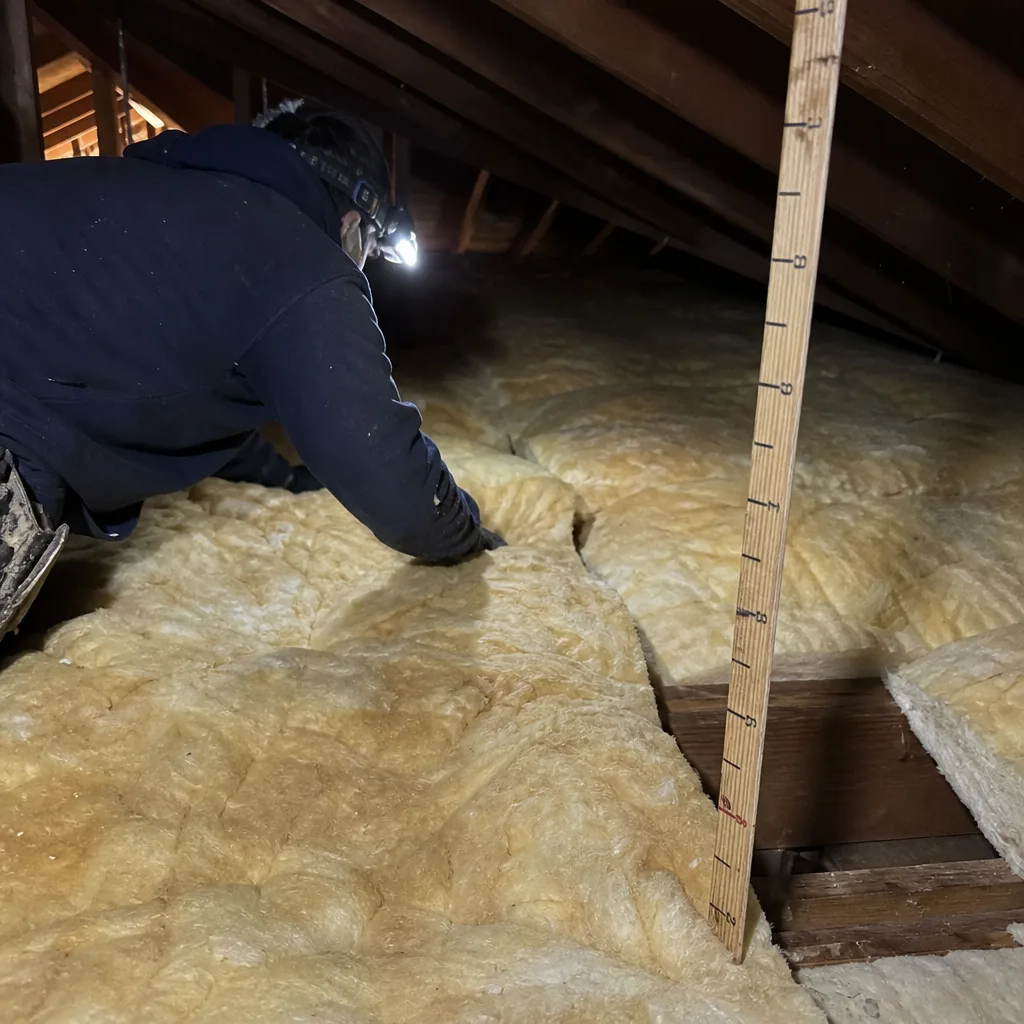
There are real ways to lower the cost without cutting the wrong corners. Here’s what actually works:
- Audit before you commit to a scope. A home energy audit – a full-building assessment of where your conditioned air is actually going – costs $150-$400 in Long Beach but routinely identifies that half the problem is in a location you wouldn’t have thought to insulate. Spending $400 on a diagnosis before a $3,000 job can redirect the scope entirely. We offer home energy audits as part of our full building-envelope service at Envelope Insulation Co..
- Check the TECH Clean California and LADWP programs. Southern California Edison and LADWP both run rebate programs tied to insulation and air sealing upgrades. In 2025-2026, rebates for attic insulation in Long Beach homes have ranged from $0.10 to $0.25 per sq ft of installed material depending on the program cycle and your current utility. These rebates don’t show up automatically – you have to apply – but on a 1,800 sq ft attic they can offset $180-$450 of the total cost. Ask your contractor if they can document the R-value upgrade in a format the utility accepts.
- Bundle air sealing and insulation in one scope. If you price air sealing and blown-in insulation separately, the mobilization cost doubles. When both are done in a single visit by the same crew, the combined cost is consistently lower than two separate jobs – typically $200-$500 less. This is also how the work should be sequenced: seal first, then insulate, in that order.
- Get a second opinion on any written estimate. We offer a free second opinion on any written estimate – bring us what you have, and we’ll read it with you line by line. That includes identifying whether a competing quote has omitted air sealing, is pricing material by the bag rather than the installed R-value, or has built in a removal charge for insulation that may not actually need to come out. A quote that looks $400 cheaper sometimes is $400 cheaper. And sometimes it’s skipping $800 worth of work.
- Don’t over-insulate past the code requirement without a reason. Some homeowners are sold R-60 in a Long Beach attic when Title 24 requires R-38. R-60 is appropriate in colder climates or if you’re trying to qualify for specific programs. In Climate Zone 8, the marginal return between R-38 and R-60 is small. Know what you’re buying before you agree to a depth that adds material cost without proportional energy savings.
For a no-obligation written estimate on Blown-In Insulation services for your Long Beach home, call (424) 415-7031. We give you a flat price in writing before anyone starts work – that’s Haven Standard Clause 1, and it doesn’t change based on what we find once we’re in the attic.
What the Estimate Process Looks Like With Us
We know this is the part most contractors skip over. Here’s what actually happens when you call or text Topside Attic Insulation Long Beach at (424) 415-7031:
A live person answers – no voicemail loop, no callback window. We schedule an attic assessment at a time that works for you. The technician who arrives will be background-checked, uniformed, and named in the text you’ll receive when they’re on the way (that’s the Haven Standard: Arrive on schedule, you get a named technician and a text when they’re on the way).
During the assessment, we measure the attic, check existing R-value with a probe, document current conditions with photos, and note any air sealing gaps – can lights, top plates, plumbing and electrical penetrations. We look at access size, ventilation, and any signs of moisture or pest activity. If there’s existing insulation that needs to be evaluated for removal, we tell you what we found, not what we think you want to hear.
You walk away with a written scope and a flat price. If you have a competing written estimate, bring it – we’ll read it with you for free. Work doesn’t start until the written price is signed. When the job is done, you receive a Documented Photo Record of the completed work, and on jobs where air sealing was performed, before-and-after blower-door readings so you can see in one number what changed. The 365-Day Done Right Promise covers everything in the written scope – if it’s not right, we make it right.
That’s the process for every job, including a blown-in insulation installation in Long Beach, whether it’s a 900 sq ft bungalow near Retro Row or a 2,800 sq ft home in Los Cerritos.
FAQs – Blown-In Insulation Cost in Long Beach
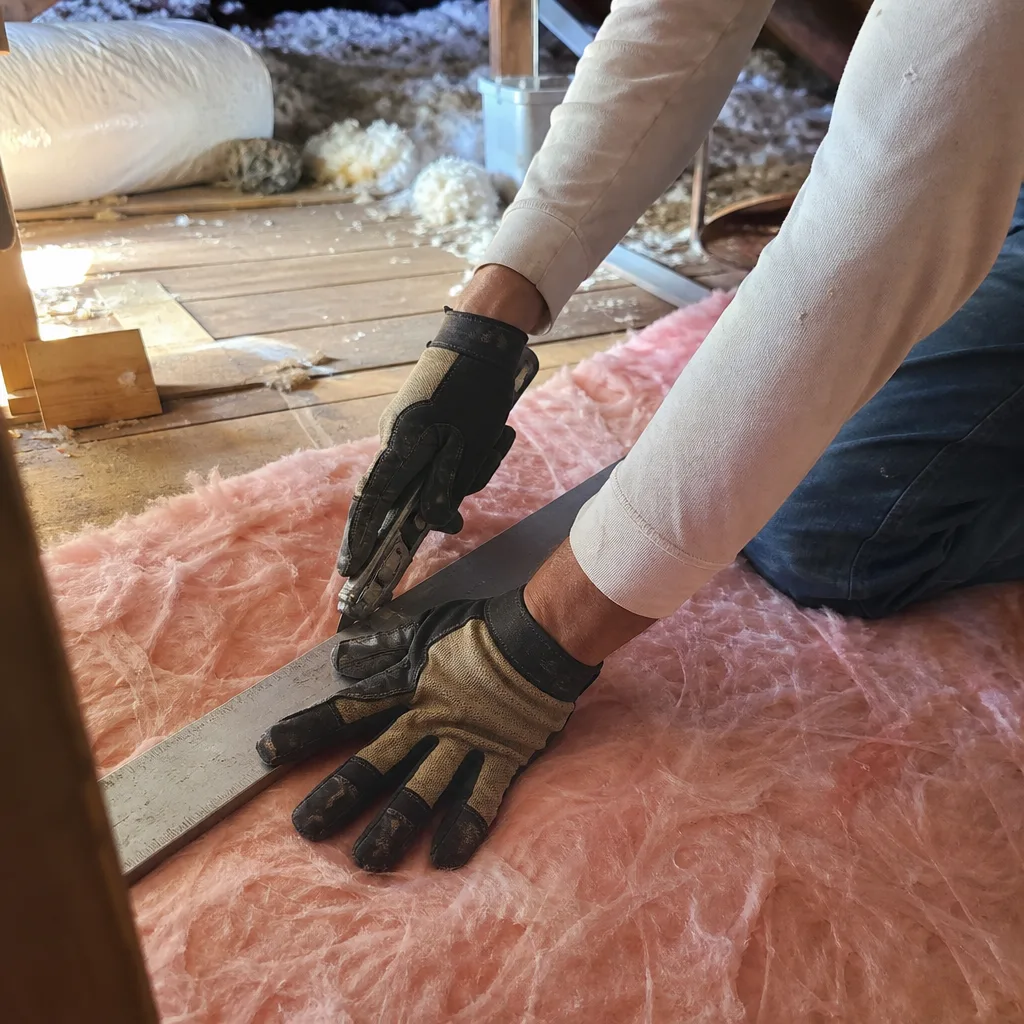
How much does blown-in insulation cost in Long Beach per square foot?
Blown-in insulation in Long Beach runs $0.85 to $2.10 per square foot installed, depending on whether the quote includes air sealing, old insulation removal, and what depth you’re installing to. A straight material-and-labor quote for topping up a partially insulated attic to R-38 typically lands at $0.85-$1.20/sq ft. If air sealing is included – which it should be for the work to actually perform – expect $1.30-$1.80/sq ft. Jobs that include full removal of old material before new insulation goes in run $1.60-$2.10/sq ft. Call (424) 415-7031 for a written estimate on your specific attic; we’ll give you a flat price, not a range with a call-back asterisk.
Is it cheaper to replace or just add blown-in insulation on top of existing material?
Adding blown-in on top of existing insulation is cheaper – typically $600-$1,200 less than full removal and replacement on a standard Long Beach home. But it’s only the right call if the existing insulation is dry, uncompressed, and free of rodent contamination. Compressed or moisture-damaged insulation under a fresh layer of cellulose doesn’t recover its R-value; you’ve paid to install on top of a problem. We probe the existing depth and take photos before recommending either path, and we show you what we found so the decision is yours to make with real information.
Does blown-in insulation require a permit in Long Beach?
In most cases, blown-in insulation installed as a straightforward upgrade does not require a building permit in Long Beach. However, if the project is part of a larger renovation that triggers Title 24 compliance review, or if the attic contains knob-and-tube wiring (which requires a licensed electrician’s involvement before insulation is added), there may be additional requirements. Long Beach building code follows California’s Energy Code; your contractor should know the trigger thresholds. We pull permits when the scope requires it and tell you upfront if your job falls into that category – it goes in the written scope before work starts.
How long does blown-in insulation last in Long Beach?
Fiberglass blown-in installed correctly lasts 20 to 30 years before meaningful degradation in most Long Beach attics. Cellulose has a similar lifespan under normal conditions, though it’s more sensitive to sustained moisture. In Long Beach’s coastal climate, the bigger threat to longevity isn’t material breakdown – it’s the combination of unaddressed air leaks and inadequate ventilation that allows humidity to cycle through the attic and compress the insulation over time. That’s why air sealing before installation isn’t optional on our jobs; it directly extends how long the insulation performs at the rated R-value.
Can blown-in insulation lower my energy bills in Long Beach?
Yes, though the numbers vary. In Long Beach homes we’ve worked on since 2016 – particularly in neighborhoods like Wrigley, Bixby Knolls, and North Long Beach where older construction often has attic insulation well below R-19 – upgrading to R-38 with proper air sealing has reduced heating and cooling loads enough to move summer utility bills by $40-$110 per month. The blower-door test before and after the air sealing portion of the job gives you a documented measure of the infiltration change. The insulation on top locks in what the air sealing created. If a contractor tells you the savings will be dramatic but shows you no numbers to back it up, ask for blower-door readings – before and after – as part of the written scope.
What’s the difference between blown-in insulation and spray foam for an attic?
Blown-in insulation – whether fiberglass or cellulose – fills the attic floor cavity and is the standard approach for vented attic assemblies, which most Long Beach homes have. It’s installed on top of the ceiling drywall, between and over the joists, and it works with normal attic ventilation. Spray foam (open-cell or closed-cell) is applied to the underside of the roof deck in an unvented attic assembly, which effectively brings the attic inside the building envelope. Spray foam costs significantly more – typically $3,000-$7,500 for a comparable Long Beach home – and changes how the attic mechanically functions. Neither is universally better; the right choice depends on whether your HVAC equipment lives in the attic, whether you want a conditioned attic space, and what your permit scope requires. We use products from Icynene and Demilec for spray foam applications and Owens Corning, Johns Manville, Knauf, and GreenFiber for blown-in work, and we’ll tell you which approach makes sense for your specific attic before you commit to either.
Key Takeaways
- Most Long Beach homeowners pay $1,500-$3,200 for blown-in attic insulation when air sealing is included – the range that actually moves the needle on performance.
- California Title 24 requires R-38 minimum in Long Beach attics for most residential projects; many pre-1990 homes sit at R-11 or less.
- Air sealing – done before insulation is installed – is what separates a documented performance improvement from a layer of material sitting on an unsealed attic floor.
- Before-and-after blower-door readings give you a single, measurable number that confirms the air sealing worked; ask for them as part of any quote.
- Written price before any work starts. Documented Photo Record when the crew leaves. 365-Day Done Right Promise covering the written scope. That’s the standard on every job.
- Free second opinion on any written estimate – bring what you have to (424) 415-7031 and we’ll read it with you.
Get a Written Estimate for Your Long Beach Home
Wes Okafor and the crew at Topside Attic Insulation Long Beach have assessed and insulated homes across Long Beach – from 1940s bungalows in Wrigley to postwar ranches in Bixby Knolls and newer builds near Belmont Shore – and the job has looked different on every one of them. The price ranges on this page reflect what we actually see in this market in 2026. Your attic may land anywhere inside those ranges, and the written estimate will tell you exactly where and why.
Call (424) 415-7031 – a live person answers – and we’ll schedule an attic assessment, give you a written flat price before anyone touches a tool, and document what we found and what we did before we leave. That’s not a sales pitch; it’s just the way every job runs under the Haven Standard.
Pricing reflects the Long Beach market as of 2026. Topside Attic Insulation Long Beach offers free estimates – call (424) 415-7031.
Written by Wes Okafor, Owner at Topside Attic Insulation Long Beach, serving Long Beach, CA since 2016.
What Our Customers Say
"Fixed price, clean work, and they hauled the old material away as agreed."
- Todd M."Crawl space encapsulation done properly. Photographs of the vapour barrier at every seam, and the damp smell in the hallway is gone."
- Ainsley P."Two other companies quoted to blow more insulation on top of what was there. These were the only ones who said the existing material had to come out first, and explained why."
- Clifford E.