
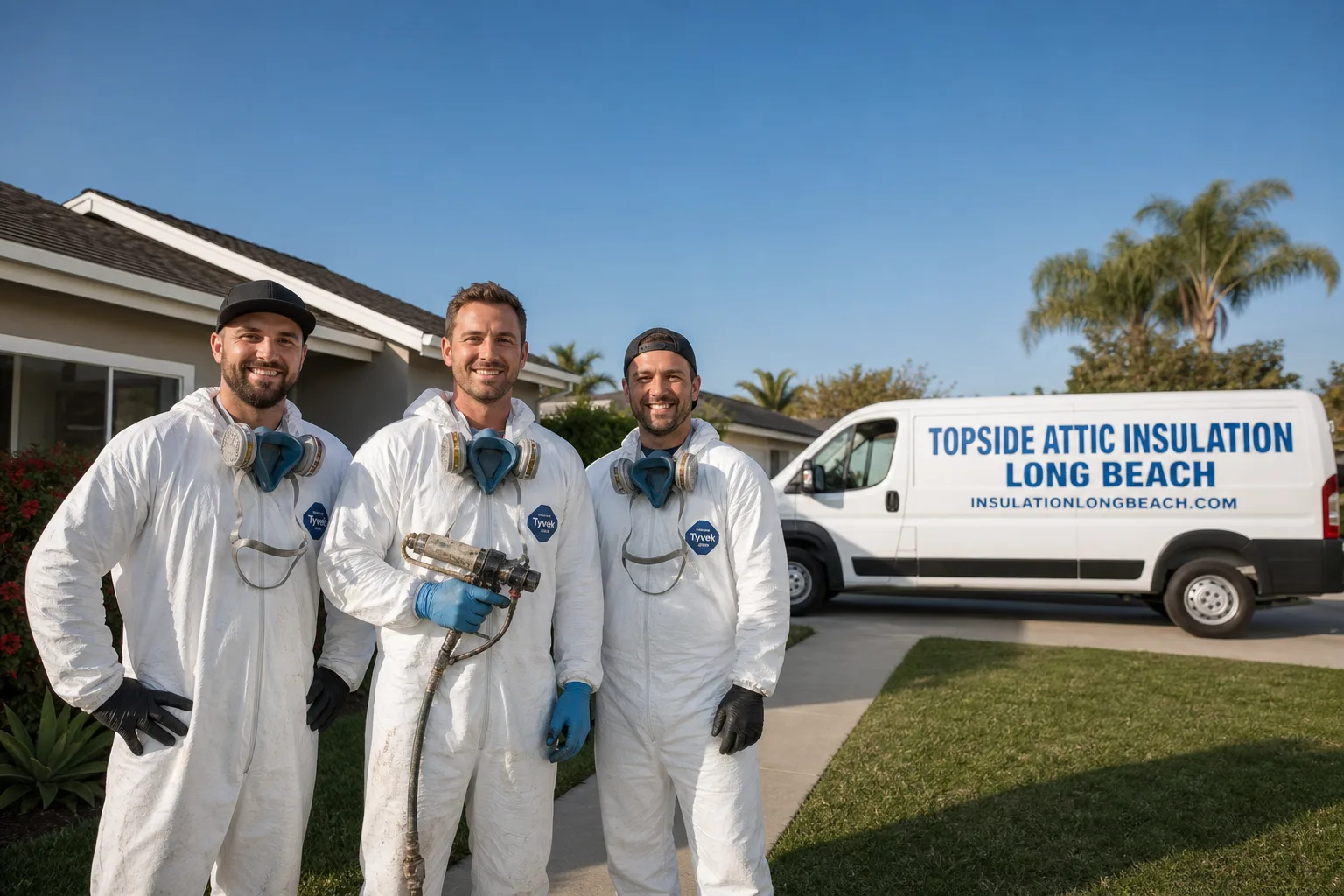
How Much Does Attic Insulation Cost in Long Beach?
Our Attic Insulation Near Me in Long Beach, CA typically costs between $1,800 and $4,200 for a standard single-family home, with most jobs landing around $2,400 to $3,000 when air sealing is included. The price depends on attic square footage, the type of insulation material, current R-value, and whether old insulation needs to come out first. Most homes we assess in Long Beach need both air sealing and new insulation to meet current California Title 24 performance standards – doing one without the other leaves real money on the table.
Attic Insulation Cost Breakdown (2026)
The numbers below reflect actual job pricing in the Long Beach market as of 2026. Homes in Bixby Knolls, Belmont Shore, and Signal Hill tend to run at the mid-to-upper end of each range because the attic configurations are tighter and older (many were built between 1945 and 1965), which adds labor time. Newer construction in El Dorado Park and Los Altos generally comes in closer to the floor of each range.
| Service / Line Item | Typical Range (Long Beach, 2026) | Notes |
|---|---|---|
| Blown-in fiberglass insulation (per sq ft) | $1.20 – $2.00 | Most common on tract homes; fast install |
| Blown-in cellulose insulation (per sq ft) | $1.10 – $1.80 | Good retrofit material; dense-pack available |
| Batt insulation – fiberglass (per sq ft) | $1.50 – $2.40 | Used where accessibility allows; less common in attics |
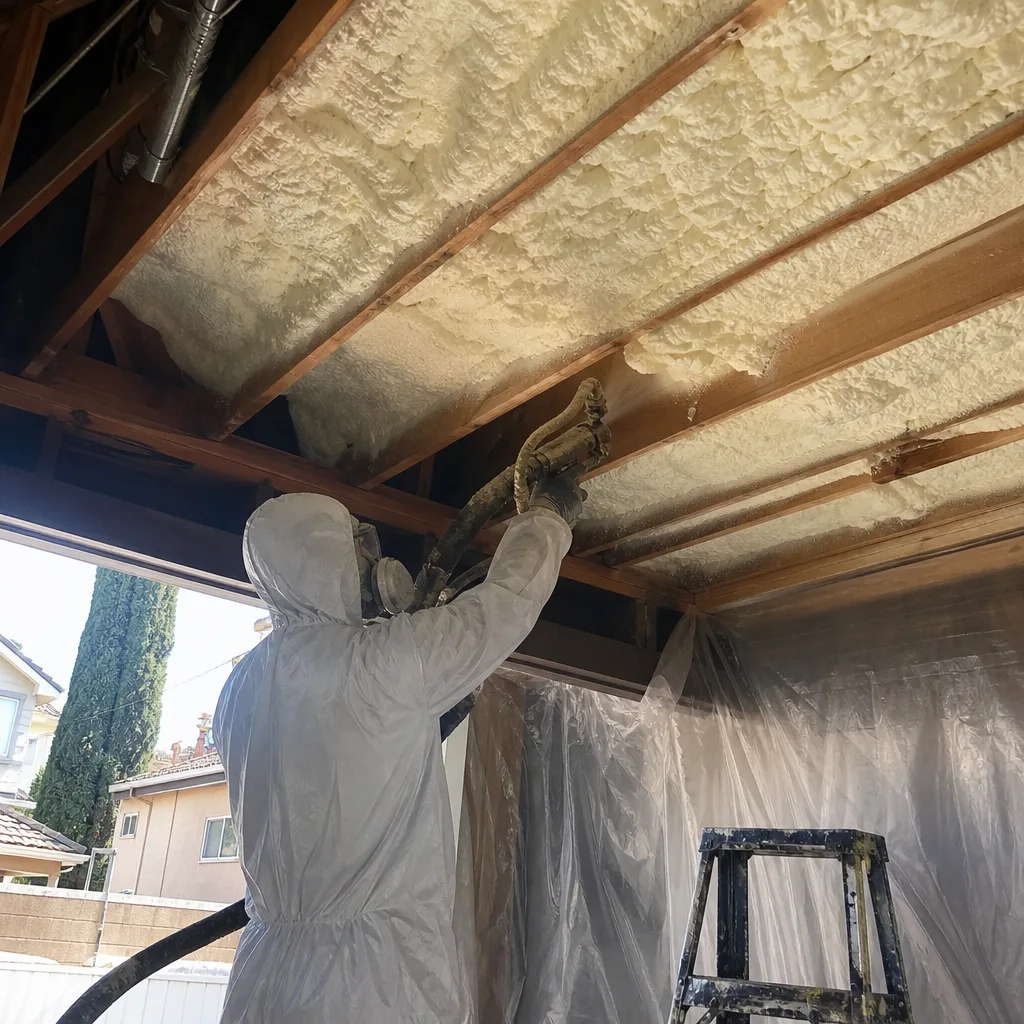
| Open-cell spray foam (per sq ft) | $1.80 – $3.00 | Unvented rafter application; roof deck treatment |
| Closed-cell spray foam (per sq ft) | $3.50 – $6.50 | High R-value per inch; used for specific problem areas |
| Attic air sealing only (top plates, can lights, penetrations) | $400 – $900 | Completed before insulation; blower-door verified |
| Radiant barrier installation | $600 – $1,400 | Effective in Long Beach’s warm climate; reduces cooling load |
| Old insulation removal (per sq ft) | $1.00 – $2.50 | Required when existing material is contaminated or compacted |
| Full attic job (seal + blow-in, 1,200 sq ft attic) | $2,200 – $3,400 | Most common scope for Long Beach single-family homes |
| Full attic job with removal + seal + blow-in (1,200 sq ft) | $3,200 – $5,200 | Older homes requiring demo before reinstall |
What the Numbers Actually Include
Every price Envelope Insulation Co. puts in writing covers materials, labor, cleanup, and a Documented Photo Record of the finished work – that last item is included on every job, not something you request after the fact. On jobs where air sealing is part of the scope (which is most of them, because we won’t blow insulation over an unsealed attic floor), you also receive before-and-after blower-door readings: a single pressurization number that tells you, in plain terms, how much conditioned air your home was losing and how much less it loses now.
What the numbers above do not include: HVAC duct sealing (a separate scope), attic cleaning beyond basic debris removal, or rodent proofing if pest damage is present. If those items come up during our initial assessment, they appear as separate line items in the written price – never buried inside a vague “preparation” charge.
A Quick Note on R-Value and California Code
California’s Title 24 energy code calls for R-38 to R-60 in most Long Beach attic applications, depending on the climate zone (Long Beach sits in CEC Climate Zone 8). Many older homes in Wrigley, North Long Beach, and the areas around Poly High are sitting at R-11 or R-13 – sometimes nothing at all. Getting from R-13 to R-38 on a 1,200 square foot attic floor typically requires about 10 to 11 inches of blown-in fiberglass or cellulose and falls toward the middle of the $2,200 to $3,400 range above.
What Affects Attic Insulation Pricing in Long Beach
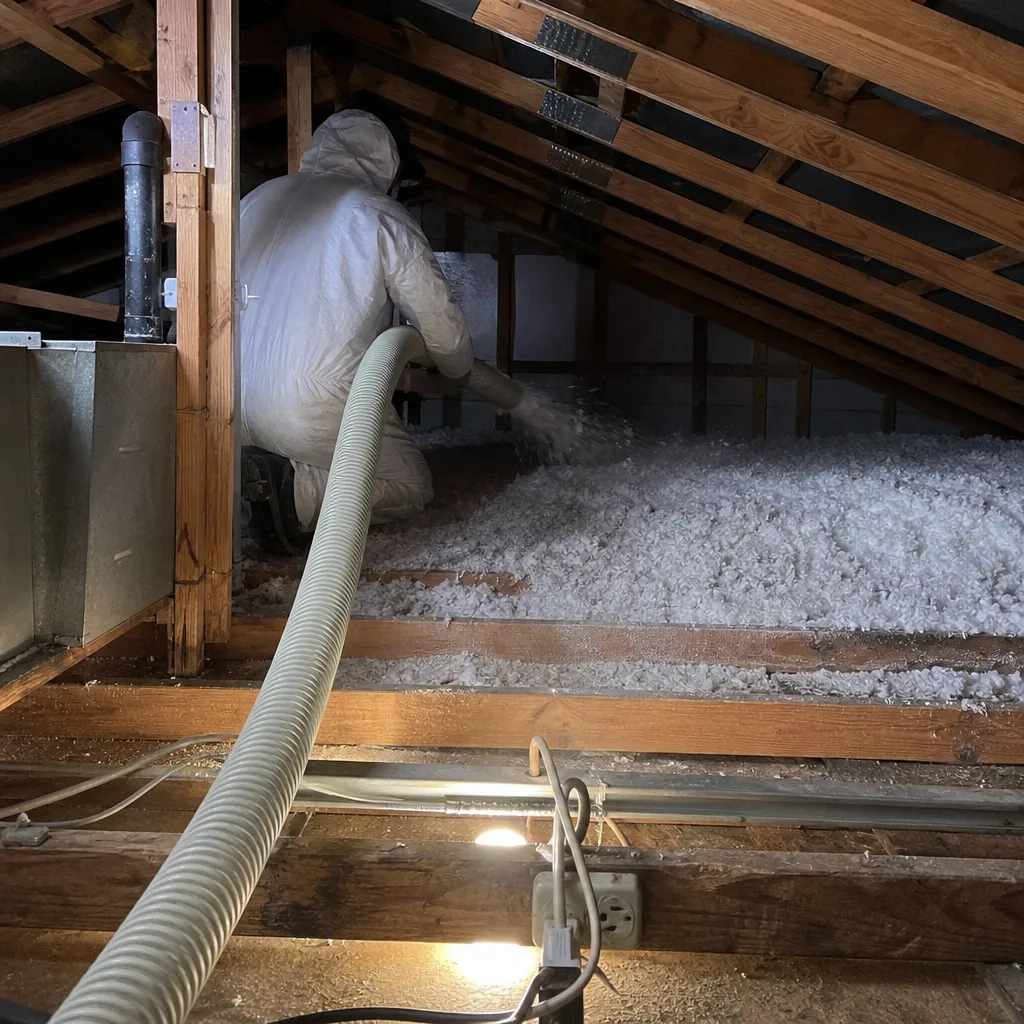
Six variables move the price meaningfully. All of them show up in the written scope before any work starts.
- Attic square footage and access. A 900 square foot attic with a generous 30-inch hatch costs less to insulate than a 1,500 square foot attic with a 22-inch hatch and knee walls. Many craftsman bungalows in Bluff Park and Alamitos Beach have complex rooflines that add labor hours regardless of material cost.
- Existing insulation condition. If the current insulation is in reasonable shape and the R-value is just low, we can often add on top. If it’s contaminated from a rodent problem – which is common in older Long Beach neighborhoods near the LA River corridor – removal is required first, and that’s a separate cost. We document what we find with photos before recommending removal.
- Air sealing complexity. A 1960s Long Beach home can have 40 to 60 individual penetrations at the attic floor: can lights, top plates at interior walls, plumbing stacks, wiring runs, and HVAC chases. Each one needs to be sealed with caulk, foam, or rigid blocking before insulation goes in. A newer home in Rancho Dominguez or the Poly High area may have far fewer. Air sealing labor is priced per penetration count, not as a flat percentage of the job.
- Insulation material chosen. Blown-in fiberglass (Owens Corning or Johns Manville) and blown-in cellulose (GreenFiber or Knauf) are the most cost-effective options for attic floors. Closed-cell spray foam from Icynene or Demilec costs more per square foot but is the right call for unvented roof assemblies – a configuration that shows up occasionally in Long Beach remodels where someone converted an attic space. We match material to application, not to margin.
- Long Beach’s climate profile. The South Bay marine layer keeps Long Beach cooler than inland LA County most of the year, which means cooling load matters but isn’t as extreme as in the San Gabriel Valley. That said, heat does build in the attic during Santa Ana conditions, and homes facing south or west in areas like Los Cerritos and Cal Heights feel it. A radiant barrier adds $600 to $1,400 but meaningfully reduces attic temperatures on those orientations – worth pricing out before deciding.
- Permit requirements. The City of Long Beach Building and Safety Department requires permits for some insulation scopes, particularly when spray foam is applied to the roof deck in an unvented application. Blown-in insulation added to an existing vented attic floor typically does not require a permit. We handle permit applications when they are required; the cost appears in the written price, not as a surprise line item at the end.
Attic Insulation vs. Replacement: Which One Do You Need?
This is the question that comes up on almost every initial assessment in Long Beach, and the answer always starts with what we actually find up there – not with what the schedule needs to produce that week.
Attic Insulation Top-Up makes sense when: the current insulation is dry, uncontaminated, still lofted (not compressed flat), and has a documented R-value of at least R-11. In that case, topping up to R-38 or R-49 is the most cost-effective path, and it’s what most homes in newer Long Beach subdivisions need.
Attic Insulation Replacement makes sense when: the existing insulation is contaminated by rodent activity, wet from a past roof leak, compacted to near zero R-value, or so old that it’s degraded (vermiculite or early-generation blown-in that’s turned to dust). We document the condition with photos before making the recommendation, because “you need full replacement” should come with evidence, not just a verbal description from someone standing on the attic ladder.
How to Save on Attic Insulation in Long Beach
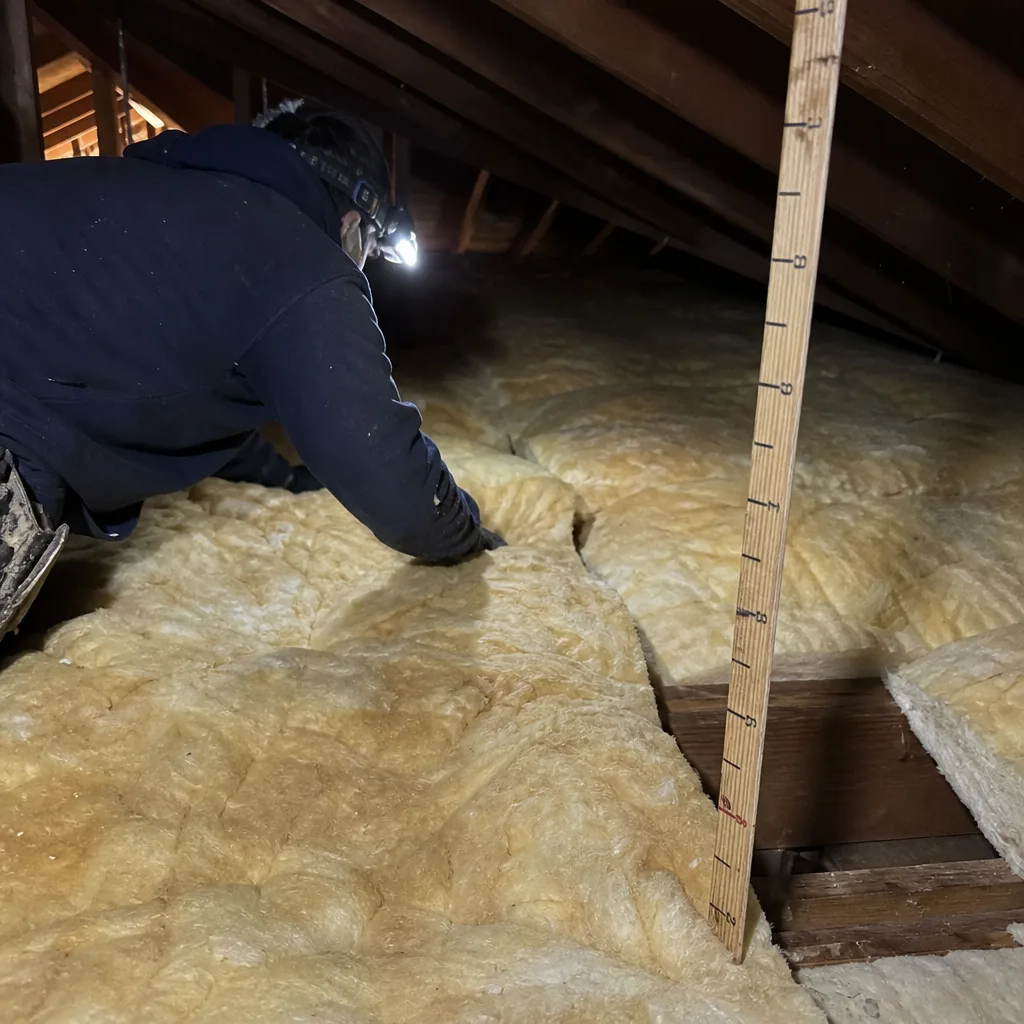
Stack Available Incentives
The federal 25C tax credit, updated under the Inflation Reduction Act, currently covers 30% of attic insulation and air sealing costs up to a $1,200 annual cap (as of 2026). That’s a real offset on a $2,400 job. Southern California Edison and SoCalGas also run rebate programs for qualifying insulation upgrades – eligibility depends on your current R-value and the improvement achieved, not just on installing any insulation at all. We can tell you before the job starts whether your project is likely to qualify; we can’t file the rebate on your behalf, but we do provide the documentation the utility programs typically ask for.
Combine Scopes in One Visit
Attic air sealing, blown-in insulation, and radiant barrier installation all happen in the same work zone. Scheduling them as a single job costs meaningfully less than three separate visits – the setup, equipment hauling, and cleanup happen once. If your attic also needs cleaning or rodent proofing, adding that to the same scope saves a second mobilization charge. The written price will show each line item separately so you can see exactly what each scope costs on its own.
Get a Second Opinion Before You Commit
If you’ve already received a written estimate from another contractor, we’ll read it with you – no charge, no obligation. The Free Second Opinion on Any Written Estimate is part of how Envelope Insulation Co. operates, because an informed customer makes better decisions about their home. If their price is accurate and their scope is sound, we’ll tell you that. If there are items missing from the scope (air sealing is the most common omission), we’ll point to the specific line items.
Don’t Skip Air Sealing to Save Money
This one is counterintuitive. Skipping air sealing to reduce the upfront cost is the single most common reason attic insulation underperforms in Long Beach homes. New insulation slows conductive heat transfer – but conditioned air escaping through gaps at the top plates and can lights bypasses the insulation entirely. You’ve paid for R-38 performance and you’re getting something closer to R-20 in practice because the air is moving around the insulation, not through it. We won’t structure a quote that omits air sealing when the attic floor needs it; that’s not a business policy, it’s just what the physics requires.
Request a Free Estimate with a Written Scope
A written price before any work starts is not a perk – it’s Haven Standard Clause 1, and it applies to every job Envelope Insulation Co. takes on. Call (424) 415-7031 to schedule a free estimate for your Long Beach home. The estimate comes with a written scope, a written price, and a written warranty – you’ll know exactly what you’re paying for before anyone climbs into your attic.
Long Beach Neighborhoods: What We Typically Find
After assessing homes across Long Beach since 2016 – from the craftsman corridors of Bluff Park to the postwar tracts in Lakewood Village – a few patterns show up repeatedly, and they affect pricing in ways that a per-square-foot average can’t fully capture.
Bixby Knolls and California Heights: These neighborhoods are heavy on 1930s to 1950s construction with plaster ceilings and complicated attic geometry. Can light penetrations are everywhere, and the original insulation – when it exists at all – is often rock wool or compressed fiberglass batting at R-6 or lower. Air sealing labor runs higher here because penetration counts are higher. Budget for the upper half of the full-job range.
Belmont Shore and Belmont Heights: Smaller attic footprints, often under 900 square feet, but tight hatch access and older framing configurations. Total job cost is lower because of footprint, but labor per square foot is higher. Radiant barriers are less common here because of the marine cooling effect, but air sealing consistently shows large improvement on blower-door readings.
El Dorado Park and Los Altos: 1960s to 1970s tract construction with more standardized attic configurations. These jobs tend to move faster and price closer to the lower half of each range. Existing insulation is often in reasonable condition but at R-13 or lower – good candidates for an add-on-top scope without full removal.
North Long Beach and Wrigley: Mix of ages and conditions. Rodent activity in attic insulation is more common in these areas, which means removal is a more frequent part of the scope. That adds to the total cost but also means the finished job is starting clean rather than layering new material over a contaminated substrate.
Signal Hill: Elevated terrain and hillside exposures mean attics on the south and west faces accumulate more heat than the neighborhood averages suggest. Radiant barriers perform well here. The city of Signal Hill has its own building department separate from Long Beach, so permit requirements can differ slightly on spray foam applications.
Why Air Sealing Has to Come Before Insulation
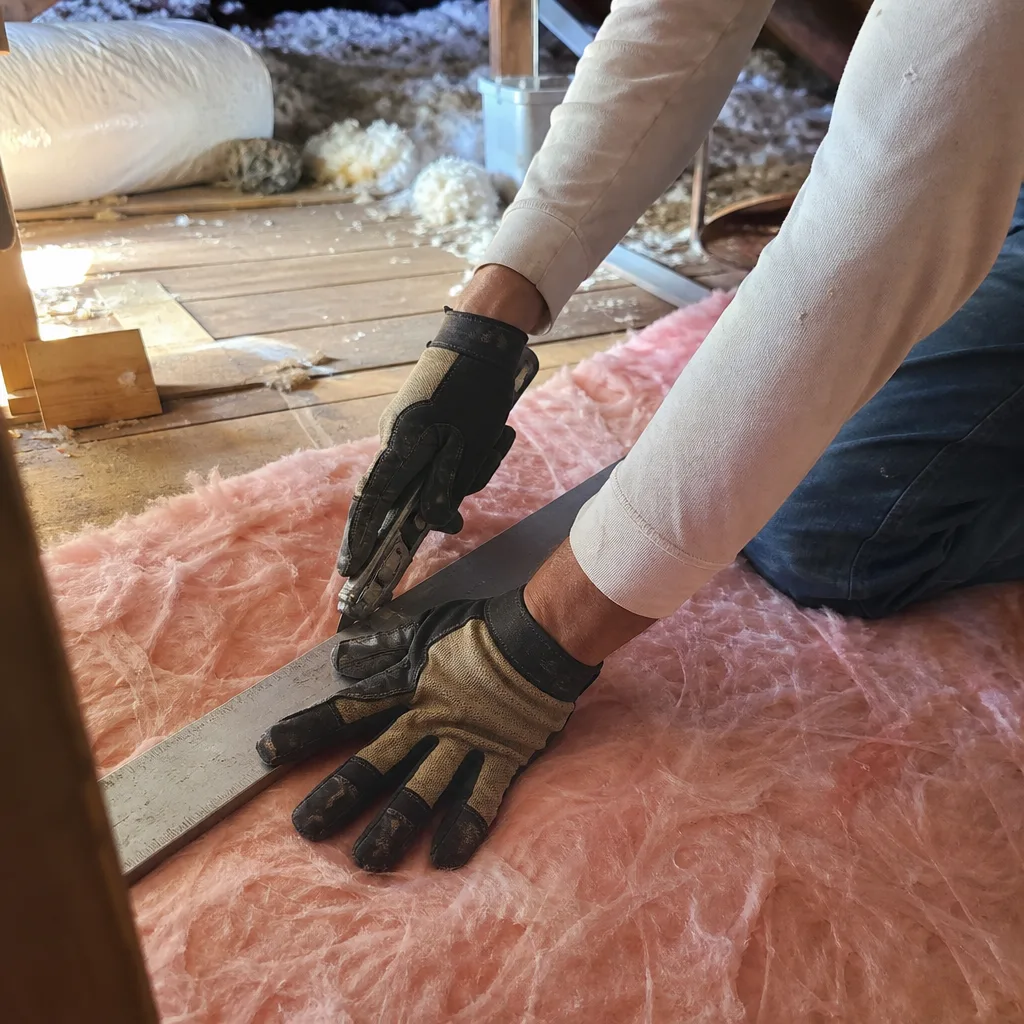
This is worth explaining plainly, because not every contractor in the Long Beach market treats it as a requirement. Our Attic Insulation in Long Beach service page covers the full scope, but the pricing logic is worth understanding here too.
Insulation resists heat transfer by conduction – heat moving through a solid material. But conditioned air escaping through a gap in your attic floor is convection – air physically moving through a hole. Insulation doesn’t stop convection. A well-sealed attic floor with R-38 insulation will outperform a perfectly installed R-49 attic floor that sits over unsealed penetrations, every time, in every house.
The blower-door test makes this visible. Before sealing, a typical Long Beach home from the 1950s reads somewhere between 4,000 and 6,500 CFM50 (cubic feet per minute at 50 pascals of pressure) – a measurement of how much air the building envelope is leaking under controlled conditions. After sealing the attic floor penetrations, that same home frequently reads 2,500 to 3,800 CFM50. The insulation then goes in on top of a sealed floor, and the combined result is a conditioned space that holds temperature without the HVAC running continuously.
Every applicable job at Envelope Insulation Co. includes both numbers in the documentation you receive when we leave. “Before: 5,200 CFM50. After: 2,700 CFM50.” That’s the kind of evidence that tells you whether you got what you paid for – not a description of how hard the crew worked.
Insulation Material Guide: What We Use and Why
Blown-In Fiberglass
Owens Corning AttiCat and Johns Manville Spider are the materials we reach for most often on Long Beach attic floors. Both settle predictably, hold R-value over time, and are non-combustible. Install time is fast on open attic floors, which keeps labor cost in range. Good for: adding R-value to an existing, clean attic floor; not ideal for air sealing (foam or caulk still handles that separately).
Blown-In Cellulose
GreenFiber and Knauf Jet-Spray cellulose are made from recycled paper and treated with fire retardant. Cellulose dense-packs well into irregular spaces and has a slightly higher R-value per inch than standard fiberglass. It’s also effective at reducing sound transmission – relevant for homes near the 405 or 710 corridors. Good for: retrofit applications in older homes with irregular attic geometry.
Spray Foam
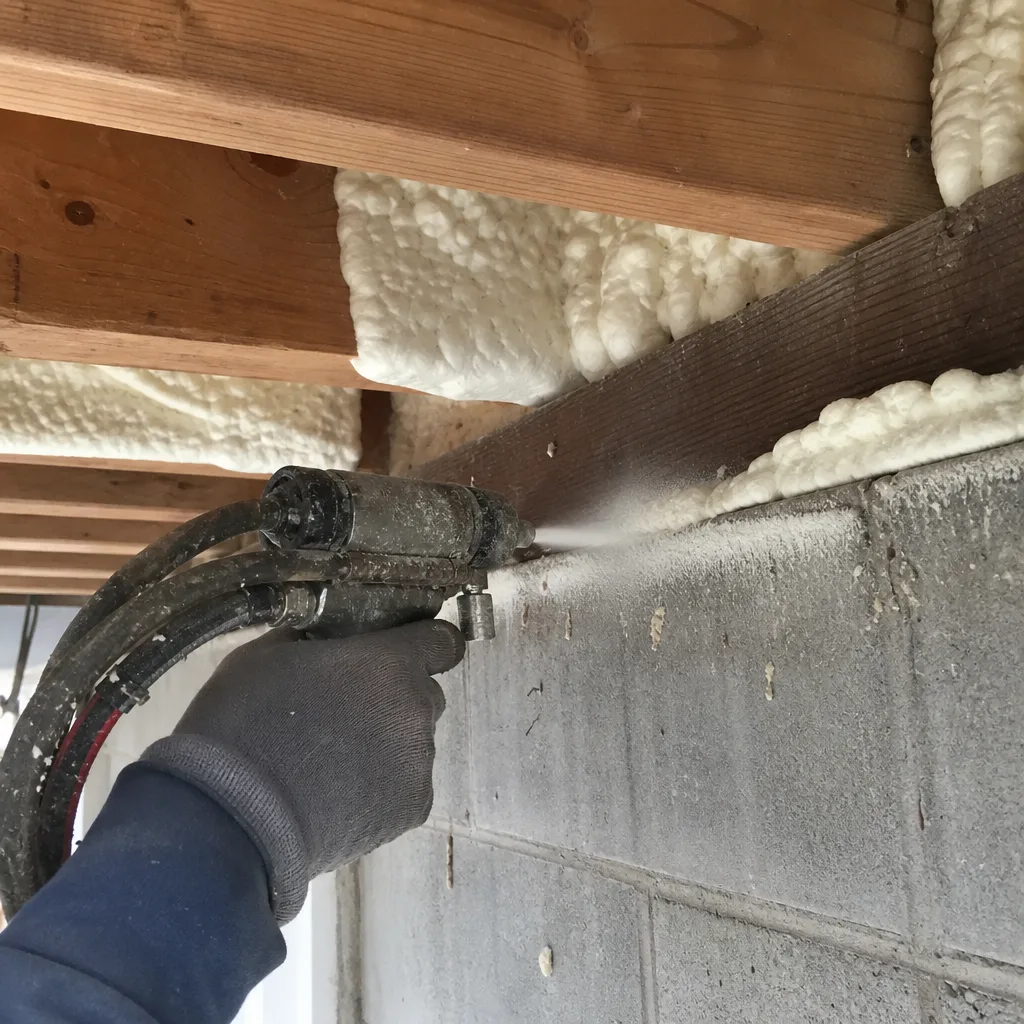
Icynene and Demilec products are what we use when spray foam is the right call. Open-cell foam (typically R-3.7 per inch) works for unvented roof deck applications. Closed-cell foam (R-6 to R-7 per inch) is used for specific problem areas: knee walls, attic hatches, HVAC chases. Spray foam costs more per square foot than blown-in, and it’s the right tool in specific situations – not a universal upgrade. Note: spray foam application near open flame or in enclosed spaces requires proper ventilation and should never be approached as a DIY project; the off-gassing during cure is a real safety concern, and professional application with appropriate protective equipment is the only safe method.
Rockwool (Mineral Wool) Batts
CertainTeed and Rockwool batts show up on specific applications: blocking at knee walls, cathedral ceiling sections, or anywhere the blown-in equipment can’t reach effectively. Higher fire resistance than fiberglass batts and better dimensional stability in humid conditions – relevant for Long Beach homes near the waterfront where summer humidity stays elevated.
FAQs – Attic Insulation Cost in Long Beach
How much does attic insulation cost for a typical Long Beach home?
Most Long Beach single-family homes looking for our Attic Insulation services fall between $1,800 and $4,200 for a complete attic insulation job that includes air sealing. A 1,200 square foot attic – close to the median for Long Beach homes built between 1945 and 1975 – typically runs $2,200 to $3,400 when air sealing and blown-in insulation are done together. Homes requiring full insulation removal before reinstallation range from $3,200 to $5,200. Call (424) 415-7031 for a free written estimate specific to your address – the price is on paper before anyone starts.
Is it cheaper to add insulation on top or replace everything?
Adding insulation on top is less expensive – typically $1,200 to $2,200 less than a full removal-and-replace scope on a 1,200 square foot attic. But it’s only the right call when the existing insulation is dry, uncontaminated, and still has meaningful R-value. If there’s rodent activity or moisture damage, installing over it traps the problem and reduces the performance of the new material. We document what we find with photos before recommending either path – that documentation is included at no extra charge. Call (424) 415-7031 to schedule an assessment.
Does attic insulation cost include air sealing in Long Beach?
At Envelope Insulation Co., air sealing is completed before any insulation goes in – it’s not an optional add-on. For jobs where a separate air-sealing scope is needed, it runs $400 to $900 depending on the number and type of penetrations at the attic floor. Combined job pricing already reflects both scopes. We don’t insulate over an unsealed attic floor; the physics of it doesn’t work, and neither does the paperwork – our written scope has to describe work that actually performs. Call (424) 415-7031 to get a written price that covers both.
Are there rebates or tax credits for attic insulation in Long Beach?
Yes. The federal 25C tax credit covers 30% of insulation and air sealing costs up to $1,200 per year as of 2026. Southern California Edison and SoCalGas run separate rebate programs that may apply depending on your current R-value and the improvement achieved. We can tell you before the job starts whether your project appears to qualify and provide the documentation those programs typically require. The credit and rebate don’t stack automatically – a tax professional should confirm your specific eligibility.
How long does attic insulation installation take in Long Beach?
A standard blown-in job with air sealing on a 1,000 to 1,500 square foot attic takes 4 to 8 hours for a two-person crew, depending on penetration count and attic access conditions. Jobs requiring full removal first add 2 to 4 hours. We give you a time estimate in the written scope, and the Documented Photo Record is completed before the crew leaves – so you don’t have to climb into your attic to verify the work was done.
Can attic insulation reduce my energy bills in Long Beach?
In Long Beach’s Climate Zone 8, the biggest gains come from reduced cooling load during Santa Ana wind events and late-summer heat, and from reduced heating load during the mild but persistent winter nights. Homes we’ve assessed that go from R-13 to R-38 with full air sealing typically show 15% to 25% reductions in HVAC runtime – the before-and-after blower-door numbers give a concrete baseline for that calculation. The blower-door reading alone doesn’t predict exact utility savings (too many variables in occupant behavior and HVAC efficiency), but it does tell you whether the building envelope tightened. That’s the number that matters.
The Written Price Comes Before Any Work
Under Haven Standard Clause 1, Envelope Insulation Co. does not start a job without a written price, a written scope, and a written warranty in your hands. That’s not a sales tactic – it’s how we’ve operated every job since 2016, across more than 9,000 homes sealed and insulated. When Wes Okafor built this company, the premise was that a homeowner should know exactly what they’re paying for before anyone opens an equipment bag, not after.
Every estimate includes a Documented Photo Record of the current attic condition, which means you have a baseline before the work starts and a completed record when it ends. On air-sealing jobs, you also get before-and-after blower-door numbers – not a description of improvement, but an actual measurement. If any part of the finished work isn’t right within 365 days, the 365-Day Done Right Promise applies: we make it right. That’s in writing too.
If you’ve already received a quote from another Long Beach contractor, bring it. We’ll read it with you – the Free Second Opinion on Any Written Estimate is part of what we offer, because a second set of eyes on a written scope costs you nothing and sometimes catches a significant gap.
Get Your Free Attic Insulation Estimate in Long Beach
Wes Okafor and the team at Envelope Insulation Co. have been assessing and insulating Long Beach attics since 2016. If you’re in Bixby Knolls, Belmont Shore, El Dorado Park, Signal Hill, North Long Beach, or anywhere in between, the process is the same: we come out, we document what we find, and you get a written price before any work starts.
Call (424) 415-7031 to schedule your free estimate. A live person answers – no voicemail loop, no callback window measured in business days. The written price, written scope, and written warranty are ready before anyone lifts a tool.
Key Takeaways
- Most Long Beach attic insulation jobs cost $1,800 to $4,200, with a typical sealed-and-insulated scope running $2,200 to $3,400 for a 1,200 sq ft attic.
- Air sealing has to come before insulation – not as an upsell, but because insulation doesn’t stop air moving through gaps.
- Full insulation removal adds $1.00 to $2.50 per square foot and is required when existing material is contaminated or moisture-damaged.
- The federal 25C tax credit covers 30% of qualifying costs up to $1,200/year; SoCal Edison and SoCalGas rebate programs may also apply.
- Before-and-after blower-door numbers are included on every applicable job so you can verify the air-sealing result with a real measurement, not a description.
- Every job includes a Documented Photo Record and a written price before anyone starts – that’s Haven Standard Clause 1, applied without exception.
- The 365-Day Done Right Promise applies to all completed work – in writing.
Pricing reflects the Long Beach market as of 2026. Topside Attic Insulation Long Beach offers free estimates – call (424) 415-7031.
Written by Wes Okafor, Owner at Envelope Insulation Co., serving Long Beach since 2016.
What Our Customers Say
"Two other companies quoted to blow more insulation on top of what was there. These were the only ones who said the existing material had to come out first, and explained why."
- Clifford E."They photographed rodent damage in the old insulation that we had no idea about, and priced the exclusion work separately so we could decide."
- Harriet N."The winter gas bill dropped by about a third. They had estimated a quarter, so they under-promised."
- Genevieve R.