
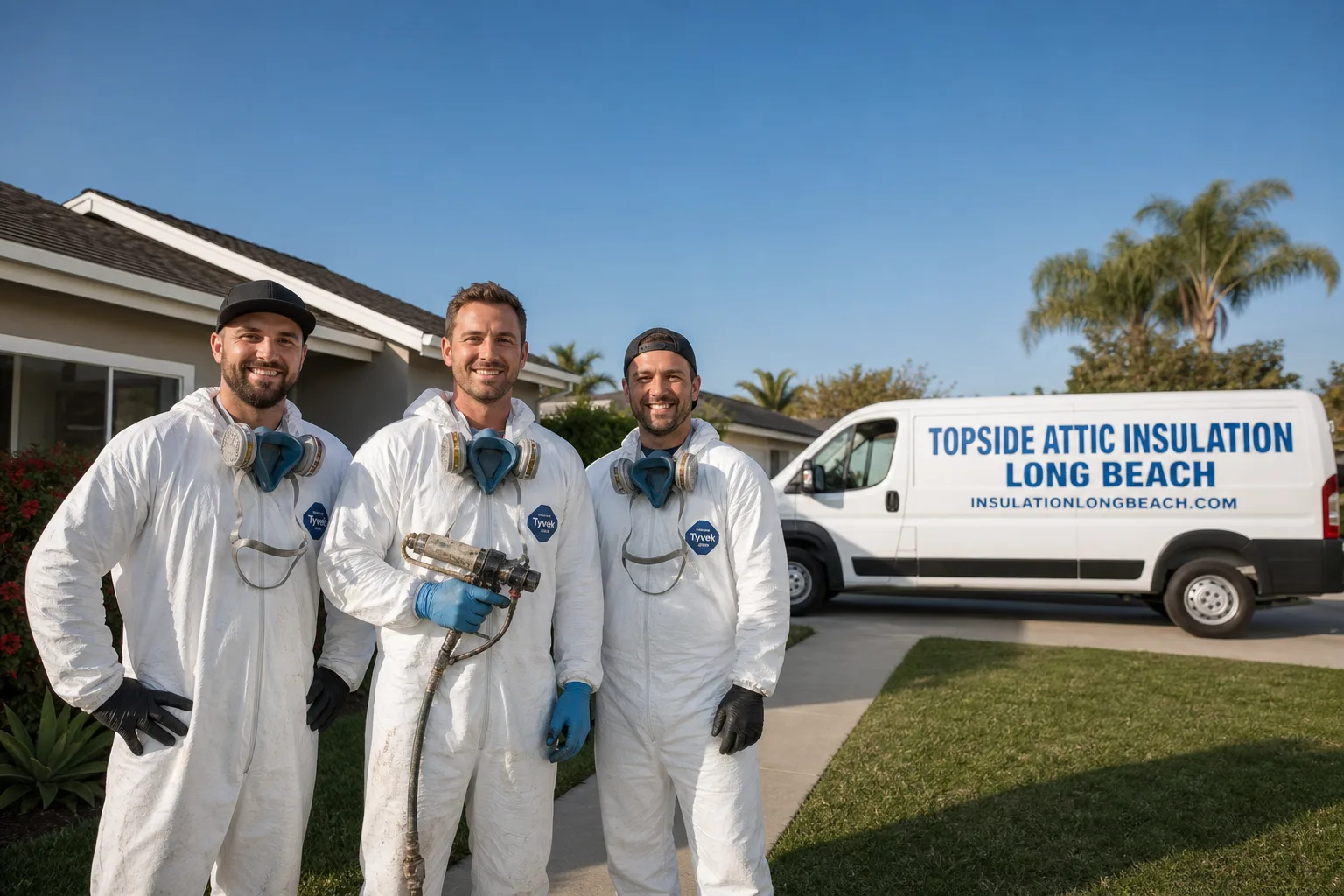
How Much Does Insulation Cost in Long Beach?
Insulation in Long Beach, CA typically costs between $1,200 and $4,800 for a full attic job, depending on square footage, current R-value, and whether air sealing is done first. Blown-in attic insulation on a standard 1,200-1,500 sq ft Long Beach bungalow runs $1,400-$2,200 installed, while spray foam for a crawl space or rim joist adds $800-$2,400 depending on access and linear footage. Most homeowners in Long Beach who contact us already have insulation – they just have too little of it, and none of it was ever air-sealed underneath.
Insulation Cost Breakdown (2026)
These ranges reflect what jobs actually cost in the Long Beach market as of early 2026 – materials, labor, and disposal where applicable. Every figure below assumes a written price was delivered before work started, which is how we operate under Haven Standard Clause 1.
| Service | Typical Long Beach Price Range | Notes |
|---|---|---|
| Attic blown-in insulation (fiberglass or cellulose) | $1,200 - $2,600 | Most common job in Long Beach; price rises with attic depth and access difficulty |
| Attic air sealing + blown-in insulation (combined) | $1,800 - $3,400 | The correct sequence: air sealing of top plates, can lights, and penetrations first, then insulation on top |
| Spray foam insulation (open-cell) | $1.00 - $1.50 per board foot installed | Common for crawl spaces, rim joists, and hard-to-reach cavities |
| Spray foam insulation (closed-cell) | $1.75 - $3.00 per board foot installed | Used where vapor control and maximum R-value per inch are both needed |
| Wall insulation (blown-in retrofit) | $1,400 - $3,200 | Existing exterior walls drilled and filled; price depends on linear footage and finish type |
| Radiant barrier installation | $600 - $1,400 | Foil sheeting applied to attic rafters; particularly effective in Long Beach homes with west-facing roof exposures |
| Crawl space encapsulation + vapor barrier | $2,200 - $5,500 | Range reflects crawl space height, moisture severity, and liner thickness; Long Beach coastal proximity matters here |
| Insulation removal (existing material) | $1.00 - $2.00 per sq ft | Required before reinstallation in homes with rodent contamination or degraded batt insulation |
| Attic cleaning and rodent proofing | $800 - $2,500 | Scope-dependent; Wes Okafor’s crews document condition with photos before and after every visit |
| Home energy audit (blower-door test) | $300 - $600 | Blower-door test – a pressurization reading that shows, in one number, how much air the building envelope is losing; before-and-after readings published on applicable jobs |
What Pushes the Price Up or Down
The single biggest cost driver in Long Beach is attic access. Homes in Belmont Heights and Alamitos Heights tend to have tighter attic hatches and lower clearances than the larger Craftsman-era houses in Wrigley or Bixby Knolls. A crew that can’t move freely through an attic takes longer, and longer jobs cost more. That’s not a complaint – it’s just physics.
R-value targets matter too. California’s Title 24 energy code requires R-38 in attic applications for most Long Beach climate zone projects (Climate Zone 8). If your home currently sits at R-11 or R-13 – which is common in houses built before 1985 – you’re looking at a meaningful depth of new material, and that adds cost before any other variable enters the picture.
Air sealing, done properly, also adds to the upfront number. But skipping it doesn’t save money – it just means the insulation you paid for underperforms from day one, because conditioned air keeps moving through the gaps that should have been closed first. On every job we do at Topside Attic Insulation Long Beach, air sealing of top plates, recessed can lights, and penetrations is completed before any blown-in material is added. We don’t treat it as an upsell.
What Affects Insulation Pricing in Long Beach
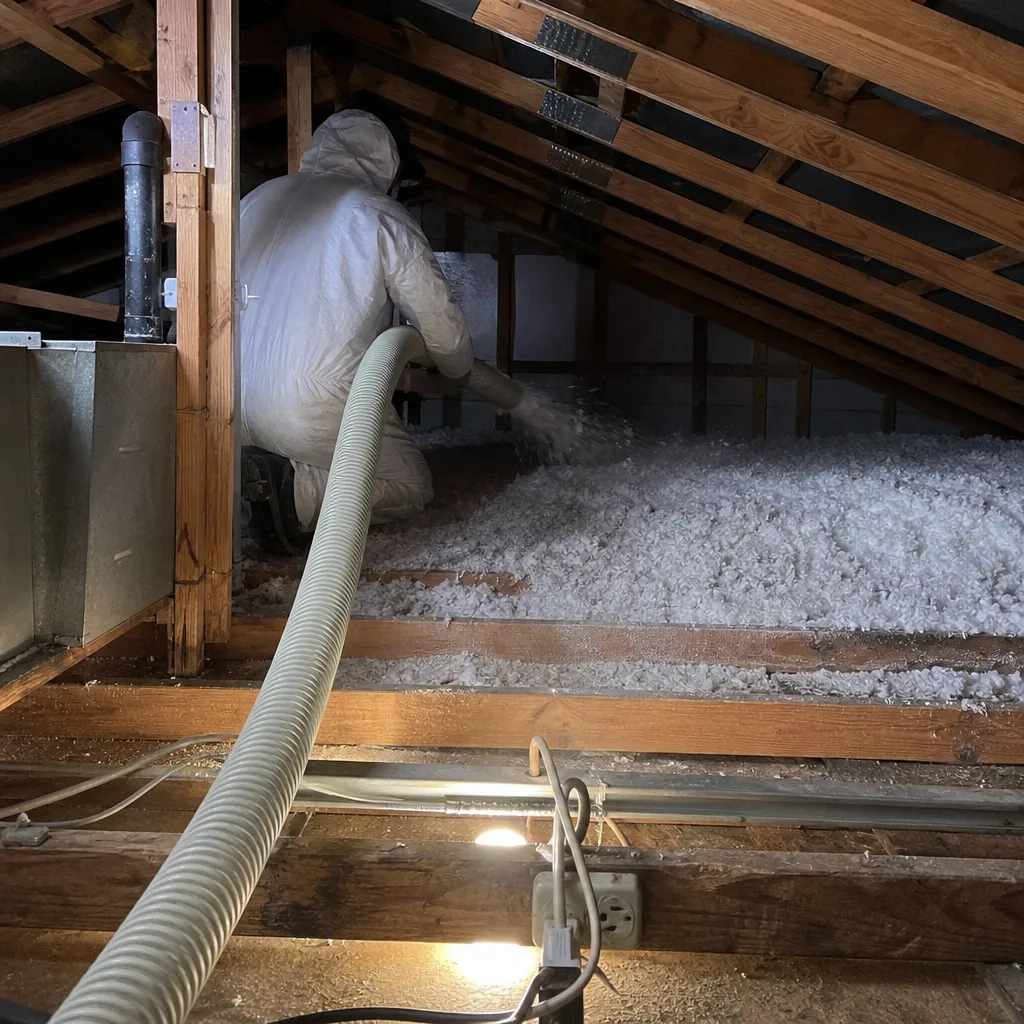
- Current insulation depth and condition: Homes in Long Beach’s older stock – particularly in North Long Beach, Zaferia, and the Central neighborhoods built between 1940 and 1970 – often have fiberglass batts that have compressed or shifted over decades. If the existing material is contaminated or severely degraded, removal is required before new insulation can be installed. Removal costs are priced separately and depend on square footage and how much material is present.
- Attic geometry and access: Low-pitch roofs common on mid-century ranch homes in areas like Los Cerritos and Lakewood Village limit how far a crew can move within the attic. Hip roofs with multiple valleys also create pockets that require hand-packing rather than machine blowing, which takes more time. Both scenarios increase labor cost.
- Climate zone and R-value gap: Long Beach falls in California Climate Zone 8, where the code-minimum attic R-value is R-38. Homes closer to the coast – Naples, Belmont Shore, Park Estates – often experience mild enough summers that homeowners have underinvested in attic insulation for decades. Closing that gap from R-11 to R-38 requires more material than going from R-19 to R-38, and the price reflects the difference.
- Coastal moisture exposure: Proximity to the water affects crawl space and vapor barrier pricing more than attic pricing. Homes within a mile of the harbor or the beach in Bluff Park or Belmont Shore often have elevated moisture readings in their crawl spaces. A thicker liner, better drainage management, and additional sealing at the perimeter all add to encapsulation costs.
- Air sealing scope: The number of penetrations, recessed lights, top plate gaps, and HVAC boot connections in an attic floor varies widely by home age and renovation history. A house that had recessed lighting retrofitted in the 1990s without any air-sealing work might have 40 or 50 unsealed can penetrations. Closing each one adds time and material – but it’s the work that makes the blown-in insulation actually perform.
- Material selection: We work with products from Owens Corning, Johns Manville, Knauf, Rockwool, CertainTeed, Icynene, Demilec, and GreenFiber – and we use the material the job calls for, not whatever is on the truck. Open-cell spray foam, closed-cell spray foam, blown fiberglass, blown cellulose, and batts each have different installed cost structures. The spec drives the material choice, not the other way around.
Long Beach-Specific Pricing Context
Long Beach is a dense, varied city, and insulation pricing reflects that variety more than most homeowners expect. A 1,100 sq ft post-war bungalow in Wrigley and a 2,400 sq ft Craftsman in Bluff Park are both “Long Beach homes” – but the attic geometry, existing insulation condition, and moisture exposure are often completely different. We price based on the actual scope of the job, not on square footage alone.
On the cost side, Long Beach labor rates track Los Angeles County averages, which run higher than the Inland Empire and lower than West LA or Santa Monica. Materials are priced at regional distributor rates with no proprietary markup structure tied to any brand. When Wes Okafor reviews a quote with you, you’ll see the material line and the labor line as separate items – that’s a requirement under the Haven Standard, and it’s also the fastest way to compare a competing estimate side by side.
California utilities – SoCalGas and SCE – both offer insulation rebates that can offset installed cost for qualifying Long Beach homeowners. Rebate amounts change periodically and depend on current R-value versus post-installation R-value, so we document the starting depth on every job for exactly this reason. A blower-door test result, combined with pre- and post-installation documentation, also satisfies the evidence requirements for most utility rebate applications.
What Long Beach Homes Actually Need (and What They Don’t)
The most common scenario we find in Long Beach is a house with some insulation that has never been air-sealed. The blown-in material sits on an attic floor full of gaps: open top plates, uninsulated recessed lights punched through the ceiling, HVAC boots that were never sealed to the drywall. In these homes, adding more insulation without sealing first produces a measurably smaller improvement than the homeowner expects. The blower-door number tells the story: if the CFM50 reading – cubic feet per minute of air loss at 50 pascals of pressure – barely moves after insulation is added, it’s because the air pathways were never closed.
Radiant barriers come up frequently in Long Beach because the marine layer keeps summer temperatures moderate through the morning, then the afternoon sun hits hard – particularly on south- and west-facing roofs. A radiant barrier applied to the underside of the roof decking reduces the heat that radiates down into the attic space during those afternoon hours. It doesn’t replace R-value, but in Long Beach’s specific climate pattern, it works alongside blown-in insulation to reduce peak attic temperatures and the load on air conditioning systems.
Crawl space work is underpriced in most homeowners’ mental models. A damp, unencapsulated crawl space in Belmont Shore or Naples pulls moisture into the floor structure year-round. It also creates a significant air pathway – cold, damp air moving up through floor penetrations into the living space. The vapor barrier and encapsulation work that seals this off is not glamorous, but before-and-after moisture readings in the crawl space routinely show dramatic differences. We include a documented photo record on every crawl space visit, not because it’s optional, but because the customer deserves to see what the crew found and what they left behind.
How to Save on Insulation in Long Beach
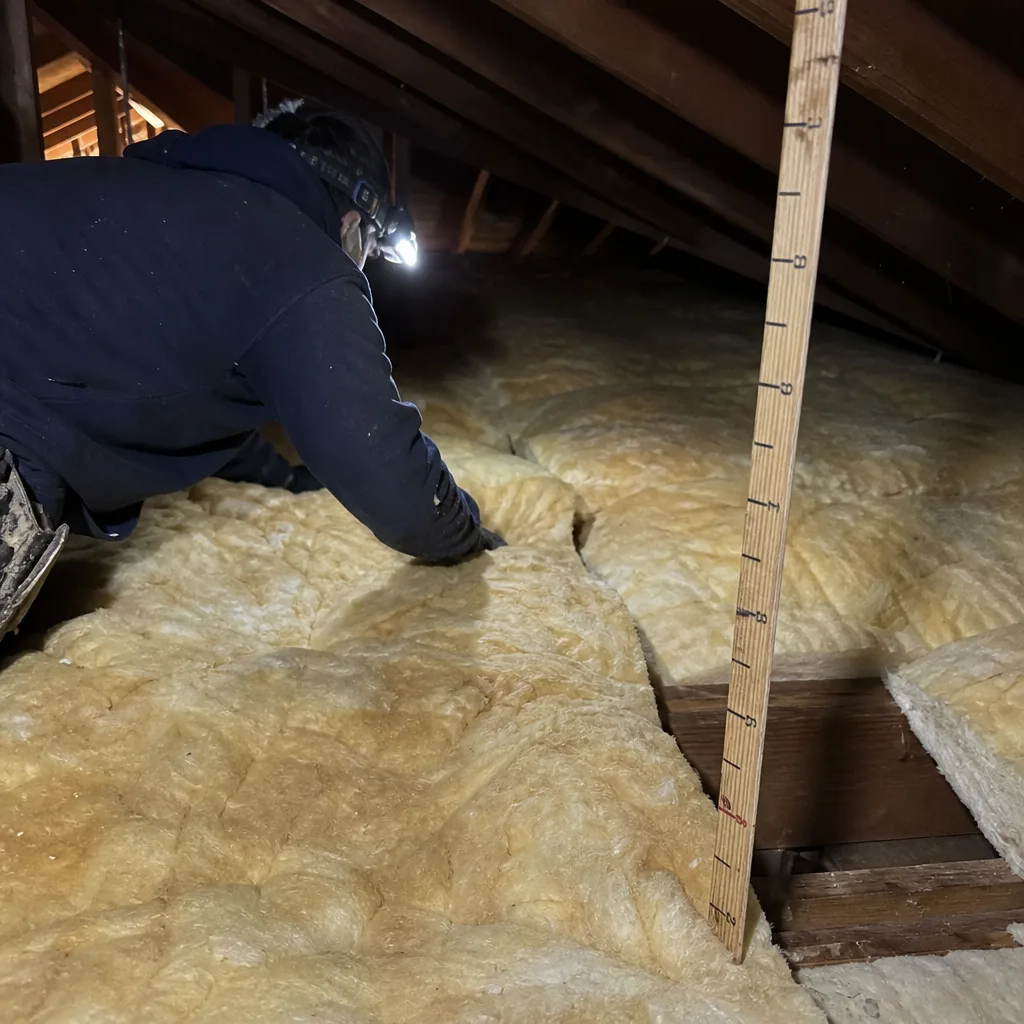
The honest version of this section is that the most expensive insulation job is the one that gets done twice. Skipping air sealing to reduce the upfront cost, then calling us two years later because the utility bills haven’t changed, ends up costing more than doing it right the first time. That said, there are real ways to reduce cost without cutting scope.
- Combine services in one visit: Attic air sealing and blown-in insulation require the same access and staging. Scheduling them together costs less than two separate mobilizations. The same logic applies to pairing insulation removal with reinstallation – one crew, one setup, lower total cost.
- Time it before summer peak demand: The Long Beach area sees higher demand for attic work from April through July, when homeowners notice the heat gain for the first time. Scheduling in late fall or winter typically shortens lead times and sometimes affects scheduling flexibility, though we don’t manufacture scarcity around it.
- Apply for utility rebates before the job is done: SoCalGas and SCE rebate programs sometimes require pre-approval or a qualifying audit. Scheduling a home energy audit first – a blower-door test that gives you the before reading – puts you in a better position to document the improvement and claim the rebate after installation.
- Bring a competing written estimate for a free second opinion: We’ll read it with you line by line. If it’s a better scope for a better price, we’ll tell you that. If it’s missing air sealing or using a thinner vapor barrier than the moisture levels in your crawl space warrant, we’ll show you exactly where the gap is. That’s a standing offer – no conditions.
- Don’t pay for removal you don’t need: Not every existing insulation installation requires removal before new material is added. If the existing batts are clean, dry, and free of contamination, blowing new material on top of them is legitimate and saves removal cost. We document the condition with photos and tell you which way the scope should go – you’re not paying for removal to pad a ticket.
For an exact written price on your Long Beach home, call (424) 415-7031. We’ll look at the attic, check the crawl space if applicable, and deliver a flat-line written price before any work starts – that’s Haven Standard Clause 1, and it’s not negotiable.
FAQs – Insulation Cost in Long Beach
How much does attic insulation cost in Long Beach, CA in 2026?
Attic insulation in Long Beach typically costs between $1,200 and $2,600 for blown-in fiberglass or cellulose in a standard single-family home. When air sealing is included – which it should be, done first and documented – that range moves to $1,800 to $3,400 for most homes between 1,000 and 2,000 square feet. The exact number depends on existing R-value, attic access, and the number of penetrations that need to be sealed at the attic floor. Call (424) 415-7031 for a written price specific to your home – estimates are free and delivered in writing before any commitment.
Is it cheaper to add insulation over existing insulation or remove and replace?
Adding over existing material costs less upfront – typically $400 to $800 less than a remove-and-replace job on a standard Long Beach attic. But it’s only the right call when the existing material is clean, undamaged, and free of rodent contamination or mold. If the existing insulation shows any sign of moisture damage or pest activity – both common in older Long Beach homes, particularly those near the harbor – removal is required before new material goes in. We photograph the existing condition on every visit so you can see exactly what we found, and we tell you which scope the evidence supports.
Does Long Beach require a permit for attic insulation?
Most residential insulation projects in Long Beach – blown-in attic insulation, air sealing, crawl space vapor barrier installation – do not require a building permit under the current City of Long Beach building code, as they are classified as maintenance rather than structural alteration. Spray foam applied in significant quantities to roof assemblies can trigger a permit requirement depending on the application. We confirm the permit status for each scope of work as part of the written price conversation – you’ll know before any work starts whether a permit applies.
How much can I save on energy bills after insulating my Long Beach home?
Energy savings vary, but homes in Long Beach that go from below R-13 to R-38 in the attic, combined with proper air sealing, routinely see measurable reductions in cooling load during the summer months. The blower-door test – a pressurization measurement that produces a CFM50 figure – gives you a before-and-after number that documents the air-sealing improvement directly. On jobs where we’ve recorded pre- and post-installation readings, it’s common to see the CFM50 figure drop by 30 to 50 percent after sealing top plates, can lights, and penetrations. That reduction in air leakage is what most directly affects the energy bill – more than the R-value of the insulation material itself.
How long does attic insulation installation take in a Long Beach home?
A standard attic air sealing and blown-in insulation job on a Long Beach home typically takes one full day for a crew of two to three technicians. Larger homes above 2,000 square feet, or attics with restricted access like those found in many Belmont Heights or Los Cerritos ranch-styles, may run into a second day. Crawl space encapsulation is usually a one-day job on its own. We give you the time estimate in writing alongside the price, so you know what “done” looks like before anyone arrives. Wes Okafor’s crews send a technician name and a text when they’re on the way – no guessing about arrival windows.
Why the Sequence Matters More Than the Product
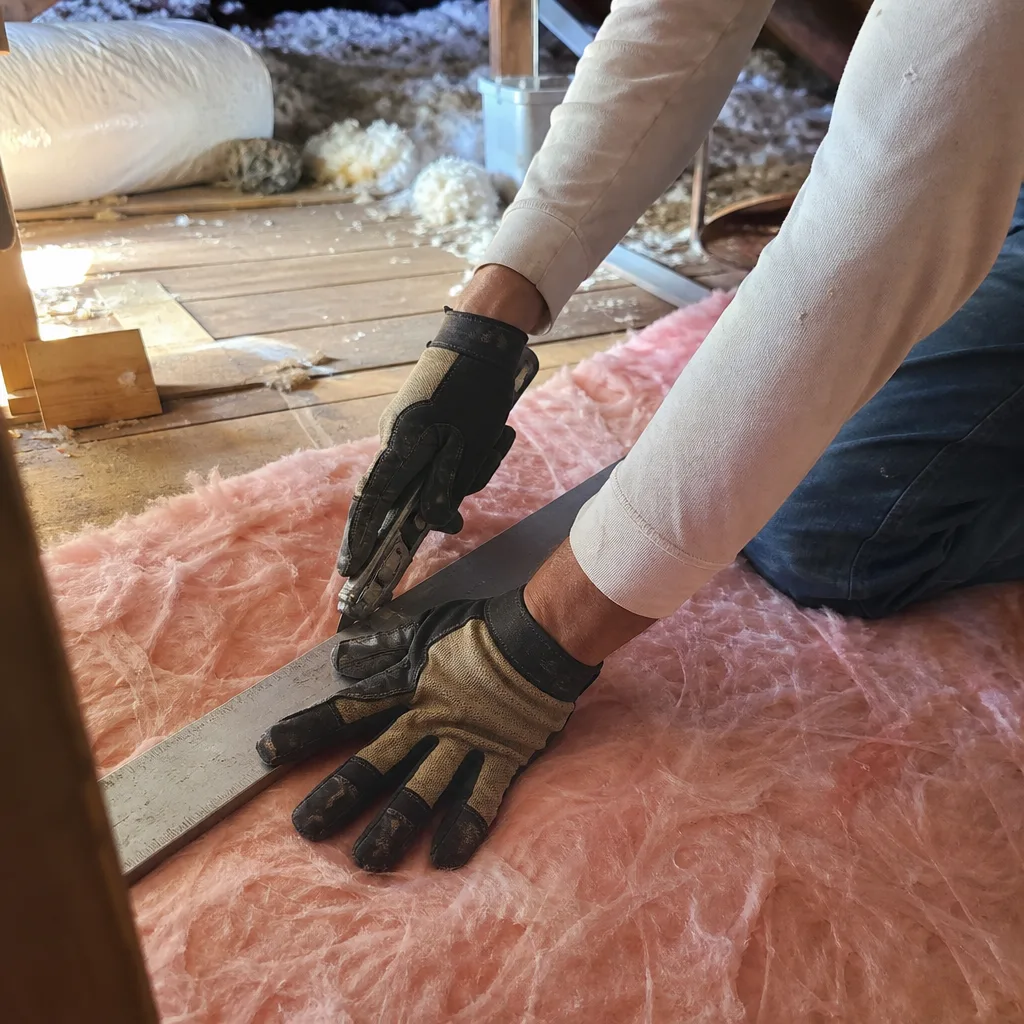
Homeowners researching insulation in Long Beach often spend a lot of time comparing blown fiberglass versus cellulose, or debating R-38 versus R-49. Those are legitimate questions. But they’re secondary to a question that gets asked far less often: was the attic floor air-sealed before the insulation went in?
An unsealed attic floor has gaps at every top plate, every recessed light, every HVAC penetration, and every electrical run through the ceiling. Conditioned air from the living space rises through those gaps continuously – not dramatically, but constantly. Insulation slows conducted heat transfer. It does not stop air movement. If the gaps are open, the insulation sits on top of an air pathway, and the performance you paid for is partially canceled by the leakage underneath.
At Topside Attic Insulation Long Beach, we’ve been doing this work since 2016 and have documented the before-and-after blower-door readings on applicable jobs across neighborhoods including Bixby Knolls, California Heights, Wrigley, Signal Hill adjacent properties, and the older housing stock in Central Long Beach. The pattern holds consistently: air sealing moves the CFM50 number; insulation alone on an unsealed floor moves it far less.
That’s why our process is sealed first, then insulated – in that order, with the air sealing documented before the blown-in material covers it. It’s not a sales technique. It’s what the blower-door data shows.
If you’ve already received a written estimate from another contractor, bring it in for a free second opinion. Wes Okafor will review the scope line by line and tell you exactly what’s there and what isn’t. That offer stands whether or not you hire us.
For Long Beach homeowners looking for a starting point on the full range of what we do, the Topside Attic Insulation Long Beach home page outlines every service line and how the Haven Standard applies to each one.
Key Takeaways
- Attic insulation in Long Beach runs $1,200 to $2,600 for blown-in only; $1,800 to $3,400 with air sealing included.
- Air sealing should always be done before insulation is added – not as an upsell, but as the step that makes the insulation work.
- Long Beach homes fall in California Climate Zone 8, with a code-minimum attic R-value of R-38; most pre-1985 homes are significantly below that threshold.
- Coastal proximity affects crawl space moisture and vapor barrier pricing; homes in Belmont Shore, Naples, and near the harbor typically need more robust encapsulation.
- Before-and-after blower-door readings, a written price before any work starts, and a documented photo record are included on every applicable job – not available on request.
- SoCalGas and SCE offer insulation rebates for qualifying Long Beach homeowners; a pre-installation blower-door test strengthens the rebate application.
- A free second opinion on any written estimate is a standing offer – bring a competing quote and we’ll read it with you.
Written by Wes Okafor, Owner at Topside Attic Insulation Long Beach, serving Long Beach, CA since 2016. Pricing reflects the Long Beach market as of 2026. For a written price on your specific home, call (424) 415-7031 – the estimate is free, and you’ll have the number in writing before anyone starts work.
What Our Customers Say
"Fixed price, clean work, and they hauled the old material away as agreed."
- Todd M."Crawl space encapsulation done properly. Photographs of the vapour barrier at every seam, and the damp smell in the hallway is gone."
- Ainsley P."Two other companies quoted to blow more insulation on top of what was there. These were the only ones who said the existing material had to come out first, and explained why."
- Clifford E.