
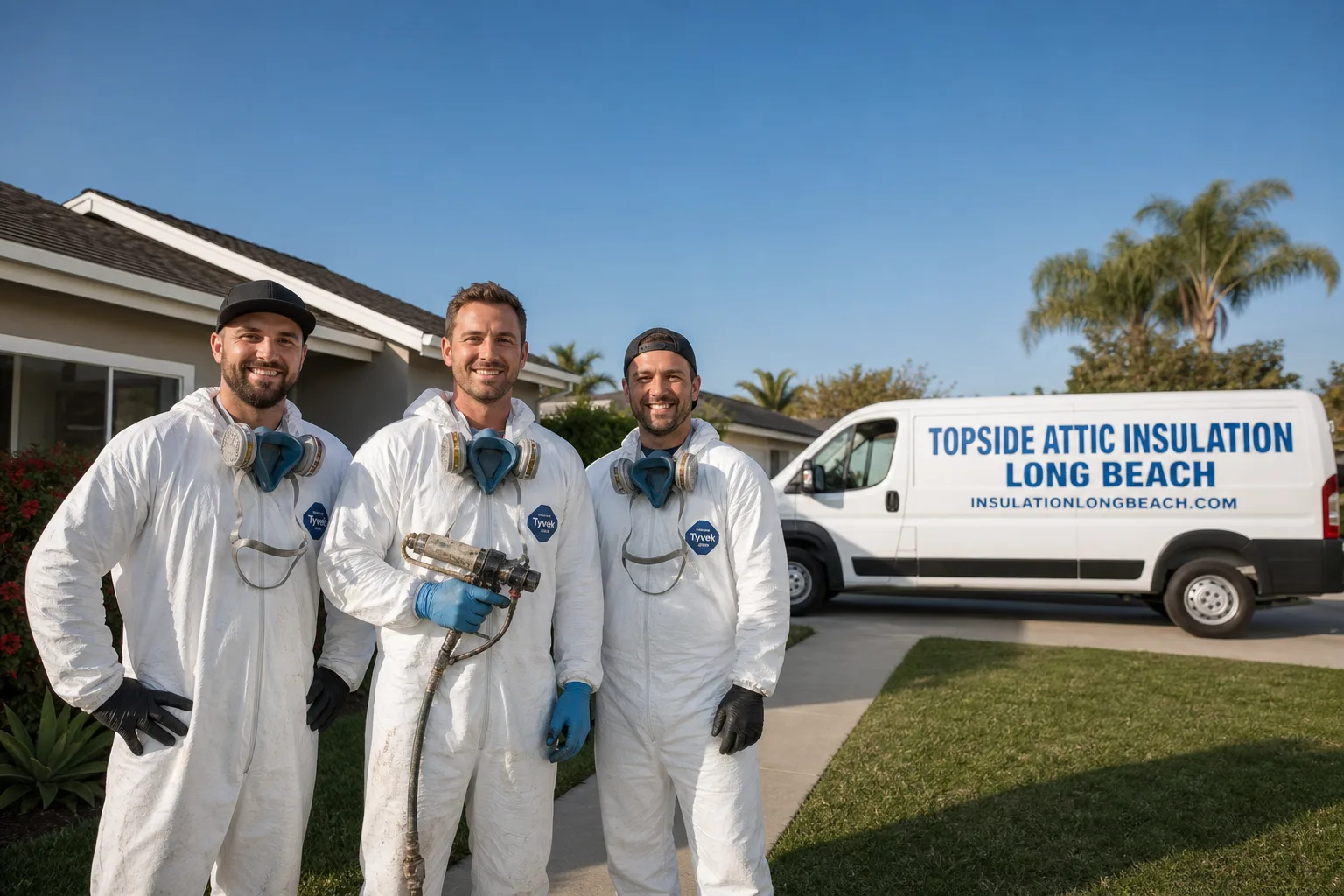
Fast, Reliable Blown-In Insulation Across Long Beach
Most blown-in insulation jobs in Long Beach run $1,800-$4,500 for attics and $3,200-$7,800 for dense-pack wall retrofits, with same-week scheduling available throughout the city. Our crews serve Long Beach from dispatch out of our Los Angeles office, and we typically arrive within 45 minutes to the Bluff Park, Rose Park, and Belmont Heights neighborhoods. Call (424) 415-7031 for a written price before any work starts - that’s Haven Standard Clause 1, no exceptions.
Long Beach homeowners don’t call us with the same story we hear in Carson or Lakewood. Here, especially west of the 710, the conversation starts with diesel particulate, exhaust infiltration, and keeping port-complex air out of bedrooms. We’ve insulated over 9,000 homes since 2016, and the framing, moisture patterns, and air-quality motivations in Long Beach are distinct enough that we train crews specifically for this market. The 1920s-1940s housing stock in Rose Park and Bluff Park, the post-1933 reconstruction buildings, and the post-WWII east-side tracts each present different envelope problems - and different blown-in solutions.
Why Topside Attic Insulation Long Beach Is Long Beach’s Preferred Blown-In Insulation Company
We don’t claim preferred status with any manufacturer. What we do is publish before-and-after blower-door numbers on every job where air sealing applies - a pressurization reading that shows, in one figure, how much conditioned air your building envelope was losing before we started and how much it holds after we leave. Homeowners in Long Beach receive that documentation, plus a photo record, plus a written scope and warranty, before anyone lifts a tool.
Our reviews from Long Beach customers consistently cite two things: the written price that doesn’t change, and the crew’s willingness to explain why they sealed before they insulated. One recent Rose Park customer noted that three other contractors offered to blow insulation directly over unsealed top plates; we were the only ones who refused. That’s not upselling - it’s physics. Unsealed bypasses let blown-in material settle unevenly and allow freeway-corridor air to channel through cavities regardless of how much cellulose or fiberglass is present.
Calls are answered by a live person, 24/7. No voicemail loops. No callback windows measured in business days. We background-check and uniform every technician, and you’ll get a text when your crew is en route with a named technician and ETA. Under Haven Standard: Arrive on schedule.
Our Blown-In Insulation Services in Long Beach
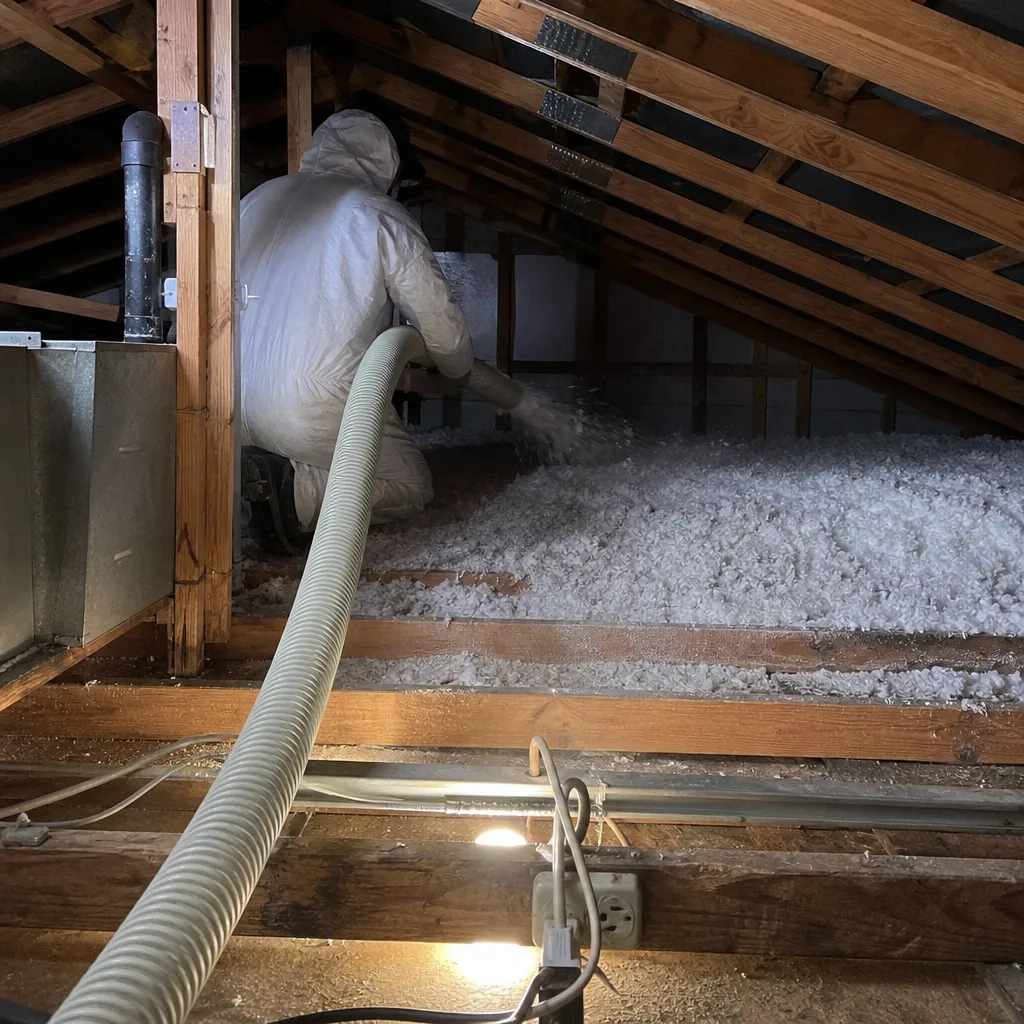
Blown-In Cellulose
We use GreenFiber cellulose for most Long Beach dense-pack and attic jobs - a borate-treated recycled paper product that resists pests and fire without the chemical load of older formulations. In West Long Beach, near the port and freight rail lines, cellulose’s density and air-blocking characteristics make it particularly effective at slowing particulate infiltration through balloon-frame wall cavities. A typical attic fill in a 1,200-square-foot Long Beach bungalow runs $1,800-$2,800. Dense-pack sidewalls in the same footprint run $4,200-$7,800 depending on cavity depth and accessibility.
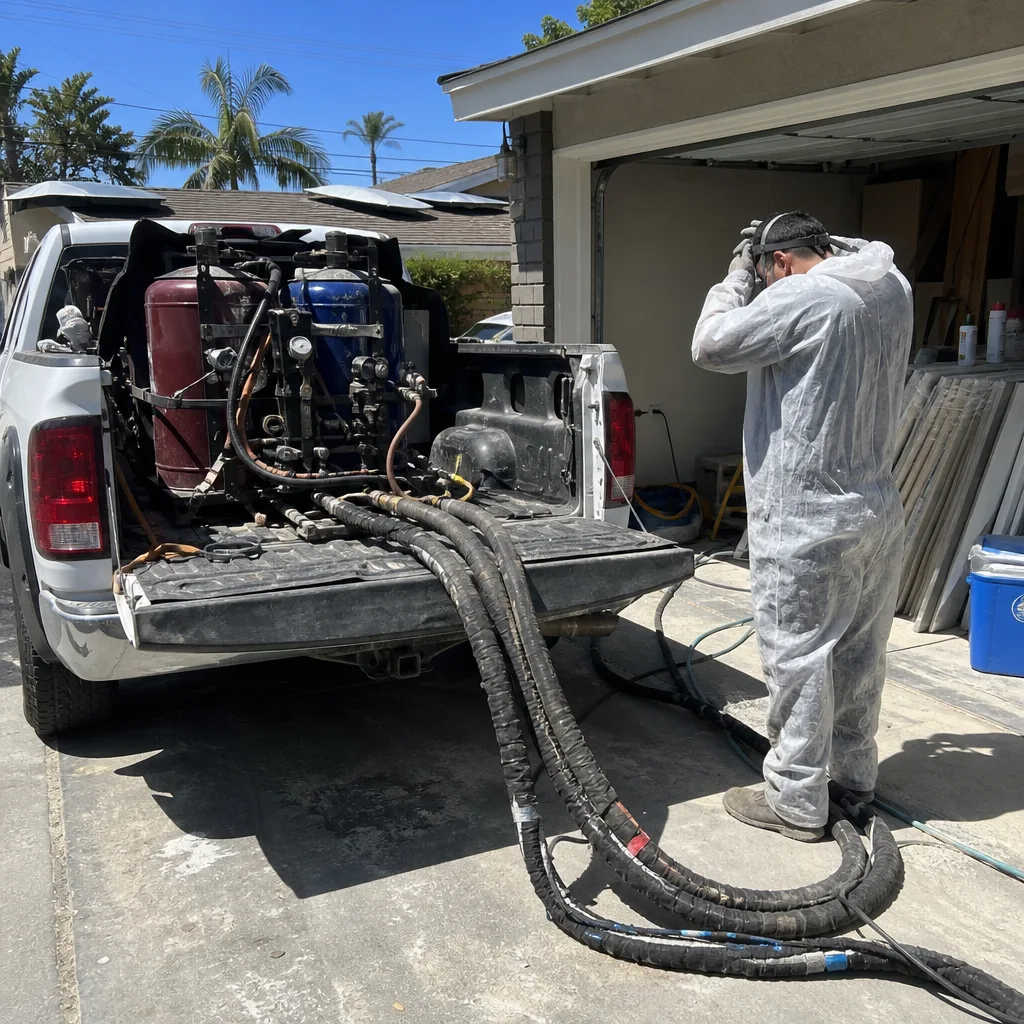
Blown-In Fiberglass
Owens Corning fiberglass works best for attic top-ups in Long Beach’s post-WWII east-side tracts where existing insulation is compressed but the assembly is otherwise intact. Fiberglass doesn’t settle as aggressively as cellulose in vented attics with good airflow, and it’s the right choice when the primary goal is thermal performance rather than air blocking. We rarely recommend fiberglass alone for West Long Beach wall cavities - the particulate-infiltration problem demands the denser pack that cellulose or mineral wool provides. Attic fiberglass top-ups typically run $1,400-$2,400.
Dense-Pack Wall Insulation
This is the service we perform most often in Long Beach’s pre-war neighborhoods. Original 1920s-1940s balloon-frame walls in Bluff Park, Rose Park, and Belmont Heights were built without insulation and without top-plate blocking - meaning stud bays open directly into attic space and basement or crawl space. Without dense-packing and simultaneous air sealing, you’re not insulating a wall; you’re building a chimney that moves air from bottom to top. Our crew was called to a 1938 Spanish Colonial Revival in Rose Park where the homeowner, whose block backs up toward the 710, wanted to cut freeway exhaust infiltration - not just cooling costs. We dense-packed the original uninsulated balloon-frame sidewalls with GreenFiber cellulose and blew Owens Corning fiberglass into the attic floor to bring the assembly up to a code-ready R-value, then foamed the open balloon-frame top plates and band joists that were channeling particulate-laden air straight up the wall cavities. The envelope now holds static pressure, and the homeowner told us the house finally smelled like a house instead of the freeway. Dense-pack wall jobs in Long Beach run $3,200-$7,800.
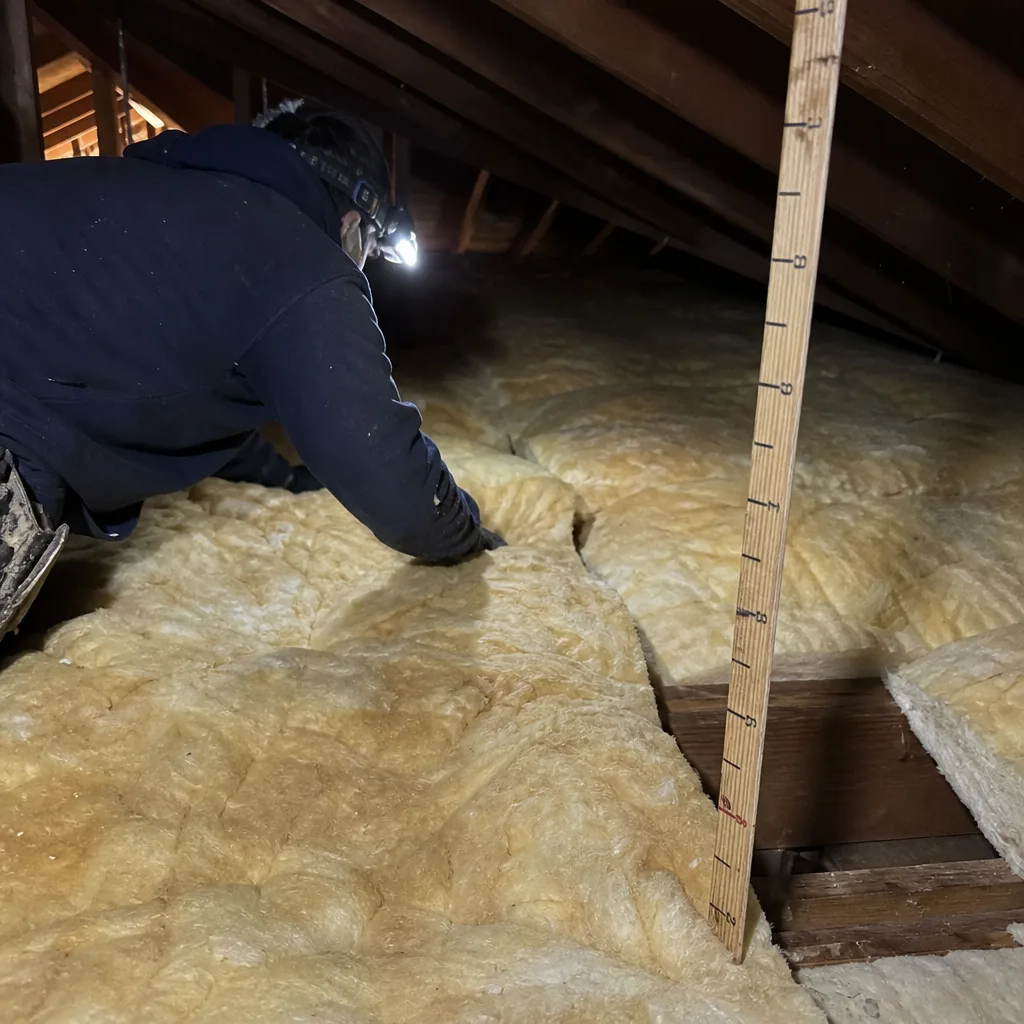
Blown-In Top-Up
East Long Beach tract homes built between 1945 and 1970 often have some original insulation - usually thin fiberglass batts or an early blown-in layer - that’s compressed, displaced, or settled below current Title 24 thresholds. A blown-in top-up adds material without full removal, but only after we verify the existing layer isn’t mold-contaminated and that attic bypasses are sealed. In Long Beach’s marine-layer climate, adding fresh insulation over damp, unsealed gaps creates exactly the mildew problem homeowners fear. We check first. Top-ups run $1,400-$2,800.
Our Blown-In Insulation team covers the full envelope service line, but on Long Beach jobs we spend disproportionate time on air sealing because the housing stock and air-quality context demand it.
What happens when you call
- 1
A real person answersNo phone trees - you reach a local pro.
- 2
You get an upfront price rangeHonest numbers before anyone is dispatched.
- 3
A background-checked tech heads outLicensed & insured, dispatched right away.
- 4
You approve before work beginsNothing starts until you say go.
Trusted Brands We Service in Long Beach
We source materials from Owens Corning, Johns Manville, Knauf, Rockwool, CertainTeed, Icynene, Demilec, and GreenFiber - no proprietary lock-in, no house brand pushed for margin. For Long Beach’s specific conditions, we typically specify GreenFiber cellulose for dense-pack wall work (the density blocks particulate migration better than loose-fill alternatives) and Owens Corning fiberglass for attic top-ups where thermal recovery is the primary goal. Demilec open-cell foam sees use for band-joist and top-plate sealing in balloon-frame jobs where air tightness is the priority. We stock common densities and borated formulations locally, so most Long Beach jobs don’t wait on material delivery.
Common Blown-In Insulation Problems We See in Long Beach Homes
- Balloon-frame wall cavities without top-plate blocking. Original 1920s-1940s construction in Bluff Park and Rose Park left stud bays open from foundation to attic. Blown-in material settles or escapes downward while freeway-corridor air channels upward - the exact particulate-infiltration path West Long Beach homeowners are trying to close. Dense-packing without first foaming the top plate wastes money and material.
- Marine-layer moisture in beachside assemblies. Chronic low-level moisture in Belmont Heights and other near-coast neighborhoods can saturate improperly vented wall or attic cavities. Adding blown-in insulation over unsealed gaps without vapor and air control turns an uninsulated-but-drying cavity into a cold, damp shelf for mildew. We test moisture content before we blow.
- Post-Title-24 bypasses in east-side tracts. Post-1933 reconstruction and post-WWII east-side tract homes predate modern California Title 24 requirements. Open soffits, unsealed bypasses, and legacy one-piece assemblies let blown-in top-ups leak and settle unevenly, cutting attic R-value years before the material itself should degrade. We map these with blower-door-directed infrared before adding material.
- Insulation added over unsealed can lights and chimneys. This isn’t unique to Long Beach, but it’s common here because so many retrofits were done by prior owners or handymen without envelope training. The result is a warm, humid attic in winter and a heat sink in summer, with conditioned air leaking into the insulation layer rather than staying in the living space. We remove and redo these jobs regularly.
Pricing for Blown-In Insulation in Long Beach, CA
Here’s what blown-in insulation costs in the Long Beach market based on jobs we’ve written prices for in the last 18 months:
| Service | Typical Range | What Drives the Price |
|---|---|---|
| Attic blown-in cellulose or fiberglass (1,000-1,500 sq ft) | $1,800-$2,800 | Existing removal, access difficulty, ventilation upgrades needed |
| Attic blown-in top-up (adding over existing) | $1,400-$2,400 | Condition of existing layer, bypass sealing required |
| Dense-pack wall insulation (full exterior, typical bungalow) | $3,200-$7,800 | Cavity depth, plaster vs. drywall interior, number of stories |
| Air sealing + blower-door verification (add-on or standalone) | $1,200-$2,600 | Size of home, number of penetrations, accessibility |
Every job gets a Written Price Before Any Work Starts - Haven Standard Clause 1 - and we offer a Free Second Opinion on any written estimate from another contractor. Bring us their scope; we’ll read it with you. Call (424) 415-7031 for an exact quote on your home. Estimates are free.
The thermal gradient between cooler beachside Long Beach and warmer inland eastern edges means energy-bill ROI varies by zip code. We calculate payback using your actual usage and SDG&E or SCE rate structure, not a generic formula.
We Also Serve Cities Near Long Beach
Our crews work throughout the metro corridor, including Long Beach proper plus Carson, Lakewood, Lomita, and Compton. Dispatch is coordinated from our Los Angeles office, but the technicians who arrive at your door know the local housing stock - whether that’s a 1920s Craftsman in Rose Park, a post-war tract in Lakewood, or a mid-century in Carson. Same written-price guarantee, same documented photo record, same 365-Day Done Right Promise.
Serving Long Beach, CA - Our Local Coverage Area
We’re based in the Long Beach area and know this community well. Use the map below to see our service coverage - if you’re nearby, we can almost certainly help.
FAQs - Blown-In Insulation in Long Beach
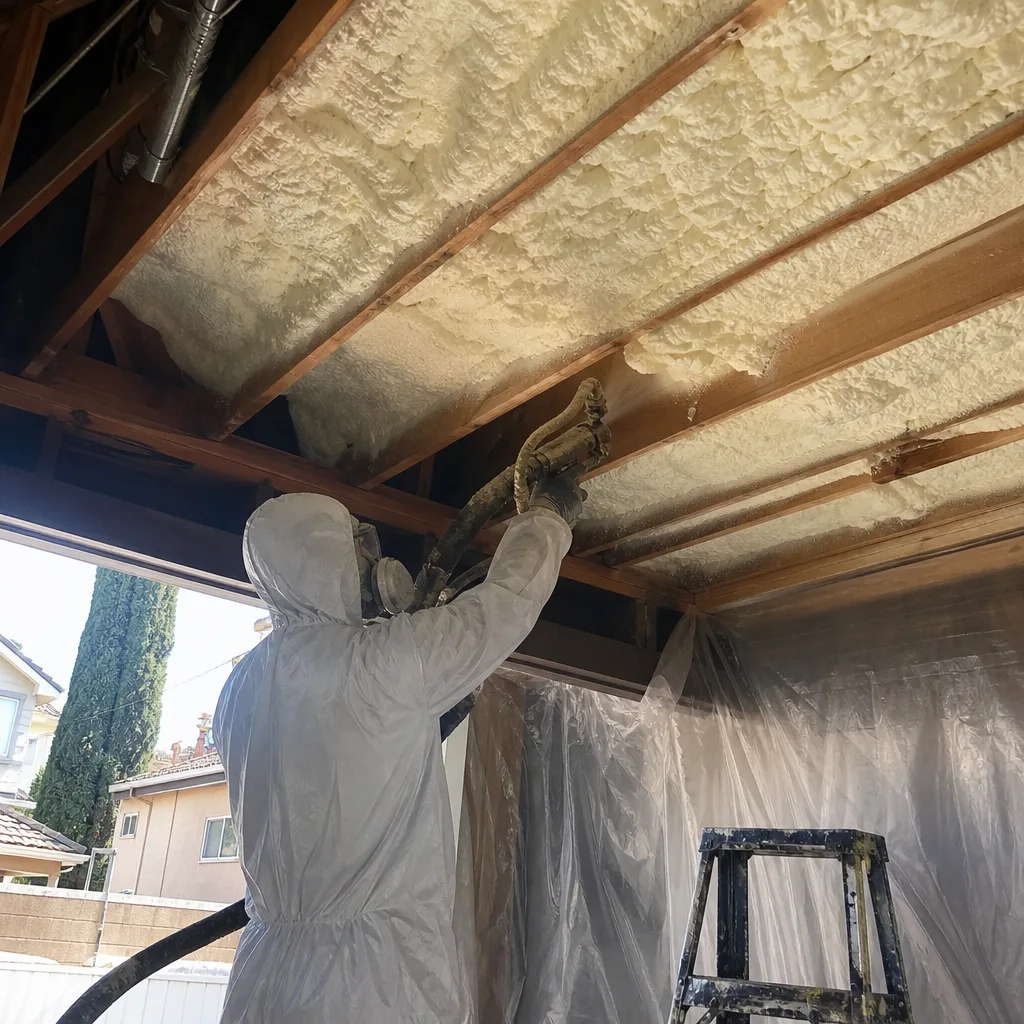
Yes, but only if air sealing is done first and dense-pack methods are used. Blown-in material alone, loose in a wall cavity, won’t stop air movement - it just filters some particulates while channeling others. We dense-pack cellulose to 3.5 lbs per cubic foot, which slows air migration through the stud bay, then foam-seal top plates, band joists, and all penetrations. The blower-door test confirms the result: we target a 35-50% reduction in CFM50 on retrofits. Call (424) 415-7031 for an exact quote - estimates are free.
Yes. We dense-pack through exterior holes drilled at stud-bay intervals, or through interior plaster if the homeowner is already planning paint or restoration. The plaster itself is often the best air barrier in these walls - removing it destroys that layer. We patch exterior siding with matched material; on interior work, we coordinate with your plaster contractor if needed. Most Bluff Park and Rose Park balloon-frame jobs run $3,200-$7,800. Call (424) 415-7031 for a written scope.
Not if the assembly is properly sealed and vented before insulation goes in. Long Beach’s marine layer introduces chronic low-level moisture that can saturate uninsulated cavities - they dry because they’re open. Seal the cavity without ventilation, or add insulation over damp gaps, and you create a cold surface where condensation collects. We test moisture content, verify soffit and ridge venting, and seal bypasses so warm interior air doesn’t reach cold sheathing. Documented photo record included. Call (424) 415-7031.
A top-up is worth it if the existing insulation is dry, uncompressed, and the attic bypasses are sealed. Many east Long Beach tracts have thin original fiberglass or early blown-in that’s settled to R-11 or below; bringing it to R-38 or R-49 with a top-up runs $1,400-$2,400 versus $2,800-$4,500 for full removal and replacement. We assess with blower-door and infrared to determine which path actually fixes your envelope. Free Second Opinion on any written estimate. Call (424) 415-7031.
Cellulose for dense-pack wall work, especially near the port and freight corridors where air blocking matters. Fiberglass for attic top-ups where thermal performance is the primary goal and the assembly is already reasonably tight. We don’t push proprietary products; we specify based on your home’s condition and your priorities. Both materials are sourced from national manufacturers - GreenFiber cellulose and Owens Corning fiberglass are our most common Long Beach specifications. Written scope includes the exact material and density before work starts. Call (424) 415-7031.
Written by Wes Okafor, Owner at Topside Attic Insulation Long Beach, serving Long Beach since 2016 under The Haven Standard.